
The uncertainty of today's world demands that every organization is not only led by people who have the capacity and capability, but also aware of the direction and purpose of the institution.
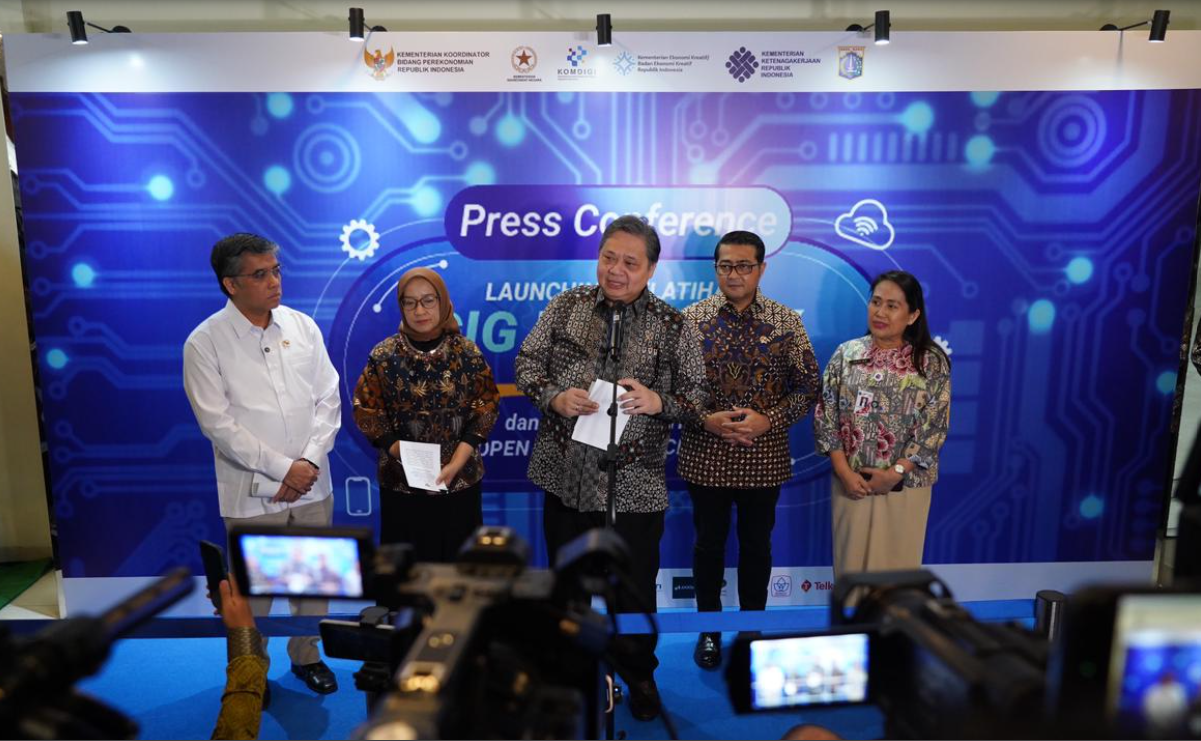
Without a complicated vision and mission, leaders who set an example and listen can help keep the team moving in the right direction towards the target, according to the results of the International Test Center (ITC) Leadership Conclave 2025 seminar, Thursday (16/10/2025).
Chairperson of the Indonesian Employers Association (Apindo) Shinta W. Kamdani explained thatintentional leadership is a type of leadership that is able to navigate uncertainty with awareness of values, direction, and strategic goals, not just intuition. All three must be complete, because without a value compass, the direction can be misleading.
"A direction-conscious leader not only relies on reaction readiness, but also has a north star, a guide that determines direction when visibility drops. These values help the leader to determine: whether the decision is strengthening in the long run, strategic, or just putting out fires," Shinta said in her speech.
The CEO of Sintesa Group stated that with the principle of intentional leadership, any organization will have resilience by design, not just by chance. Intentional leaders know that firmness of direction is more important than speed of reaction, are able to build systems that prevent crises rather than just manage them, and havestrategic clarity, not just stability.
Modern leadership practices, according to Shinta, will focus on investing in productive human capital, and realize that behind every machine and algorithm, there are humans who should not be forgotten. Therefore, intentional leadership also means leadership that understands that a business must not only be profitable, but also responsible for the values it creates.
"In today's turbulence, crisis is actually a wake-up call from reaction to redirection. Disruption is a navigation to achieve greater meaning. The business world will never return to stability, but in the midst of uncertainty, we find new stability born from clarity of purpose, not just predictability," he said.
Inevitable
The qualification of an intentional leader is not primarily measured by his or her ability to make decisions in the midst of crisis, but also by understanding the nature of continuous transformation. In a world that is increasingly losing meaning, intentional leadership will ensure that transformation is inevitable.
"During my 34 years in business, I transformed a minimum of 34 times. Is my business now the same as 34 years ago, obviously not. Uncertainty is the basic formula of leadership. If everything is certain, you don't need a leader, you only need a manager," said Sakti Makki, co-founder of MakkiMakki and strategic transformation consultant.
Reflecting on his experience helping various companies to transform, he found that only 1% of companies managed to transform holistically. Meanwhile, 99% of other companies only compile pages of strategy documents that then go into a drawer and are only issued if necessary.
In fact, instead of lengthy strategy documents and overly complicated visions and missions, intentional leadership can drive transformation with an awareness of three aspects:direction, disruption, and communication. The most important aspect, according to Makki, is disruption that makes an organization run dynamically.
"Disruption ensures that your organization does not do the same thing over and over again. If you don't disrupt yourself, then your competitors will disrupt your business," he said.
In addition, communication is the aspect that enables the previous two aspects to be conveyed. Although simple, not many leaders realize that communication has three levels: informative communication that conveys one-way; dialogic communication that ensures the other person is listening; and engagement communication that achieves brainstorming.
"Of the three levels, what is needed is engagement, but what is always implemented is only informative, give instructions, and that's it. In fact, if we only communicate in one direction, no culture is built, even though the basic guideline for communication is the similarity of values and culture," Makki said.
Through the crisis, keep learning
The experience of forging and shaping intentional leadership is challenging. Not only does he have the skills to carry out his own tasks, but he must also ensure that his cultural background does not impede progress.
Human Resources Director of Pertamina International Shipping (PIS) Dewi Kurnia Salwa revealed that in her company, the formation of intentional leadership can be seen from every crisis experienced.
As a company engaged in oil and gas transportation, PIS realizes that technical and non-technical problems can arise at any time. For this reason, every PIS unit has a crisis center available to be activated whenever a problem arises.
One of Dewi's empirical experiences was when oil and gas prices spiked in early 2022 when the Russia-Ukraine War had just broken out. The war occurred when the rest of the world was just entering the beginning of its pandemic recovery, including Indonesia. At such crucial times, Dewi witnessed that solid leadership helped PIS stay afloat.
"Later, I found a study that compared leadership before and after the pandemic, and the performance of leaders after the pandemic proved to be better. Perhaps this proves the superiority of intentional leadership, where the leader reads the data before making a decision so that he knows the purpose and consequences," Dewi said.
In addition to the skills and ability to lead in the midst of a crisis, a leader needs to have technical competence about the entire field he or she is working in. Leadership skills are meaningless if the leader does not understand the most detailed and complicated intricacies before making decisions.
"Leadership training and technical competence are instilled together so that they complement each other," he said.
Shinta W. Kamdani appreciated the way the PIS works. According to her, it forms an upskilling ecosystem that ensures every worker has leadership capacity within themselves. With that, every job is not only held by people who are trained and ready to work, but also resilient and have a clear contribution.
"The biggest investment is to create a learning environment that never stops, as a survival currency in a changing world. We want to produce workers who give meaning that a profession is not just a position, but a contribution. Technology can replace jobs, but it will never replace purpose," he said.