
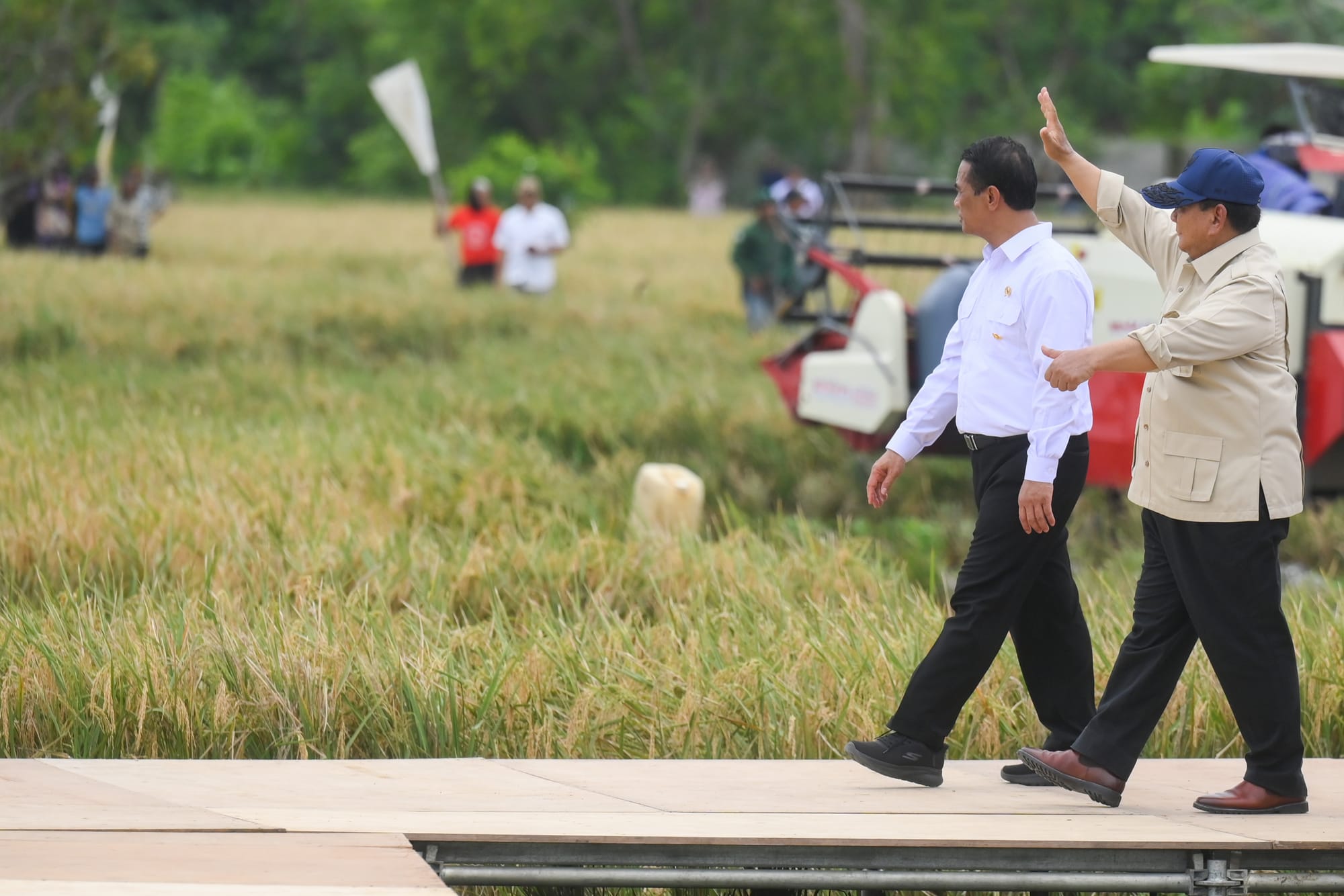
President Prabowo Subianto announced on Wednesday (January 7, 2025) that Indonesia will achieve food self-sufficiency by the end of 2025, three years ahead of the previous target of 2029.
Thus, throughout 2025, Indonesia will no longer be dependent on rice imports from other countries.
Meanwhile, a number of agricultural experts have questioned the definition of food self-sufficiency amid continued high levels of food imports.
"With thename of Allah, the Most Gracious, the Most Merciful, on this morning, Wednesday, January 7, 2026, I, Prabowo Subianto, President of the Republic of Indonesia, hereby announce that Indonesia has achieved food self-sufficiency in 2025 for the entire Indonesian nation," said President Prabowo at the Grand Harvest in Kertamukti Village, Karawang Regency, West Java Province, Wednesday (07/01/2026).
Prabowo said that Indonesia must become an independent country because Indonesia has abundant natural resources, and it would be a waste not to utilize them to the fullest.
At the beginning of his term as president, he set a target of achieving rice self-sufficiency within four years, but in fact, rice self-sufficiency was achieved within a year.
Throughout 2025, Indonesia's rice production reached 34.71 million tons, the highest in history.
"Indonesia has not imported any rice at all throughout 2025, proving that Indonesia has achieved food self-sufficiency," he said.
He recalled Indonesia's experience during the Covid-19 pandemic, when a number of rice-producing countries withheld exports for their own domestic interests. This situation, said the President, served as a stark warning for Indonesia not to be complacent and continue to depend on other parties, especially in matters of food and energy.
He expressed his appreciation and pride to farmers, agricultural extension workers, and the entire Indonesian agricultural community. According to the President, they have proven that the Indonesian people are capable of standing on their own feet.
"Today, you have given the nation and the country tangible proof. In my opinion, you have marked an important milestone in the independence of the Indonesian nation," said the President.
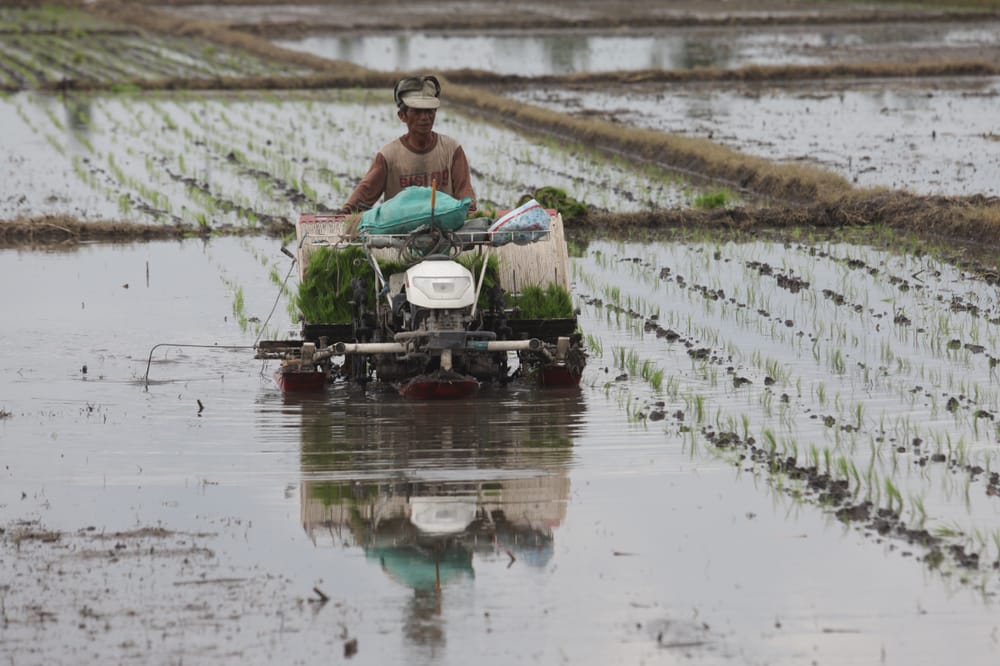
During the event, Prabowo also witnessed the harvest in Kertamukti Village, Cilebar Subdistrict, Karawang Regency, which is part of the national production center. The harvest was carried out using combine harvester technology, which allows for a faster harvesting process, reduces crop loss, and reduces dependence on manual labor.
In addition, the technology that has been disseminated and adopted by farmers can also be seen in the superior Inpari 32 rice variety. Developed by the Ministry of Agriculture, this rice seed has a potential yield of 8.42 tons per hectare, a technology that boosts national rice production.
President Prabowo encouraged the continued development of superior rice varieties to achieve productivity of up to 15 tons per hectare. In addition to the harvest, President Prabowo also witnessed demonstrations of agricultural tools and machinery, including drones and water pumps, as well as agricultural downstreaming. These various technologies are factors that drive increased production for sustainable food self-sufficiency.
"I see extraordinary agricultural downstream products. Later, with food self-sufficiency everywhere, Minister Amran and Deputy Minister of Agriculture promised me that with the support of the Indonesian National Armed Forces and the Indonesian National Police, corn will also be self-sufficient in the near future, and feed will be cheap for all livestock farmers and farmers. We will lower the price of feed. We have already lowered the price of fertilizer, and if possible, we will lower the price again," he said.
Meanwhile, on the same occasion, Minister of Agriculture Amran Sulaiman said that agricultural modernization is key to maintaining national food security.
According to him, mechanization, provision of production facilities, and assistance for farmers continue to be carried out to increase productivity and farmers' welfare.
"We must promote innovation and technology-based agriculture. With technology, productivity increases, crop yields rise, production costs fall, and farmers' welfare improves," he said.
His party is also committed to the government's plan to develop modern, efficient, and competitive agriculture in Indonesia as a strong foundation for maintaining food self-sufficiency and the welfare of farmers.
Questioned
In response to this, agricultural observer Khudori said that the announcement of food self-sufficiency needs to be accompanied by a clear definition and context of production.
He reminded that historically, the rice harvest season in Indonesia runs from February to May. If the harvest season is defined as production exceeding consumption, then cyclically, this opportunity only begins in February.
He believes that the government needs to be careful in using the term food self-sufficiency. This is because, based on Law No. 18 of 2012, food is defined very broadly to include agricultural, plantation, livestock, and fishery products, as well as water. With this definition, he estimates that comprehensive food self-sufficiency will be difficult to achieve.
It is impossible for Indonesia to achieve this. In the law, food is defined as anything that comes from biological sources such as agricultural, plantation, forestry, fishery, livestock, aquatic, and water, whether processed or unprocessed, intended for human consumption as food or drink, including food additives, food raw materials, and other materials used in the preparation, processing, and/or manufacture of food or drink," he said.
Khudori added that, to date, the government has not openly explained the limits of self-sufficiency, whether it means meeting 90% of domestic demand or eliminating imports entirely. Without this clarity, it will be difficult to objectively measure the achievement of self-sufficiency.
Based on data from the Central Statistics Agency (BPS) released on January 5, 2026, national rice production in 2025 is estimated to reach 34.71 million tons, an increase of 13.36% compared to the previous year. This figure is the highest production since 2018 and will result in a surplus of around 3.81 million tons.
He emphasized that the increase in production was not yet fully reflective of structural improvements.
"The increase in production was mainly contributed by an increase in harvest area to 1.29 million hectares, while the increase in productivity was relatively limited, at around 0.45%," he said when contacted by SUAR.id in Jakarta (7/1).
Entering 2026, the challenges of sustainable production are still considered to be significant. The focus of agricultural policy is no longer only on rice and corn, but also on the development of other commodities such as soybeans, cassava, and sugar, as well as increasing egg and chicken meat production to support the Free Nutritious Meals (MBG) program. This expansion of focus has the potential to affect land allocation, budgets, and human resources.
Meanwhile, the United States Department of Agriculture (USDA) projects Indonesia's rice production in 2026 to be 33.6 million tons, down from 2025. The decline is expected to occur in line with a reduction in harvest area and productivity.
Khudori believes that the government needs to pay attention to these projections in order to maintain rice production levels.
"Going forward, the main challenge is to ensure the sustainability of production. The announcement of self-sufficiency should be followed by consistent policies so that production does not decline again," he said.
Contacted separately, IPB Agricultural Observer Dwi Andreas said that the context of broad food self-sufficiency is not limited to rice alone, but also includes other commodities such as corn and soybeans.
He expressed his appreciation for the achievement of rice self-sufficiency in 2025, which must be maintained for the following year.
"Indonesia is already self-sufficient in rice, but there are other commodities that still need attention, particularly corn and soybeans," he told SUAR Jakarta (7/1).
To achieve food self-sufficiency, it is necessary to increase productivity through technology, including high-quality seeds, mechanization, modern irrigation, food diversification such as sago and sorghum, and land optimization.
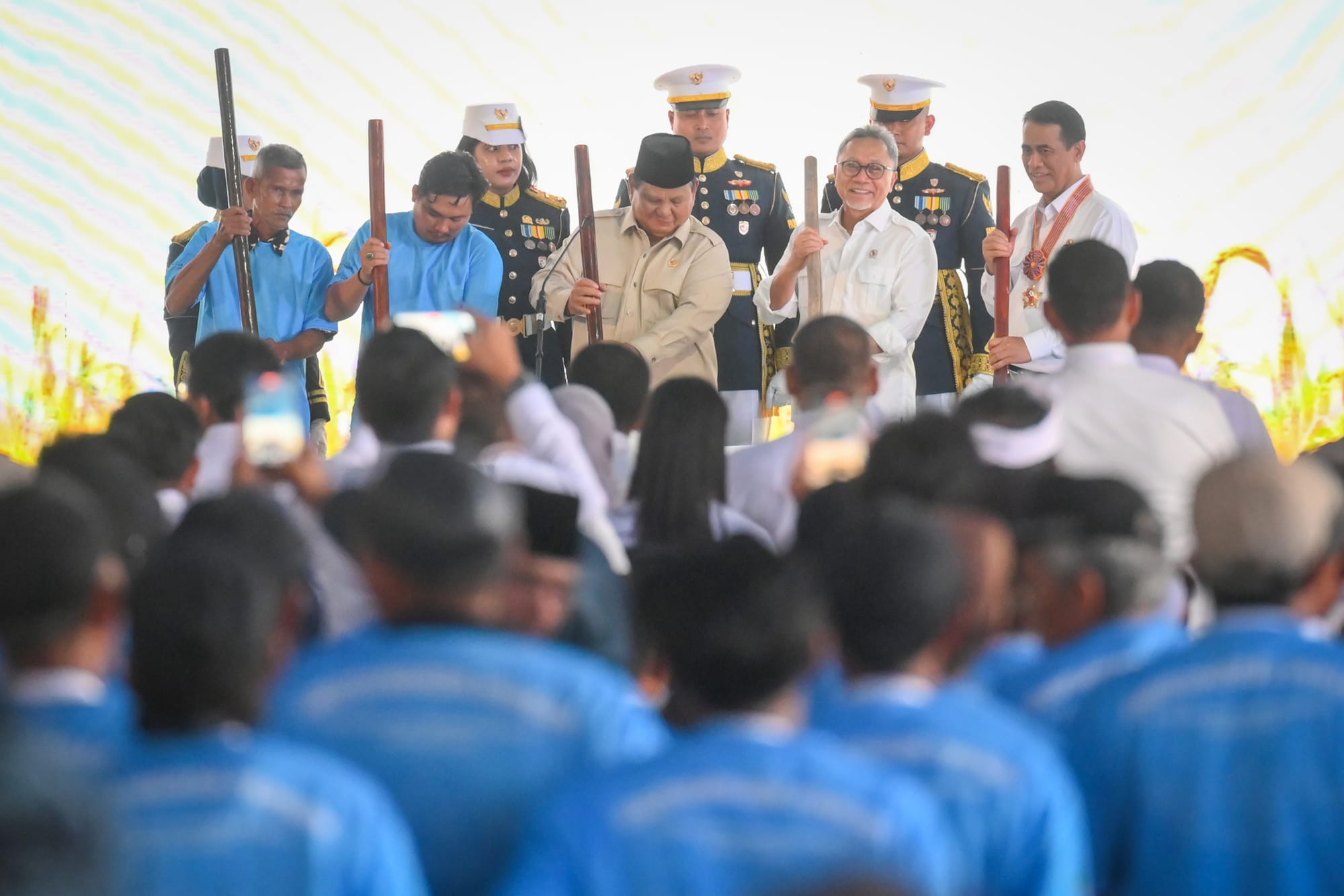
Service star
President Prabowo Subianto also presented the Satyalancana Wira Karya award to figures from various sectors who were deemed successful in collaborating to maintain food security in their respective regions.
They include Mohammad Naudi Nurdika, Setyo Wahono, Aep Syaepuloh, Toni Kasmiri, Yugi Bayu Hendarto, Andhi Ardana Valeriandra Putra, Dili Eko Setyawan, Don Muzakir, as well as inspirational farmers Mugi Raharjo and Nurul Hadi from Indramayu.
One of them is Aseng, a member of the Ciraden Farmers Group in Campaka, Cianjur Regency. Aseng, who spends his days farming, recounts his journey with the Ciraden farmers group, which manages approximately 15 hectares of rice fields, leading to the award.
"Praise be to God, I received a certificate and an award. Thank you, Mr. Endang, PPL Campaka, and thank you, Mr. Regent of Cianjur, for receiving this certificate. Thank you very much," he said.
Aseng said that the increase in rice harvest in his group was inseparable from the assistance of extension workers and the provision of high-quality seeds (Pajajaran Seeds) from the government.
"I received assistance from Benih Pajajaran. I used to get 6.5 tons per hectare, but now I get 8 tons per hectare," he said.
He appreciates the policies of President Prabowo Subianto's administration, which are considered to be very helpful and supportive of farmers. These include the rice barn program, reductions in fertilizer prices, and high grain selling prices.
"And fertilizer prices, which are usually high, have now dropped by 20 percent. Subsidized cheap fertilizer is very helpful for the farmers' economy," he explained.
Uun Suparma, representative of the Kosambibatu Village Farmers Group Association, Cilembar subdistrict, Karawang, expressed his appreciation for the President's visit to his region.
"The point is, the people of Cilebar Subdistrict and I feel that we are being prioritized. The important thing is that we are being taken care of," he said.
Currently, Uun says that rice production in Kosambibatu Village is around 8–9 tons per hectare. However, he is confident that rice production in his village can reach 15 tons per hectare this year thanks to the government's encouragement and motivation.
"As farmers, we want to increase all agricultural production in our region to support better food self-sufficiency in the future," added Uun.
Contacted separately, a rice farmer in Lampung, Suparlin, hopes that with this self-sufficiency, prices at the farmer level will not decline when the harvest season arrives.
"The government is preparing for absorption when the harvest season arrives, and the government can improve the quality of subsidized fertilizers and absorb organic rice to create a culture of farming without polluting the environment," he said when contacted SUAR on Wednesday (7/1).
The Central Statistics Agency (BPS) previously stated that based on the November 2025 area sample frame (KSA) observations, national rice production in 2025 is predicted to reach 34.71 million tons, exceeding the annual domestic demand of around 30-31 million tons per year.
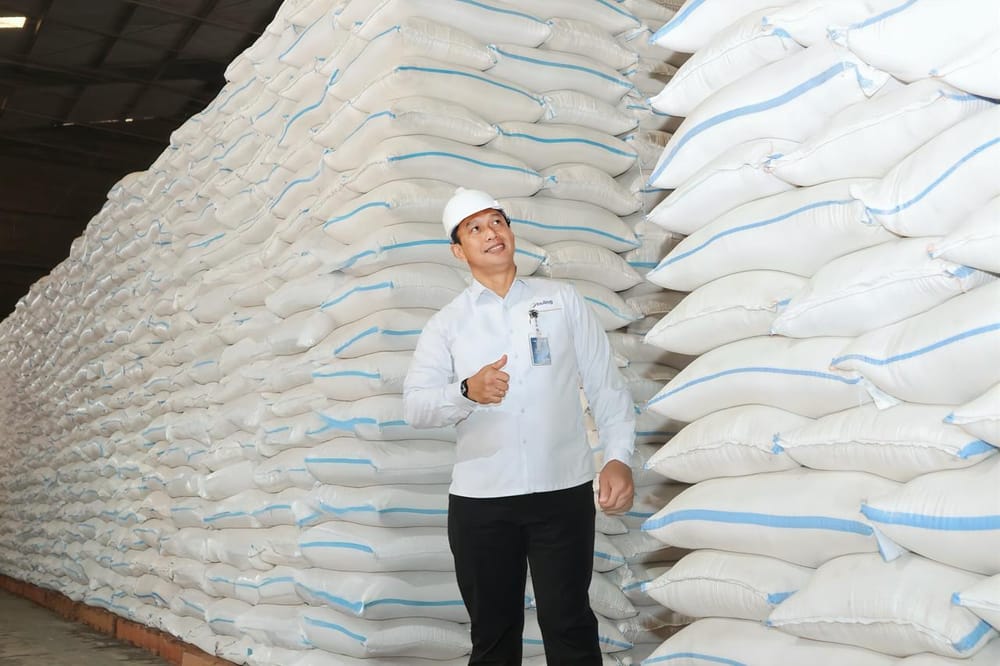
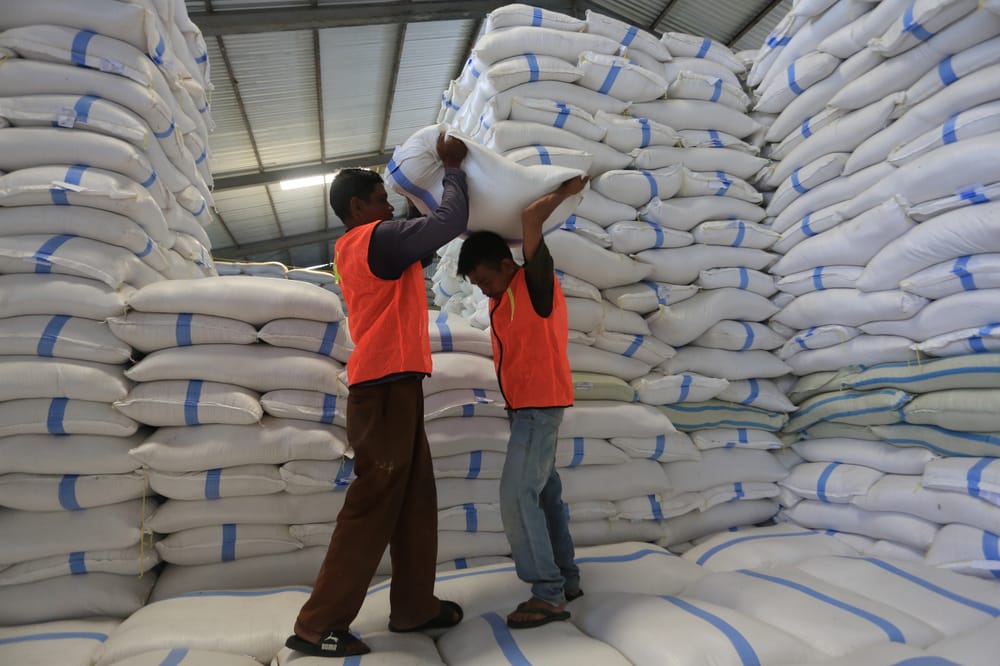
The 2025 rice procurement is also recorded as the largest in the history of Perum Bulog through the direct purchase of unhusked rice of any quality from farmers at a price of Rp6,500 per kilogram.
Government rice reserves reached a record high of 4.2 million tons in June 2025 and are now at around 3.25 million tons in early 2026, in line with rice distribution for disaster relief and stock and price control.