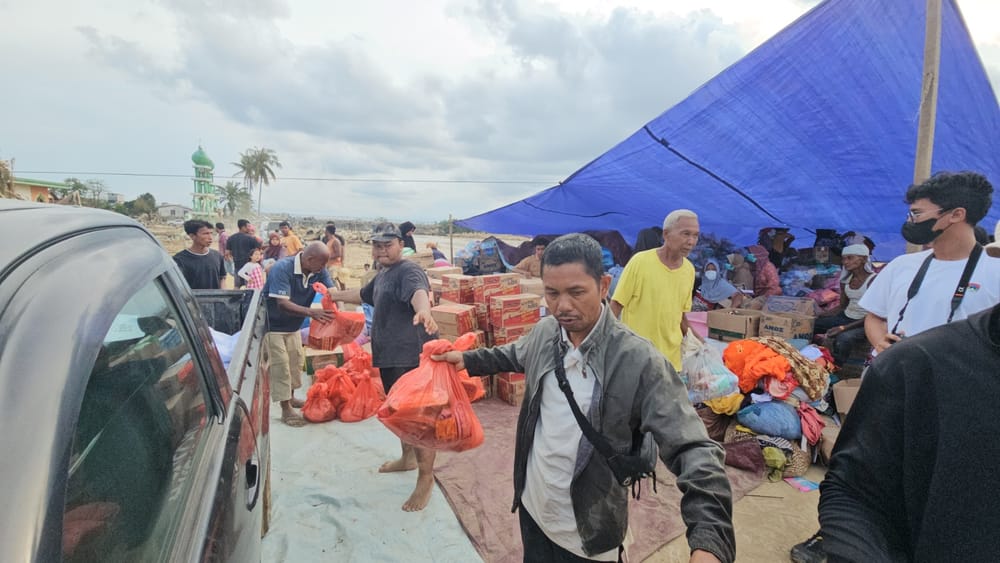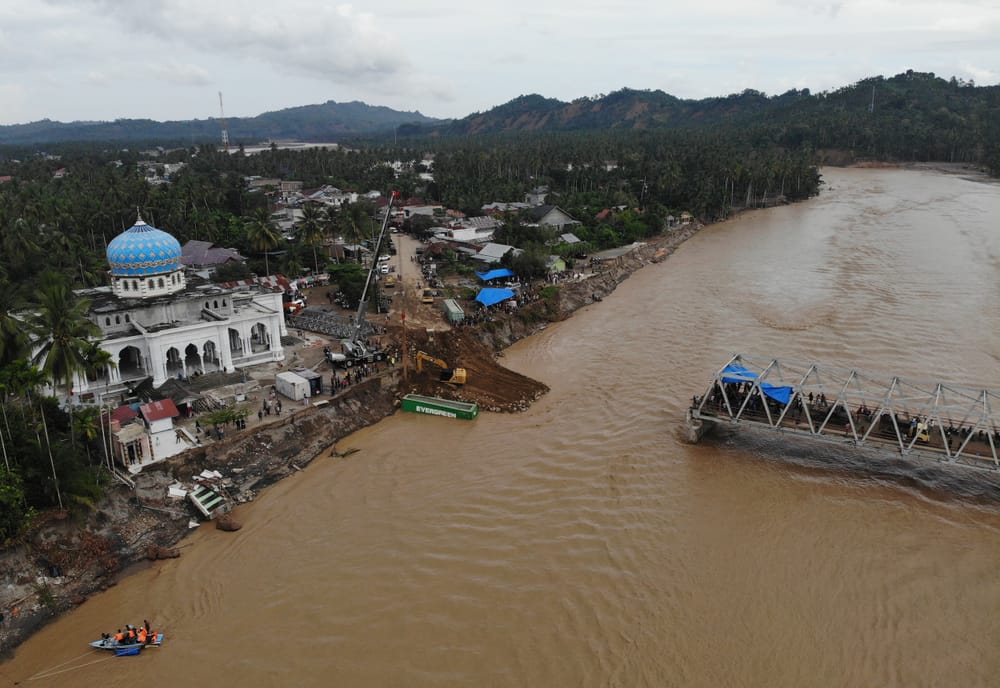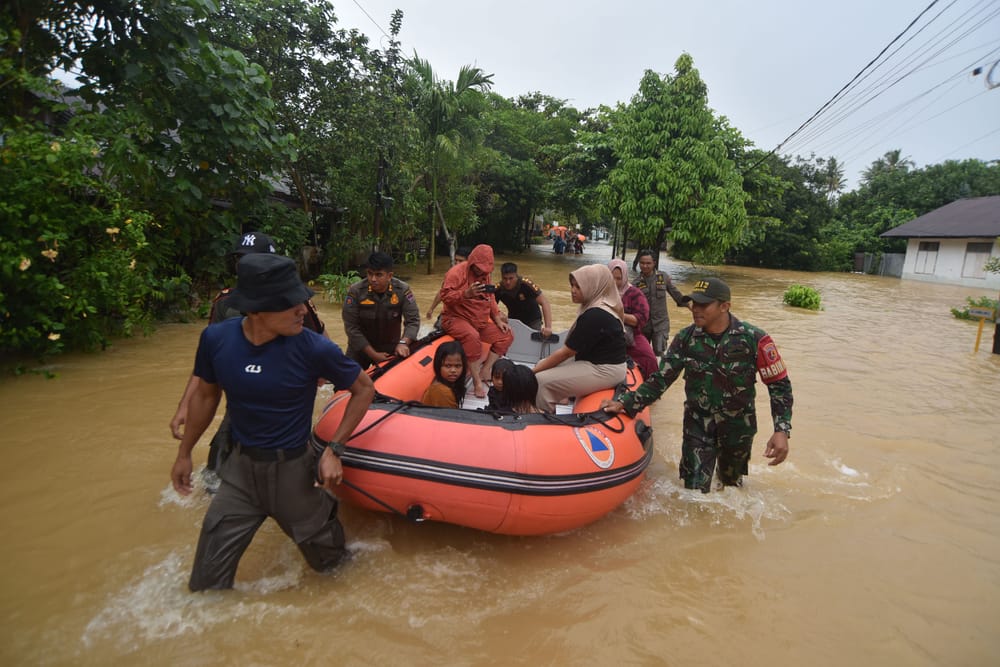

The government will provide relaxation of small business credit (KUR) distribution to three provinces affected by flooding in Sumatra within three years. Currently, the areas affected by the disaster are Aceh, North Sumatra, and West Sumatra.
Coordinating Minister for Economic Affairs Airlangga Hartarto said the plan had been reported in a plenary cabinet meeting and President Prabowo requested its immediate implementation.
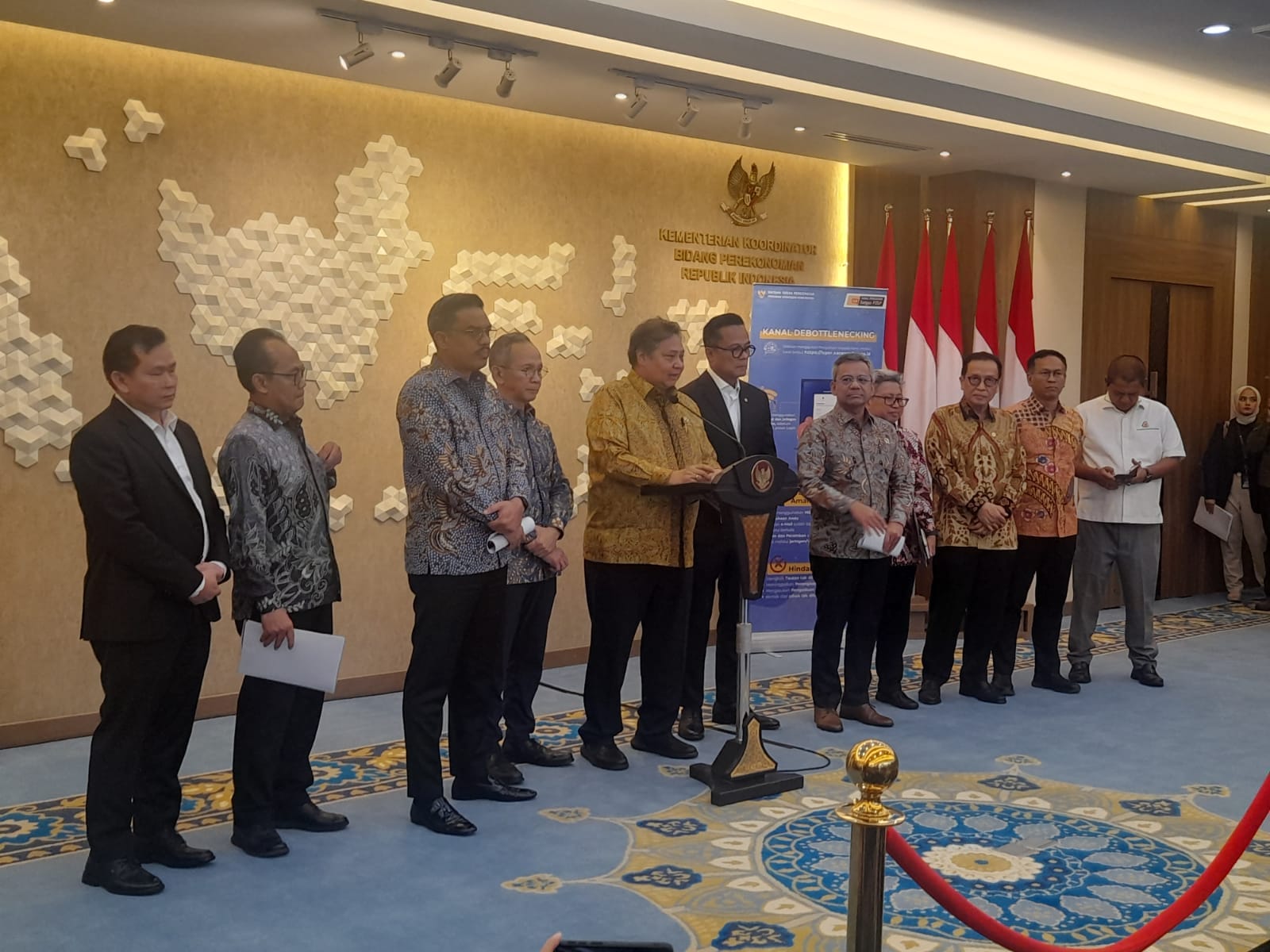
"The OJK (Financial Services Authority) has issued a POJK (Financial Services Authority Regulation) that continues the KUR restructuring process, which has been relaxed for up to 3 years," he said at a press conference on KUR for Disaster Victims in Sumatra, at the Coordinating Ministry for Economic Affairs, Lapangan Banteng, Jakarta (16/12).
Airlangga said that the government is drafting a Government Regulation (PP) in the three provinces. The government is also mapping the impact of the disaster on KUR debtors.
The KUR relaxation will be carried out in two phases, with the first phase running from December 2025 to March 2026. In the first phase, debtors will not pay installments, lenders will not receive installments, and neither guarantors nor insurers will file claims.
Then the second phase is the relaxation of existing KUR debtor obligations, which is related to debtors whose businesses cannot be continued at all. Of course, there is a relaxation period and also the potential for write-offs.
Then, for new KUR debtors, an interest rate of 0% will also be applied in 2026. Then in 2027, it will be 3%, while in the following years, a normal interest rate of 6% will be applied.
The government also provides tax exemptions for disaster victims, whereby the tax obligations of affected taxpayers are waived in accordance with Minister of Finance Regulation No. 81 of 2024.
"If business activities are halted due to a disaster and do not generate profits, then there is no tax liability. Victims are also exempt from administrative sanctions in the form of fines," he said.
3 Elements in Credit Restructuring
OJK Board of Commissioners Chairman Mahendra Siregar said that credit restructuring is permitted under OJK Regulation (POJK) Number 19 of 2022, with the consideration being disaster management.
Mahendra explained that there are three main elements in the credit restructuring process for disaster victims in Aceh, North Sumatra, and West Sumatra.
First, the implementation of credit restructuring by banks and financing from all existing financial institutions, including multifinance institutions and microfinance institutions.
Second, OJK emphasizes that the credit status given restructuring is considered current or smooth. This relief allows disaster victims to apply for new credit or financing, according to their needs. Third, restructuring for credit with a value of up to Rp10 billion.
Mahendra said that in the future, only one pillar will be established, namely based on the smoothness of repayment, so that no other additional requirements are necessary.
Of the approximately 996,000 KUR debtors in the three provinces, an estimated 141,000 debtors with outstanding debts of around Rp7.8 trillion were affected by the disaster. More than 63,000 debtors were from the agricultural sector with outstanding debts reaching Rp3.57 trillion.
Previously, OJK also approved special treatment in the form of credit relaxation for up to 3 years for debtors affected by natural disasters in Aceh, North Sumatra, and West Sumatra as an effort to assist in post-disaster recovery. In addition to banking, the insurance sector is directed to respond to claims more quickly and measurably, while still prioritizing the principle of prudence.
Read also:
 Benedictus Krisna Yogatama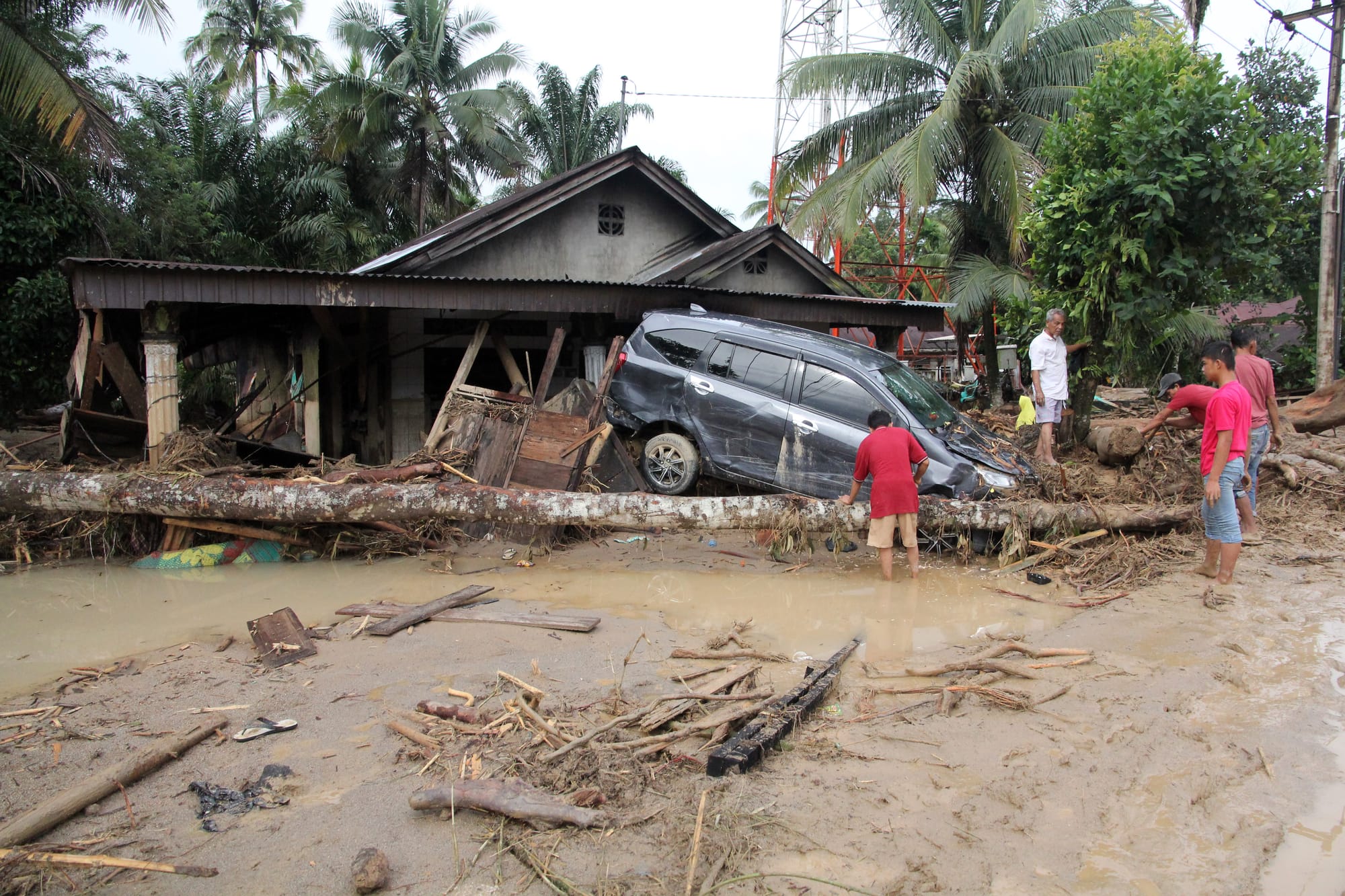
As of October 2025, Bank Mandiri has disbursed KUR loans totaling Rp 38.11 trillion to 329,012 UMKM players UMKM Indonesia. In terms of credit quality, Bank Mandiri's KUR portfolio is well maintained with a non-performing loan rate of less than 1 percent.
SVP Micro Development & Agent Banking Bank Mandiri Bayu Trisno Arief Setiawan said that the realization is equivalent to 92.96 percent of Bank Mandiri's KUR target in 2025 of Rp 41 trillion. According to him, this distribution is clear evidence of the synergy between the government, banking, and business sectors in accelerating people-based economic growth.
"This KUR support is not only about financing, but also about empowerment. Through broader access to capital, we want to help UMKM players UMKM their production capacity, expand employment opportunities, and increase competitiveness. This is the form of Sinergi Majukan Negeri (Synergy to Advance the Country) that we are implementing on an ongoing basis," said Bayu in his official statement some time ago.
Furthermore, KUR distribution until October 2025 is dominated by the production sector at 61.47 percent or Rp 23.43 trillion. Of this amount, the agricultural sector, as the driving force behind national food security, reached IDR 11.93 trillion or 31.31 percent, the production services sector absorbed 21.34 percent worth IDR 8.13 trillion, the manufacturing sector 7.41 percent or IDR 2.82 trillion, and the fisheries sector 1.37 percent or IDR 523 billion.
Since the KUR program was launched by the government in 2008 until October 2025, Bank Mandiri's total KUR disbursements have reached Rp 300.52 trillion to 3.56 million debtors throughout Indonesia. These low-interest loans have helped millions of businesses increase their business capacity and expand their markets.
Provide Baby Supplies Assistance
On the same occasion, Minister of Micro, Small and Medium Enterprises (UMKM) Maman Abdurahman said that his office, together with ID FOOD, distributed humanitarian aid in the form of baby supplies to communities affected by disasters in the Sumatra region.
The aid will be distributed at the national disaster management command center for Sumatra, located at Halim Perdanakusuma Air Base in Jakarta, and will be distributed to a number of disaster-affected areas in Sumatra.
"This tragedy is a shared sorrow. Through this baby supplies assistance, we hope to ease the burden on affected families while ensuring that children's basic needs are met amid these difficult circumstances," he said.
Read also:
 Benedictus Krisna Yogatama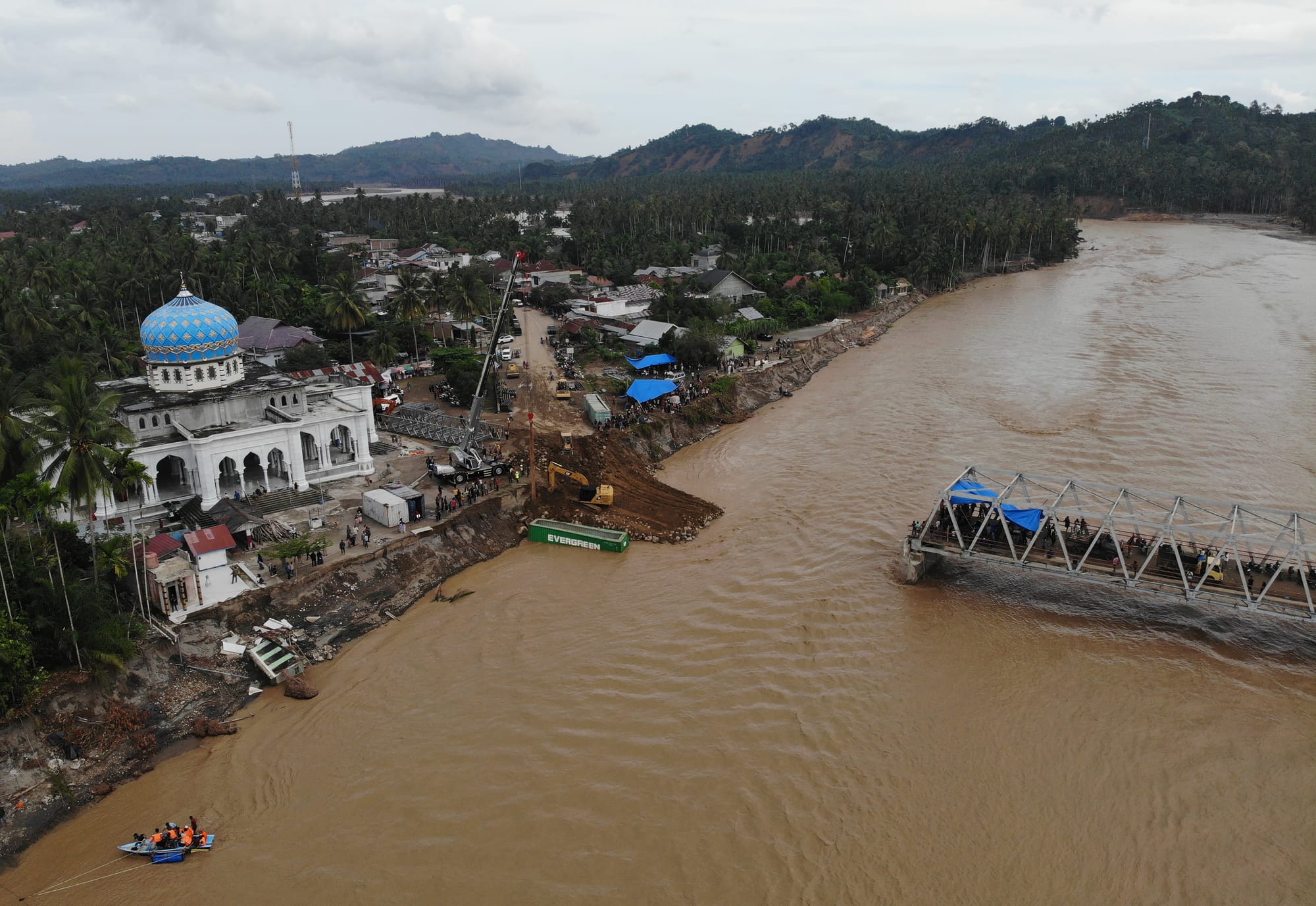
The distribution of this aid is a form of concern and solidarity for disaster victims, especially vulnerable groups such as babies and mothers.
Maman conveyed that attention to babies' basic needs is very important in disaster emergencies, when families face limited access to basic services and facilities.
He emphasized that the collaboration UMKM the Ministry UMKM ID FOOD is a tangible manifestation of synergy between institutions in strengthening human values, social awareness, and the spirit of mutual cooperation.
The Ministry UMKM this aid will safely reach disaster victims in Sumatra and become part of joint efforts to accelerate recovery, foster new hope, and strengthen social solidarity within the community.