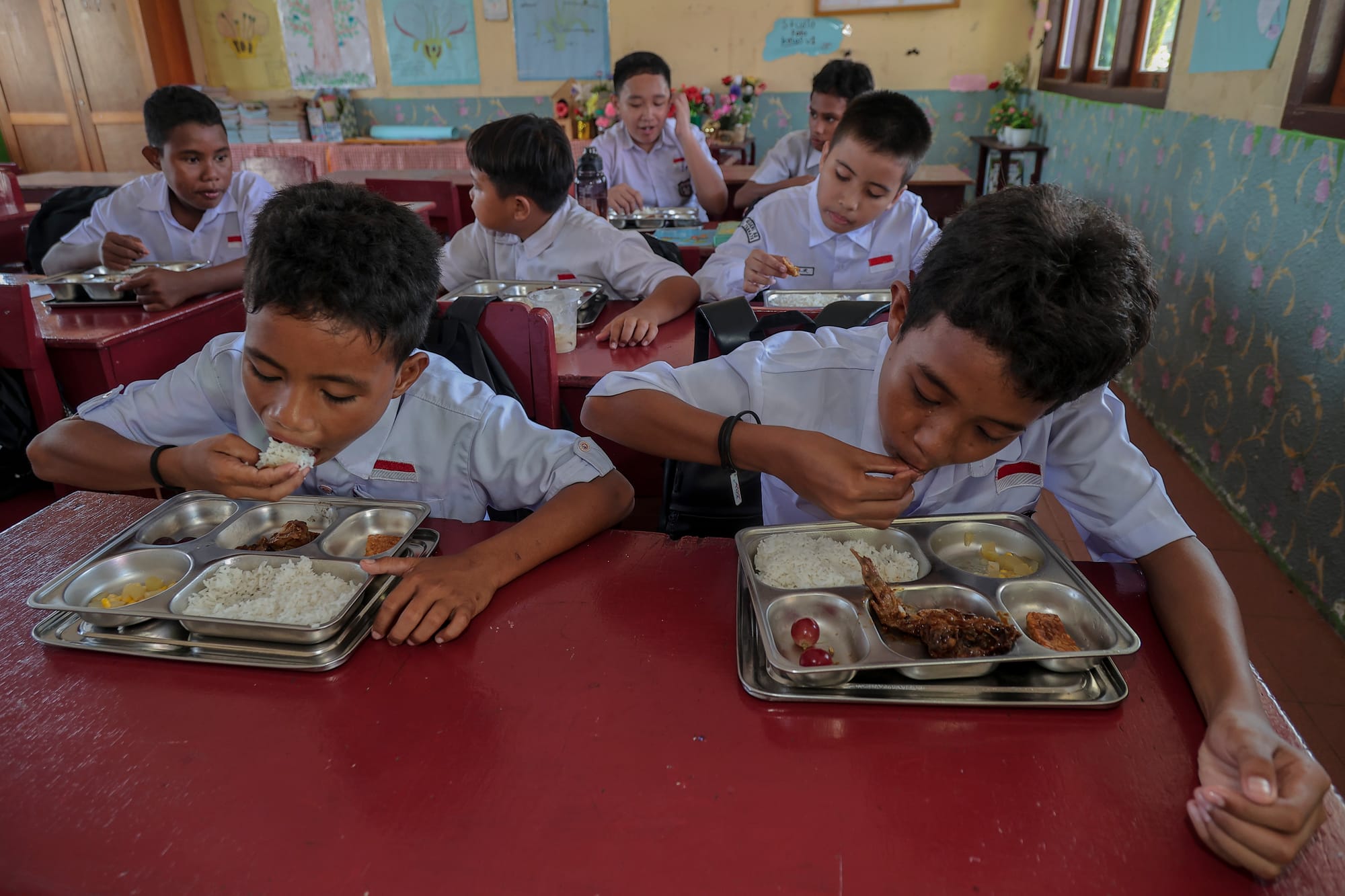
The Free Nutritious Meal Program (MBG) is in the spotlight due to two main problems, namely quality and distribution. To fix this, it must start with mapping and monitoring and evaluation using key performance indicators(KPIs).
The Business Universe Survey in September 2025 captured the implementation of the MBG through the eyes of corporate decision-makers and economic observers. A total of 35 people were interviewed. In general, the interviewees emphasized the need for the MBG program to be managed professionally.
Conceptually, the MBG program was seen as ambitious: a big budget and a big impact. However, the execution has not lived up to expectations.
By the end of September, the MBG program had reached 32 million beneficiaries and empowered more than 9,000 government partner units that served as Nutrition Fulfillment Service Units or SPPGs. Two things related to the implementation of MBG that need serious attention are the quality and distribution.
In terms of quality, the program faced the problem of students falling victim to food poisoning. The number was almost 6,000, making it classified as an extraordinary event. On the other hand, food distribution is constrained because of its wide range and uneven distribution.
Therefore, the priority target of beneficiaries must be clear. The target of reaching all of Indonesia is better, but initially it must focus on those in need.
Initial mapping
The quality and distribution issues in the MBG program can be unraveled by first conducting mapping.
First, the mapping of MBG beneficiaries. The MBG target does not need to be all Indonesian children, but focuses on those who are truly in need.
In many countries' practices, free feeding programs like this are reserved for children in need. Children who are not targeted because they are not in need can join the program by paying.
This is related to financing or funds, because there are also other programs that are priorities that also require large funds.
Although the MBG program is national in scale, only areas in dire need or very poor areas should be prioritized. This is to emphasize that the state is truly present for those in need.
Although the MBG program is nationwide, only areas in dire need or very poor areas should be prioritized.
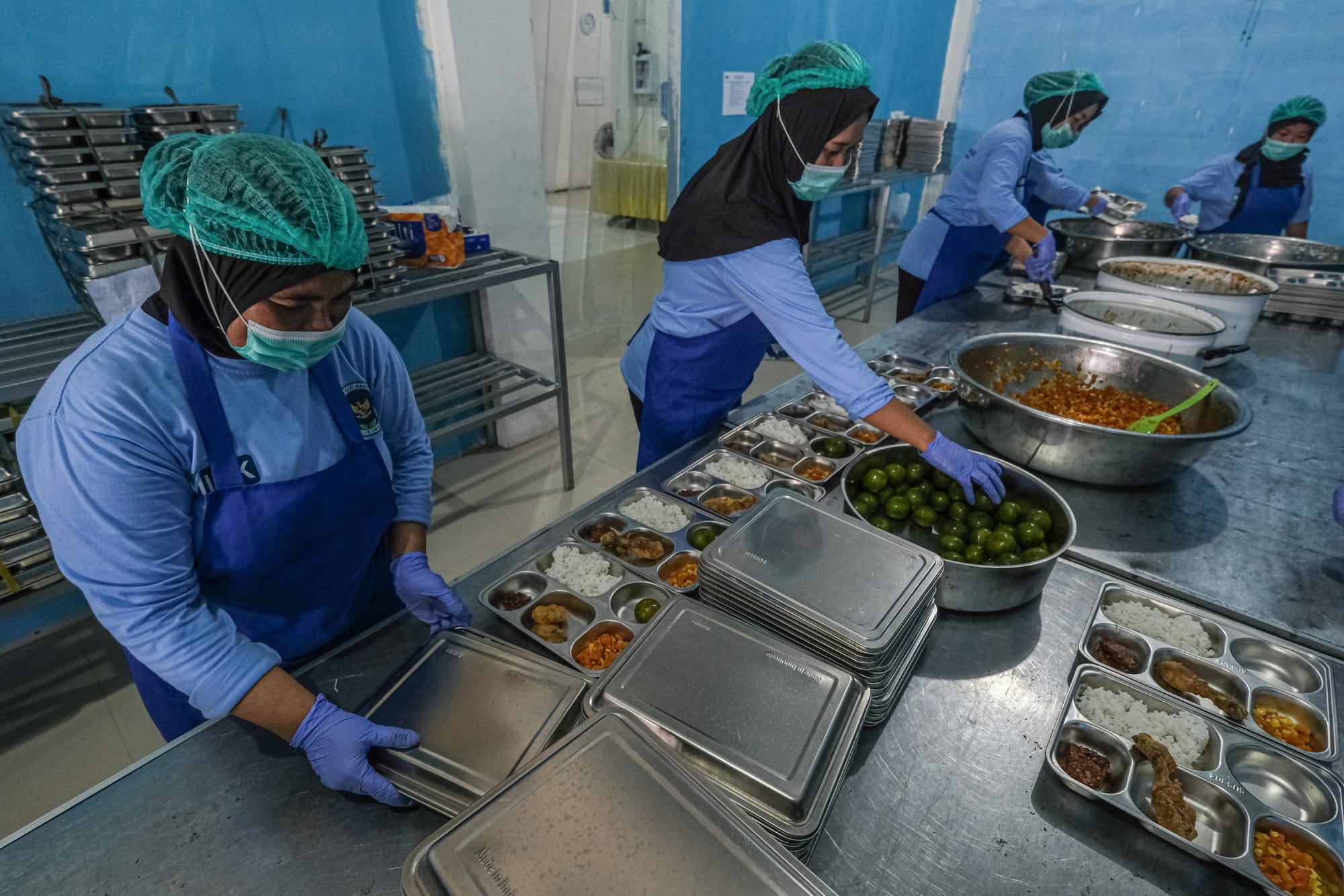
The second is related to the parties running the MBG program. The government needs to map the human resources involved in all program service processes from upstream to downstream. The business world can be integrated into the supply chain so that the materials needed for MBG are sufficiently available.
The government needs to partner with the private sector in coordination and governance that works based on standard operating procedures (SOPs). With mapping, MBG implementation is not top-down from the center. Production costs can also be reduced when procuring goods or needs directly from the first hand - farmers or fishermen.
Collaboration and coordination
The implementation of MBG requires collaboration with many parties. This is because this program is actually related to cooperatives, agriculture, trade, as well as industry for processed food and beverages. Like a company that has SOPs, the MBG program has no clear SOPs in involving these many parties.
Many UMKM in the regions, which are already familiar with good SOPs, could be involved. UMKM can supply MBG kitchens, but there is no good coordination yet. Initiatives will emerge because of the existing infrastructure in the regions.
In the regions, there is already a lot of infrastructure to support the MBG program, such as BUMDes, Village Unit Cooperatives, Joint Business Cooperatives, and so on. Whether they will be consolidated or competed with is unclear. This infrastructure for MBG should be utilized as a strong foundation to support the smooth implementation of MBG.
By following regional strengths, the MBG program will ultimately drive the local economy, including local food. By utilizing the strength of assets in each region, MBG implementation can be more efficient and effective. The principle is to use and empower existing assets rather than starting from scratch.
The program must be able to add value when producing goods and services to meet MBG needs. And, it must be free from administrative and bureaucratic constraints. This is where coordination between stakeholders is important.
In the regions, there is already a lot of infrastructure to support the MBG program, such as BUMDes, Village Unit Cooperatives, Joint Business Cooperatives, and so on.
Monitoring implementation
After mapping beneficiaries based on priorities and field coordination is carried out, the implementation of MBG programs for sustainability relies on monitoring and evaluation (M&E) activities. M&E is based on a number of key performance indicators (KPIs), just like those carried out in companies.
These indicators are formulated together with reference to the many aspects to be achieved. It is not only based on quality indicators. If this is done transparently, Indonesians can have more confidence and will work together to make this good project a success.
From the thoughts of the speakers from the business world, it can be concluded that to overcome quality problems, mapping and monitoring and evaluation must be done. Meanwhile, to overcome distribution problems, it can be done through coordination or collaboration between parties down to the regions. This will be the key to the success of the government's programs.
Author: Gianie