

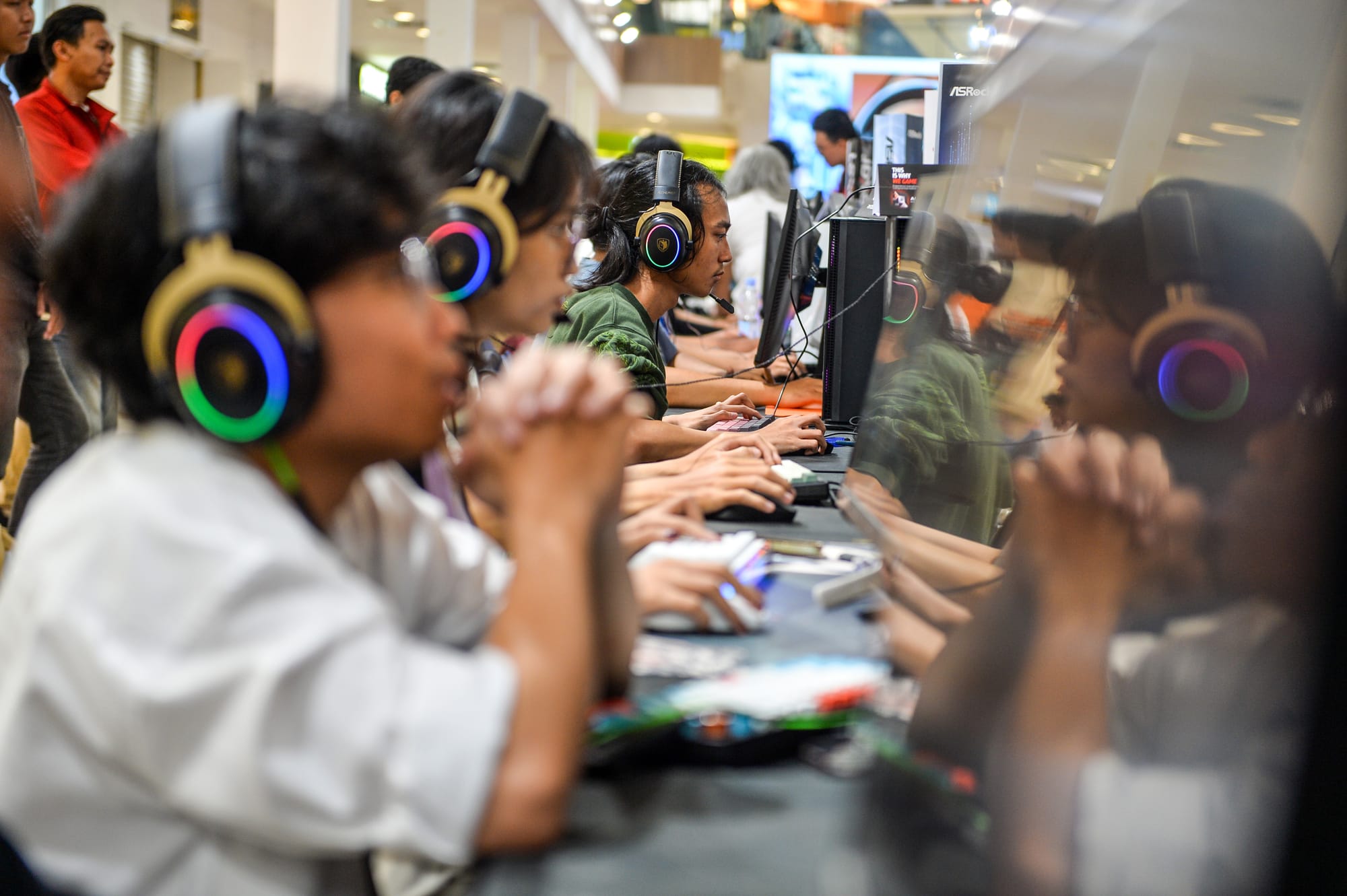
The government's plan to restrict access to the online game PUBG mobile has drawn strong reactions from national game industry business players, who consider the plan to be reactive and potentially hamper the development of the national game industry.
Martha Wigoeno, Daily Chairperson of the Indonesian Esports Association (IESPA), said that the plan to limit PUBG is quite unfortunate considering that this industry has made many achievements and opened thousands of new jobs.
"It's unfortunate that all forms of child abuse are always attributed to the negative impact of games. I think this is an 'easy' response to find a scapegoat for this incident. In many cases like this, the target is always 'the game is wrong' or 'the child is affected'," he told SUAR in Jakarta, Wednesday (12/11).
The plan to restrict access to the online game PUBG, an online multiplayer battle game, originated from President Prabowo Subianto's consideration following the explosion incident that injured 96 students at SMA Negeri 72, Kelapa Gading, North Jakarta.
Minister of State Secretary Prasetyo Hadi stated that the consideration is one of the proposed solutions to the negative influence and exposure to violence against children and adolescents that is suspected to come from online games.
"Because, it does not rule out the possibility that this online game, there are some things that are not good, which might affect our future generations," Prasetyo said, as aired by the Presidential Secretariat on Sunday (9/11/2025).
In fact, IESPA also supports the government's steps as long as it is still in the right corridor. But Martha emphasized that games do not always have a negative impact. She pointed out that some Indonesian esports athletes have contributed 3 gold in the SEA games, and many world champions in other gaming branches.
"Currently, Indonesia is the spearhead, and leader in the race of esports and video game achievements in South East Asia," he said.
According to him, instead of limiting it, it is better for the government to direct the game industry in a more positive direction like in South Korea.
"So that later in Indonesia, we will not only be consumers of video games and the industry, but can become producers and powerhouses in this multi-billion dollar industry," he said.
Has gone through editing
Martha explained, just like the movie, media and other entertainment industries, games that are released have also gone through a screening process so that there are various ratings in each game such as children, teenagers, and adults.
"In several countries such as China, India, Vietnam, some functions of the game are restricted, such as blood graphics being changed to green or other effects, the word death or "death" becomes "knock out" and others. This is a form of game restriction that is common and applied in many developing countries," he said.
According to him, the cause of child abuse cannot be attributed only to a single factor but also other factors such as the family environment and playground.
"The environment in which children grow up and play is equally important in influencing their mindset. A child can behave in an anarchic manner, even if they don't play games, if they grow up in an environment that normalizes violence," he said.
Comprehensive, evidence-based
Despite having sufficient grounds, restrictions on access to online games tend to depart from partial assumptions. In fact,evidence-based public policy requires not only a holistic study, but also a constructive approach so as not to harm the national game industry as one of the pillars of the creative economy in the digital sector.
Chairman of the Association of Indonesian Digital Games and Content (AGKDI) Hendri Andrigo explained that globally and in Indonesia, there is no scientific and empirical evidence that shows a direct correlation between online games and child abuse. Basically, games are a medium of entertainment, a space for expression, and a form of creativity and positive competition, not a source of exposure to violence.
"The policy of restricting online games should not be done reactively. In many cases, the problem is not the game, but the lack of interaction time and moral guidance from parents. Elements of violence can also come from movies, music, cartoons, and social media which are much more difficult to moderate," Hendri said when contacted. SUAR, Wednesday (12/11/2025).
Hendri assessed, before there is strong scientific and empirical evidence, blaming games in general is a shortcut that is not a solution. A blanket restriction policy, he emphasized, has the potential to have a broad impact on the digital ecosystem and the national creative industry, especially national game developers.
Moreover, according to Hendri, various behavioral psychology studies do not show a significant correlation between playing games and violent behavior. Thus, exposure to violent game content does not automatically cause aggressive behavior in the real world. The effects of games tend to be situational, depending on the social context, emotional state, and parenting in the family environment.
Not only that, restrictions can also hinder the nurturing of young esports athletes, reduce investment interest, and disrupt the concentration of various parties who are building esports as one of Indonesia's promising future sports.
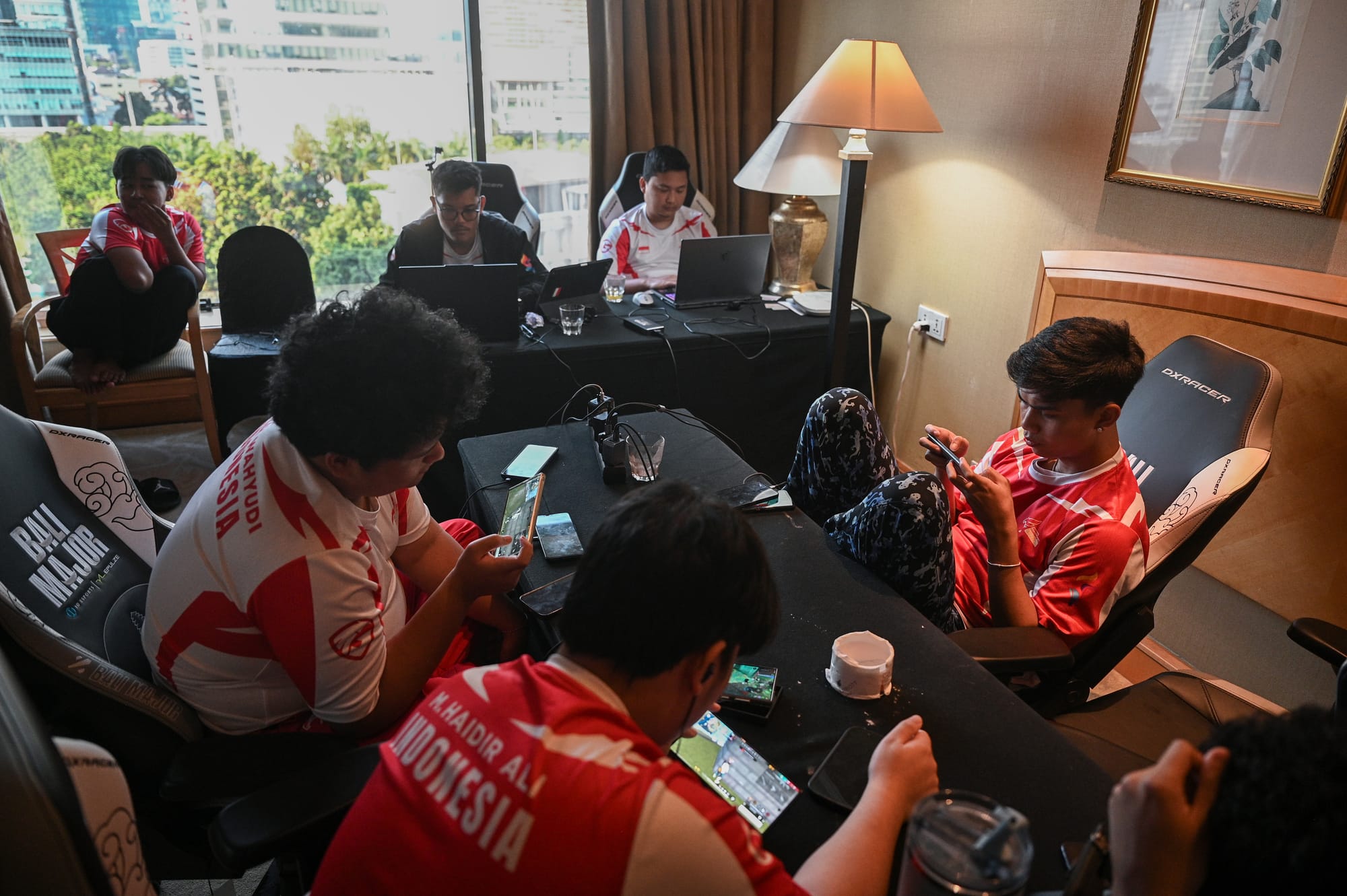
Therefore, Hendri encouraged the government to consider a three-step approach that is more holistic and constructive:
- First, increasing the digital literacy of children, parents and educators, along with increasing interaction time between parents and children.
- Second, implementing a strict game rating system that is integrated with the Entertainment Software Rating Board (ESRB) system in the Google Play Store, and covers national and international games.
- Third, encourage the development of local educational games, so that children can still get positive entertainment and build character.
"AGKDI is ready to collaborate with the government to create a safe, healthy and productive digital ecosystem, without having to kill the potential of Indonesia's creative economy and e-Sports potential in the future," concluded Hendri.
Sharing Hendri's view, Agate Games International CEO Shieny Aprilia believes that the government needs to look at the explosion at SMA Negeri 72 holistically. Shieny emphasized that the alarming incident was not only due to online games. However, she agrees that restrictions on online games are aimed at reducing negative impacts such as addiction or reducing the possibility of games being accessed by underage users.
"If so, restrictions must be carried out by involving related industry players so that the policies enacted are balanced between the side of minimizing the adverse effects on underage users , with the business impact on the game publisher ," Shieny said when contacted, Wednesday (12/11/2025).
Precise supervision
The need for digital literacy training for parents allows the practice of supervising online game play by children and adolescents to be more optimal. This is because the rich variety of online games can actually provide learning for children, not just a medium for exposure to violence.
Creative economy practitioner and former Deputy for Destination and Infrastructure Development at the Ministry of Tourism and Creative Economy Hari Santosa Sungkari believes that restrictions on online games are not the first proposal, especially in response to the adverse impact of games on the cognitive and psychology of adolescents. However, the facts show that social media has a greater share in children's exposure to violent content.
"That's why some states and countries tend to regulate the use of social media for minors. The state of Florida, United States, regulates restrictions on the use of social media for children under 12 years old, while Australia limits it to 16 years old and under," Hari said to SUAR.
In the current flow of technological development, Hari recommends that the issue of exposure to violent content be seen within a larger framework, namely cybersecurity. This is because, not only online games, the inappropriate use of artificial intelligence can also be harmful and have a wider impact on the psychomotor of children who are still in their infancy.
"The challenge is for parents to be able to regulate what their children consume. Restrictions are not the solution, because games are not only about hitting, but also many strategy games and brain teasers that are beneficial for children. These should not be banned, but their consumption should be regulated within reasonable limits," Hari concluded.