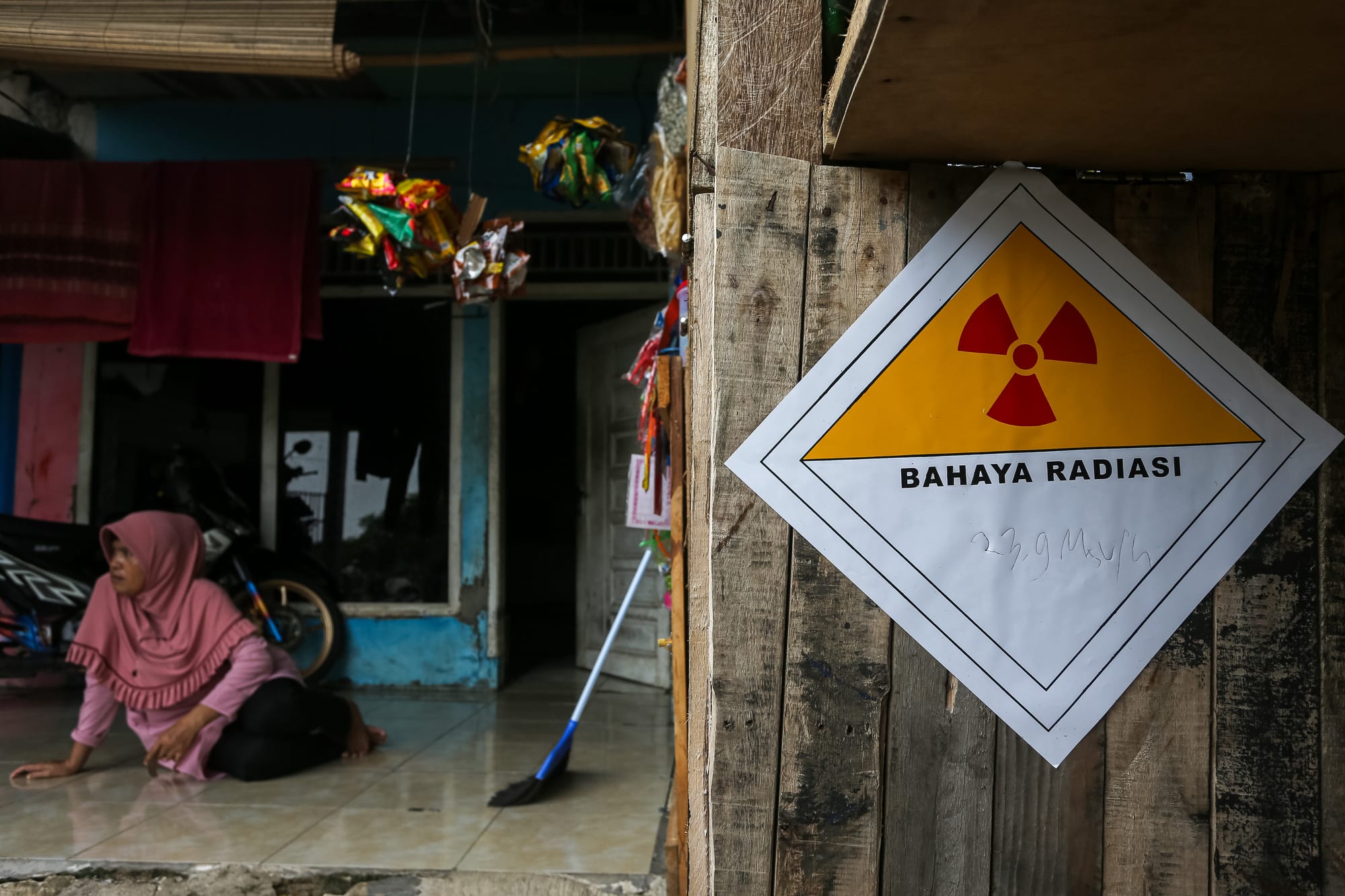
The activities of residents in the Cikande Modern Industrial Estate (KIM), Serang, Banten seem to be running normally, even though this area has recently been suspected of being the center of exposure to the very dangerous Cesium-137 radionuclide. When SUAR visited the area last Friday, October 17, 2025, there was no panic from the surrounding community or workers. Restrictions on community mobility are also not strict.
Residents were seen doing their routines as if there was nothing threatening, a number of students in uniform were seen neatly passing by on motorbikes in areas exposed to radiation, without wearing masks or other protection. From the roadside of the radiation red zone, the sound of factory equipment engines is quite loud, indicating that a number of factories are still operating.
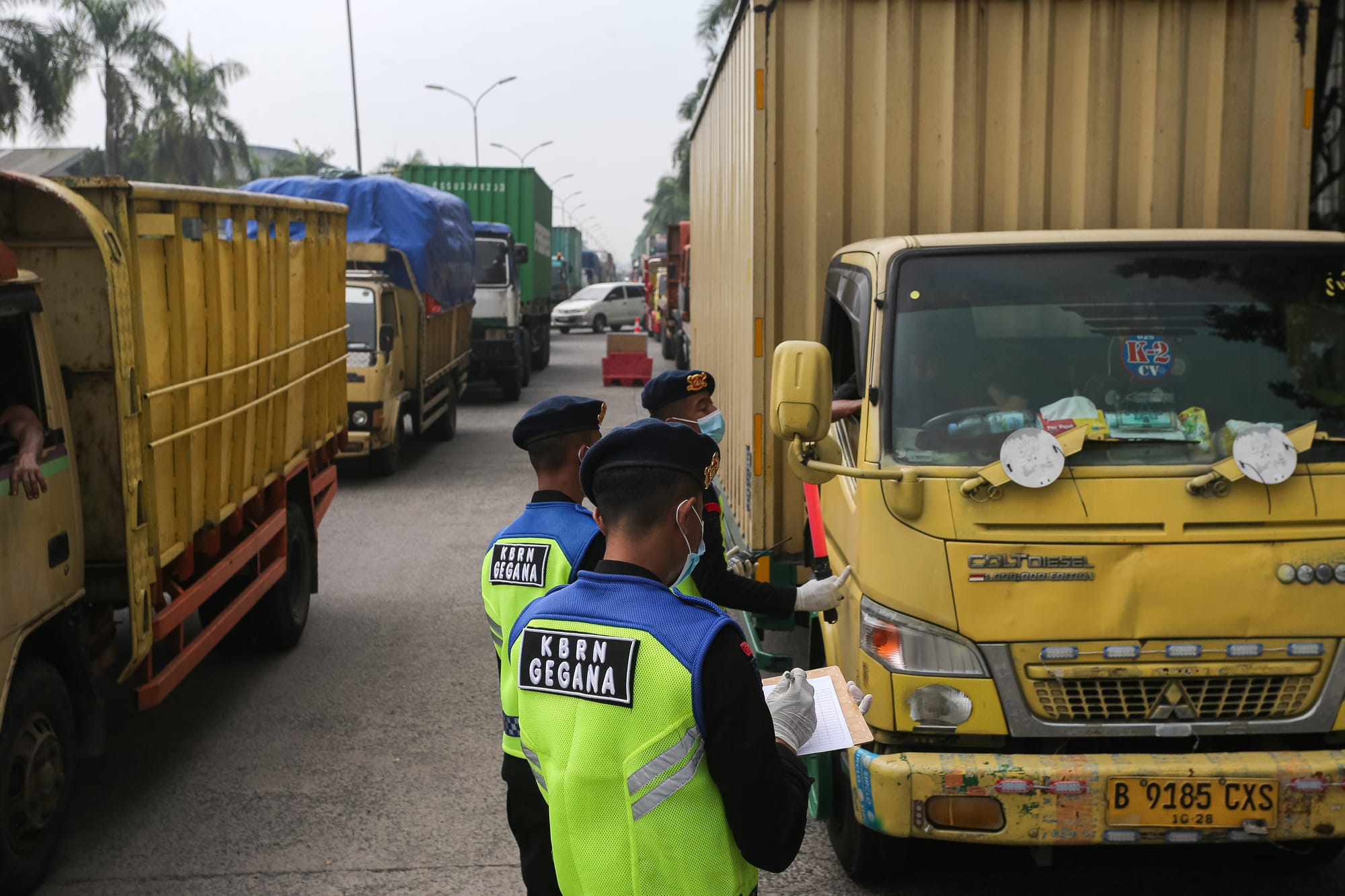
At the exit of the industrial estate, large trucks queue up to be checked one by one. Uniformed officers check carefully to ensure that the vehicles do not carry contaminants outside. However, unlike the trucks, private vehicles such as cars and motorcycles rode freely without inspection. The flow of vehicles continued, as if undisturbed by the emergency status that enveloped the area.
Right next to the iron stalls, the point that was previously declared contaminated, there are two food stalls that are still operating. Some customers were even seen inside the food stalls.
After 10 days, on that day, the warning signs in the area were finally removed by officers from the Cesium-137 (Cs-137) Radionuclide Radiation Handling Task Force. The warning sign was previously installed in front of the iron stall in Kedung Laban village, Barengkok village, Kibin sub-district, and the PT Jongka Indonesia factory in Cikande Modern Industrial Estate, Serang district, Banten.
Since October 7, 2025, several points in KIM have been declared contaminated with Cesium-137 radiation. However, after decontamination was carried out at several points in the region, the Government ensured that the handling of Cs-137 contamination in Cikande, Banten, was carried out intensively.
"We understand the concerns of the community and want to emphasize that the situation is currentlyunder control," said the Head of Diplomacy and Communication of the Cs-137 Radionuclide Radiation Hazard Handling Task Force, Bara Krishna Hasibuan, at the location.
The discovery of CS-137 radionuclide contamination in the Cikande Modern Industrial Estate (KIM) began when containers of frozen shrimp from Indonesia entered several US ports, around August. However, the Food and Drug Administration (FDA) or the Food and Drug Administration (BPOM) of Uncle Sam's country immediately rejected the shrimp containers from Indonesia, because their detection equipment showed radioactive content beyond the threshold.
The incident triggered a wave of scrutiny in the country. The National Nuclear Regulatory Agency (Bapeten), Indonesia's nuclear regulatory agency, together with the Ministry of Environment and Forestry (LHK), the National Research Agency (BRIN), the Ministry of Marine Affairs and Fisheries (KKP) and related institutions immediately conducted an investigation.
After searching, they found that the source of contamination was in thescrap metal processing area inside KIM Cikande. Bapeten also secured scrap metal indicated to contain Cesium-137 (Cs-137), one of the artificial radioactive isotopes that does not occur naturally.
These discoveries occurred at a number of points in scrap metal stalls and material stockpiling sites around the industrial area. As the investigation progressed, authorities expanded the inspection radius to a 2-kilometer radius around the industrial zone. Several points with high exposure rates, which showed Cs-137 levels reaching 875,000 times above natural radiation exposure, were cordoned off.
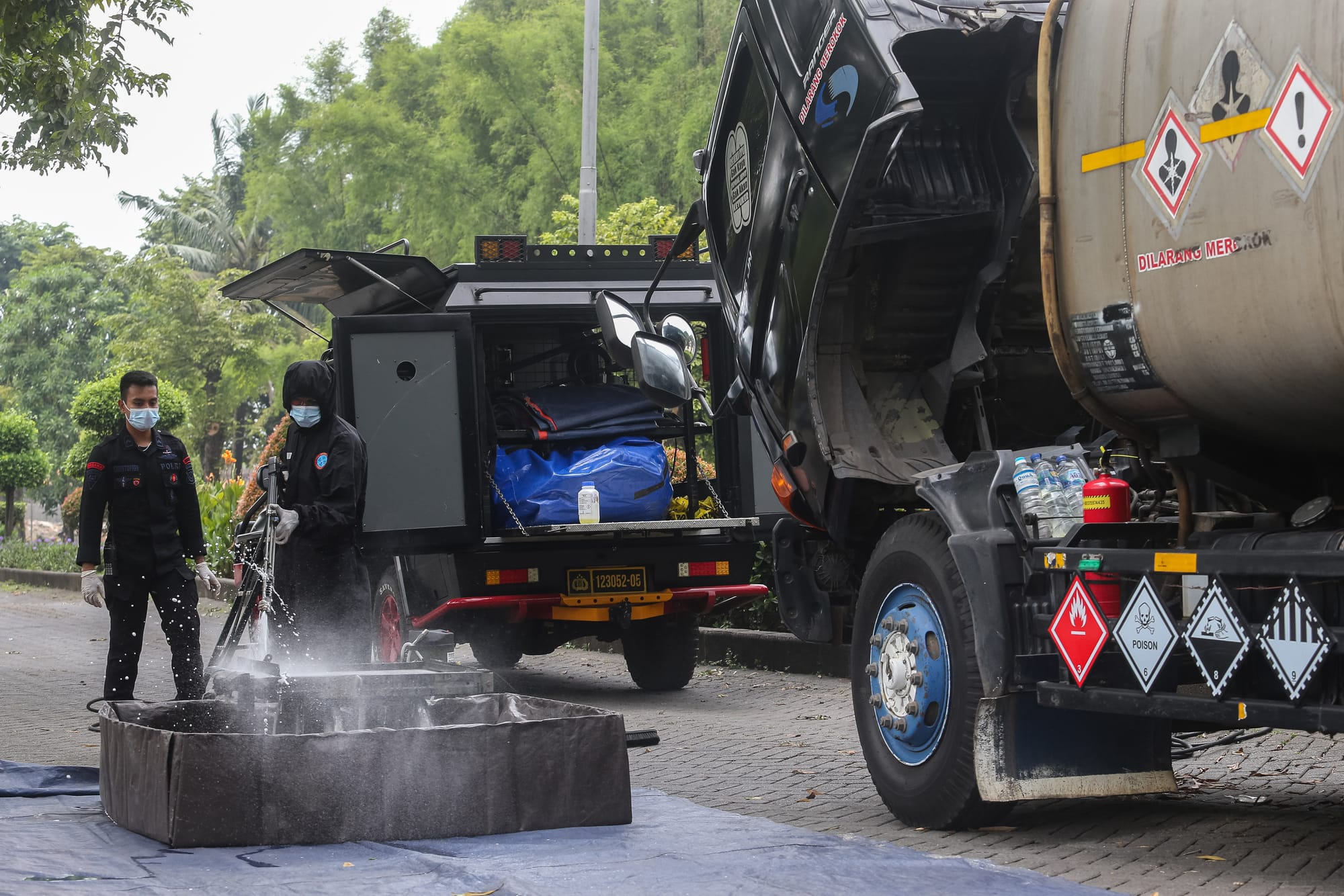
On September 23, 2025, Bapeten and related agencies moved a number of contaminated materials to a temporary security site within the industrial area. The removal activity involved a joint team from Bapeten, KLHK, BRIN, and the Emergency Response Unit (STD) as well as the KBRN Brimob team.
The government then designated KIM Cikande as a special event status for Cs-137 radiation contamination. All activities in and out of the area will be strictly controlled through a radiation monitoring system(Radiation Portal Monitoring).
Exposure has not yet spread to the community
After the source of radiation was found, the authorities then carried out decontamination until no more points were found that were detected to emit radiation. Of the total 22 factories in the Cikande Modern Industrial Estate that were contaminated with Cs-137, 20 factories have completed decontamination and declared clear and clean. While 2 factories are still being decontaminated.
Then, from 13 contaminated areas, in the form of iron stalls and junkyards that are also contaminated, 2 locations have also been declared clear and clean. While other contaminated areas are still in the intensive process of decontamination, which is expected to be completed as soon as possible. "The decontamination progress is going fast. We are optimistic that the entire area will be clean and safe in the near future," said Bara Krishna Hasibuan, Head of Diplomacy and Communication of the Cs-137 Radionuclide Radiation Hazards Task Force.
In addition, the Task Force through the Law Enforcement Division will carry out PPLH Line releases on 1 factory (PT Jongka Indonesia) and 1 contaminated area (scrap metal stalls in Sadang Village) which were declared clear and clean upon verification by the BRIN and Bapeten authorities.
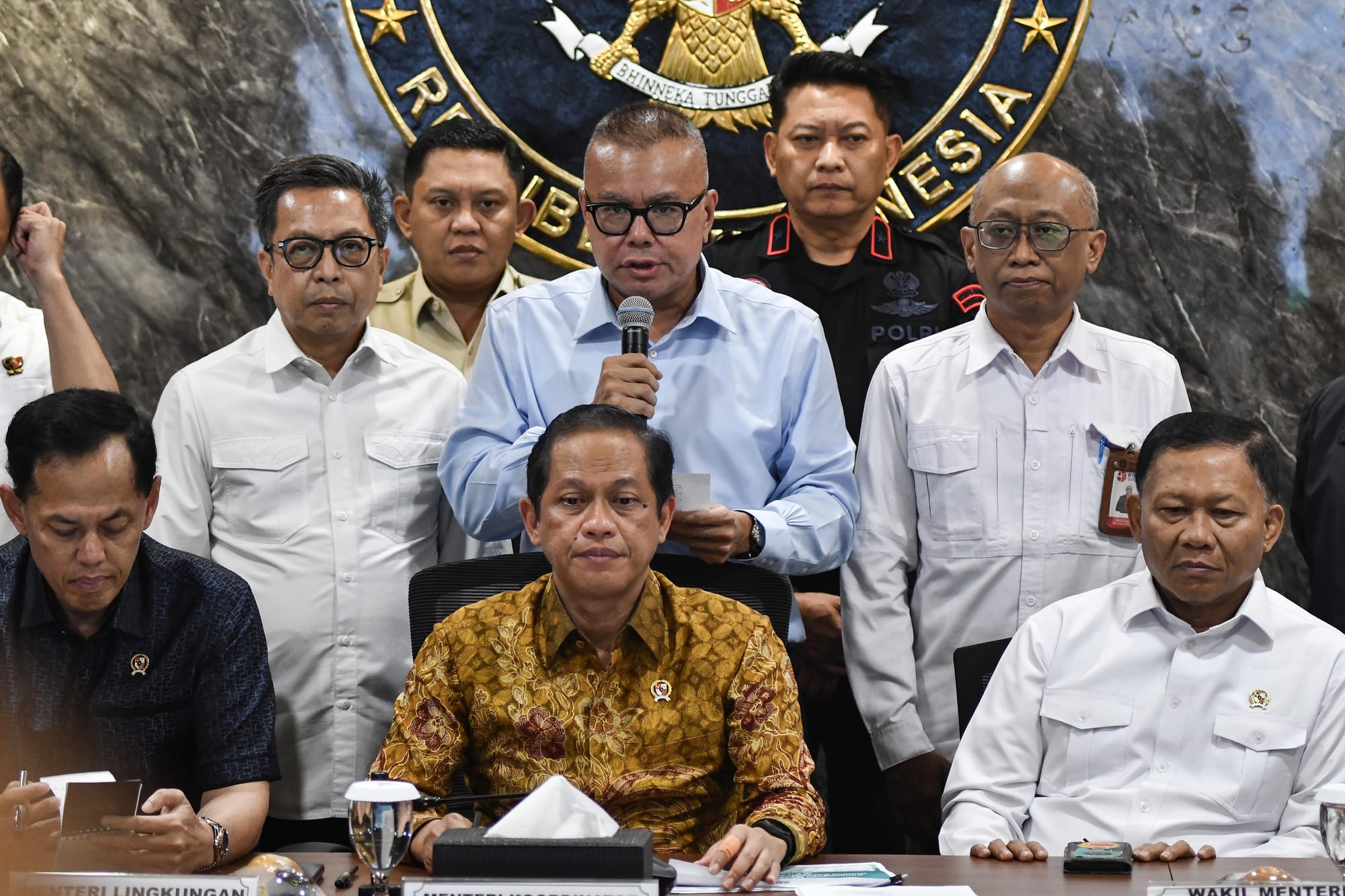
The Task Force also conducted comprehensive education to workers and local residents. This is related to counseling, providing health information, and information boards in several locations and relocating residents. "We want people to get the right information, not from unclear sources. Don't hesitate to ask officers or access our official channels," Bara said.
He added that he had succeeded in preventing radiation from spreading out of the Cikande Modern Industrial Estate.
"No one (community) has been exposed, so far we have managed to contain it, so it is not spreading, we are overcoming how to prevent contamination," said Bara.
no members of the public were reported to have been exposed to radiation, apart from 9 workers who were reportedly exposed and have been taken to hospital.
Bara emphasized that there were no people reported to have been exposed to radiation, apart from 9 workers who were reportedly exposed and have been taken to the hospital for further examination, although they have been able to return to their respective homes. "However, health checks are still being carried out to provide education," he explained.
The Task Force along with all other related parties also continue to handle the location, including conducting investigations related to the origin of the spread of radioactive substances. Bara also appealed to the public not to be overly afraid, but to remain vigilant.
"The public must remain calm, because this contamination is not spreading, and we are actively tracing any contaminated facilities. So people don't need to worry, if someone is exposed, we will immediately send them to the hospital to be referred and treated," he said.
Shrimp industry threatened
The shrimp rejection incident in Indonesia had a far-reaching impact. This incident triggered the US Food Authority (FDA) to issue an import alert on Indonesian shrimp products. As a result, the entire shrimp industry was affected by the incident.
"The shrimp industry is not at fault at all. Just because one company made a mistake, the whole industry was hit," said one of the administrators of the shrimp industry organization, Shrimp Club Indonesia (SCI).
SCI, the source said, understands the FDA's move to question the origin of the radioactive contamination, considering that Cesium-137 usually comes from nuclear reactor activities, not from food products. However, it assesses that the Indonesian government's response is still not fast enough and inappropriate. "Maybe because of the government's lack of dexterity, we got another import alert 99-52. Initially, we were only hit by Import Alert 99-51," he said.
Import Alert 99-51 issued by the FDA was initially aimed at one company responsible for shipping frozen shrimp to America, PT Bahari Makmur Sejati. But in its development, it was then the FDA that established strict supervision of shrimp products from Indonesia, especially from the Java and Lampung regions, to ensure the absence of radioactive Cesium-137 contamination. Of course, this could be detrimental to the ecosystem of the shrimp industry in Indonesia.
Even so, he sees the positive side of this situation. According to him, the FDA still opens export opportunities with an additional condition, namely that every shipment from Lampung and Java must be accompanied by a special certificate from the government. "We can make this an opportunity for global branding, that Indonesian shrimp streams now have the highest standards, pre-antibiotic and pre-radioactive contamination," he said. "Not all other countries have such stringent tests. So this can actually be our selling point regarding food security."

However, he also highlighted the risk of delays on the part of the government that could have a major impact on the supply chain and market. "If the government is slow, the market will also be hampered. Now the effects are starting to be felt," he said.
SCI believes that this problem cannot be ignored for too long as it concerns the livelihood of thousands of people in the shrimp industry. He suggested that the government provide temporary solutions, such as additional cold storage and low-interest financing to keep factories operating while waiting for a settlement with the FDA. "Selling to the local market is not a solution. Local uptake is only 10%, while 90% is exported. How can everyone suddenly eat shrimp every day?" he said.
SCI also highlighted the need for speed, certainty and accuracy in the government's response. "A minister asked us to be careful in the media, not to be busy in public. Even though this is a common interest. If the government continues to say 'safe, safe', even though in the field the supply chain has been disrupted, it is not a solution," he said.
Although disappointed with the unresponsive handling, SCI remains confident that Indonesia's shrimp reputation can be restored if the export certification system is strengthened and run transparently. "This is a good moment. We can show the world that Indonesian shrimp exports have the strictest safety standards. If the regulations are implemented, our reputation will rise," he said.
Meanwhile, Chairman of Shrimp Club Indonesia, Andi Tamsil, admitted that apart from the American market, the domino effect is starting to be felt in other countries. "There are several countries such as Japan and China that are also starting to question the condition of Indonesia. If we don't resolve this issue with the US soon, other countries may also doubt," he said.
He assesses that international market confidence is the most vulnerable thing to lose, and it takes a long time to restore. For this reason, SCI actively encourages the government to accelerate negotiations with the FDA. They hope that the new certification will be recognized soon and exports can be reopened no later than the end of October.
According to him, this case should be an alarm for the government to strengthen the cross-sectoral monitoring system, from Bapeten, Customs, to security forces, so that radioactive materials no longer enter the industrial or export channels.
However, despite the difficulties, he remains optimistic that shrimp farmers in Indonesia are tough workers. "We just need clarity and speed from the regulator. If certification goes through this week, everyone can breathe again," he said. For businesses in this sector, saving the shrimp supply chain is not just about the export economy. It's about safeguarding the livelihoods of thousands of families working in farms, ice factories, logistics, and ports.
Law enforcement remains in place
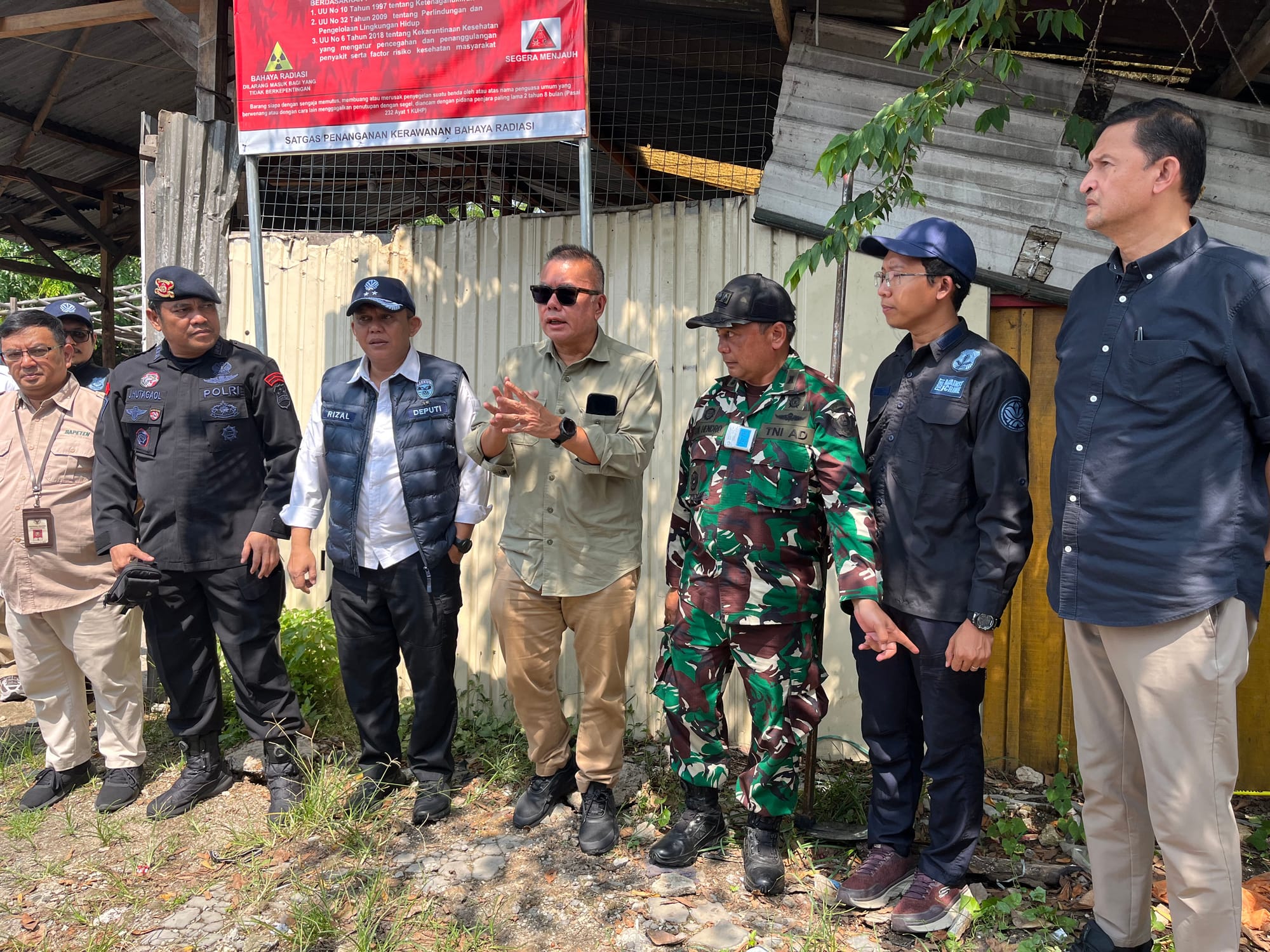
Meanwhile, the Deputy for Environmental Law Enforcement at the Ministry of Environment (MOE), Inspector General Rizal Irawan emphasized that the government will also hold companies responsible for causing this disaster. "This is called strict liability. Absolute liability. It is regulated in the law. Polluters pays principle. Whoever commits pollutants, pollution, he is the one who is responsible. So that it will be charged to them as polluters," Rizal explained.
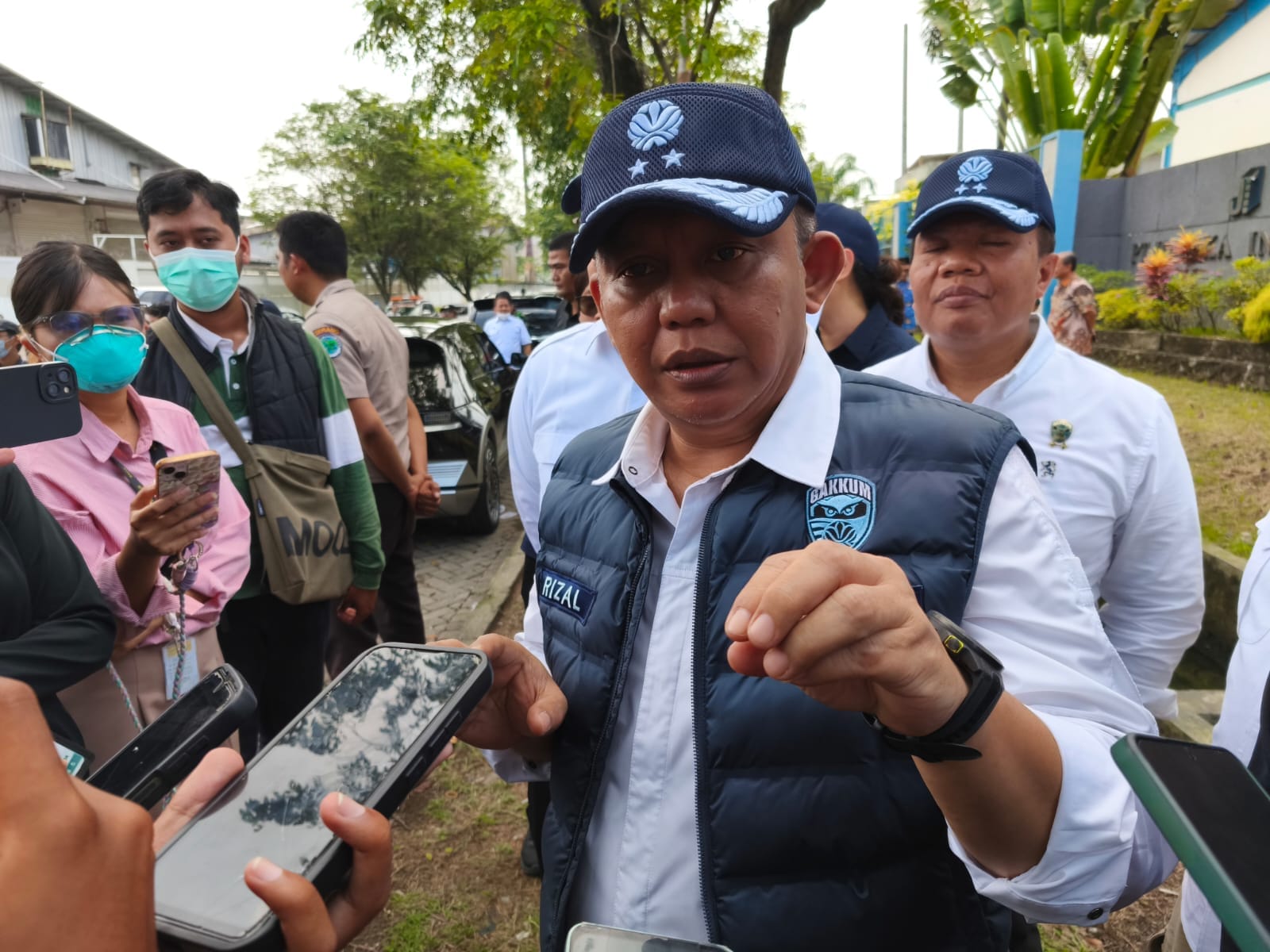
Companies that cause radioactive substance contamination or become victims are required to pay for the decontamination process themselves. Therefore, the cost of decontamination is not provided by the government.
Absolute liability is regulated in Law 32 of 2009, which is the principle that the perpetrator of environmental damage or pollution is responsible for the losses incurred without the need to prove the element of fault.
These companies were ordered to do their own decontamination. They will pay for the cost themselves. "So there is nothing to us. Please they are independent. So even though the implementation is from colleagues from both Gegana and Bapeten," he said.
Rizal also could not provide certainty regarding the origin of the radioactive substance contamination in the area. However, PT PMT is suspected to be the cause of the radioactive spread. "While we focus on PMT. Because from other (companies), after we processed the crime scene yesterday with Bareskrim because this was found in the blower, then in the wind doors, exhaust. So this still indicates that they are actually not the cause. Yes, other factories are not the cause, unlike PMT," he said.
PT PMT is strongly suspected of being the cause of the radioactive spread based on the results of the crime scene (TKP) that has been carried out. "For PMT, we conducted a crime scene investigation. It is indeed in the process furnace, the production furnace. Then there is in the raw material area. Then we do research that there are strong indications. The cause of pollution or contamination in this area is the cause of PMT.
PT Jongka Indonesia in the area, which had been declared clean and clear, was referred to by him as a victim, not the main place for the spread of radioactive material. He also has not been able to explain where the radioactive material that was then scattered in the area came from.
He asked all parties to wait for an explanation from the National Police Criminal Investigation Agency, which is investigating the criminal potential of this case. "Because I am not the one handling it. I don't want to lose, because from our data, in the meantime, PT PMT does not import," he said.
Mitigation and problem-solving measures
Regarding concerns about the impact of Cs-137 radionuclide contamination on the industrial sector, the Ministry of Industry (Kemenperin) ensures that public safety and the sustainability of industrial activities remain top priorities after this case.
Minister of Industry Agus Gumiwang Kartasasmita emphasized that the government has taken mitigation and handling steps in a coordinated manner across ministries so that the issue does not have an impact on public health and the investment climate.
"This radiation issue must be handled quickly, scientifically, and transparently so as not to disrupt public confidence in domestic manufactured products," Agus said.
According to Agus, coordination has been carried out with the Coordinating Ministry for Food, Bapeten and local governments to inventory and control potential contamination from the radiation sources found. A joint team across ministries/agencies has also conducted direct monitoring in the field.
Agus added that public safety issues are also closely related to export market confidence in national products. Therefore, the Ministry of Industry continues to coordinate with relevant agencies to ensure that the handling of radiation issues does not have an impact on the reputation of the Indonesian industry in the global arena.
"We guarantee that Indonesia's industrial estates, including Cikande, remain a safe and competitive place for investment. This issue will be a momentum to strengthen industrial safety management and environmental governance systems in our industrial estates," he said.
In addition, the Ministry of Industry is preparing more comprehensive guidelines for strengthening industrial environmental governance. An integrated monitoring system between area managers, local governments, and technical ministries will be developed to prevent similar risks in the future.
Thanks to this compact work, the resolution of this problem also began to get a bright spot, after the Ministry of Maritime Affairs and Fisheries (KKP) received recognition from the US Government as a Certifying Entity (CE) for shrimp exports to the United States.
With this recognition, shrimp products that can enter the US market must have a Quality Certificate issued by KKP. "To be able to enter the US, it is mandatory to use a Quality Certificate issued by KKP, especially for exports from Java and Lampung," explained Ishartini, Head of the Quality Control and Supervision Agency for Marine and Fishery Products or KKP Quality Agency.
The establishment of CE for Indonesian shrimp exports is closely related to the implementation of import tightening regulations by the US through Import Alert 99-52 which imposes additional requirements, namely certification of free Cesium 137 contamination in shrimp products by the competent authority of the country of origin officially recognized by the FDA.
According to Ishartini, the Import Alert 99-52 rule for Indonesian shrimp by the US Government is not a red list or rejection, but only an additional requirement for shipments originating from shrimp UPI (fishery companies-ed) located in Java and Lampung, which must be accompanied by a Cesium 137 Free Quality Certificate. "Meanwhile, shrimp exports to the US other than from the two regions remain valid as usual," added Ishartini.
Ishartini explained that KKP as CE is the only agency that issues quality certificates free from Cesium 137 contamination in shrimp products through a series of certification activities involving the Indonesian nuclear authority, Bapeten and the National Research & Innovation Agency or BRIN.
Coordination and data are key to mitigation
Faculty of Agricultural Technology lecturer Angga Dheta Shirajjudin Aji, who researches waste treatment and environmental chemistry, explained that Cs-137 contamination is more often found in sediment and solid dust than water. That is why liquid waste treatment is not enough. "The focus should be on industrial solid residues, including ventilation systems and ash storage," he said.
He also highlighted the long-term risks to the food chain and trade. "If this contamination enters farmland or waterways, crops and fish can absorb it. The impact is not only on health, but also on our export reputation. Other countries can immediately reject commodities from affected areas," he said.
As a comparison, Angga mentioned Japan's steps after the Fukushima disaster. "They installed radiation portal monitors in ports and industrial areas. So any goods or vehicles coming in and out can be detected immediately if they contain radioactivity. The reporting system is also open and based on public data. Indonesia can emulate that," he suggested.
However, according to Angga, Indonesia's biggest problem is coordination. "We have many institutions but their data is not connected. There is no integrated system that can track radioactive sources from start to finish," he said.
He encourages the implementation of a cradle-to-grave tracking system for radioactive materials: from purchase, use, to disposal. "Ideally, every radioactive source should have a digital identity, either through a QR code or NFC tag, so that it can be monitored continuously," he explained.
In the long term, he thinks Indonesia could develop a "radiation-free" certification for products from high-risk industrial areas such as Cikande. "It's not just about safety, but also public trust. The business world will be calmer, and people will know their products are safe," Angga said.
He also highlighted the challenges of the tropical environment. "High rainfall makes it easier for Cs-137 particles to be carried by water into rivers and rice fields. So closed drainage management and hydrological monitoring are key," he said.
Angga also reminded that this effort will not be effective without investment in laboratories and human resources. "Our radiology laboratory capacity is still limited, especially in the regions. Whereas rapid detection is very important to prevent wider impacts. Indonesia needs to strengthen radiochemistry and ecotoxicology research so that it can move quickly when cases like this arise again," he said.
Mukhlison, Dian Amalia, and Gema Dzikri