
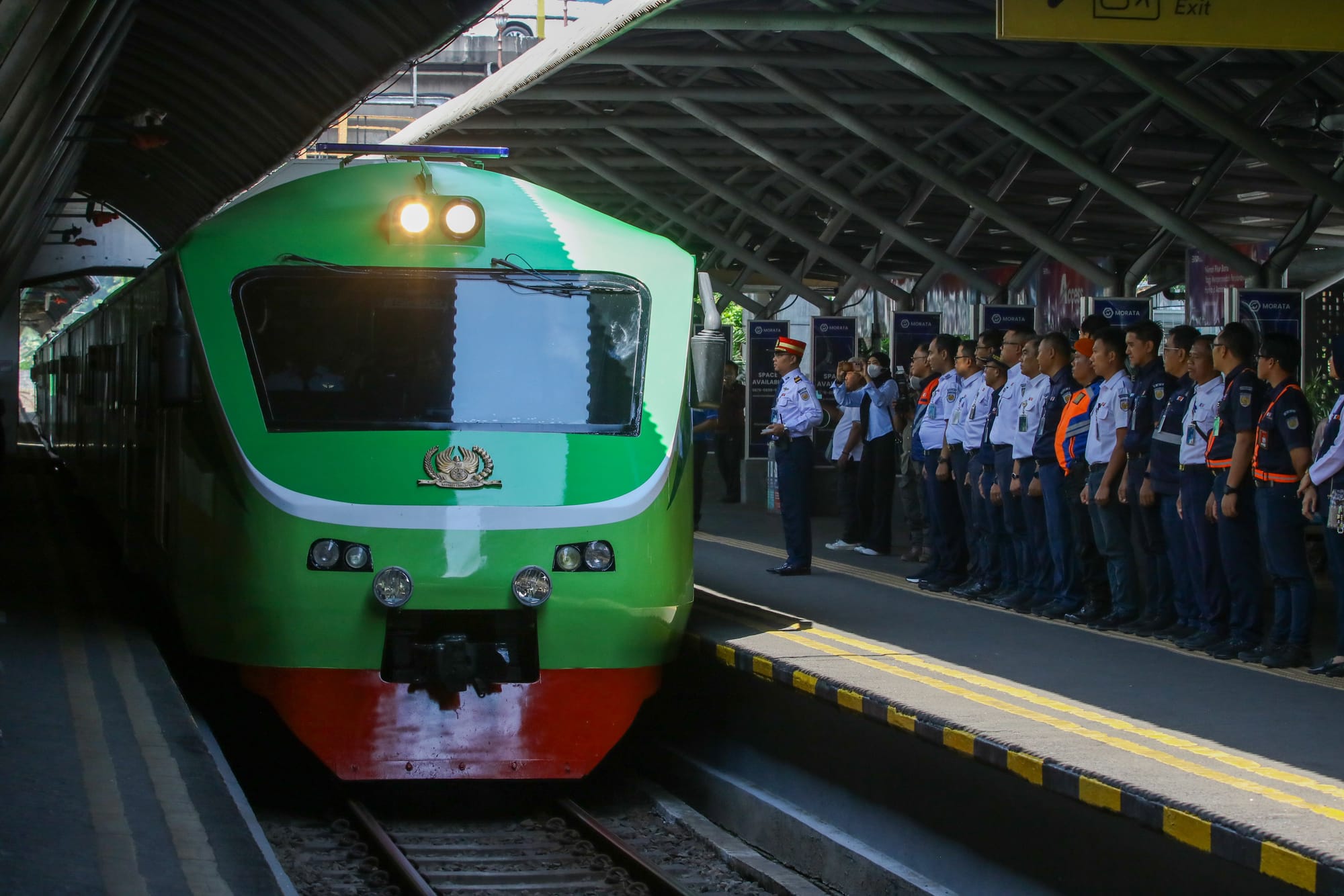
The plan to operate a new Jakarta–Bandung high-speed train called "Kilat Pajajaran," initiated by the West Java government and PT Kereta Api Indonesia (KAI), has sparked controversy. Various groups, particularly logistics companies, consider this plan inappropriate in terms of passenger demand amid fierce competition.
The Pajajaran Express Train, which is planned to launch on November 25, 2025, will connect Jakarta and Bandung, cutting travel time to between 1 and 1.5 hours. This high-speed train service is also planned for the Garut-Tasikmalaya-Banjar route, with an estimated travel time of around 2 hours.
Founder & CEO of Supply Chain Indonesia (SCI) Setijadi believes that the passenger market segment is already saturated, so new similar services are not appropriate from an economic perspective or in terms of transportation network efficiency.
"The train development plan should be shifted to strengthening rail-based logistics rather than transporting passengers, with the aim of streamlining industry in West Java," Setijadi told SUAR Jakarta (15/12).
According to him, passenger connectivity between Jakarta and Bandung is served by various modes of transportation and operators. These include the Parahyangan train, which is a popular choice due to its direct access to downtown Jakarta; the Whoosh high-speed train, which offers the most competitive travel time; and travel and shuttle services, which dominate point-to-point transportation .
In addition, the Jakarta-Cikampek II Toll Road (Japek II), with an estimated travel time of 1.5 hours, will also attract private vehicle users, while travel and shuttle services will become more competitive.
"Additional services such as the Kilat Pajajaran train will not receive sufficient demand and risk burdening train operators without significant added value," he said.
In addition, with KAI indirectly holding the largest share in KCIC (Whoosh), there will be competition between three similar services (KA Parahyangan, Whoosh, and Kilat Pajajaran), all of which are "owned" by KAI.
West Java is Indonesia's largest manufacturing base, covering the automotive, electronics, textile, and food sectors, which require strong logistical support. In 2024, there will be 8,239 medium and large manufacturing companies and 38 industrial estates located in West Java.
Based on the analysis of the SCI research team, the volume of exports from Tanjung Priok originated from Bekasi (32%), Karawang (29%), Purwakarta (8%), Bandung (6%), Bogor (4%), and Cilegon (8%).
Meanwhile, the import destinations were Bekasi at 23%, Karawang at 36%, Purwakarta at 9%, and Bandung at 6%.

Superior rail logistics
A similar sentiment was expressed by Muhammad Akbar, a researcher at the Indonesian Transportation Society (MTI), who said that the Padalarang–Purwakarta route has a relatively greater slope than the flat Pantura route.
However, technically speaking, this line was originally designed for freight trains, not purely for passenger trains.
"In fact, this route has long been used by heavy freight trains carrying cement, fuel, and containers. This means that in terms of carrying capacity, this route is capable," he told SUAR Jakarta on Monday (12/15).
He continued, the challenges lie in operational management: the number of trainsets, locomotive traction, adjusted speed, and more intensive maintenance requirements.
"Logistics trains are not sensitive to inclines, as long as speed is not the main target. What is sought is large capacity, consistent travel times, and low cost per ton-kilometer—and these are the advantages of rail," he said.
In addition, the Padalarang–Purwakarta route connects major industrial areas (Purwakarta–Karawang–Cikarang) and is connected to the port (Tanjung Priok via Cikampek).
In terms of efficiency, he explained, one freight train can replace 30–40 large trucks. Energy consumption per ton-km is much more efficient for trains than trucks, especially for medium distances. Trains are also considered unaffected by traffic jams and traffic restrictions.
"As a regular passenger train, the risks are that it is not competitive with toll roads, the costs are high, and there are few passengers," he said.
According to the West Java Regional Revenue Agency website, the Pajajaran high-speed rail project is estimated to require an investment of Rp 8 trillion.
West Java Governor Dedi Mulyadi revealed that the West Java Provincial Government has prepared a financing plan that will be channeled through the West Java Regional Revenue and Expenditure Budget (APBD) worth Rp 2 trillion per year, starting from 2027 to 2030. The total construction time is estimated to be 4 years.
The President Director of PT KAI reported that the study for the Kilat Padjadjaran project will begin in early 2026.
Not only Bandung-Jakarta, Kilat Padjadjaran will also connect Bandung City to Banjar, via Garut and Tasikmalaya. With this project, the total travel time from Jakarta to Banjar is targeted to be only 3 hours.
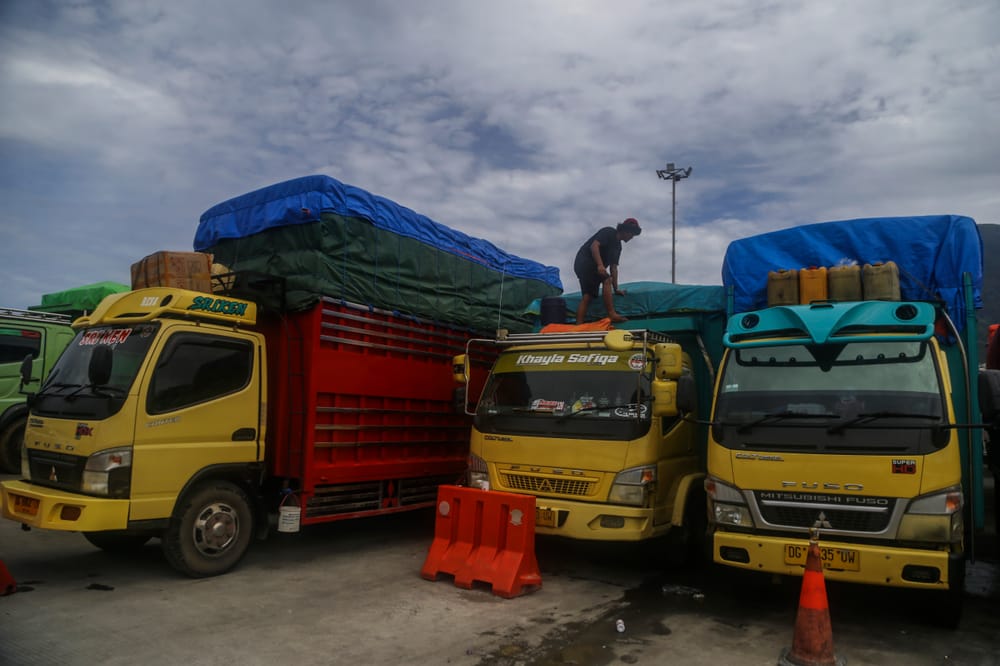
The Chairman of the Indonesian Logistics Association (ALI), Mahendra Rianto, said that there are many advantages to rail-based logistics, including capacity and cost efficiency, as it is capable of transporting large volumes of goods in a single trip, significantly reducing operational costs and costs per unit of goods compared to trucks.
Unaffected by traffic jams and poor road conditions, travel times are more predictable and scheduled, supporting the Just-In-Time (JIT) concept.
"The risk of accidents and theft is lower than other modes of land transportation, supported by a 24-hour tracking system and insurance," he told SUAR Jakarta (15/12).
Rail-based logistics are also environmentally friendly because they produce much lower carbon emissions per ton of goods, supporting the sustainability and Net Zero Emission agenda.
Industrial areas with rail access are more attractive to investors and accelerate the movement of goods from producers to consumers, thereby boosting the regional economy.