The movement of Indonesian tourists abroad, or what is known as domestic tourists, indicates an improvement in the national economy. The Covid-19 pandemic that hit the world in 2020 has reduced the mobility of the world's population, including Indonesia.
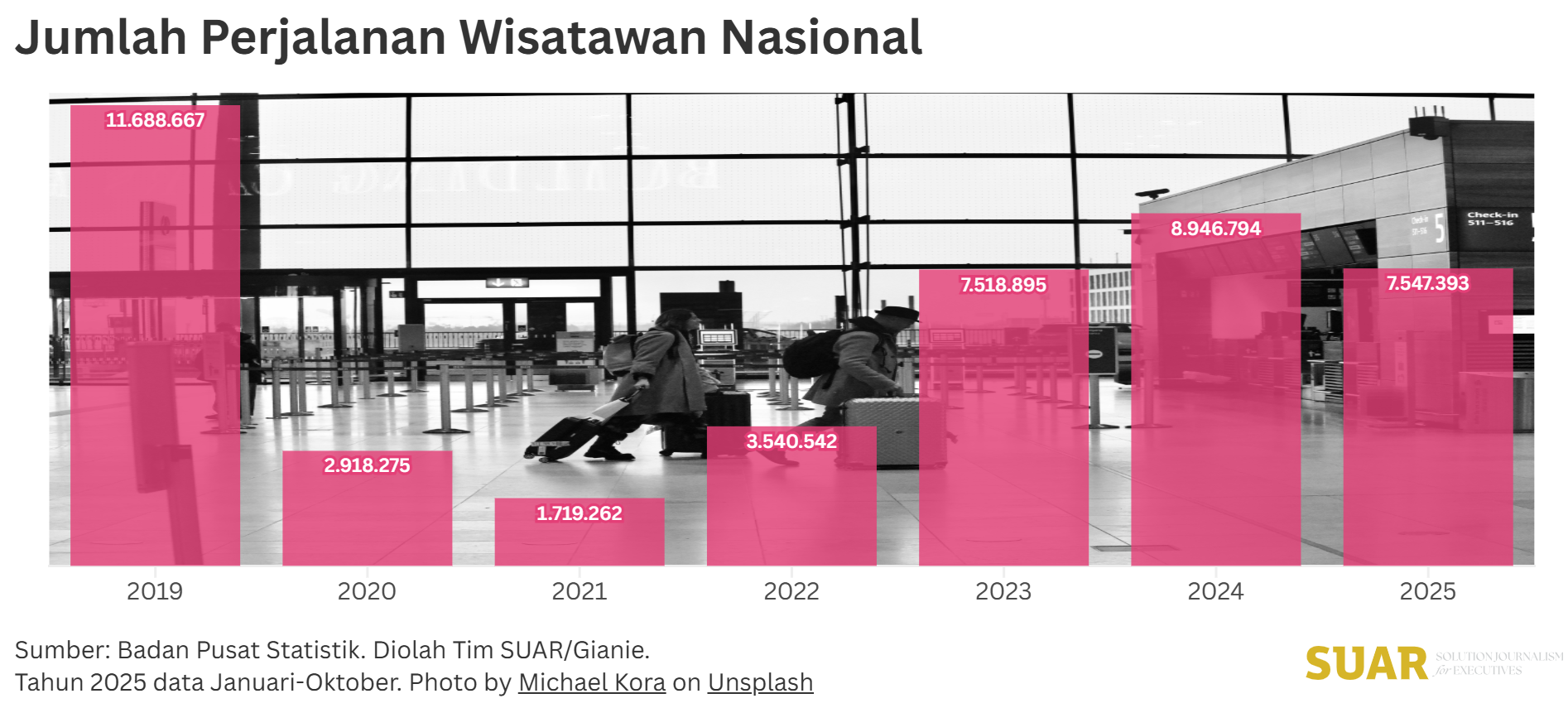
Based on data from the Central Statistics Agency (BPS), the number of domestic tourists in 2021 was at its lowest point, recorded at 1.7 million trips. In 2020, the number was still higher at 2.9 million trips because during the first 3 months of that year, mobility was not yet restricted.
In 2022, after mobility restrictions were lifted, the number of domestic tourists doubled to around 3.5 million trips. The following year (2023), the number of domestic tourists doubled again to 7.5 million trips. In 2024, the increase in the number of domestic tourists was only around 19 percent to nearly 9 million trips.
Throughout this year, from January to October, there were 7.5 million international travelers. With an average of 754,739 international travelers per month, the total number of international travelers by the end of the year will reach 9 million. However, this number has not yet recovered to pre-pandemic levels. In 2019, the number of international travelers reached more than 11 million.
The pattern of large-scale tourist movements begins in October and peaks in January. This is triggered by a decline in formal activities as the year draws to a close and holidays during the end of the year and the beginning of the new year. After that, tourist movements slow down until June-July, when they increase again in line with school holidays. The period from August to September sees another slowdown. This cycle repeats itself every year.
The purpose of domestic tourists traveling abroad is not only to enjoy a vacation. According to data from the Central Statistics Agency (BPS), the purpose of domestic tourist travel is also related to business or participating in self-development activities such as training/courses/short courses. In addition, it is also for health checks (medical treatment) or beauty treatments, as well as religious rituals.
The three most popular destinations for domestic travelers are Malaysia (28.4% of total trips), Saudi Arabia (17.85%), and Singapore (12.79%). Last year, the average cost incurred by domestic travelers was US$1,820, or around Rp 30 million per trip. These expenses naturally vary depending on the destination country.
The highest costs are incurred when traveling to the United States, which is around US$5,000, to European Union countries around US$4,700, and to Australia US$4,000.
Domestic travel abroad poses a challenge for the national tourism industry because it has the potential to reduce foreign exchange circulating within the country. However, the mobility of residents abroad is also considered to stimulate economic growth in their home countries, especially in the transportation sector and other supporting sectors/industries.
In addition, overseas travel experiences can indirectly encourage innovation in the domestic tourism sector and increase the competitiveness of tourist destinations.