

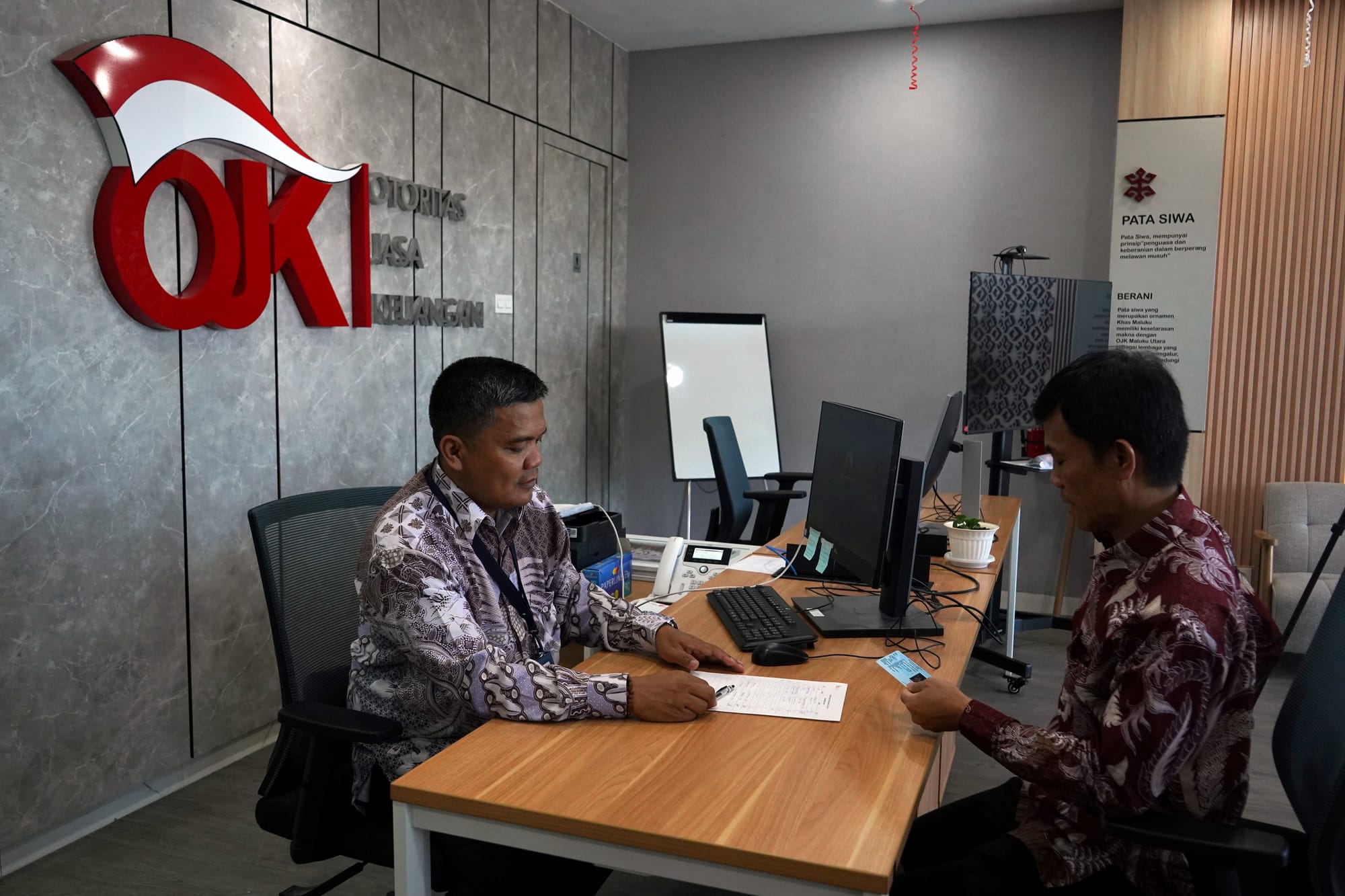
The Financial Services Authority (OJK) assesses that the financial sector remains stable and promising amid uncertainty caused by geopolitical developments and differences in central bank policies that affect global financial markets. Anticipation is needed, not only in terms of operations, but also in facing changes in service preferences to meet the needs of young customers.
OJK Board of Commissioners Chairman Mahendra Siregar said that differences in central bank policy directions around the world will be one of the factors shaping global financial dynamics throughout 2025. While the US Federal Reserve and the Bank of England are gradually cutting their benchmark interest rates, the Bank of Japan is raising interest rates to their highest level in three decades.
"The stock market strengthened in response to the Federal Fund Rate cut, despite concerns about a potential bubble in technology stocks. At the beginning of 2026, market players are also paying attention to developments in Venezuela and their potential impact on political stability and global financial markets," said Mahendra at the OJK Monthly Board of Commissioners Meeting (RDKB) Press Conference on Friday (09/01/2026).
In an uncertain geopolitical situation, Mahendra assured that the geopolitical impact on the domestic financial sector has not been seen at all so far. However, he urged financial service providers to remain vigilant of geopolitical developments and risks in the medium and long term, given that any escalation could trigger unexpected market reactions.
"We are monitoring the risks of increased tension and uncertainty in global political stability, and we ask all financial service institutions to closely monitor and observe market risks, liquidity risks, and credit risks," he said.
Looking at the intermediary performance of financial service institutions throughout 2025, Mahendra stated that these achievements were not different from the OJK's forecast interval, except for UMKM credit and financing, UMKM contracted much lower. Therefore, this positive momentum is expected to be a strong foundation for the financial sector to navigate business in 2026.
"We hope that this year there will be better improvements in credit and financing performance, especially for UMKM, so that the targets set can be achieved properly. The integrity and enforcement of regulations will be further strengthened, along with strategic and concrete steps to increase market penetration, especially in the stock exchange," he said.
Supplementing Mahendra's explanation, OJK Chief Executive of Banking Supervision Dian Ediana Rae stated that banking performance is projected to remain solid, supported by maintained credit quality and strong capital. In November 2025, credit grew 7.74% year on year to Rp8,314.48 trillion, with third-party funds continuing to grow at double digits, up 12.03% YoY to Rp9,899.07 trillion.
With a Liquidity Ratio/Third Party Funds (AL/DPK) of 29.67% and a Capital Adequacy Ratio ( CAR) of 26.05%, the bank has succeeded in providing a strong mitigation buffer, as well as maintaining the net non-performing loan ratio at 0.86% and reducing the loan at risk ratio to 9.22% from the previous 9.41%.
"Banks have sufficient liquidity to extend credit in the future. Therefore, the withdrawal of Rp75 trillion in SAL funds from Himbara banks will not have a significant impact on liquidity. Himbara's Liquidity Coverage Ratio remains stable, in addition to the risk appetite setting which is still in accordance with regulations," explained Dian.
Read also:
 Benedictus Krisna Yogatama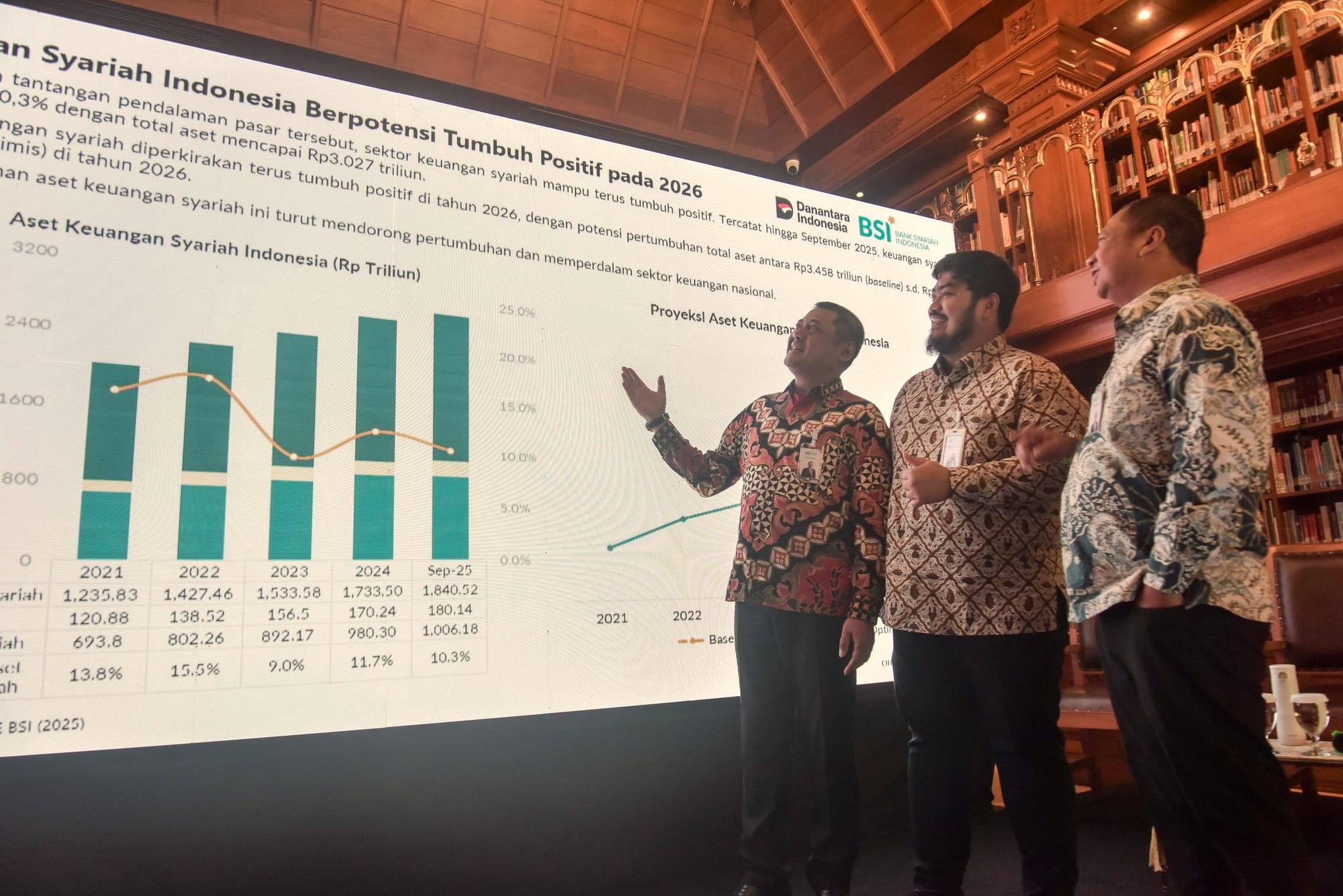
Meanwhile, in the capital market, OJK Chief Executive of Capital Market, Derivatives, and Carbon Exchange Supervision Inarno Djajadi emphasized that the achievements of the capital market in Indonesia and the positive trends in fund raising, daily transaction values, and stock market liquidity throughout 2025 will serve as capital for implementing a number of strategic agendas in 2026.
One of these agendas is the formulation of a free float policy as part of long-term market deepening. Inarno emphasized that the formulation of the free float policy will be carried out in stages, accompanied by considerations involving all stakeholders, including the Indonesian Issuers Association and corporate investors who drive both demand and supply.
"OJK and IDX are conducting a comprehensive evaluation and refinement of the free float policy by considering liquidity, investor protection, market cap size, market absorption capacity, an appropriate transition period, as well as maintaining the interest of domestic corporations to go public. Taking market dynamics into account, free float will be issued gradually in 2026," said Inarno.
Read also:
 Benedictus Krisna Yogatama
Pay attention to quality
Perbanas Institute lecturer Arianto Muditomo believes that amid economic uncertainty, banks need to focus on the quality of growth, rather than simply pursuing credit expansion. Strengthening risk management, selective credit distribution, and operational efficiency through digitalization are key to maintaining healthy and sustainable performance.
"Beyond credit, banks need to seriously accommodate changes in the payment preferences of young customers, who increasingly favor digital, fast, and seamless solutions. This generation judges banks based on their experience and ease of service, so the ability to adapt to payment patterns will determine competitiveness and long-term customer loyalty," said Arianto when contacted on Friday (09/01/2026).
In line with Arianto, Aviliani, an economist at the Institute for Development of Economics and Finance (Indef), explained that in one survey, 39% of private companies stated that they were not interested in applying for credit in 2026. In line with the private sector's lack of interest in expanding, Danantara's efforts to maximize investment in state-owned enterprises have not been optimal.
"The budget for infrastructure is also relatively low, even though government infrastructure development is usually one of the driving forces. Of these three indicators, if credit growth remains the same as in 2025, that would already be good. Consumption has been stimulated, but significant growth requires investment," he told SUAR.
Read also:
 Benedictus Krisna Yogatama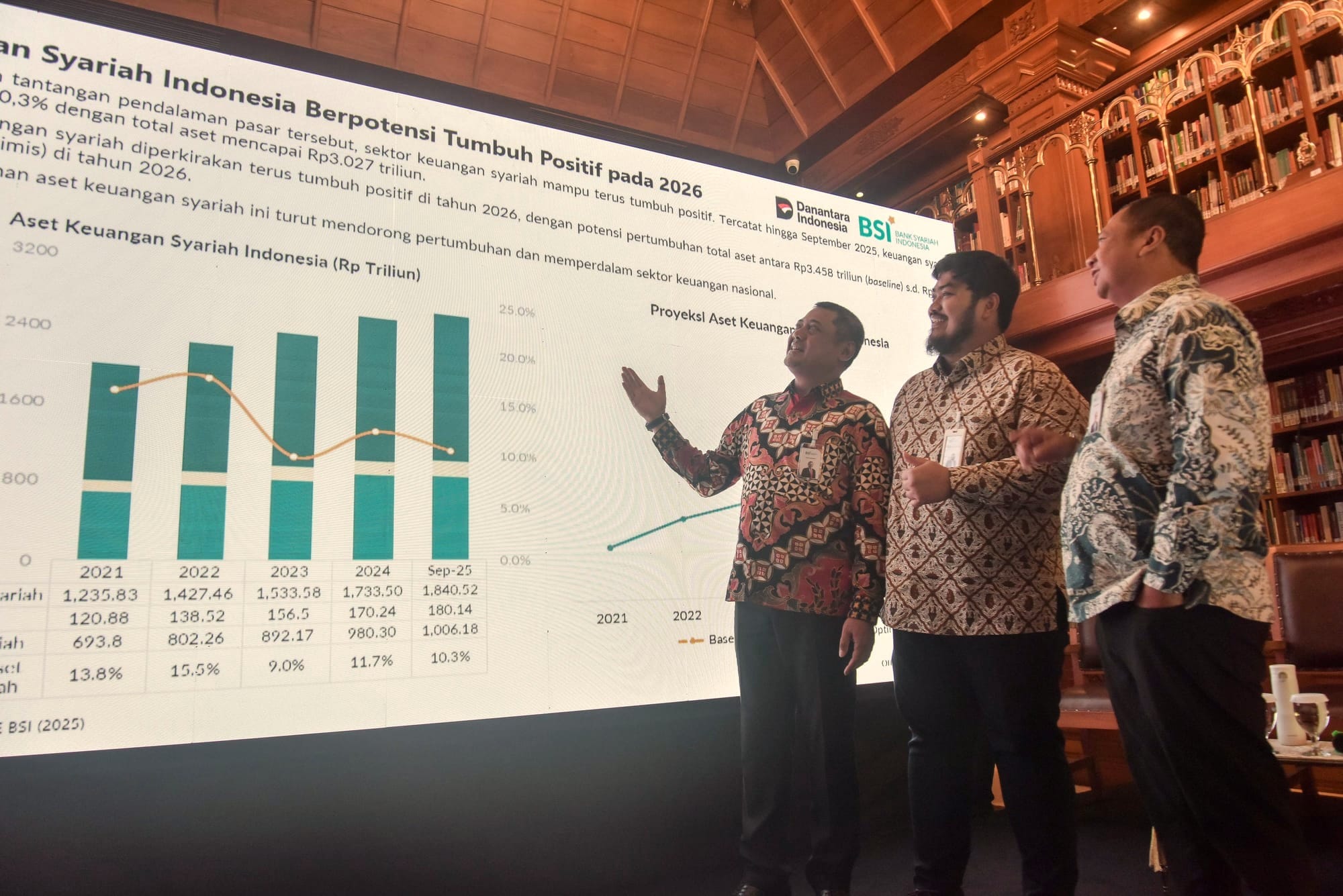
Without denying the successful growth of investment credit, which reached 17.98%, Aviliani emphasized that, in addition to merely reflecting the average, growing investment credit also created more capital-intensive industries rather than labor-intensive industries that absorb a large workforce. Furthermore, the level of undisbursed loans remains relatively high.
"In terms of consumption, I am not worried because upper-middle-class consumption accounts for almost 70%, and they are usually not too affected by inflation. The opposite is true for the lower-middle class. Therefore, high growth is not actually difficult to achieve, but the problem lies in the quality of that growth," he said.
In navigating business in 2026, Aviliani provides three important points for financial service providers, particularly banks, to consider. First, the possibility of efficiency due to the need to reduce costs when revenue cannot be increased. Second, the potential of prime customers as a credit segment, given their characteristics as customers who are not greatly affected by current market sentiment.
Third, maximize fee-based income by channeling the needs of retail investors in purchasing SBN and mutual funds, in addition to maintaining general banking transactions. Fee-based income can be a counterbalance, especially during a trend of low interest rates that causes credit interest income to decline.
"Fee-based services have become an alternative to credit growth, which, in addition to volume, has also declined in terms of credit interest rates, causing the net interest margin ( NIM) to shrink to just 4%, meaning that banks cannot operate more freely," he concluded.