

Even though he was only an intern at a state-owned bank in a city in South Kalimantan, Akhram Khatam always carried out his duties diligently. He also often discussed with his mentor to determine the tasks he could do.
"My mentor doesn't want me to be idle. So I have to go out into the field, everywhere, every morning. He directly sets my agenda, what I have to do today," he said.
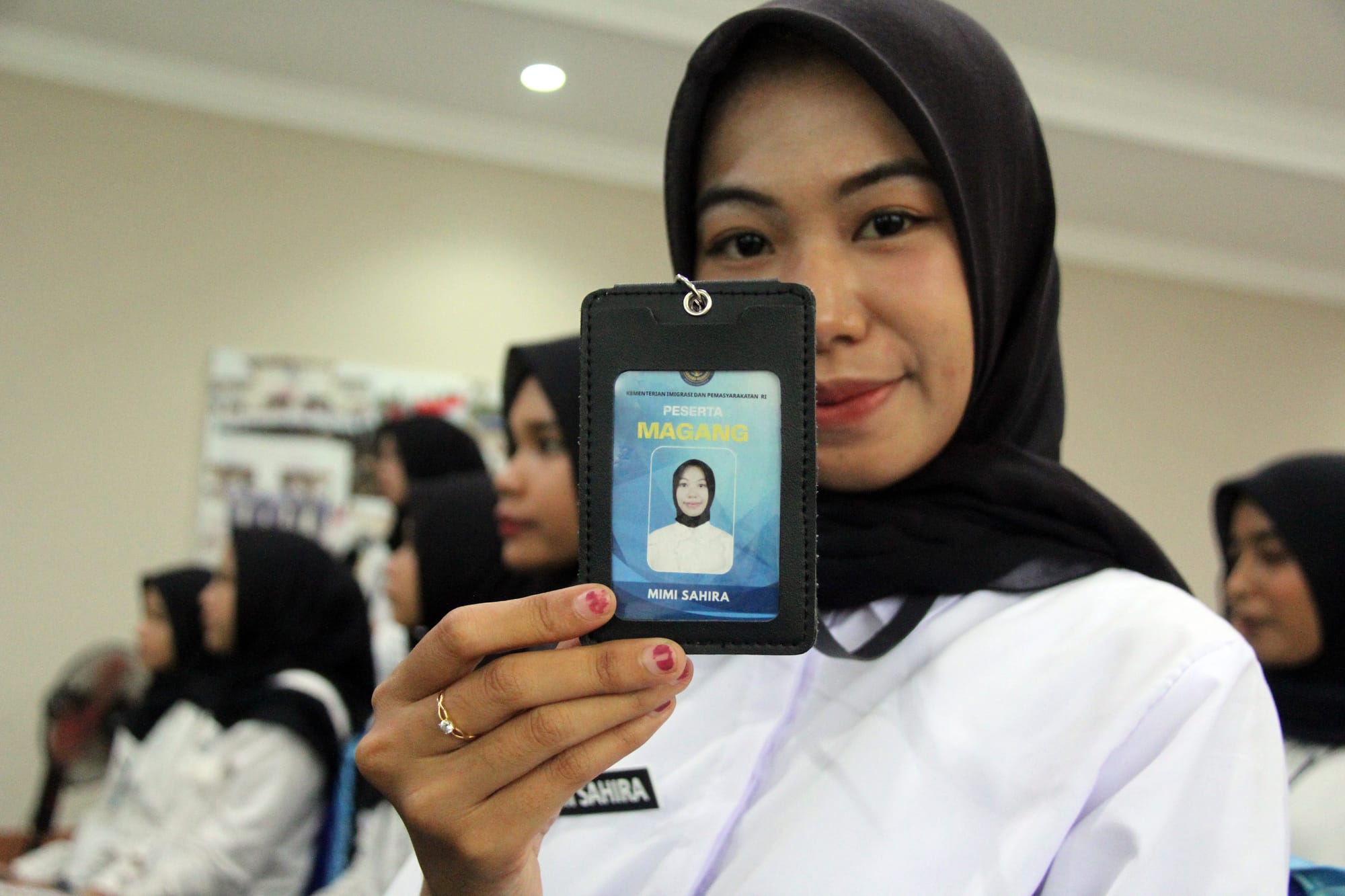
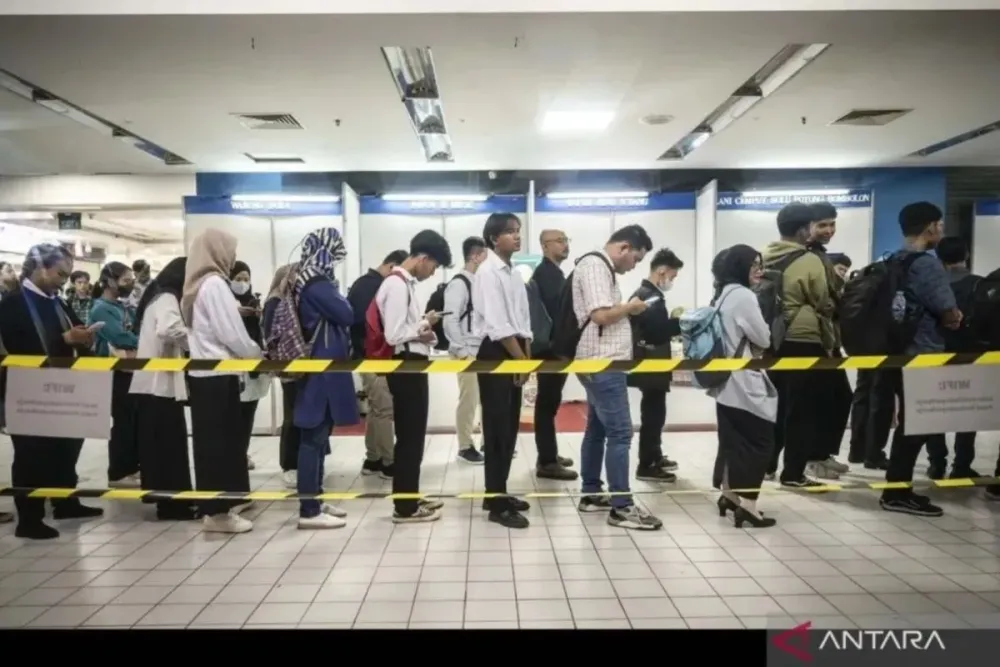
Akhram, who recently graduated with a Bachelor's degree in Communication Studies from the Islamic University of Yogyakarta, was fortunate to be able to intern at a financial services company. As a fresh graduate, he had sent out numerous job applications until he heard about this national internship program.
"It turns out that the Ministry of Labor is offering internships for fresh graduates. I see this as an opportunity, especially since the salary is the minimum wage. So I think it's possible to gain experience too," said Akhram.
Akhram then applied to a number of companies registered in the government program. He was finally accepted as a participant in the first batch of internships, which began on October 20, 2025. His current position as an intern is in line with his educational background.
"My position now is in sales, because at the Ministry of Manpower, once you enter your major, they immediately filter according to your major. You can't cross majors, so that everyone has the same opportunity," he explained.
The national internship program is one of the government's efforts to create jobs, which has been a program of President Prabowo Subianto's administration.
This program was initiated by the Ministry of Manpower to bridge the gap between new college graduates and the industrial world by providing them with 6 months of direct work experience. The program aims to reduce unemployment and improve human resource competencies, with pocket money equivalent to the provincial minimum wage (UMP) or district/city minimum wage (UMK) and BPJS protection, through the Maganghub platform.
This program is offered in various batches, involving state-owned enterprises, private companies, and government agencies. It covers various strategic sectors such as tourism, creative industries, food and beverage, logistics, agriculture, and public services.
Various programs to reduce unemployment
The government is currently fulfilling its promise to expand employment opportunities through an economic package program aimed at absorbing labor. Coordinating Minister for Economic Affairs Airlangga Hartarto stated that the President is paying close attention to a number of strategic programs that have a direct impact on labor absorption.
In addition to the National Internship Program, several other major government programs are also touted as job creation engines. For example, the establishment of 80,000 red and white village cooperatives, which the government expects, based on calculations on paper, to absorb 681,000 new workers, with a target of up to one million people by December.
In addition, the red and white fishing village program is also a priority, with a target of developing 100 fishing villages by 2025. Through this program, employment is expected to continue to increase in line with the increase in the number of fishing villages.
"This year's target is 100 villages, which are expected to absorb 8,645 workers. In the long term, 4,000 locations could create 200,000 jobs," said Airlangga.
In order to create more jobs, the government is also focusing on the marine sector by revitalizing fish farms in the Pantura region, covering an area of 200 hectares, which is estimated to absorb up to 168,000 workers.
In addition to these three programs, efforts to modernize a thousand fishing boats are also an important part of the agenda. "This is expected to create 200,000 new jobs," said Airlangga.
Not only in the maritime sector, Airlangga said that the government is also promoting smallholder plantation programs by replanting 870,000 hectares of land. "It is hoped that this will create more than 1.6 million jobs with priority commodities including sugar cane, cocoa, coconut, coffee, cashew, and nutmeg," he said.
Five sectors contributing to absorption
According to the Head of the Employment Planning and Development Agency (Barenbang) of the Ministry of Manpower, Anwar Sanusi, when viewed from the structure of the labor market, based on the latest employment data, there are at least five main sectors that remain the backbone of national employment.
"The largest sectors are still agriculture, forestry, and fisheries. Then wholesale and retail trade, manufacturing, food and beverage supply, and construction," he said.
On the other hand, several sectors recorded fairly high employment growth. These included mining, financial and insurance services, electricity and gas supply, transportation and warehousing, and construction.
However, Anwar warned that the dominance of the agricultural sector still poses fundamental problems because most of its workers are in the informal sector. "Around 40 million people work in agriculture, and the majority of them are informal. This is a big challenge that we must respond to," he said.
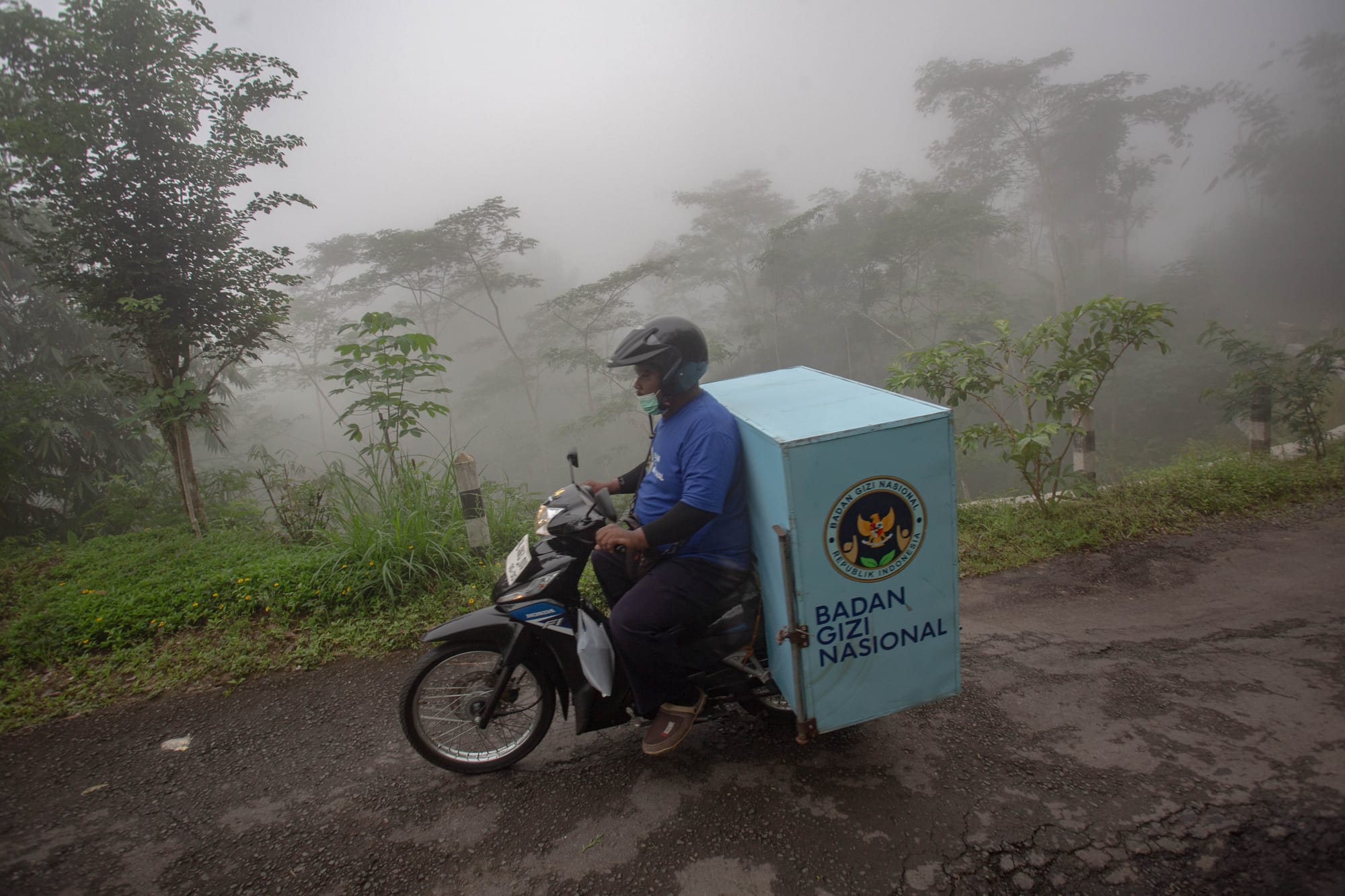
One program that is touted as having great potential is Free Nutritious Meals (MBG). "One SPPG kitchen can employ around 40 to 50 workers. If there are 30,000 kitchens, that's 1.5 million people employed," he said.
However, he acknowledged that there were still implementation challenges in the field that prevented the program from having a maximum impact. The government hopes that these obstacles can be overcome so that employment can increase in the following year.
In addition to MBG, large projects and industrialization are also expected to createa multiplier effect. "Not only direct jobs in factories or construction, but also indirect jobs, ranging from transportation, food businesses, lodging, to other supporting services," explained Anwar.
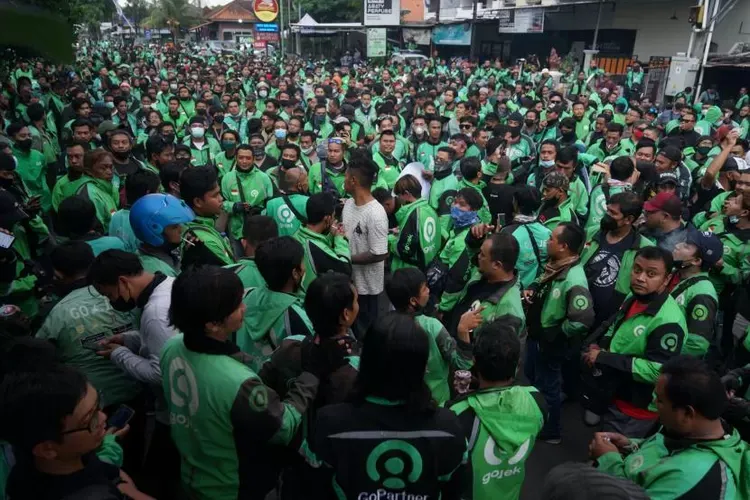
Anwar acknowledged that labor regulations have not been able to fully keep pace with changes in the nature of work. "There are still gaps in the legal framework for new types of digital-based work. The content is almost complete, but it is not yet finished," he said.
The absence of regulations has an impact on job security and social protection for digital workers, especially in terms of employment social security.
Cross-agency policies create resilience
Based on data from the Central Statistics Agency (BPS), the open unemployment rate (TPT) in February 2025 was recorded at 4.76%, the lowest figure since the 1998 crisis. Job creation was significant, with an additional 3.59 million jobs created.
Job quality indicators also showed improvement compared to February 2024. The proportion of full-time workers increased from 65.6% to 66.2%, while the underemployment rate decreased from 8.5% to 8.0% and the proportion of part-time workers fell slightly from 25.9% to 25.8%.
Job creation also occurred in almost all economic sectors. The sectors with the largest contribution to job creation were the trade sector with 980,000 people, the agricultural sector with 890,000 people, and the manufacturing sector with 720,000 people.
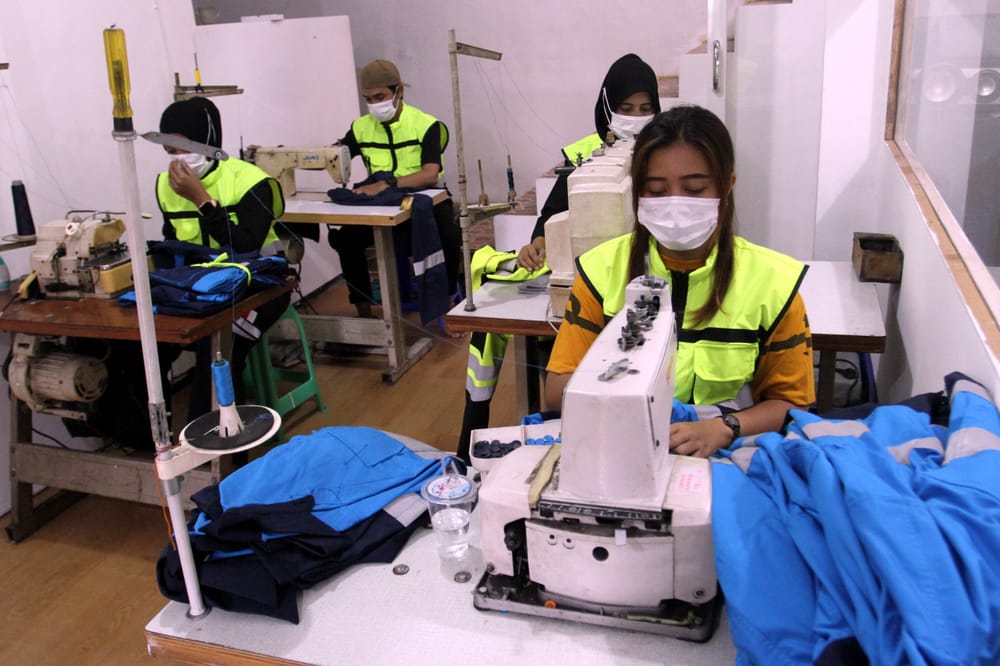
In the manufacturing sector, the sub-sectors that employ the most workers are footwear manufacturing (172,000 people), small food and similar industries (137,000 people), and motorcycle component manufacturing (117,000 people).
The Minister of Manpower, Yassierli, said that this achievement reflects the collective strength of various labor policies across ministries and institutions.
According to him, amid various global economic challenges, Indonesia's employment conditions remain resilient. "This shows resilience or adaptability, while also giving the government room to strengthen interventions to create broader and higher-quality employment," said the Minister of Manpower.
Yassierli emphasized that although current trends are pointing in a positive direction, the challenges of global economic uncertainty and trade wars must still be taken seriously.
Therefore, the Ministry of Manpower will continue to strengthen cooperation between ministries and institutions, business actors, labor unions, worker unions, and various development partners to boost productivity, expand employment opportunities, and increase the competitiveness of the national workforce.
Maintaining growth momentum
Chairman of the Indonesian Food and Beverage Entrepreneurs Association (Gapmmi) Adhi Lukman acknowledged that the food and beverage industry is growing quite well. In the third quarter, growth was 6.48%, higher than the national economic growth rate.
On the investment side, the trend is also relatively positive. Domestic investment (PMDN) has increased sharply this year, in contrast to foreign investment (PMA), which has slowed slightly. "And overall, investment in this sector is still better than last year," explained the Head of Manufacturing Industry at the Indonesian Employers Association (Apindo).
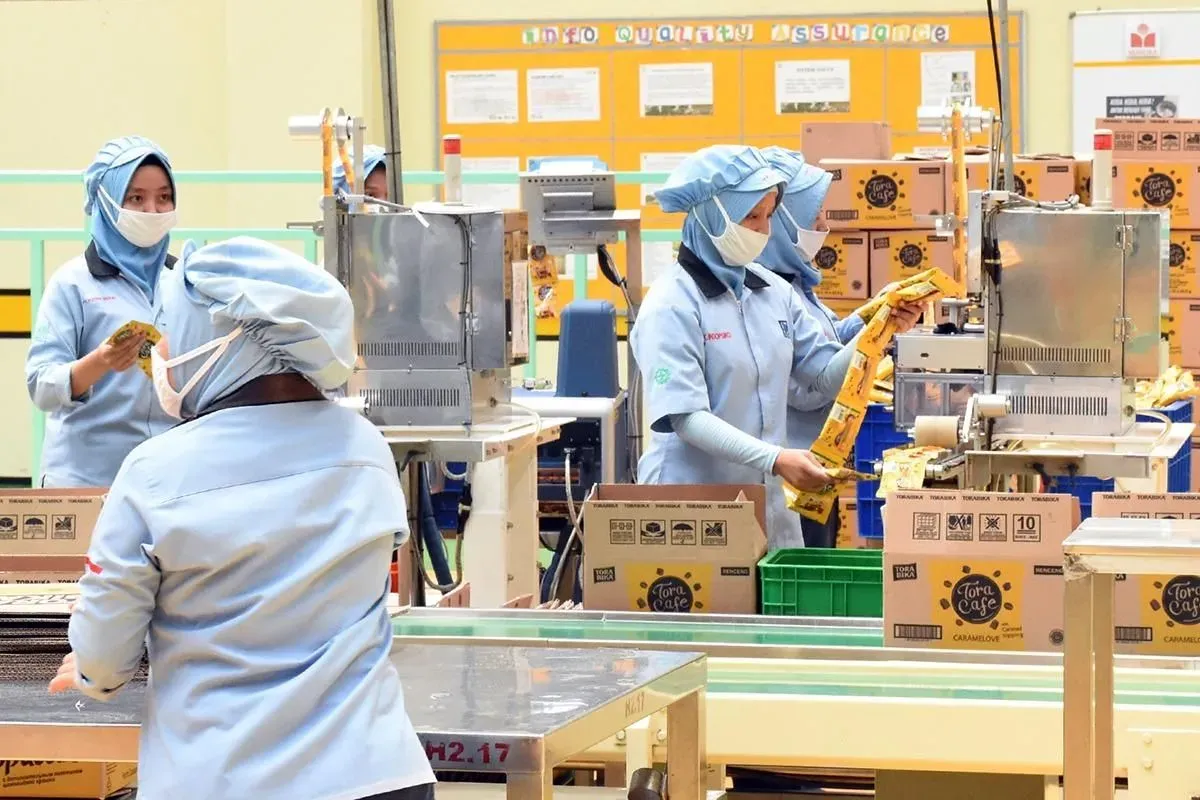
In terms of numbers, the food and beverage industry remains one of the driving forces behind employment. However, according to him, the sustainability of this sector depends on Indonesia's ability to balance three things: fair wages, increased productivity, and improved workforce competencies. Without these three things, the current strong growth could lose momentum.
The industry is still growing and investment in this sector is beginning to flourish, keeping labor absorption in the food and beverage sector high. The food and beverage industry is known to be labor-intensive, especially in small and medium-sized companies that have not yet fully embraced automation technology, currently employing around five million direct workers.
However, Adhi added that the sustainability of employment depends heavily on wage policies and productivity. The biggest challenge currently comes from the minimum wage, which continues to increase every year, unlike other ASEAN countries where it tends to remain stable.
This situation has made production costs in Indonesia increasingly expensive, while worker productivity has not been able to keep pace. "We hope the government can begin to implement a productivity-based wage system. Many countries have already done this: Singapore, Malaysia, and others," said Adhi.
With this approach, workers' incomes can increase beyond the minimum wage, while production costs per unit can be reduced as productivity rises. "If productivity increases, companies are happy, employees are happy, and the competitiveness of our products improves," he added.
Pay attention to output and quality of work
Nawawi Asmat, Head of the Population Research Center at the National Research and Innovation Agency (BRIN), explained that the unemployment trend has indeed shown improvement after the Covid-19 pandemic. After spiking in 2021–2022 due to a wave of layoffs, the trend has begun to level off over the past two years. "If we look at the beginning of 2024, layoffs have begun to decline, so the unemployment rate has also decreased," said Nawawi.
However, he cautioned that a decline in unemployment does not necessarily mean an improvement in job quality. According to him, the composition of labor absorption actually points to unresolved structural problems. "Unemployment has indeed fallen, but labor absorption is still dominated by the informal sector. That is where the quality of our workforce is still questionable," he said.
Meanwhile, CORE Indonesia economist Yusuf Rendy Manilet believes that flagship government programs such as Free Nutritious Meals (MBG), Merah Putih Cooperatives, and People's Schools are indeed capable of creating jobs. However, he emphasizes the important distinction between the number of people involved and the number of jobs that are truly high quality.
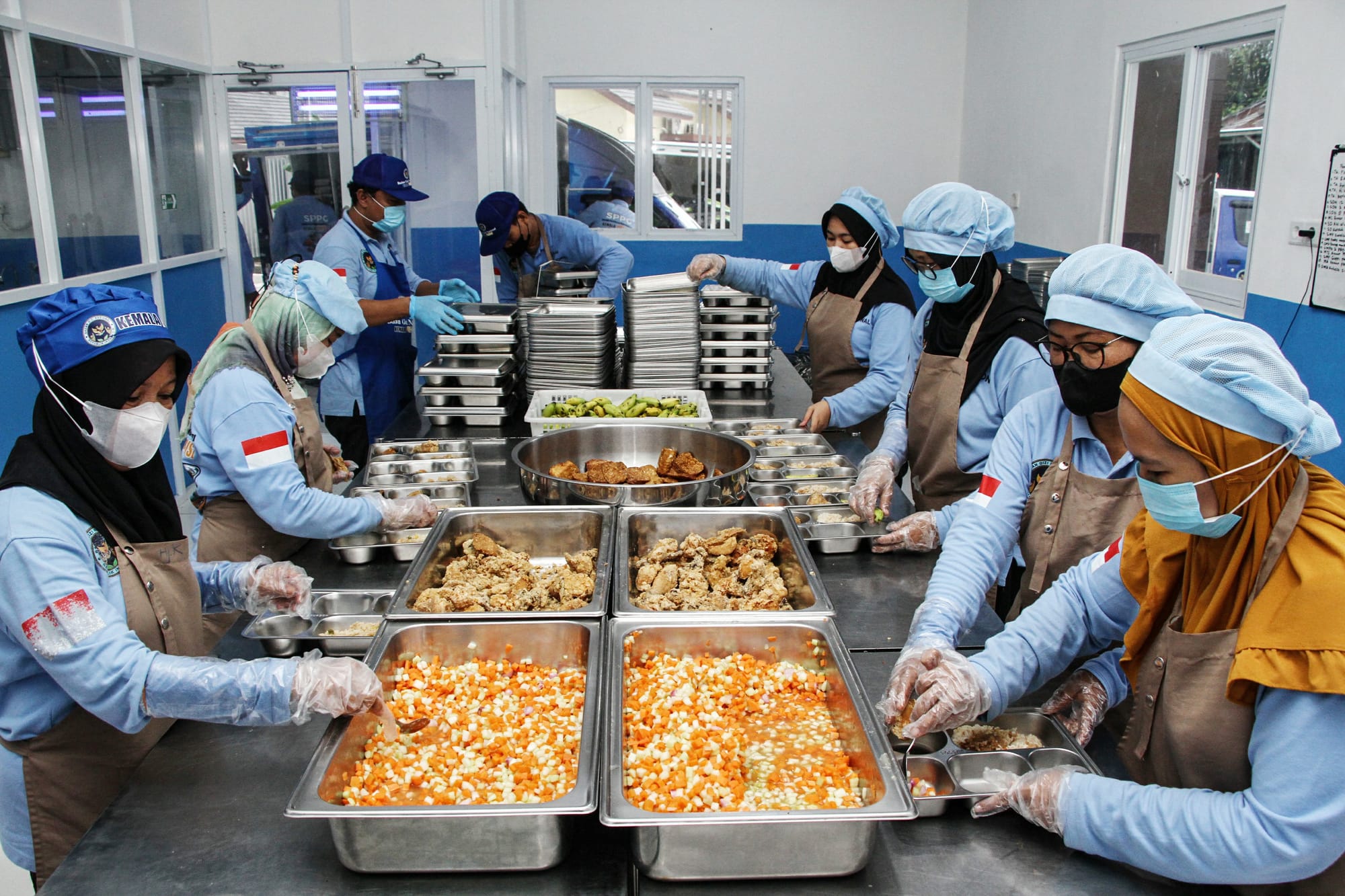
"There is potential for job creation. But many of the jobs created are administrative, temporary, or daily operational in nature," he explained. This means that the program does absorb labor, but it does not automatically generate productive or long-term jobs.
He cautioned that claims of large employment gains often mask the reality that the nature of these jobs is still fragile and not robust enough to build a healthy labor market.
According to him, there are a number of factors that will most determine the success of job creation in the future. There are at least three main factors that reinforce each other, namely productive investment, quality human resources, and a supportive business ecosystem.
"Investment is important because it is a source of labor demand. But without adequate human resources, the job opportunities created will not increase productivity or wages," explained Yusuf.
Andriko Otang, a labor law scholar at Atmajaya University's Faculty of Law, believes that several of the government's current programs are also inappropriate if they are considered tools that can reduce unemployment. For example, the national internship program should not be counted as job creation.
"Internships are part of education, not an indicator of workforce growth," he said. Many internship programs lack modules, mentors, or supervision. "Companies control everything. Interns are in a very vulnerable position," he said.
Meanwhile, the government claims that there will be 1.5 million new jobs created through cooks, distribution workers, and material procurement thanks to the MBG. However, according to Andriko, these jobs are labor-intensive, require low skills, and may not necessarily create new jobs. "UMKM as MBG kitchens already exist. So, this is often just a shift in the workforce, not the creation of new jobs," he said.
The same thing happens at the Merah Putih Cooperative and public schools that recruit staff from associations or temporary teachers who have been working for a long time. "These temporary staff are not new, they are just being extended or re-recruited. So there is no increase in the number of temporary staff or improvement in the quality of their contracts," he said.
Therefore, claims that these programs have created jobs are still speculative. According to Andriko, the correct indicators are whether the number of employed people has increased, whether the number of full-time workers has increased, and whether formal employment has grown.
Mukhlison, Dian Amalia, and Gema Dzikri
Job Creation from the Gold Bank
Efforts to create jobs are not only carried out through labor-intensive sectors. Capital-intensive sectors are also encouraged to contribute to employment.
Similar to the establishment of a gold or bullion bank in February, pioneered by PT Pegadaian and Bank Syariah Indonesia (BSI), in addition to managing and trading precious metals in an integrated manner, ranging from deposits, financing, to gold trading both physically and digitally, it is also expected to create new job opportunities in this sector.
The Gold Bank was established to strengthen the gold trading ecosystem, increase downstreaming, and expand access to financing for the national gold industry. This is in accordance with the Law on Financial Sector Development and Strengthening (P2SK) and OJK Regulation No. 17 of 2024.
"From an economic perspective, the gold bank has the potential to increase Indonesia's GDP by Rp245 trillion and create around 800,000 jobs," said Minister of State-Owned Enterprises Erick Thohir.
The impact of job creation from the gold banking industry is indeed extensive. For example, through efforts to process gold domestically or downstream, gold banks increase added value and create jobs in smelters, factories, and related industries.
On the other hand, gold production activities can also stimulate the logistics sector, where logistics efficiency and national gold production will open up job opportunities in processing and distribution. Such as gold security officers, gold transportation specialists, and vault keepers.
Meanwhile, PT Pegadaian, as one of the institutions engaged in gold banking services, will become a hub for gold entrepreneurs, opening up financing channels and creating opportunities for UMKM this sector. Gold financial services also encourage the addition of services such as Gold ATMs initiated by Bank Syariah Indonesia, expanding the network and requiring professionals such as gold appraisers and gold financial agents.
Some types of jobs that can be triggered from this sub-sector include financial analysts, gold product managers, tellers, compliance staff, and technology specialists for digital gold banking services.
Meanwhile, in the downstream sector, it will stimulate the retail gold trade and jewelry stores, which will also find it easier to obtain financing and market access.
Not to mention that in the supporting services sector, there will be new jobs such as gold certification service providers, auditors, and private credit guarantee service providers.
On the other hand, transactions using gold at gold banks will make it easier for Indonesian migrant workers (PMI) to save and invest in gold, ultimately creating a need for new services that will add new jobs.
By October 2025, PT Pegadaian, a pioneer in bullion banking services, had successfully collected 129 tons of gold. Meanwhile, Bank BSI experienced significant growth in its bullion banking business, in line with the government's goal of integrating the gold ecosystem from upstream to downstream.
In the future, commercial banks will be allowed to conduct bullion business if they have a minimum core capital of IDR 14 trillion. Commercial banks that have core capital in accordance with the provisions are also permitted to conduct bullion business through sharia business units (UUS).
Mr. Widodo