
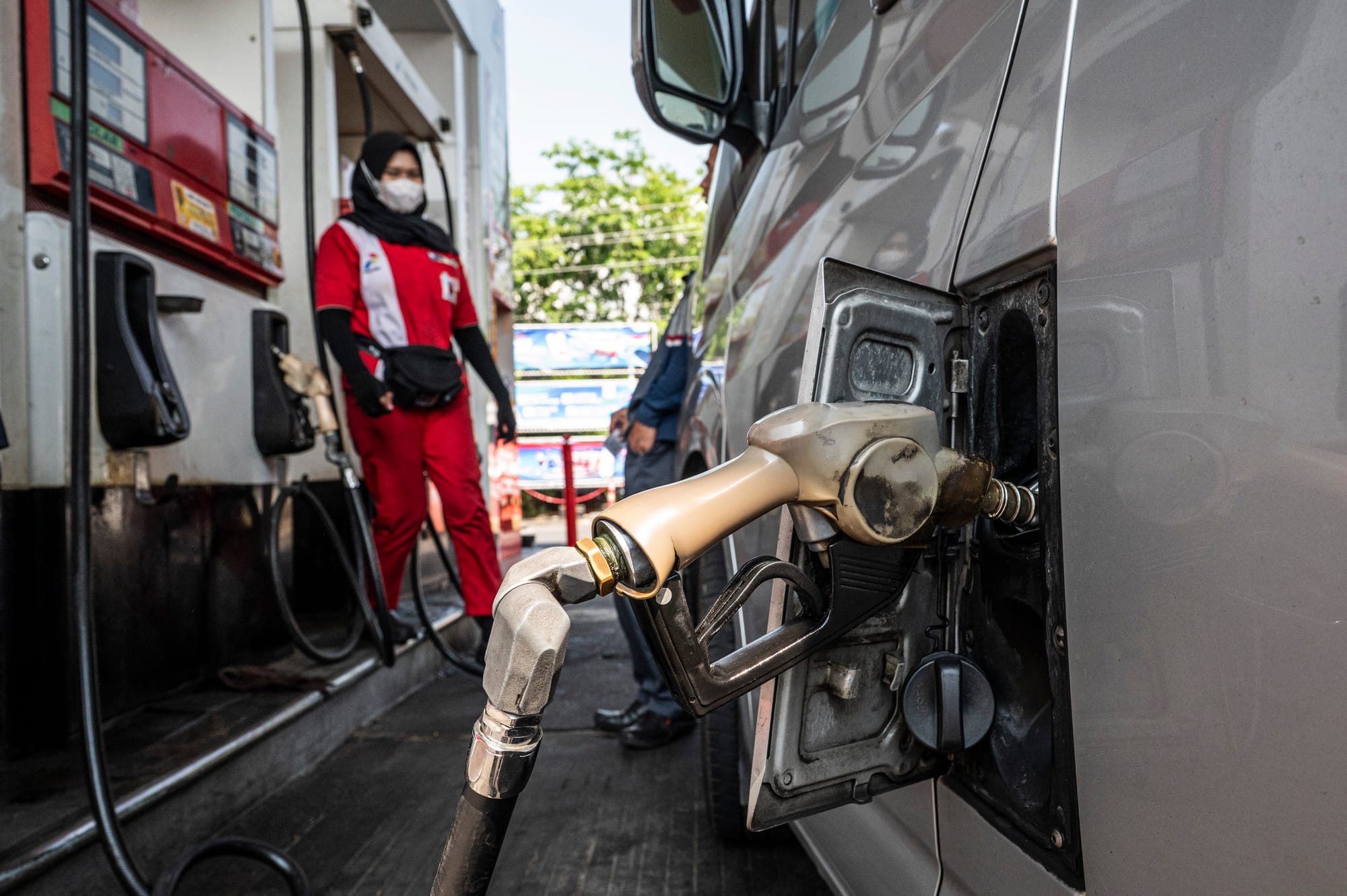
Minister of Energy and Mineral Resources (ESDM) Bahlil Lahadalia encourages the mandatory plan to use 10% ethanol (E10) as a mixture of domestic fuel oil (BBM).
This policy is carried out in order to reduce the amount of fuel imports. This is because Indonesia as of June 2025, based on reports, imported gasoline up to 61.73% of national needs.
"Our gasoline now, our usage is 42 million barrels in 2025, the rest we import 27 million, this is our import. Now the next question is whether we want to continue like this, or we should not depend on imports," Bahlil said at the Investor Daily Summit 2025, Thursday (9/10/2025).
The success of the biodiesel program in saving national diesel imports and foreign exchange is also expected to occur with the planned mandatory ethanol in gasoline that will be implemented in the near future. The use of ethanol is also an effort to encourage the use of environmentally friendly energy.
"Departing from the success of biodiesel, the price of palm oil farmers rose, the creation of jobs, our foreign exchange is not well spent, so we are trying to think about mixing gasoline again with our agricultural products, our plantation products," he said.
For information, ethanol is a biofuel blend that is blended into fossil fuels to reduce the use of fossil fuels. If a fuel contains 10% ethanol, only 90% is fossil fuel, while the rest is renewable energy.
The use of ethanol as a fuel mixture is a common practice in a number of countries such as Brazil, the United States, Argentina, Thailand, and India.
Brazil, Bahlil explained, has blended its gasoline with 27% sugarcane-based ethanol, and a number of provinces in Brazil have even used up to 100% ethanol. Looking at the success of other countries in blending ethanol, Bahlil emphasized that blending ethanol in fuel is not a bad thing.
"It is not true to say that ethanol is not good, the proof is that other countries already use this stuff," he said.
Bahlil on another occasion also said that this plan has received approval from President Prabowo Subianto, so it will be carried out in the near future.
"Thus, we will mix our gasoline with ethanol for what purpose, so that we do not import much and also to make clean oil, which is environmentally friendly," he said.
Indonesia through Pertamina has also previously released biofuel blended products, namely in the Pertamax Green 95 product which contains 5% bioethanol from molasses.
Pertamina Vice President Corporate Communication Fadjar Djoko Santoso emphasized that his company supports and is ready to carry out the ethanol blending obligation plan.
"Pertamina supports government policies in encouraging the utilization of environmentally friendly energy, in line with the government's National Energy General Plan (RUEN). One of them is the 10% ethanol biofuel (BBN) policy plan," Fadjar explained.
Pertamina also has an energy infrastructure that is ready to provide and distribute fuel with ethanol blends, such as Pertamina's refinery which has a fuel blending facility with ethanol biofuel.
"As has been done in the program of blending 20% biodiesel from palm oil with 80% diesel to produce B20 biodiesel and now it has become B40," he continued.
Read also:
 Chris Wibisana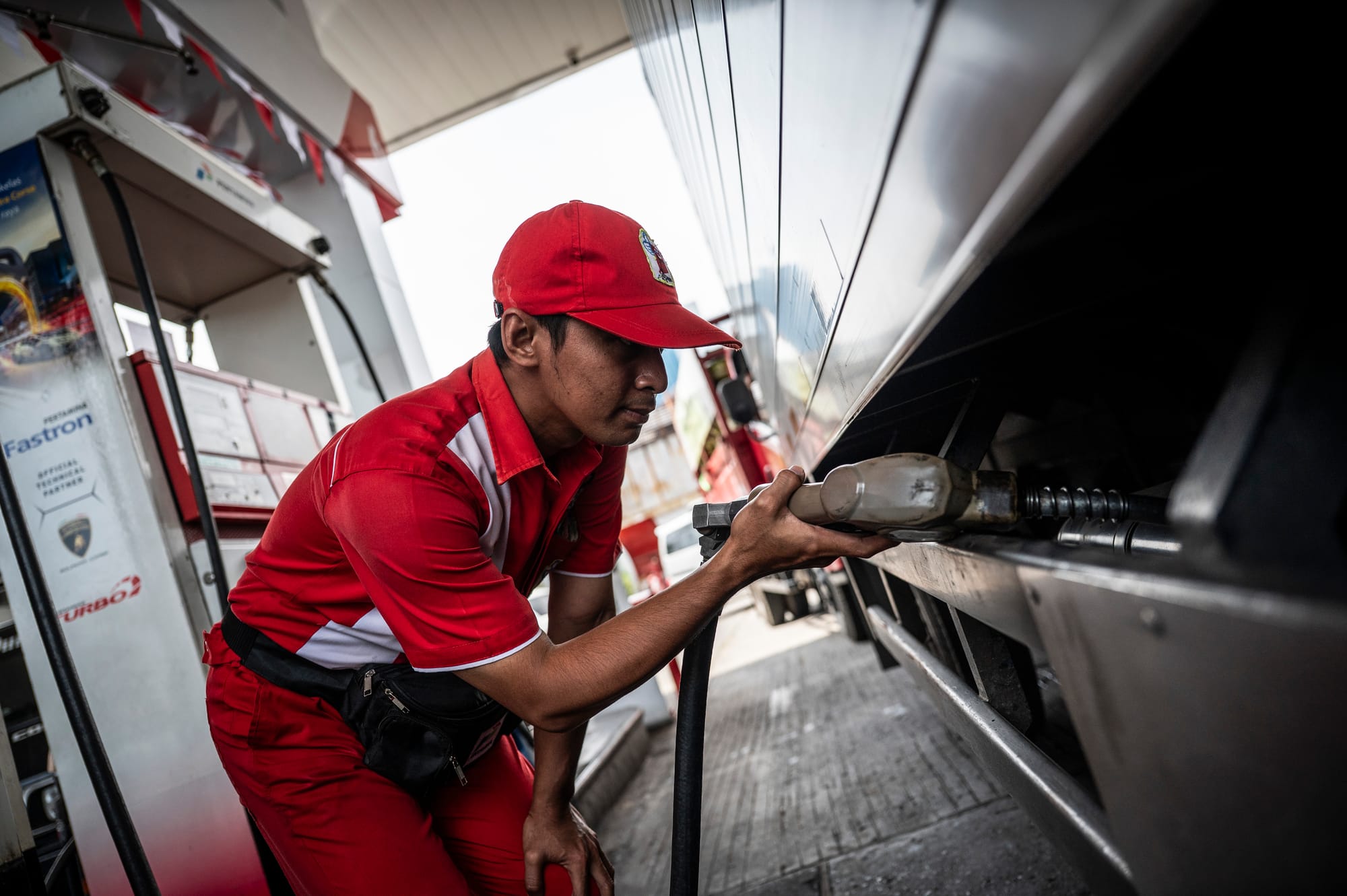
However, blending ethanol and fuel requires high costs and technology, which may affect the selling price of fuel. Therefore, Pertamina also hopes that the government can support the bioethanol ecosystem so that the selling price can remain competitive.
"Ethanol is mandated as a blending component in vehicle fuel because it is considered a renewable fuel. Biofuel development currently uses high technology, which requires investment costs. This will be reflected in production costs and affect the selling price at the consumer level," he said.
On the one hand, automotive observer and race car driver Fitra Eri also believes that the use of ethanol for fuel is fine. However, ethanol has a number of weaknesses and has an impact on vehicle performance.
The blending of ethanol in fuel is said to reduce the power of vehicle engines, and make vehicle fuel consumption a little more wasteful. In addition, corrosion is also feared to occur in the engine.
"One characteristic of ethanol is that it easily absorbs water from the atmosphere. This means that in countries with humid air like Indonesia, it will attract a lot of water, and we know that water is corrosive, so ethanol fuel is more corrosive to the engine," said Fitra.
Even so, ethanol blending in fuel is not a problem, but there are some things that need to be considered. Fitra Eri also emphasized that it is safe to do.
"Is it safe to use? It is safe, as long as the base fuel that uses ethanol is mixed with additives that are designed to work optimally in base fuel that uses ethanol," he said.
Some time ago, a number of private gas stations that experienced problems related to the amount of fuel stock canceled buying base fuel from Pertamina because it contained ethanol. According to Fitra Eri, it is possible that some of these gas stations have additives in Indonesia that are not designed for ethanol blending.
"This means they need more research time to make additives that can work optimally with ethanol base fuel. Also, not all car engines are ethanol-resistant. Indeed, most modern cars are ethanol-resistant, but not all," he explained.
Therefore, Fitra Eri asked the government to give time to related industries and fuel supply companies to make adjustments in advance so that people get the best quality vehicles and fuel.
The automotive industry must ensure that the vehicles sold to the public are resistant to ethanol fuel. Then, fuel companies must also design better additives in their gasoline so that it can work with base fuel that contains ethanol.
"Change is fine, but not suddenly. Give the industry a chance to adapt so that car products and fuel products sold in the market give consumers maximum benefits," he concluded.