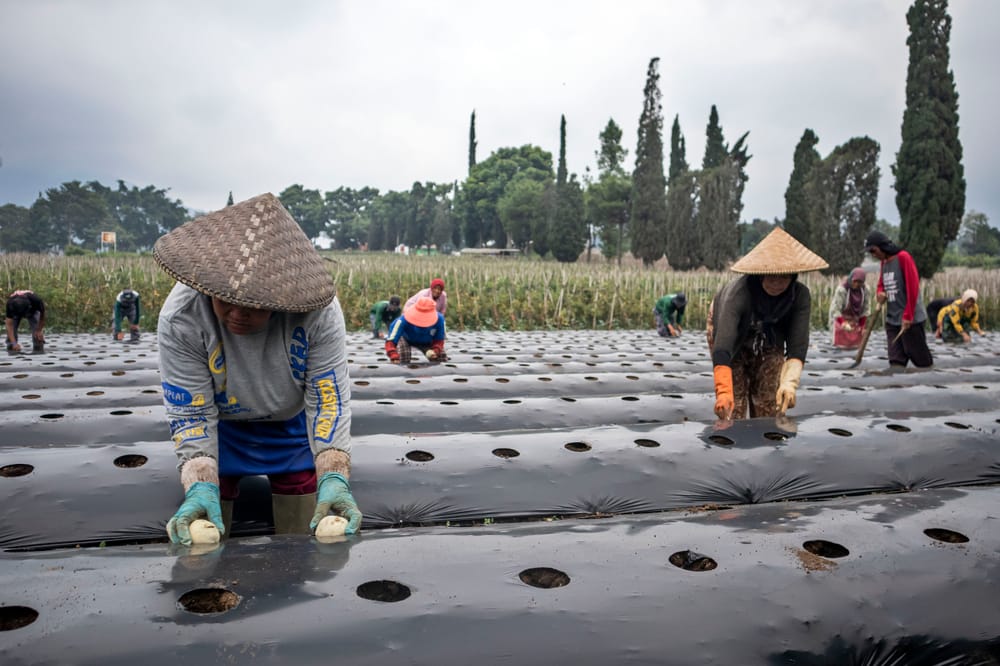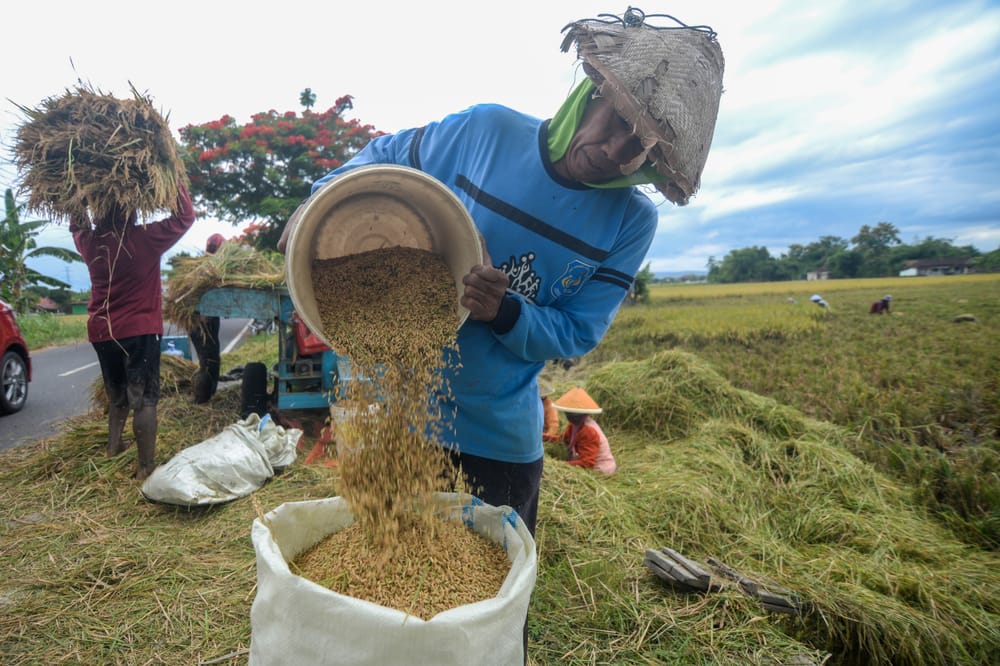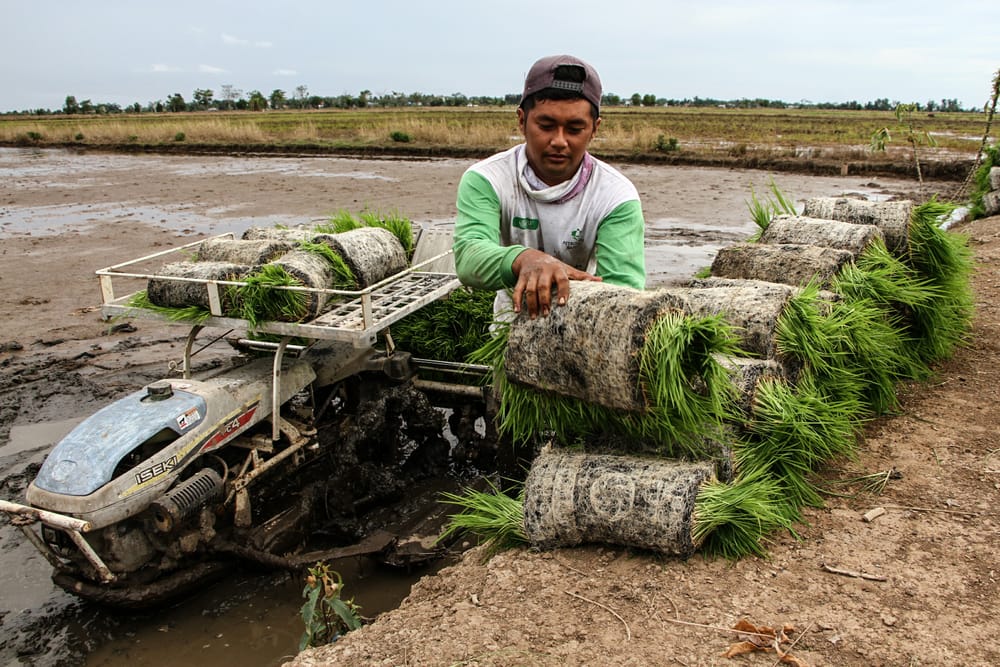

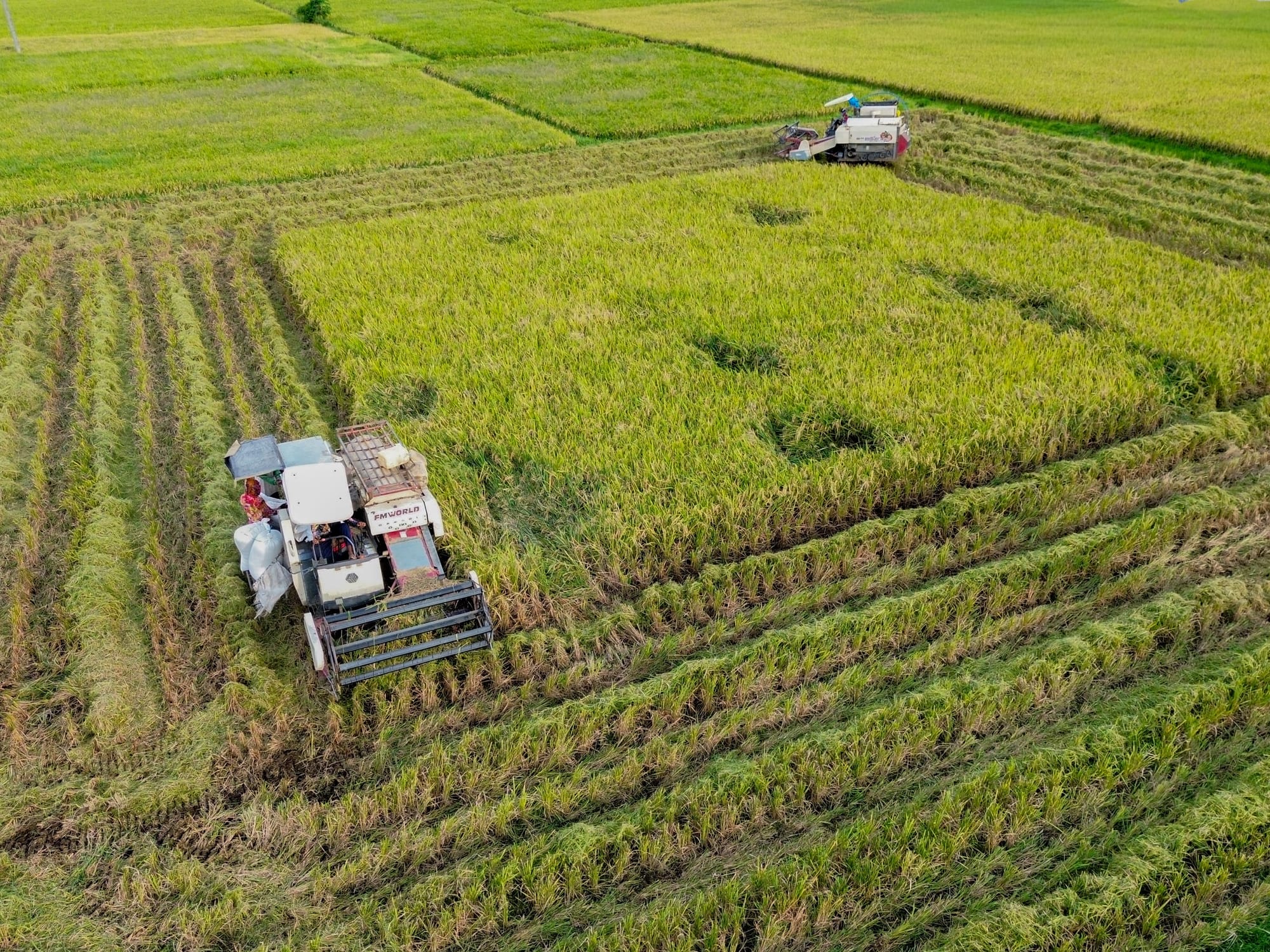
Reform towards modern agriculture is an important step in addressing the challenges of land efficiency, environmental sustainability, and increasing national productivity.
One of the agricultural equipment innovation companies Bentara Agri Indonesia introduced agricultural drones as a modern solution to increase productivity. Bentara Agri Business Development Executive Yopi Kurniadi said, this technology is designed to answer farmers' difficulties in spraying liquids and spreading seeds in large areas.
The company brought two main drone variants, the XAG P100 Pro and P60, which are tailored to the land requirements and work capacity in various agricultural areas.
The XAG P100 Pro drone is the flagship product brought by Bentara Agri because it is considered the most suitable for agricultural conditions in Indonesia. This drone has a modular design that allows users to quickly change tanks as needed, both for spraying liquids and spreading solids.
"With a high level of protection, this drone can be used in various field conditions and remains easy to maintain after use," said Yopi at the Indonesia Agriculture Technology (Agritech) event, Thursday (6/11/2025).
The XAG P100 Pro comes with two types of main tanks that have different functions. The first tank is used for spraying pesticides and liquid fertilizers, while the second tank, called RevoCast, serves to spread seeds and granular fertilizers.
Its payload capacity reaches 50 kilograms, and in one flight the drone can cover an area of about 1.3 hectares in 10 to 15 minutes.

This drone technology not only speeds up work, but also reduces labor costs in the long run. "Overall, using drones is more expensive in the beginning, but more efficient in the long run," says Yopi.
Bentara Agri offers a complete package of the XAG P100 Pro for around Rp275 million, including a battery, charging device, and a choice of tanks that can be customized to suit farmers' needs.
Meanwhile, PT Cipta Visi Sinar Kencana highlighted the other side of agricultural modernization through sustainable waste management. Director of PT Cipta Visi Sinar Kencana, Sonson Garsoni, said the technology they bring focuses on the application of circular economy to convert organic waste into materials that are beneficial to agricultural land. This innovation is realized through a machine called Biophosko that is able to process waste into high-value materials for the agricultural sector.
The Biophosko machine can convert waste into three main products, namely nano compost, biochar, and waste briquettes. Nano compost is produced from processing waste to a very fine size so that it is easily absorbed by the soil, while biochar is a biological charcoal that functions to increase carbon levels and maintain soil fertility. "Waste briquettes can be used as fuel for drying agricultural products such as grain, coffee and patchouli," said Sonson.

Sonson said the presence of biochar and nano compost is important to restore the declining soil quality. "More than 70% of agricultural soil in Indonesia is classified as sick because the organic content is below 1.5%," he said. According to him, carbon materials from biochar can help increase soil acidity and improve damaged soil structure.
Biophosko's target market is agricultural cooperatives and small businesses that can manage waste collectively. Sonson explained that the investment and operational costs of this tool are quite large if borne by individuals, so it will be more efficient if run through institutions such as village cooperatives or agricultural business units. Through this model, agricultural waste and municipal waste can be processed into useful materials that are reused by farmers.
The waste management model also opens up new economic opportunities for the community. "When processing waste, cooperatives or managers can get paid by waste generators such as hotels, restaurants and industrial estates," says Sonson. This system, he envisions, can be doubly beneficial as it not only reduces the waste problem, but also supports more efficient and sustainable agriculture.
On the mechanization side, Arkadiya Fourhaka Indonesia introduced Sinomach tractors and harvesting machines at the IndoGriTech 2025 exhibition. Arkadiya's Head of Plantation, Zaki Somantri, said the company is the sole distributor of Sinomach in Indonesia. "We want to support the government's program in strengthening national food security through the use of modern agricultural tools," he said.
Zaki explained that the 40-horsepower Sinomach tractor can cultivate about one and a half hectares of land per day, while the combine harvester can harvest on three and a half hectares of land. The product has just been released and has not yet been fully tested in the field, but is expected to achieve performance of up to four hectares per day under optimal conditions.
"The capability of the equipment also depends on the skill of the operator, but technically it is ready to support the increase of farmers' productivity," he said.
Zaki added that mechanization helps farmers work faster and more efficiently. "With this technology, costs are actually cheaper than manual methods, even though the investment looks large at the beginning," he said. Apart from being a distributor, Arkadiya also operates a hundred hectares of corn land as a location for the application and testing of the modern agricultural equipment.
Agro industry performance
Previously, the Ministry of Industry emphasized that the agro industry is one of the strategic sectors that plays an important role in sustaining national economic growth.
"In the first semester of 2025, the agro industry sector recorded a contribution of 52.07% to the GDP of the non-oil and gas processing industry, then contributed up to 8.96% to the national GDP, and grew positively reaching 4.99%.
In terms of foreign trade, the agro industry sector also showed a brilliant performance with an export value of USD37.38 billion and a trade balance surplus of USD26.96 billion," Industry Minister Agus Gumiwang Kartasasmita said in an official release in Jakarta, Wednesday (30/10/2025).
Agus said that the agro industry sector is also an investment magnet with realization reaching Rp85.05 trillion during the first semester of 2025 and absorbing 9.8 million workers, or 50.26% of the total non-oil and gas processing industry workforce.
"The data shows that the agro industry is not only a motor of growth, but also a pillar of economic equality and the creation of productive jobs," he said. This achievement, said Agus, is in line with the Asta Cita goals which emphasize the importance of accelerating industrialization in the country.