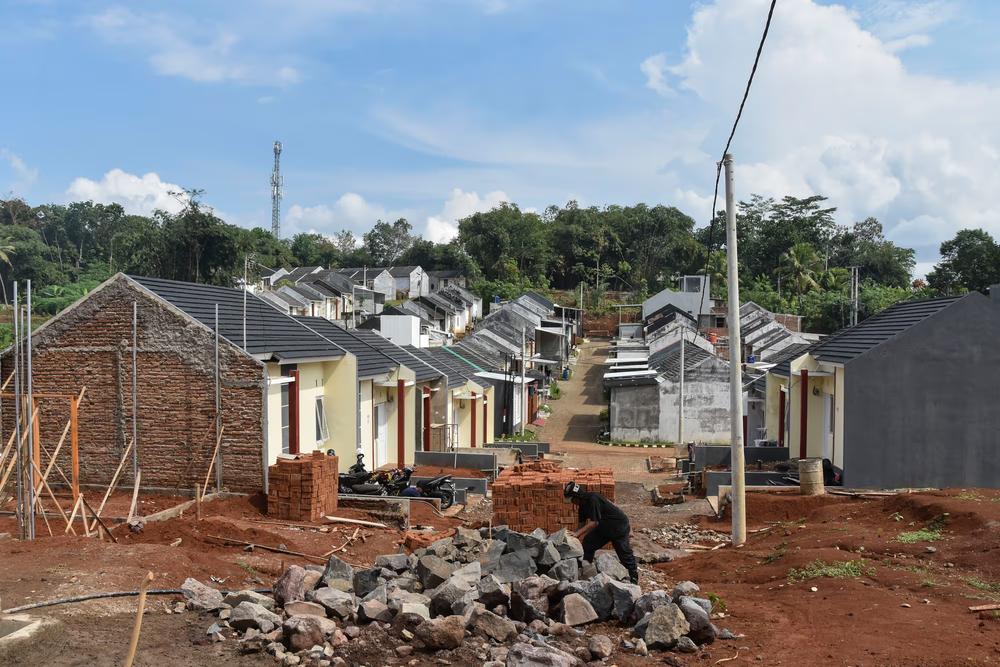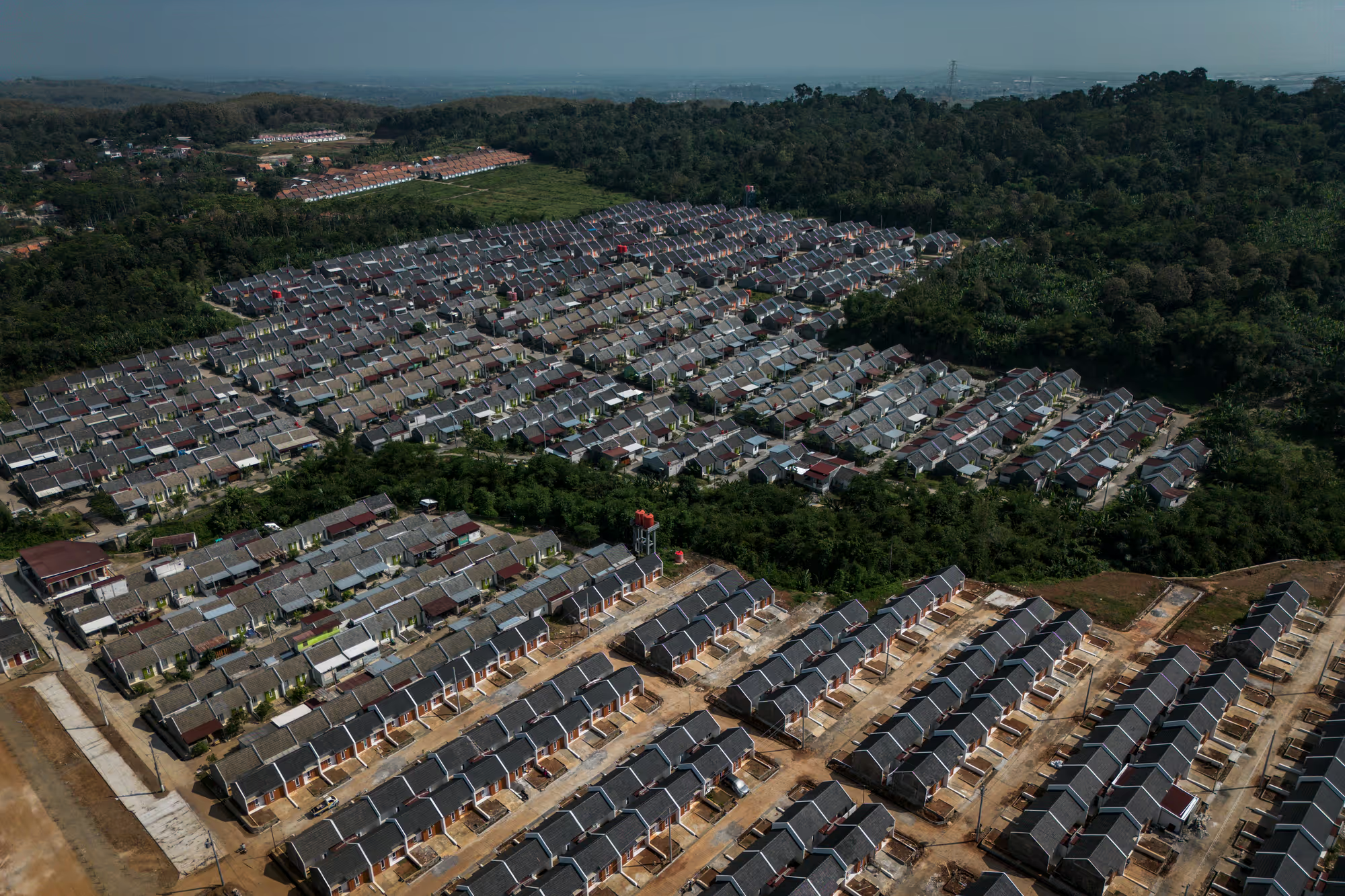
Wearing a blue-toned batik shirt, Minister of Housing and Settlement Areas Maruarar Sirait met President Prabowo Subianto at the Presidential Palace in Jakarta on Wednesday, July 30, 2025. He reported the latest progress on subsidized housing for the public and outlined several strategic initiatives, including a large-scale launch of subsidized homes and a new People’s Business Credit (KUR) scheme dedicated to housing.
“The first thing I reported was that we will hold an event in September - the launch of subsidized homes. The plan is to do it on a massive scale in September,” Maruarar said after the meeting.

The subsidized-housing program will be launched simultaneously across multiple cities, with an initial target of at least 25,000 units. The increase in the national subsidized-housing quota from around 200,000 to 350,000 units this year is seen as a significant step toward meeting public housing needs. “This is the first time the quota has increased. It used to be around 200,000; this year it’s 350,000,” he said.
Maruarar emphasized that broad support is key to the program’s success. Subsidized homes will be prioritized for farmers, fishers, laborers, teachers, drivers, and media workers, among others.
“For the first time, we’re allocating 20,000 units for farmers, 20,000 for fishers, and 20,000 for laborers. For media workers, 3,000 units; for drivers, 8,000 units have been allocated for now; and 20,000 units for teachers—along with other community groups,” he explained.
Beyond subsidies, the government is preparing a dedicated KUR-Housing scheme—an Indonesian first—aimed at supporting developers and contractors and boosting tourism through homestay development.
The government is preparing a dedicated KUR-Housing scheme—an Indonesian first
“This is the first time Indonesia will have a people’s business credit program for housing. It’s a first under President Prabowo, with support from Danantara and state-owned enterprises, coordinated by Coordinating Minister for Economic Affairs Airlangga Hartarto and Finance Minister Sri Mulyani. On the supply side, there will be significant support for developers and contractors,” Maruarar said.
Three Million Homes Strategic Project
To provide decent housing for the public—especially low-income households (MBR)—the government is targeting the construction of three million units through the Three Million Homes Program, a flagship initiative prioritized by President Prabowo Subianto. The program is also a campaign pledge, slated to be achieved within a single five-year term.
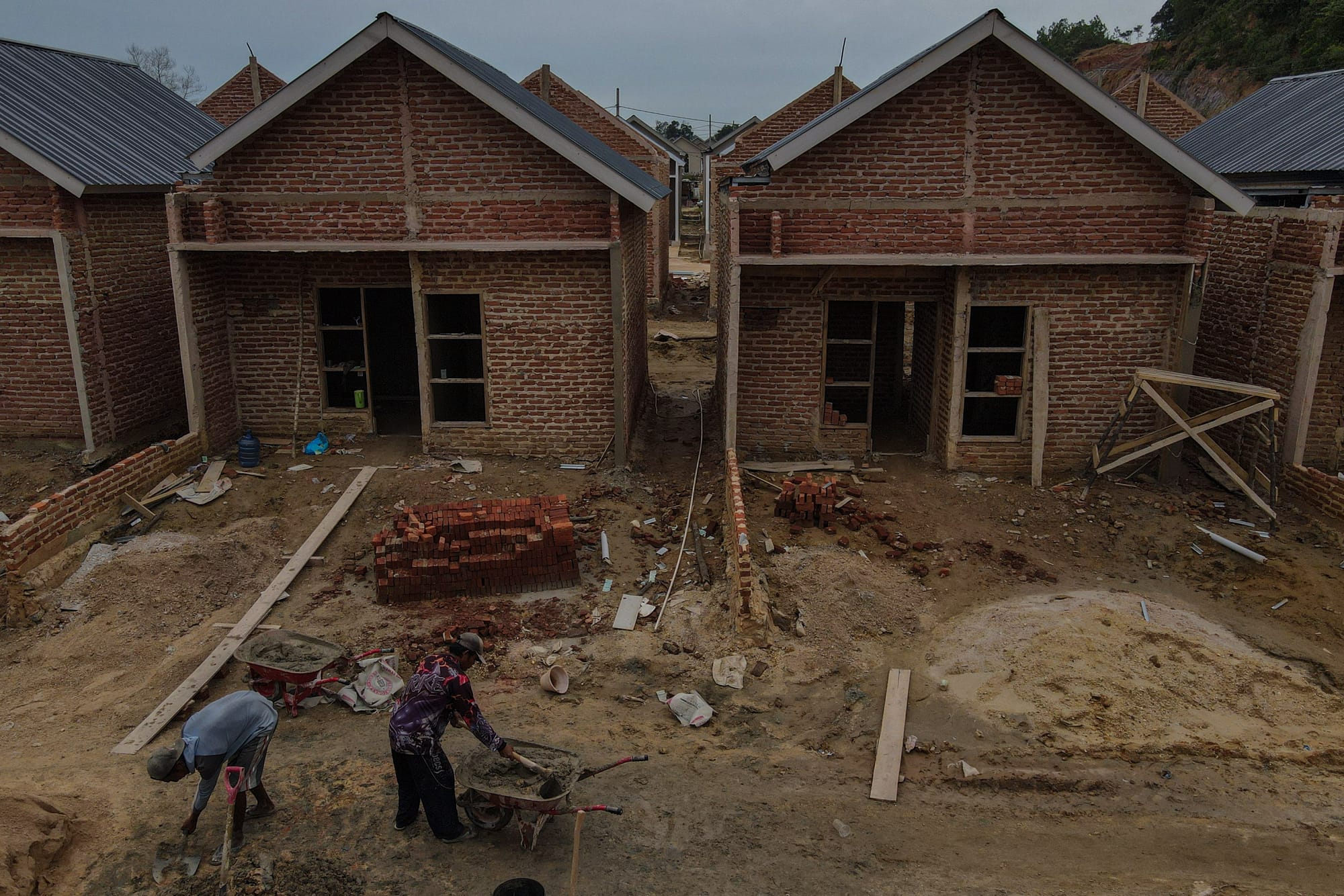
The program aims to build two million homes in rural and coastal areas and one million in urban centers—tackling the housing backlog and providing livable dwellings. Indirectly, it is expected to help reduce stunting and poverty, address broader housing and settlement issues, and stimulate the national economy.
The Presidential Task Force has said the state would need Rp53.6 trillion to realize the program. To date, however, the Ministry of Housing and Settlement Areas (PKP) has been allocated only Rp5.27 trillion—and only for 2025, with no allocations yet for 2026, 2027, and beyond, which will certainly require larger outlays.
Echoing this, Housing Minister Maruarar Sirait has flagged financing as the chief challenge in delivering the Three Million Homes Program. According to him, the state can only build and renovate 269,779 units based on appropriations in the state budget (APBN) that have been entered into budget execution lists (DIPA).
“Our capacity doesn’t reach 270,000 (homes). From the APBN and from FLPP,” Maruarar told Commission V of the House of Representatives at the Parliament Complex, Senayan, Central Jakarta, May 19, 2025.
At present, PKP’s post-efficiency budget ceiling stands at Rp3.446 trillion. In a roadmap presentation for the Three Million Homes Program, Maruarar detailed: 2,682 units of walk-up flats (rusun) to be built; 476 units of special-purpose housing; 6,687 rusun units to be revitalized; 38,504 units under the Self-Help Housing Stimulus (BSPS); 1,430 units through slum-area upgrading; and 220,000 units financed under the Public Housing Financing Liquidity Facility (FLPP).
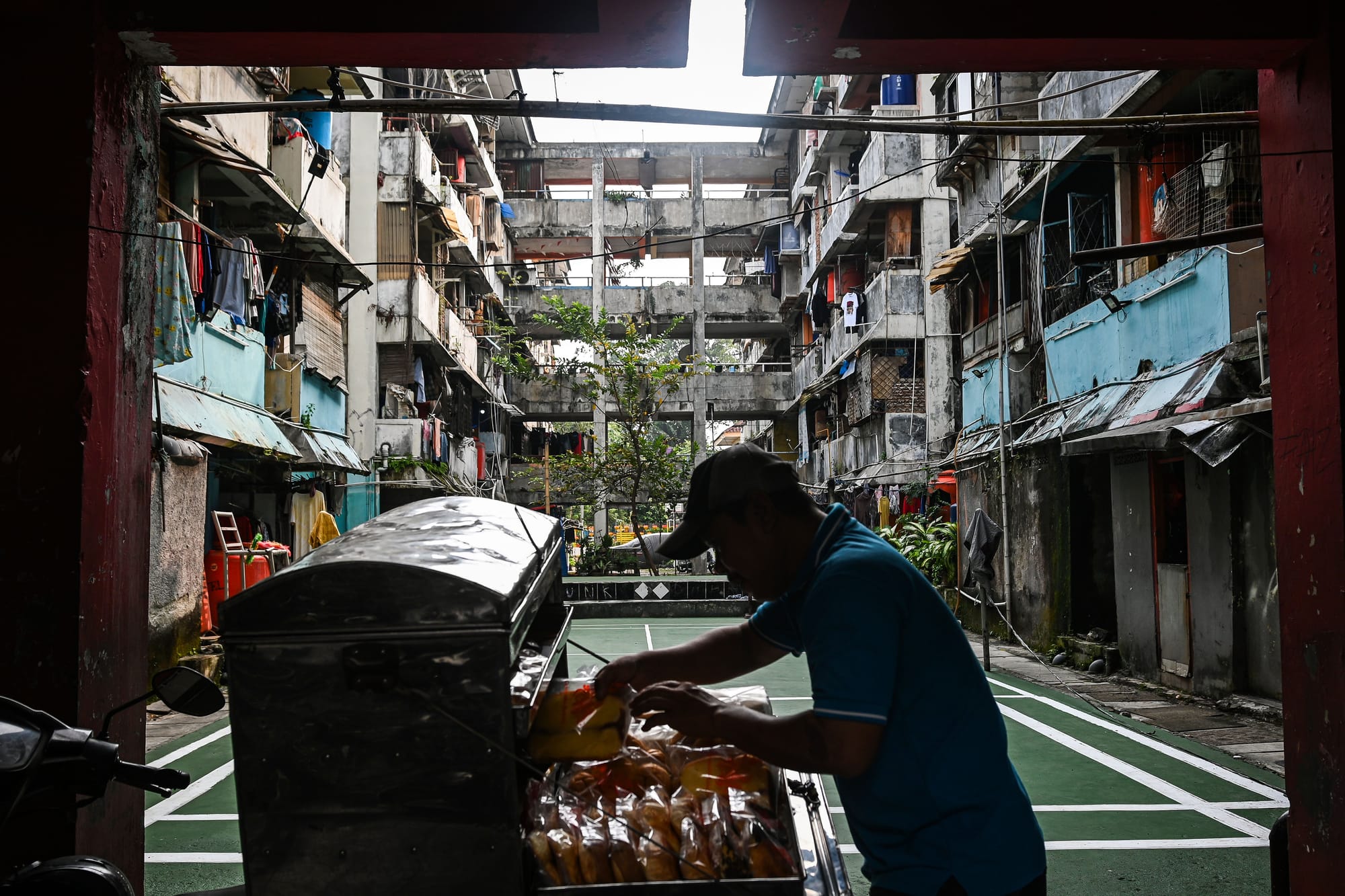
Maruarar said the remaining task for PKP is the three-million target minus 269,799 homes. To close the gap, he is working with multiple stakeholders—including the Ministry of Finance and private firms—to secure financing. One outcome is an increase in the FLPP quota from 220,000 to 350,000 units.
Chasing the Target with Incentives
To reach the goal of building up to three million homes within the year, the government is rolling out several incentives. First, it has extended the 100% Government-Borne Value-Added Tax (PPN DTP) incentive through the end of 2025.
The incentive applies to purchases of landed houses and apartments priced at a maximum of Rp2 billion. In other words, buyers in that price category do not have to pay VAT. For homes priced between Rp2 billion and Rp5 billion, VAT is only levied on the portion above Rp2 billion. The policy is expected to boost purchasing power and reinvigorate the national property sector.
Finance Minister Sri Mulyani Indrawati has approved extending the 100% PPN DTP for home purchases until December 2025 and is preparing a revision to the Finance Minister Regulation (PMK).
“We have approved the 100 percent PPN DTP for housing. The PMK amendment to extend it until December is now in process,” Sri Mulyani said at a Financial System Stability Committee (KSSK) press conference in Jakarta, Monday, July 28, 2025.
Previously, the incentive was stipulated in Finance Minister Regulation (PMK) No. 13 of 2025, which set the benefit based on the delivery date of the unit.
For units delivered January 1–June 30, 2025, the government bore 100% of VAT on a Rp2 billion tax base (DPP). For deliveries July 1–December 31, 2025, the PPN DTP was 50% of the Rp2 billion DPP.
The government has now decided to keep the 100% incentive in place through December 2025 to support household demand—particularly for home purchases—and to maintain growth in a property sector with strong multiplier effects on the broader economy.
The decision was taken at a coordinating meeting on economic growth with the relevant technical ministries at the Coordinating Ministry for Economic Affairs in Jakarta on Friday, July 25, 2025. “We hope this signals that we are using every fiscal instrument at our disposal to drive the economy,” Sri Mulyani said.
Beyond subsidized down payments, another incentive aimed at lifting the subsidized-housing quota is through the FLPP scheme. This year, the quota has been raised from 220,000 to 350,000 units, supported by Rp35.2 trillion from the state budget— a concrete step to broaden access for low-income households.
The Public Housing Savings Management Agency (BP Tapera) reports that FLPP disbursements reached Rp15.73 trillion through July 2025, financing 126,032 homes, with West Java recording the largest share, Commissioner Heru Pudyo Nugroho said.
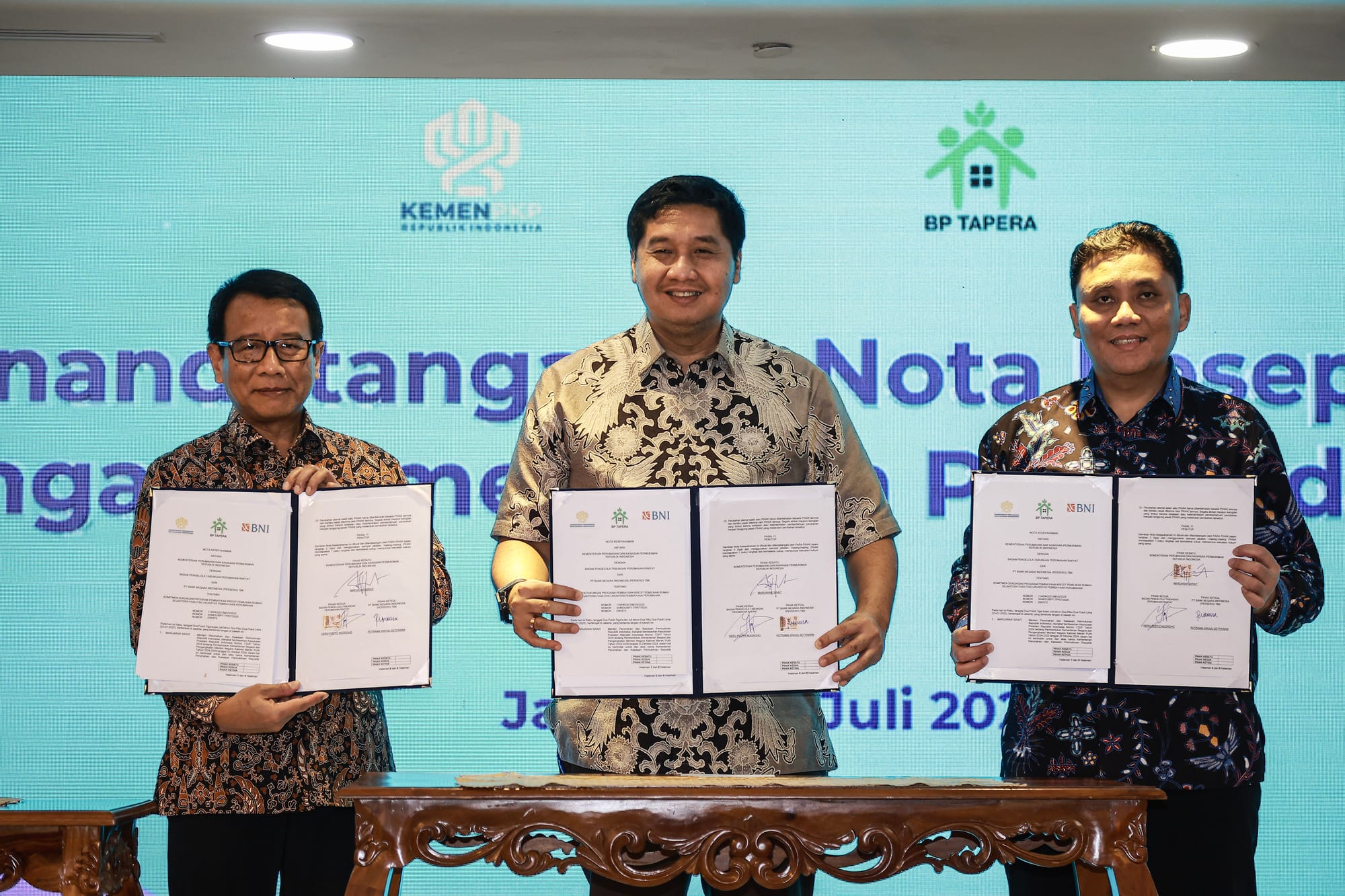
In addition to BP Tapera’s channeling, the Association of Public Housing Developers (Himperra) and BPJS Employment have launched a zero-down-payment program for FLPP homes. Under this scheme, the down payment is covered by developers, so buyers do not need to pay upfront—an option for households that struggle to meet down-payment requirements.
Further incentives include exemptions from the Land and Building Rights Acquisition Duty (BPHTB) for subsidized homes and expedited processing of Building Approval (PBG) nationwide.
Housing-Sector Business Credit
The latest measure, slated for rollout in September, is a dedicated People’s Business Credit (KUR) program for the housing sector worth up to Rp130 trillion. The government is finalizing regulations for the program, which targets small and medium enterprises engaged in housing development.
Officials stress the program will not cut into the existing KUR ceiling for MSMEs, as it will be backed directly by the Indonesia Investment Authority (BPI) Danantara, which has committed Rp130 trillion in KUR financing for housing.
Disbursement under KUR-Housing will run on two tracks. On the supply side—linked to developers and the broader housing ecosystem to produce quality, livable homes—the budget ceiling will reach Rp177 trillion.
On the demand side, Rp13 trillion will be allocated for communities seeking to develop housing-related businesses such as shop-houses (ruko) and homestays, with the aim of boosting local economies and welfare.
“Use of KUR-Housing funds as part of housing-finance subsidies must be transparent and accountable. Key indicators include accurate targeting, low NPLs, and helping MSMEs move up the value chain,” said PKP Ministry Secretary-General Didyk Choirul, as quoted on the Ministry of Housing and Settlement Areas website.
He added that the ministry will continue to invite stakeholder input through focus group discussions (FGDs) with developer associations to secure broad support and ensure the program complies with good governance and applicable regulations.
State-owned banks (Himbara) already active in KUR distribution—such as BRI—and housing finance specialist BTN will serve as KUR-Housing channeling banks. “We are also discussing involving Nobu Bank, BCA, and Artha Graha as KUR-Housing distributors and conducting FGDs to gather feedback from builders and developer associations,” Didyk said.
The Vital Role of Banks in Financing
Banks are also central to accelerating subsidized mortgages (KPR) under the FLPP scheme for low-income households.
PT Bank Rakyat Indonesia (Persero) Tbk (BRI) reports positive results in subsidized KPR: 97,878 beneficiaries nationwide as of June 2025, up 18% year-on-year.
Outstanding balances reached Rp13.35 trillion, growing 19.51% year-on-year, with asset quality intact—NPLs at just 1.1%.
FLPP mortgages account for 97% of BRI’s subsidized KPR disbursements through mid-2025.
PT Bank Tabungan Negara (BTN) has financed 79,104 FLPP “KPR Sejahtera” units through end-May 2025. This year BTN targets 220,000 units to support the government’s People’s Housing Program.
PT Bank Negara Indonesia (BNI) says that as of July 23, 2025, it had disbursed 6,025 FLPP mortgages totaling Rp759.57 billion.
BNI’s 2025 FLPP quota is 25,000 units—more than double its initial 10,750-unit quota—part of its commitment to the government’s Three Million Homes program to reduce the national housing backlog.
Oversight of Housing Distribution
Despite the involvement of many institutions, this program will still face numerous obstacles in the future. The amount of land available for housing is shrinking due to highly concentrated land ownership by a few parties. This is driving up land costs for the Three Million Homes program, even though housing should be made as affordable as possible for low-income communities.
Within the government, housing issues are handled by six ministries or agencies. This causes slow administrative processes and coordination among stakeholders managing the housing sector. If the bureaucracy is not streamlined, the Three Million Homes program will be difficult to implement.
Finally, distribution of the three million homes that have been built must be monitored so that they reach the intended target—low-income households. Without strict oversight, the program risks misuse and could be captured by parties outside the target group.
Without strict oversight, the program risks misuse and could be captured by parties outside the target group.
If this happens, the program cannot be deemed successful because the housing needs of low-income communities will remain unmet.
Property analyst Anton Sitorus, who also serves as Head of Research at Coldwell Banker Richard Ellis (CBRE) Indonesia, said one current priority for the government to ensure the Three Million Homes program runs well is to make sure all incentive packages are moving and having an impact, rather than standing still. If any one of those incentive packages fails, the three-million-unit target will be difficult to achieve and could remain mere discourse. Therefore, he believes it is better for the government to focus on implementing existing incentives rather than adding new ones.
“If you ask me about the three-million-homes program, there is no issue—the objective is very noble. I just want those incentive packages to truly work and face no obstacles,” he told SUAR on August 1, 2025.
He noted the lesson from last year: the government targeted one million homes, but actual construction reached only 300,000 units, or 30% of the target. The same applies to the three-million-homes program—conceptually very good, helping people obtain decent housing. However, in reality, it may take hard work to achieve. The key lies in implementing the incentive packages as planned.
Anton highlighted the FLPP scheme within the incentive package as a priority, because it also delivers economic spillovers by driving growth in the construction sector. “The government should focus on developing FLPP, because many people need subsidized homes, especially low-income households,” he said.
On the other hand, standards for subsidized housing should follow the World Health Organization (WHO) benchmark of at least 7.2 square meters per person and Indonesia’s National Standard (SNI) of 9 square meters per person. The government must also consider occupant comfort, as comfort affects a person’s happiness index in daily life.
By Mukhlison, Harits Arrazie, and Ridho Syukra