
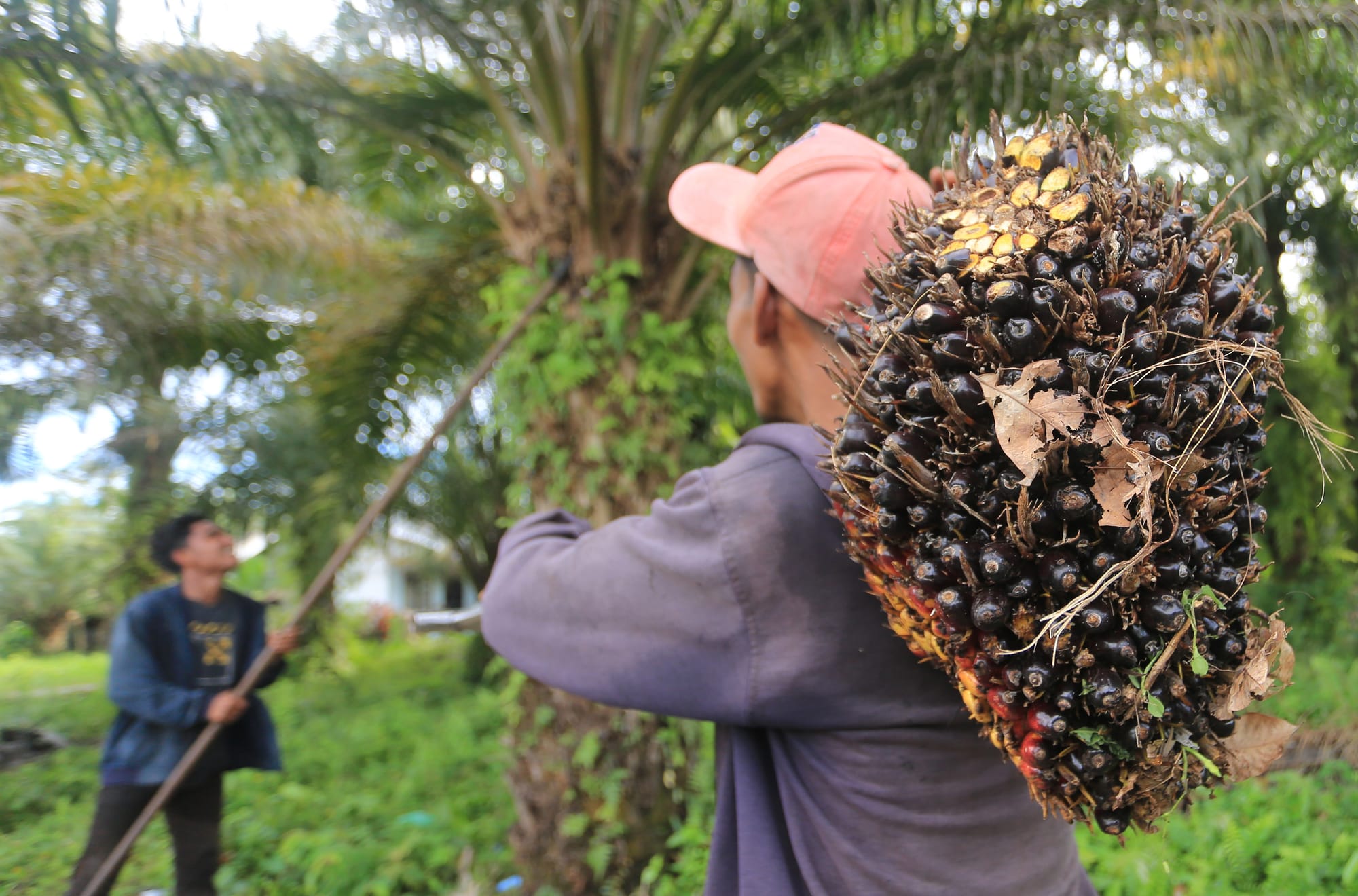
Indonesia's victory in the biodiesel trade dispute in the World Trade Organization (WTO) ruling is a ray of hope for the palm oil industry and the development of national biodiesel.
However, instead of complying with the WTO ruling, the EU chose to appeal to the WTO, leaving the case in limbo again amid economic uncertainty.
Trade Minister Budi Santoso even called this an attempt by the European Union to buy time.
"Appeals are indeed the right of every WTO member. However, this move by the EU can be seen as an attempt to buy time. Therefore, Indonesia encourages the EU to cooperate constructively, adopt the panel ruling, and help overcome the paralysis of the WTO dispute settlement system. Furthermore, Indonesia will take strategic steps to secure and expand biodiesel market access to the EU," Trade Minister Busan said in a release last weekend.
According to data from the Indonesian Ministry of Trade, together with Malaysia, Indonesia supplies 87 percent of global palm oil production, where Indonesia is the largest producer and exporter in the world market, while Malaysia is in second place.
How did the Dispute Start?
The dispute between the two countries stems from the European Union opening an anti-subsidy investigation on December 6, 2018, after assessing that Indonesia's biodiesel industry receives government support that is considered to give it an unbalanced advantage in the global market.
The European Union considers Indonesian biodiesel producers to have obtained a number of unfair advantages, ranging from tax breaks to the ease of obtaining raw materials at lower prices than the market.
On that basis, since November 2019, the EU has imposed countervailing duties (CVD) of 8-18 percent on biodiesel from Indonesia.
Responding to the policy, Indonesia sued through the WTO dispute mechanism in August 2023. Two years later, in August 2025, the WTO Panel ruled in favor of Indonesia in the DS618 case.
What is the Government's Response?
The Indonesian government is pushing the European Union (EU) to adopt the World Trade Organization (WTO) Dispute Panel DS618 ruling regarding Indonesia's biodiesel countervailing duties (CVD) policy announced on September 26, 2025.
Trade Minister Budi Santoso said the government regrets the EU's move to appeal the ruling. This is because the appeal was submitted to the WTO Appellate Body which is currently not functioning (appeal into the void).
"The EU's decision to appeal the decision of Dispute Panel DS618 is irrelevant. The panel decision-making process has been carried out according to procedures, and led by experienced and credible panelists. This appeal step is not in line with the spirit of strengthening economic relations," said the Trade Minister in a press release received by SUAR in Jakarta (3/10).
However, the WTO Appellate Body is currently not functioning due to the US blockade of membership replenishment, so there is no minimum quorum to process appeal cases. This raises questions about the EU's goodwill and commitment to resolving disputes fairly.
Employer expectations
The Indonesian Biofuel Producers Association (Aprobi) asked the European Union to respect the WTO ruling, as the victory achieved by Indonesia has gone through a long and tiring process.
Aprobi Deputy Chairperson Catra De Thouars said the European Union would look for various ways to bring down Indonesian palm oil products and often conduct black campaigns.
Indonesia's victory at the WTO proves that Indonesian palm oil products are clean and indirectly becomes a momentum to boost exports.
"We support the government's statement that is upset over the EU's move to appeal again, keep monitoring the developments," he told SUAR in Jakarta (4/10).
He said that for almost two years, business players fought tooth and nail against the European Union, and the struggle was not in vain as it yielded sweet results this year, with Indonesia winning.
Indonesian Palm Oil Association (Gapki) Chairman Eddy Martono said the EU's move to appeal the WTO ruling was predictable. Since Indonesia won, the EU did not accept and objected.
Eddy said that biodiesel exports are not really prioritized because Indonesia has a mandatory for domestic fulfillment.
"Indonesia is not proven guilty and that is a fixed price, the government must fight for it," he told SUAR in Jakarta (3/10).
What does the expert suggest?
IPB Agriculture Observer Dwi Andreas said the WTO ruling in favor of Indonesia regarding biodiesel products is an absolute decision and must be fought for.
WTO support has a direct impact on Indonesia's position in global trade, Indonesian palm products have no problem.
"The future challenges that are still faced are related to accusations that palm oil products are not environmentally friendly and are related to deforestation," he told SUAR in Jakarta (3/10).
Meanwhile, Chairman of the Indonesian Palm Oil Council (DMSI) Sahat Sinaga said that exports of biodiesel products to Europe are not too large, the composition of exports is more dominant to CPO so Indonesia does not have to worry about the EU appeal.
"The European Union should respect the WTO ruling, don't make the problem longer," he said.
According to him, the quality of Indonesian palm oil is very good and has many benefits, so many other countries are jealous and looking for ways to prevent Indonesian palm oil from entering the world market or in other words, carrying out a black campaign.
So far, the European Union has often launched a "black campaign" against palm oil by claiming that Indonesian and Malaysian palm oil is obtained from forest destruction and causes climate change.
"The government does not need to be afraid to face the European Union, just fight because Indonesia has clearly won," he told SUAR in Jakarta (6/10).
He said that after the IEU-CEPA was signed, it would further strengthen Indonesia's trade position to Europe.
He said the main advantage of palm oil in the export market is that it is used as raw material for chocolate and can be used for frying, while sunflower oil, which is owned by Europe, cannot be used for frying but only for salad dressing.