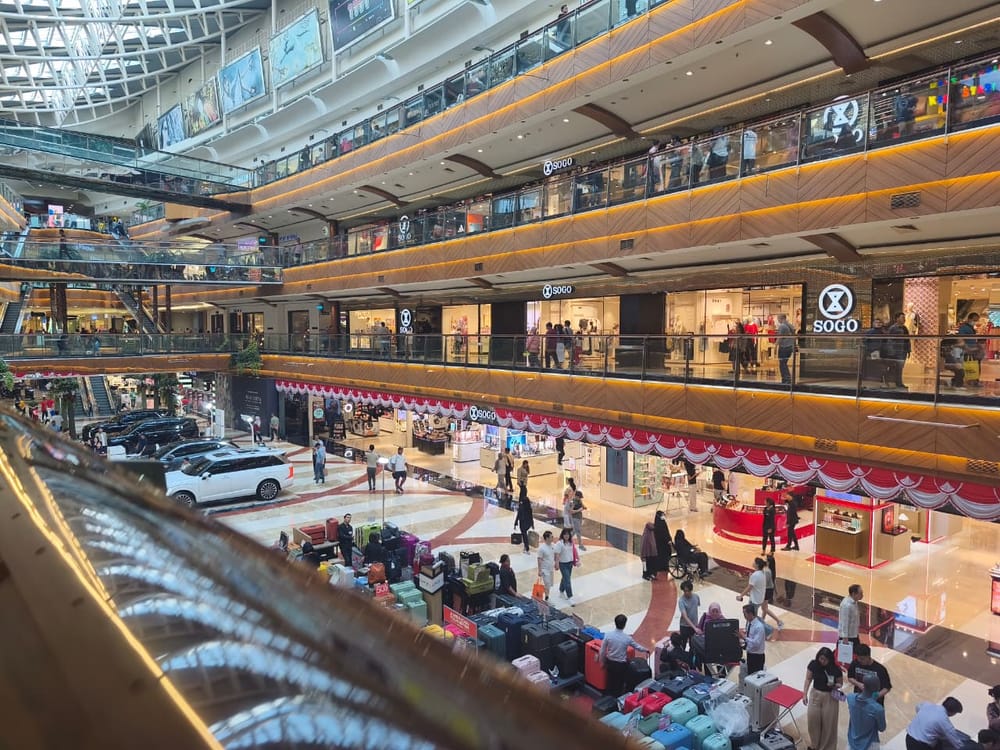


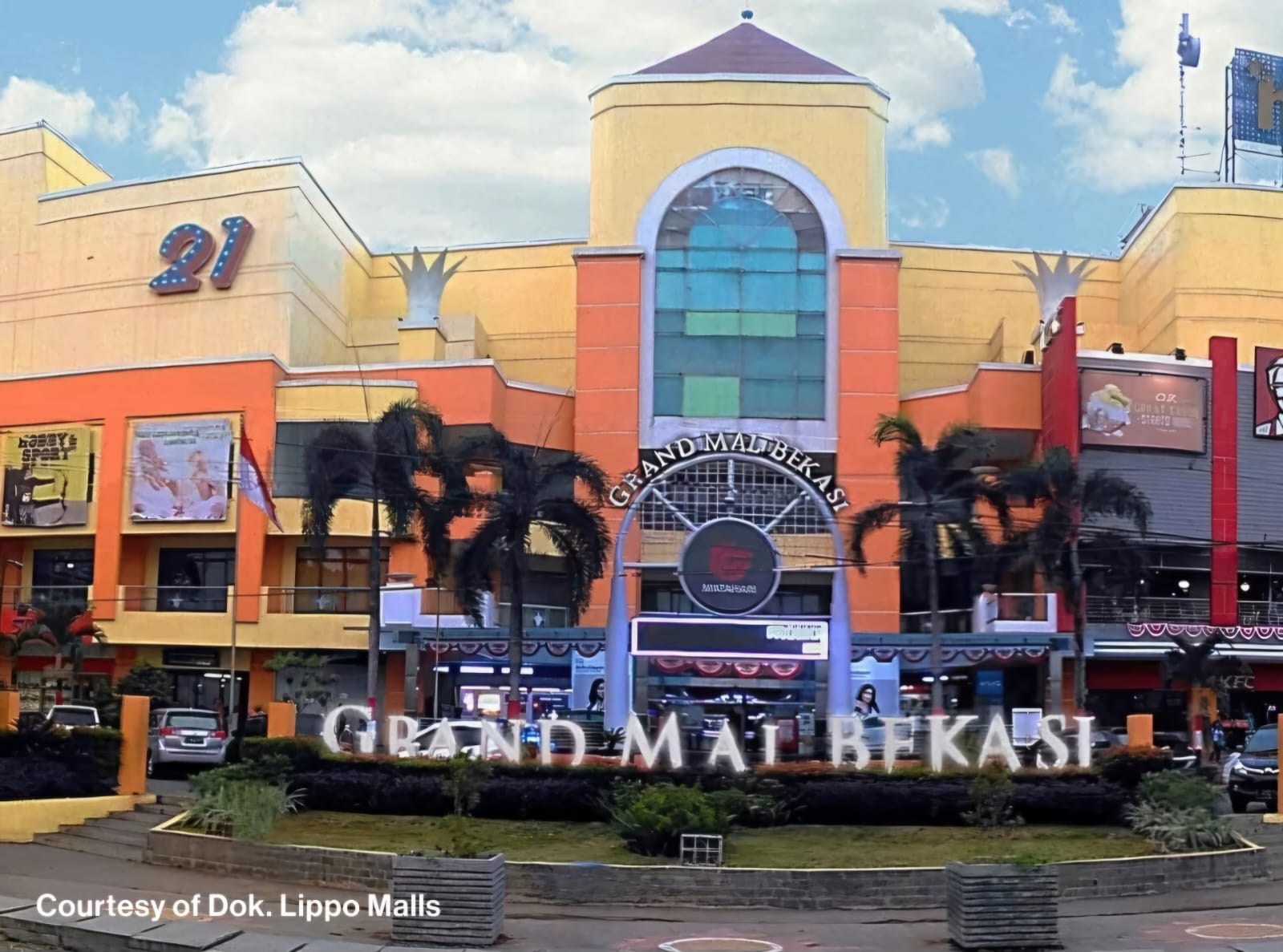
One of the old malls in Bekasi, Grand Mall Bekasi, has closed its operations since the beginning of this year. Retailers and shopping center entrepreneurs need to anticipate and prepare strategies to survive.
Since January 1, 2025, the shopping center that was once an icon of West Bekasi has officially closed temporarily. For many residents, this closure feels symbolic, a sign that the era of the mall as a place for family recreation, youth hangout, and the economic center of the city is at a crossroads.
According to the management, the sluggish retail business after the pandemic is one of the main causes. Although the economy is starting to turn again, purchasing power and consumer behavior do not seem to have returned to where they were.
"We continue to improve, but behind it all there are some conditions that are not maximally good," said Sufala Handri, Senior Head of Department Marketing Communication Grand Mall Bekasi, Friday (10/10/2025), quoted from Kompas.com.
For Bekasi's youth, Grand Mall is not just a place to shop. It was a social space, the first hangout, a place to watch cheap movies, and a place where many simple memories grew unknowingly. When the news of Grand Mall's closure surfaced, for some residents, it was not just economic news, but news of loss.
Tri Subarkah or Akah, a 31-year-old Kranji resident, remembers the mall like he remembers his own childhood. "I honestly can't remember the last time I went there," he said with a chuckle.
"But when I was a kid, I watched movies quite often, at most until junior high school. The last time I went to high school, around 2011, I watched a movie at 21. Not XXI, 21 is cheaper. I went there not because I wanted to go to the Grand Mall, but because I wanted to watch movies and the tickets were cheap."
After that, his visits stopped. Grand Mall was the first mall close to his house, but over time, its appeal faded.
"The tenacity is lacking. So I was lazy. Moreover, at that time there were new competitors like Summarecon Mall Bekasi. People, including me, prefer to go there. The facilities are complete, more modern, and there is a lifestyle sensation," he said.
Similar memories come from Lina Perdana (40), a slightly older generation, but with the same nostalgia. "Grand Mall is where my aunt and I used to eat meatballs on the ground floor, near the side door. There are pictures of artists on the wall," he says with a smile. "I also used to have an appointment with my boyfriend there, hahaha."
For Lina, the Grand Mall is not just a building for transactions, but part of her routine and teenage memories when Bekasi was not as busy as it is now. Now, as new shopping centers sprout up in every corner of the city, those memories feel like irreplaceable pieces of the past.
Mall innovation
According to Chairman of the Association of Indonesian Shopping Center Managers (APPBI) Alphonzus Widjaja, the closure of Grand Mall Bekasi should be a reminder that the retail world is now moving very fast, and only those willing to innovate can survive.
"Grand Mall Bekasi has not been operating since the beginning of the year after experiencing a decline in visitation levels for several years," Alphonzus told the Suar editorial crew through a written statement, Sunday (12/10/2025).
He explained that the rapid growth of new shopping centers in the Bekasi area brings its own challenges for old players. Many new malls come with more innovative concepts, presenting a unique customer experience and customer journey to attract visitors.
Meanwhile, shopping centers that do not update will easily fall behind. "If the old shopping center is just silent or does not do anything, of course it will no longer be attractive to the public. Eventually, customers will leave, and tenants will also leave," he explained.
Read also:
 Benedictus Krisna Yogatama
According to him, Bekasi, as one of the buffer cities, has a very dynamic consumer character. Lifestyles, from hanging out trends to the need for flexible workspaces, change very quickly, and shopping centers that are unable to adjust will lose their relevance. "Shopping centers are synonymous with lifestyles that change all the time. If they are unable to respond, they will no longer be chosen by the public," he said.
According to Alphonzus, the key to mall adaptation lies in two main things: building concept and tenant mix. The building needs to have a unique design and ambience to give visitors a new experience, while the tenant mix must be complete and diverse, from entertainment to culinary. "Both of these demand innovation and creativity, which are far more important than just cost," he emphasized.
Responding to complaints about funding for transformation, he argued that innovation does not always have to be expensive. He cited the example of the Blok M area in Jakarta, which was able to transform into a vibrant public space without major investment.
Apart from managers, retailers are also required to transform. According to Alphonzus, many retailers were forced to close not only because of external factors such as the pandemic, but because they failed to adjust to changes in the way people shop.
In other words, the success of a mall in today's era is not only determined by how grand the building is, but how far it is able to read changes and turn them into opportunities.
Chairman of the Indonesian Retailers & Shopping Center Tenants Association (Hippindo) Budihardjo Iduansjah, said that the closure of Grand Mall Bekasi cannot be separated from the changing retail landscape in the region itself. In recent years, Bekasi has become one of the areas with the fastest growing shopping centers in Jabodetabek.
"There is now Pakuwon too, and several new malls that are directly connected to the LRT," he told Suar via voice message, Sunday (12/10/2025).
This condition makes the market more competitive. Therefore, according to him, the key to survival is not just about location or size, but about concept. "If there are too many malls in the same area, each must have a unique positioning," said Budi.
"For example, if Pakuwon is an elite mall, Grand Mall can take a niche as a mall with local brands or local outlets. So it still has its own customers."
For Budi, the lesson from Grand Mall Bekasi is not just about losing the competition, but about the loss of identity in an increasingly homogenous market. When malls only become buying and selling spaces without differentiating values, they are easily displaced by new competitors, or even by the screens of devices in the hands of their own consumers.
However, not all retail problems stop at innovation. "Now many consumers compare prices. How come it's cheaper online? Because many online sellers don't pay taxes," he said. "While we in the shopping center have to pay VAT, pay import tax. Automatically, the price becomes expensive."
As a result, many mall visitors come just for window shopping without making any transactions. "The decline in buyers at the mall can occur not only because of weak purchasing power, but because the goods in the store are incomplete, the prices are expensive," he said.
Budiharjo believes that if left unchecked, this trend could have a domino effect: "As soon as the purchase moves online, stores in malls close, layoffs occur, factories that supply them also stop production. Finally, people's purchasing power will decline."
He emphasized that the government needs to be present to provide stimulus for the struggling retail sector. "So far, there has been no tax relief for retail employees. Even though if this sector collapses, the impact is very broad," he said.
The closure of Grand Mall Bekasi is not just a story about the lack of visitors. According to Tauhid Ahmad, Executive Director of the Institute for Development of Economics and Finance (INDEF), this phenomenon is not an isolated event. It reflects three major changes that are taking place, namely the shift in shopping behavior, the emergence of competitors with new concepts, and the stagnation of the purchasing power of the lower middle class.
"If we look at it, this change has actually occurred since the COVID-19 pandemic. There is a big shift in consumer behavior," Tauhid said by telephone to Suar, Monday (13/10).
"People are getting more comfortable shopping through e-commerce: cheaper, more choices, and easier." These changes have made malls lose some of their function as shopping centers. Visitors now come not to shop, but to seek other experiences: hanging out, eating, or simply sightseeing.
This phenomenon, he continued, shows that the number of malls in Jakarta's buffer zone is too many while people's purchasing power is stagnant.
"The middle class now tends to hold back consumption, while the lower class has actually drastically decreased its purchasing power. So they are more selective, coming to the mall if there is really a need or certain entertainment."
To survive, according to him, mall managers must adapt to the new pattern. Expensive strategies such as total renovation are not necessarily effective; instead, efficiency and differentiation are key. "Rental costs should not be too high, because it will have an impact on product prices. If it is expensive, consumers will run away, and tenants will also leave. So operational efficiency must be done," he said.
Tauhid also emphasized the importance of concept malls. "Malls can no longer be generic. They must have a clear theme and segmentation. For example, one mall focuses on local brands, another on family entertainment, or co-working spaces. If everything is uniform, the competition will eat each other," he said.
Retail sales forecast
Despite the downturn, there is hope for an increase in retail sales. According to the Retail Sales Survey (SPE), retail sales performance in September 2025 is predicted to increase on an annual basis.
The September 2025 Index of Real Sales (IPR) is forecast to grow by 5.8% (yoy), higher than the previous month's growth of 3.5% (yoy).
Executive Director of the Communication Department of Bank Indonesia (BI) Ramdan Denny Prakoso said that the increase in retail sales mainly came from sales growth in the Food, Beverage and Tobacco Group, Other Household Supplies, and Cultural and Recreational Goods.
On a monthly basis, retail sales in September 2025 are predicted to contract slightly by 0.3% (mtm) mainly influenced by the decline in the Clothing Subgroup.
Responding to this, Bank Mandiri Chief Economist Andry Asmoro said that the Bank's economic research team estimates that retail sales performance will be better in 2025.
The increase in retail sales in 2025 was driven by increased community activity during national holidays and the large number of collective leave throughout 2025. In addition, expectations of lower inflationary pressures are expected to encourage public spending and increase retail sales going forward.
However, global uncertainty and exchange rate risks may affect retail sales going forward. We expect the inflation rate in 2025 to be at 2.38%, while household consumption in 2025 will grow by 4.92%.
On the other hand, entrepreneurs also need to be aware of the weakening consumption level. The Deposit Insurance Corporation's (LPS) Consumer Confidence Index (CCI) was recorded at 90.5 in September 2025. This figure fell 3.5 points compared to the previous month and signaled that the level of public optimism about economic conditions was again below the neutral limit of 100 points. This decline shows consumer caution in dealing with the economic and employment situation that has not fully recovered.
LPS noted that the weakening of the CCI in September was influenced by several main factors. The increase in prices of basic necessities was the dominant cause, followed by sluggish employment conditions. In addition, extreme weather that disrupted the agricultural sector also triggered concerns about the risk of crop failure in a number of regions, thus suppressing public confidence in economic stability.
Director of the LPS Research Group Seto Wardono, explained that the combination of rising food prices and the difficulty of employment has put pressure on consumer confidence. The high price of fertilizer and production disruptions due to erratic weather are additional factors that worsen people's perceptions. This condition, according to him, makes some households more careful in managing expenses.
Despite the decline in consumer confidence, some people still view the future economic outlook positively. The Index of Expectations (IE) stood at 109 in September, remaining above the 100 level, reflecting optimism about economic conditions and income in the next six months. In contrast, the Current Situation Index (ISSI) fell 5.4 points to 65.8, signaling weaker perceptions of the economy and job availability.
The decline in CCI occurred in all household groups. The group earning above IDR7 million per month is still at an optimistic level with a score above 100, although it has decreased by 2.3 points compared to August. Meanwhile, the other three income groups fell between 2.6 to 10.4 points compared to the previous month.
Bank Permata Chief Economist, Josua Pardede, assessed that the decline in the CCI reflected more public caution than a sudden decline in purchasing power. He explained that the weakening mainly occurred in the ISSI which fell to 65.8 due to pressure on prices of basic necessities and working conditions, while the IE was still high at 109. According to him, this shows that consumers' perceptions of today's economy are weakening, but expectations for the next six months are maintained.
Josua added that food price pressure was the main cause of the decline in the CCI. This pressure is most pronounced in lower middle class households where most of their expenditure is allocated to food, so a slight increase in prices immediately reduces the space for non-food consumption. He said the government had prepared compensation measures such as rice and cooking oil assistance to cushion the impact of price increases in the field.
According to Josua, the gap between the IE and ISSI illustrates short-term economic pressures that have not been matched by real improvements, although optimism for the future remains high. Expectations for improvements in income and business activities are still positive, in line with the decline in deposit and credit interest rates which have begun to increase people's spending ability.
In terms of macroeconomics, Josua estimates that household consumption in the fourth quarter of 2025 will grow more moderately. The lower middle class may still hold back spending due to food price pressures, but various government stimuli are expected to be able to withstand the slowdown.
Banking liquidity that remains loose and the accelerated distribution of ministerial and regional spending, according to Josua, can be the main support for consumption. Thus, domestic demand will not fall sharply, although it still depends on food price stabilization.
Josua emphasized the importance of concrete and quick policy steps to restore consumer confidence. Food stabilization, he said, needs to be done through accelerating market operations and strengthening commodity logistics, followed by the distribution of targeted social assistance.
In addition, the decline in interest rates needs to be passed on to the consumption sector so that people's purchasing power increases without suppressing household cash flow. "If price stabilization and income policies run simultaneously, the gap between expectations and reality can narrow, and the CCI has the opportunity to return to the optimistic zone," said Josua.