
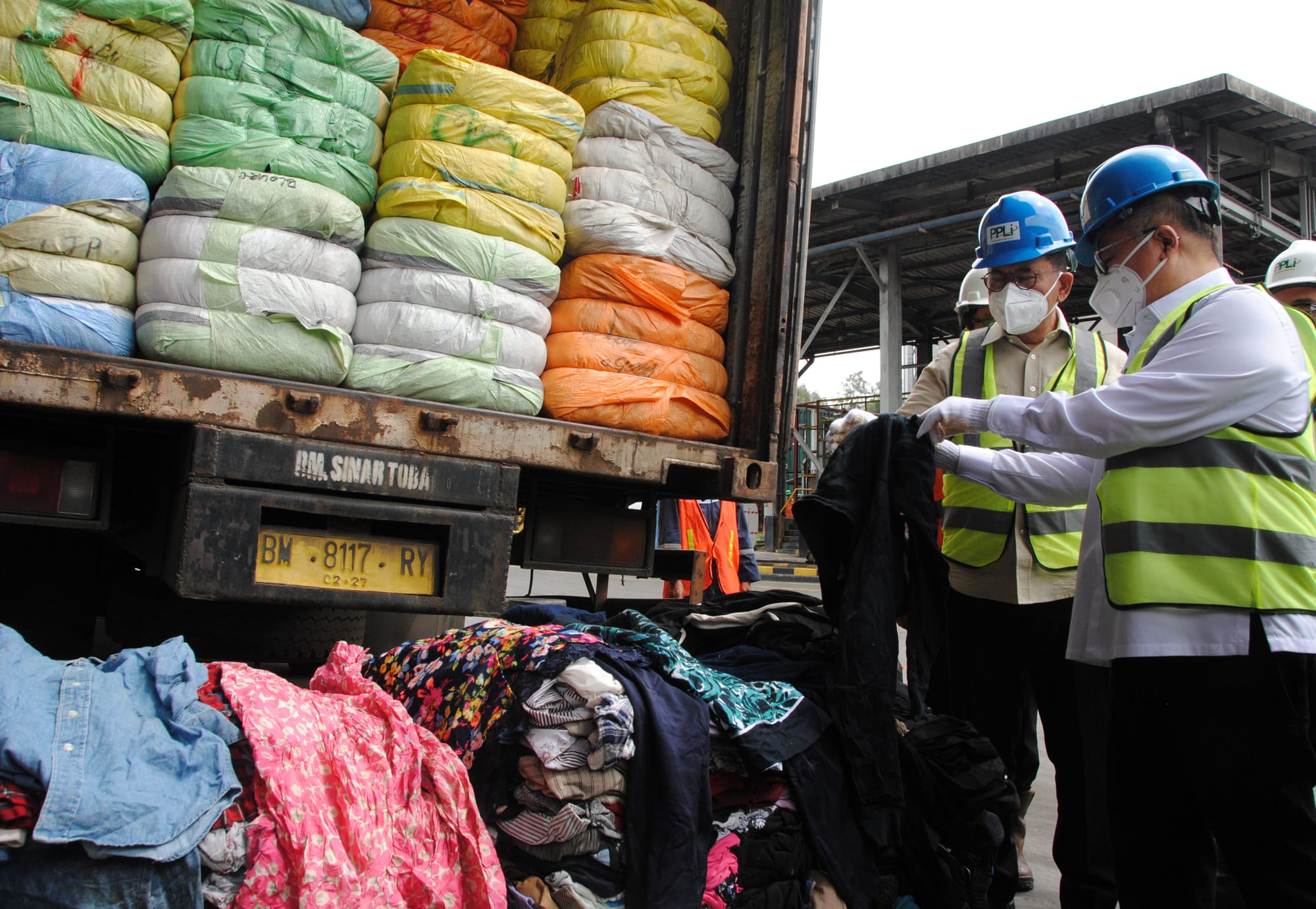
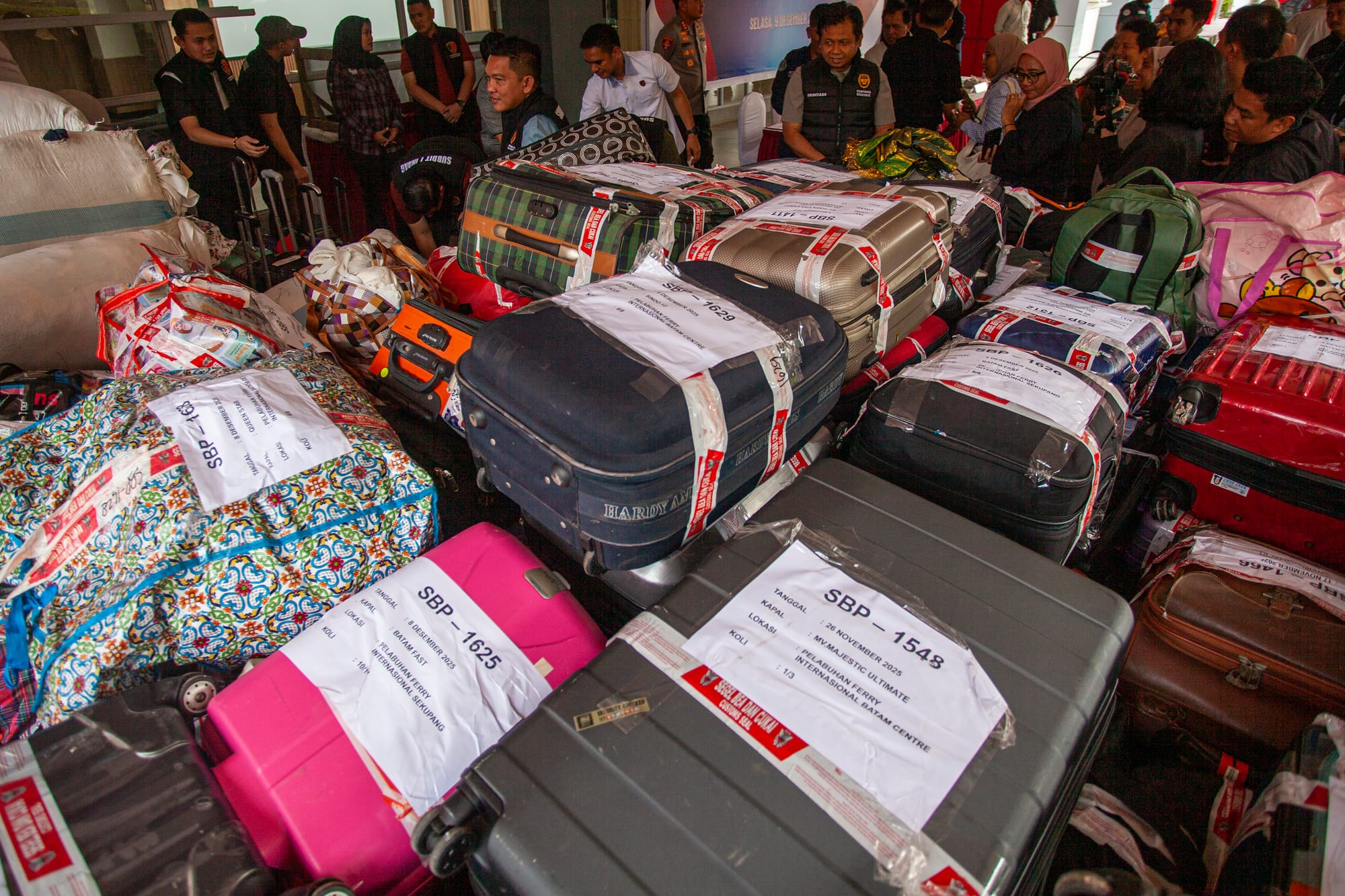
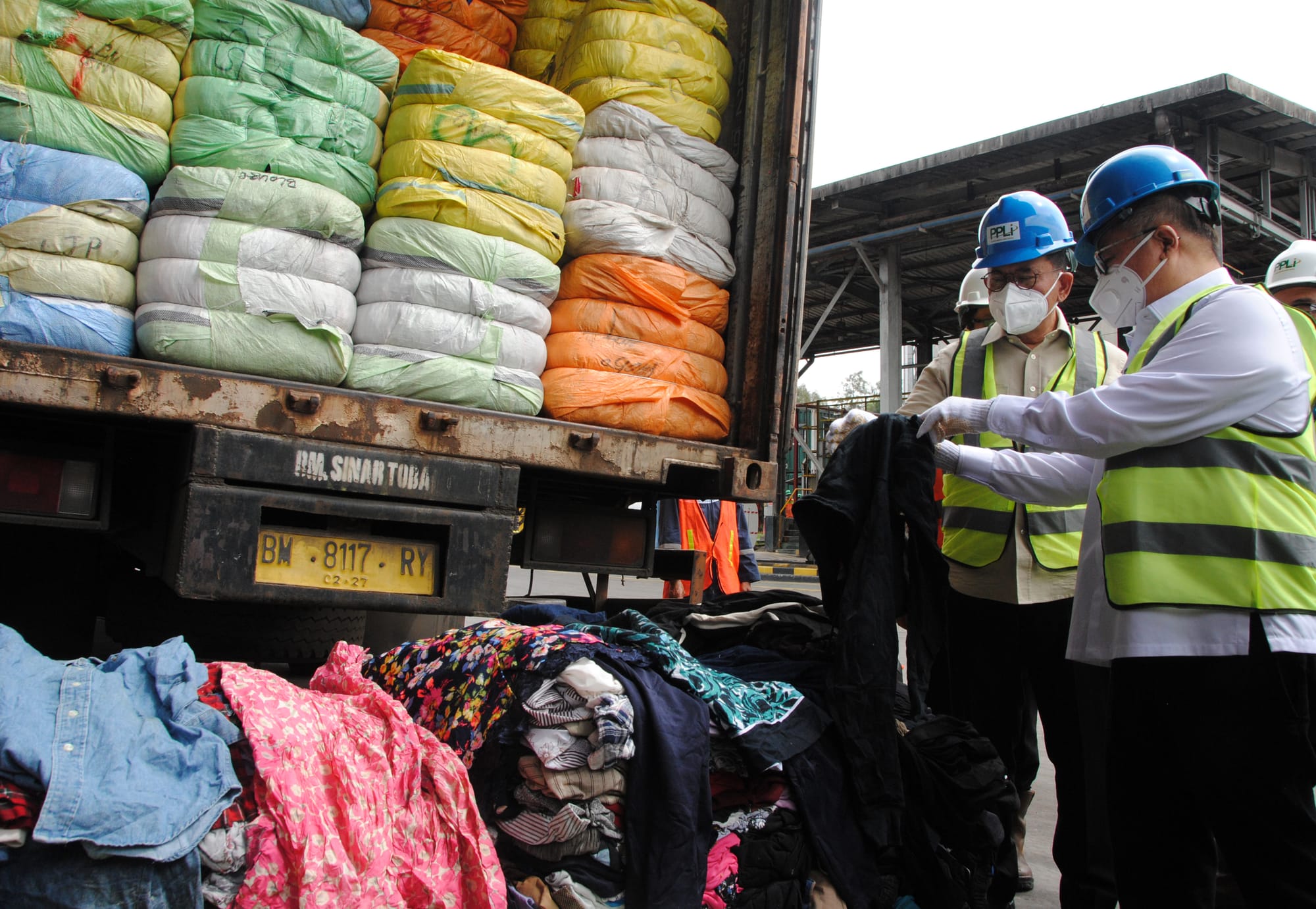
The government's desire to strictly close the door on imports of used clothing or balpres has been met with mixed reactions. On the one hand, this gives breathing space to the national textile industry, which has been overwhelmed by imports, but on the other hand, there are thousands of small traders selling used clothing who are threatened with losing their livelihoods.
The government's plan to ban imports of used clothing was announced by Finance Minister Purbaya Yudhi Sadewa. He emphasized that there would be no opportunity to use illegally confiscated garments, even for aid to disaster victims in Sumatra.
"Don't let that happen, or there will be more bailouts on the grounds that it's good for disasters," he said on Friday (12/12/2025).
Previously, on various occasions, Purbaya consistently emphasized that he did not support the practice of importing used clothing. One of his reasons was to save the national textile industry from the influx of imported used clothing.
However, the plan was met with resistance from secondhand clothing vendors. During a working meeting between Commission VI of the House of Representatives and vendors from Gedebage Market, the largest thrifting center in West Java, the vendors expressed their concerns directly. The head of the Gedebage Secondhand Clothing Vendors Alliance, Dewa Iman Sulaeman, voiced the collective concerns of the vendors.
"We have been selling for decades, sir. Since the 1990s. And it has been accepted by the lower-middle class. What will happen to us in the future when our market share is closed?" he said (12/2/2025).
In Gedebage alone, there are around 1,080 traders who make a living from the imported secondhand clothing market. For them, the import ban is not just a trade regulation; it is a matter of putting food on the table, paying bills, and sending their children to school.
Therefore, Dewa requested one thing that he considered simple: do not impose a ban until stocks are depleted. "Please use up what is already in our market share while we look for the best solution," he said.
The chairman of the Indonesian Used Clothing Traders Alliance, WR Rahasdikin, came up with another offer. According to him, if the government objects to the existence of illegal flea markets, then legalization and taxation could be a compromise option. He also proposed a 7.5%–10% levy to regulate the distribution of imported used clothing.
In their view, this policy could reduce smuggling, increase state tax revenue, and preserve jobs.
However, for the government, this directly conflicts with the Trade Law.
"It's illegal, it can't be legal," said Trade Minister Budi Santoso.
Read also:
 Benedictus Krisna Yogatama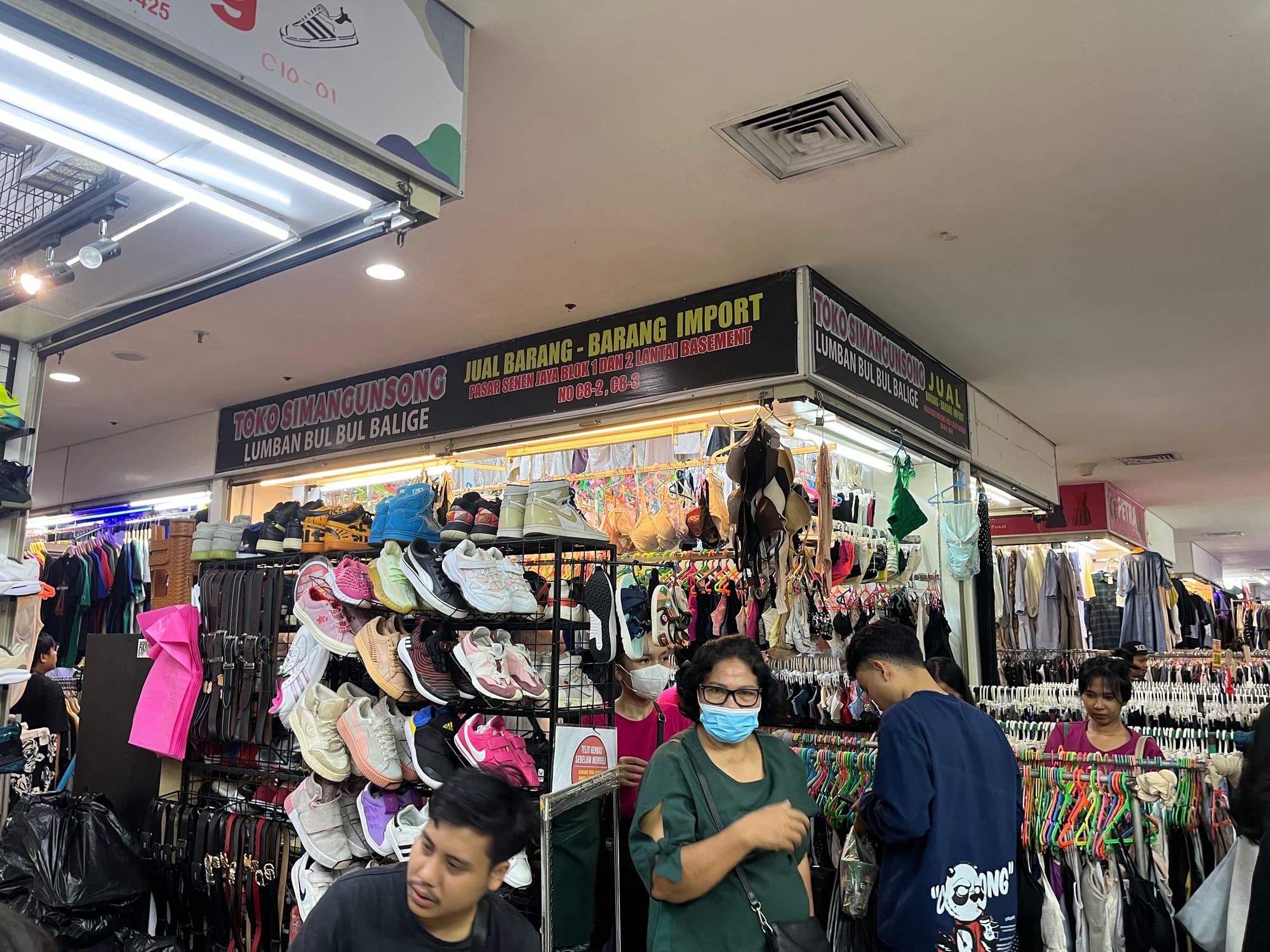
Deputy for Small Businesses at the Ministry of Micro, Small, and Medium Enterprises (UMKM) Temmy Satya also added that the ban on illegal imports of used clothing is clearly regulated in Articles 47 and 52 paragraph (2) of Law No. 7/2014 and reaffirmed through Minister of Trade Regulation 51/2015 and Minister of Trade Regulation 18/2021 in conjunction with Minister of Trade Regulation 40/2022.
For the government, a "middle ground" approach to legalizing illegal goods is not a viable option. However, this does not mean that the door to solutions is closed. In fact, it is precisely at this point that new opportunities begin to open up.
Filling the market space
Minister UMKM Abdurrahman said the government has consolidated around 1,300 local brands that are ready to become substitutes for thrifted or imported used clothing. The items include shirts, pants, shoes, sandals, and other products that are expected to provide new supplies for traders while maintaining the sustainability of their businesses.
Maman emphasized that the government does not want to destroy the livelihoods of traders. "They will continue to operate, but eventually their product supply will run out. We cannot allow that to happen. That is why we will replace them with local brand products."
This approach is gradual. The Ministry of Cooperatives and Small and Medium Enterprises has spoken with Senen Market traders who have agreed to slowly begin selling local products, provided that the government provides facilities and a transition scheme.
Chairperson of the Indonesian Garment and Textile Association (AGTi) and Deputy Managing Director of PT. Pan Brothers Tbk Anne Patricia Sutanto explained that the government and the business world, ranging from producer associations such as AGTI to the Indonesian Retailers Association (Hippindo), have actually been working behind the scenes.
"The government and the business community have coordinated with the Ministry UMKM. Solutions and steps have been provided," Anne said in a written statement on Sunday (12/14/2025).
One of the most concrete solutions currently being implemented is B2B business matching: bringing together producers and street vendors so that vendors can fill their stalls with legal and affordable goods.
Anne explained that AGTi and Hippindo have stock items that are priced even below market value because they are out of season. These items are not damaged, they are simply no longer part of the retail campaign period.
"Thisongoing process is expected to run organically, and ultimately fill the void left by illegal balpres," said Anne.
This approach opens up previously unthinkable opportunities for collaboration: thrift store owners, who are synonymous with imported secondhand goods, can connect with local producers without disrupting the established market chain. As of this writing, these efforts are being coordinated.
Confirming Anne's statement, Budiarjo Iduansyah, chairman of the Indonesian Shopping Center Retailers and Tenants Association (Hippindo), assessed that the transition from thrifting to legal products actually has a clear market precedent. According to him, in many retail sectors, secondhand and reconditioned goods have long had their own ecosystem.
"If used cars or used cell phones can be reconditioned and sold legally, clothing also has its own market," Budiarjo told Suar on Sunday (12/14/2025).
He mentioned that a number of Hippindo members also have direct links to the garment industry, both as manufacturers and distributors. Therefore, he believes that local brands can actually produce special lines to fill the market segment that has been dominated by thrift clothing, especially for consumers with limited purchasing power.
However, Budiarjo emphasized that this transition cannot be separated from the active role of the government, particularly in terms of industry. He highlighted the existence of warehouses and export-oriented factories scattered throughout Indonesia. In practice, many high-quality raw materials, even those that meet global standards, are piling up domestically because they cannot be re-exported or are subject to regulatory bottlenecks.
"In Indonesia, there are many export factories whose raw materials are piling up in warehouses. Even though the quality is good and meets global standards, they cannot be exported," he explained.
According to Budiarjo, this situation should be addressed through specific policies that allow these raw materials to be diverted to domestic UMKM and garment UMKM . With regulatory support and facilitation from the government, raw materials that were originally left unused can be processed into finished products for the domestic market.
He believes that this scheme not only paves the way for UMKM move up the ladder, but also accelerates the substitution of imported secondhand clothing with legal, affordable local products that meet market demand.
"If the government wants to help from the industrial side, the raw materials can be produced by UMKM. On average, these are good global product raw materials," said Budiarjo.
Saving the national textile industry
From the perspective of the domestic textile industry, the policy to ban the import of used clothing is not only a matter of legality, but also an opportunity to revive a sector that has been under pressure.
According to Redma Gita Wirawasta, Chairman of the Indonesian Filament Fiber and Yarn Producers Association (APSyFI), this policy could be included in the agenda to save the textile industry.
"This policy will be very helpful. Although it will not directly increase utilization, considering that illegal imports of new clothes, fabrics, and dumped yarn are also putting pressure on the industry's performance," he explained to Suar a written statement.
Redma added that in terms of cost comparison, local industries are actually competitive. What creates imbalance is the influx of dumped and illegal goods that distort market prices.
"That is the mistake in government policy over the years, because enforcement has not been carried out. Many officials have been involved," he said.
According to Redma, as long as competition is fair and equal, domestic producers are ready to fill the market that has been dominated by thrifting. "Our industry is very ready to compete, as long as it is not pitted against dumped and illegal goods."
From an economic observer's perspective, this ban will almost certainly cause disruption. However, according to Nailul Huda, an economist at the Center of Economics and Law Studies (Celios), the rules must still be enforced.
"At the beginning of the policy implementation, there will be economic and social disruption due to the integration of traders with local products. However, the rules must be enforced," he told Suar a written statement on Sunday (12/14/2025).
He explained that thrifting customers and local product customers have different characteristics. Thrifting buyers tend tobe "brand-oriented with limited funds." Meanwhile, local buyers are more closely associated with the "local pride" scene.
But according to Huda, the local industry is now much more diverse and capable of meeting a wide range of prices. "The potential for local products is growing tremendously."
However, amid opposition to the legalization of balpres, an alternative proposal has been put forward by Teuku Riefky, an economist at the University of Indonesia's Institute for Economic Research (LPEM UI). He believes that the approach of legalization with a taxation scheme is worthy of discussion in policy circles, especially when viewed in the context of Indonesia's structural economic problems, namely the high level of informality in the economy.
"If economic activities that have been informal can be integrated into the formal sector, it can actually expand the tax base," Teuku told Suar on Sunday (12/14/2025).
He explained that the legalization scheme accompanied by taxation is not merely a matter of allowing illegal goods to circulate, but rather an effort to bring economic activities into a recorded and supervised system. In this context, according to him, the integration of street vendors into the formal sector can actually expand the tax base while improving market governance.
However, Teuku emphasized that this idea is still under discussion and has not yet become a policy consensus. "This is still under debate. The main challenge is how to bring this highly informal sector into the formal system," he told Suar on Sunday (12/14/2025).
If the business matching scheme works and out-of-season AGTi and Hippindo stocks can be absorbed by balpres traders, Indonesia will actually be on the verge of market transformation.
Although the idea of connecting secondhand clothing merchants with local textile manufacturers may sound ambitious amid the complexity of Indonesia's cheap clothing market.
However, economist Tauhid Ahmad from the Institute for Development of Economics and Finance (INDEF) emphasized in a telephone interview (14/12/2025) that this kind of integration is possible, as long as the government does not impose sudden changes and allows reasonable transition time for traders.
According to him, balpres traders do not live in a vacuum. They have already invested capital, built networks, and have a stable market share. Therefore, any policy changes should ideally not begin with a shutdown, but rather a reorganization.
At this point, the DPR's proposal to bring together balpres traders with UMKM and local factory outlets is considered a step that may work, if done carefully and gradually.
"For example, they collaborate with local products that are competitive, but the markethas not been properly tapped. So, they are given access to good quality products, but at relatively low prices," said Tauhid.
According to Tauhid, the local textile industry needs support in the form of raw materials, low-cost financing for machine upgrades, and strengthening of design creativity. Without these, it is difficult to imagine local products being able to fill the market gap that has long been dominated by cheap goods.
Interestingly, Tauhid also emphasized that the biggest problem facing the textile industry is not just the price of raw materials. He cited the flood of illegally imported new clothing as a far more serious threat. These goods enter the country without customs duties, are then relabeled in Indonesia, and sold at prices that are difficult to compete with.
"That's what's destroying our industry, not just the used ones," he said. On social media, these products dominate the market, putting pressure on domestic producers and creating unfair competition.
Therefore, viewing balpres as the only issue could potentially mislead policy direction. For Tauhid, integrating balpres traders into the local ecosystem may open up opportunities for textile reindustrialization, but its success greatly depends on the government's courage to crack down on illegal imports, which have been rampant. Without regulation in this area, all efforts to integrate balpres traders with local products will only be superficial.
The Balpres market has not only grown in Indonesia, but also in Malaysia and Japan, although the volume there is much smaller. The difference is that Indonesia has become one of the largest markets in the region, driven by weak purchasing power and the need for inexpensive clothing of decent quality.
According to Tauhid, in such a context, integration may not be an instant solution, but it can be an opportunity, as long as it is done proportionally and by improving the larger ecosystem behind it.