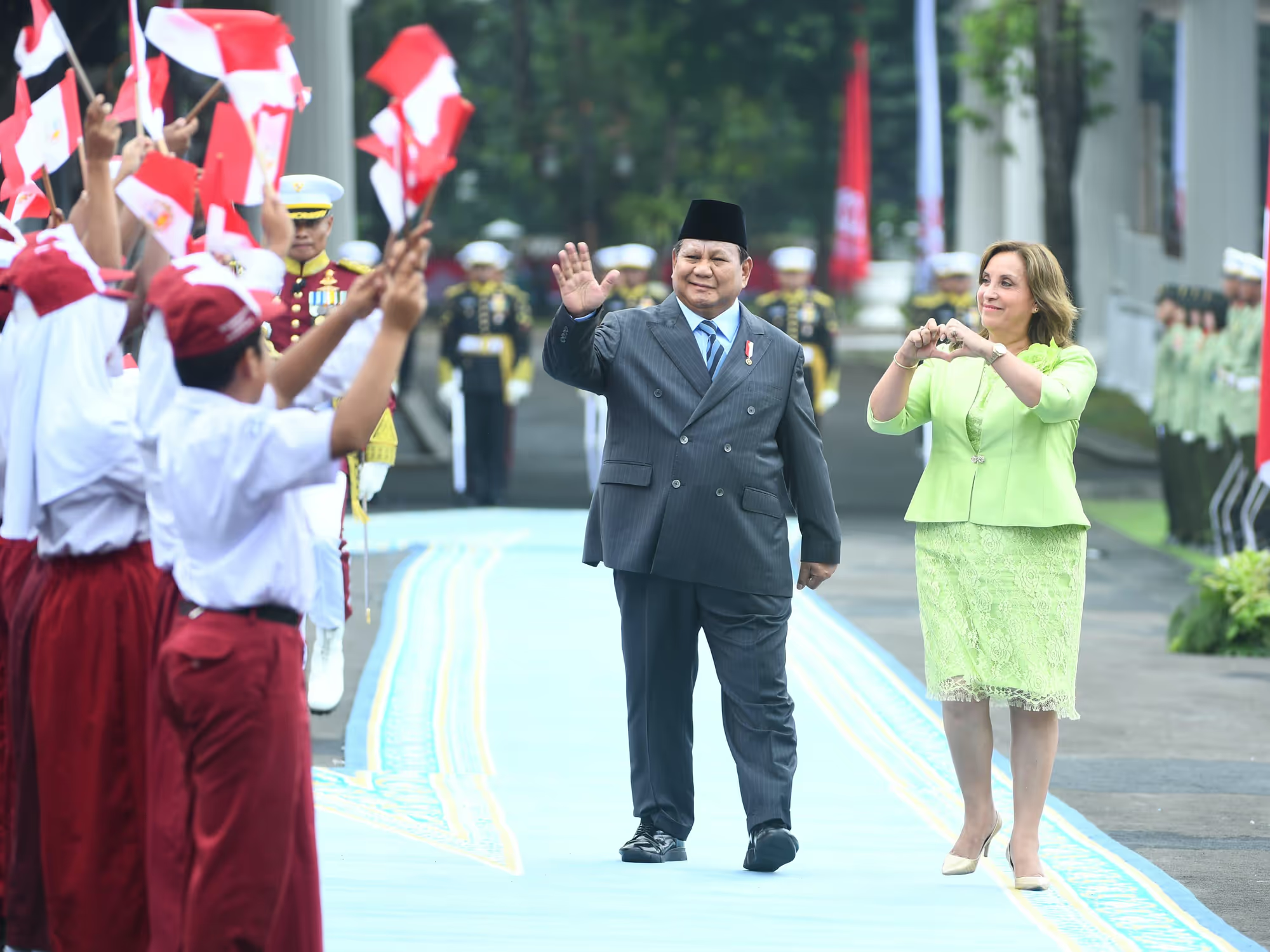
President Prabowo Subianto welcomed Peruvian President Dina Ercilia Boluarte Zegarra at the Merdeka Palace in Jakarta on Monday (11 August 2025), in a bilateral meeting that underscored Indonesia’s ambition to expand into Latin American markets with flagship exports such as automotive products, crude palm oil (CPO), and textiles.
“I warmly welcome efforts to advance the Indonesia–Peru Comprehensive Economic Partnership Agreement (CEPA). We also hope for Peru’s support for our bid to accede to the OECD,” Prabowo said, according to a State Secretariat statement.
Boluarte, for her part, outlined concrete steps to strengthen trade ties, including the CEPA signing, which enables Peruvian blueberries to enter Indonesia, and opens the door for pomegranates.
“Thank you, Mr. President, for your commitment, which has shortened processes and procedures. We can now say that this has been realized in Peru,” Boluarte said.
The bilateral meeting provided momentum to broaden cooperation across trade, investment, and development, with both leaders reaffirming their commitment as Pacific partners.
Industry players say the CEPA could unlock opportunities for Indonesian exporters. Benny Soetrisno, chairman of the Indonesian Export Companies Association (GPEI), pointed to automotive components, palm oil, and electronics as high-potential sectors.
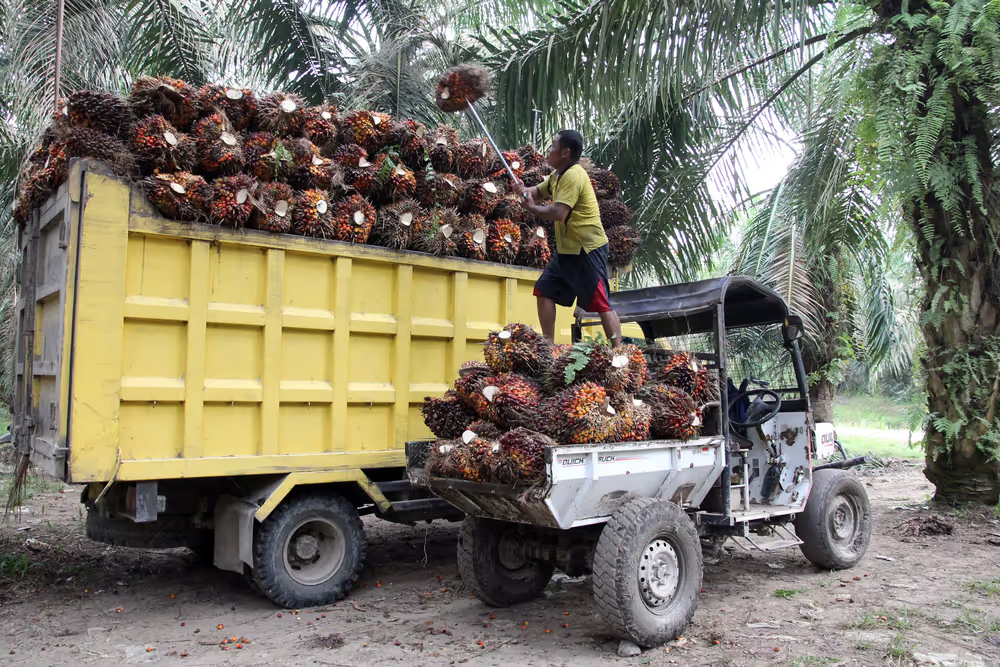
“Products already going to Peru, such as tires, could be scaled up. Then there’s CPO, which is the cheapest vegetable oil compared with others, and possibly electronics,” he told SUAR.

Redma Gita Wirawasta, chairman of the Indonesian Filament and Fiber Producers Association (APSyFI), said textile exports, especially filament and spun yarn, could gain traction in Peru even though current yarn exports to the country remain modest at around 2%–3%.
“Peru could be a gateway to other Latin American markets because of its proximity,” he told SUAR (August 11, 2025).
He noted that countries such as Brazil and Mexico have sizable garment industries, creating opportunities for Indonesia to supply yarn for further processing into fabric and garments.
Redma added that Indonesia holds advantages in polyester and rayon fibers, which are raw materials for spun yarn. He emphasized that exporting textile products to Peru could be highly profitable due to the absence of direct competition with similar domestic industries in Peru.
“By the numbers, trading with Peru—especially for textiles—should be profitable, because we’re not competing head-to-head,” he said.
Export Challenges and Trade Routes
Both Benny Soetrisno and Redma Gita Wirawasta agree that logistics and competition are the primary hurdles. Benny highlights the vast distance across the Pacific Ocean as a logistical challenge, while Redma points to China and Turkey as the main competitors—adding that Turkey enjoys an advantage due to geographic proximity.
Benny also views Chile and Peru as crucial gateways for accessing the markets of Mercosur member states (Brazil, Argentina, Paraguay, and Uruguay). He notes that while Indonesia already has trade cooperation with Chile, it does not yet have an agreement with Mercosur.
Redma welcomes the trade facilitation measures between Indonesia and Peru. He believes the ease of doing business and tariff reductions arising from such cooperation can be leveraged by the textile industry to boost exports. “When trade facilities are in place, there will naturally be efficiencies and tariff cuts—these are what the textile industry can maximize,” he said.
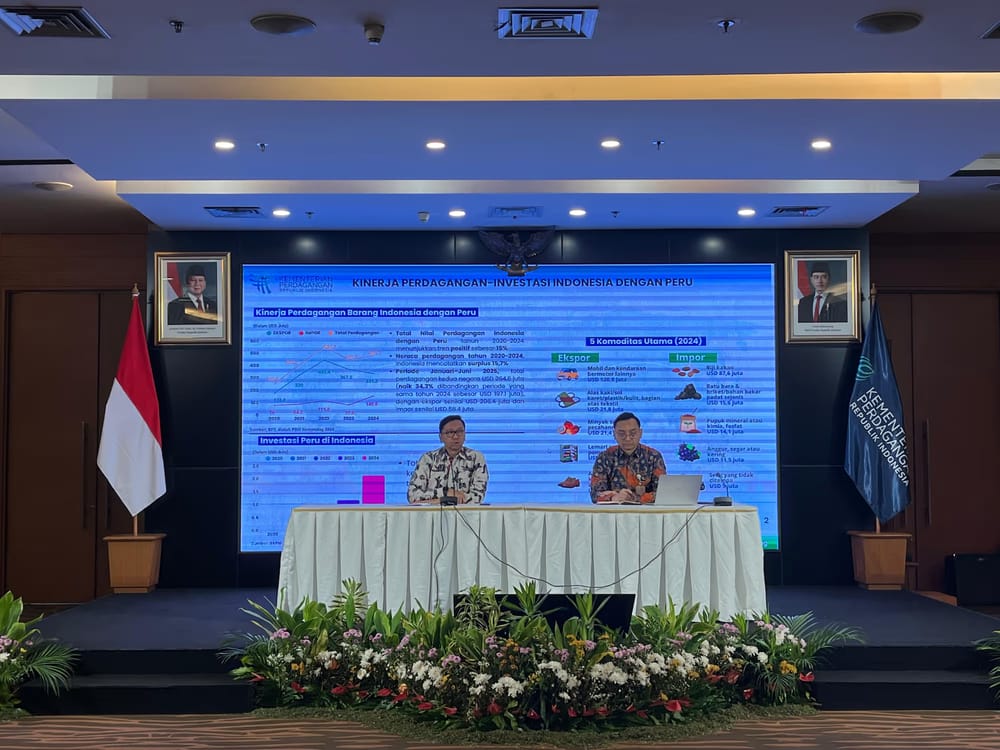
Mohammad Faisal, Executive Director of the Center of Reform on Economics (CORE) Indonesia, further explains that the Indonesia–Peru CEPA goes beyond a simple goods trade agreement. Its scope extends to services, investment, and discussions on non-tariff measures. He therefore emphasizes the need for thorough evaluation across these dimensions.
On the other hand, Indonesia imports significant volumes of cocoa beans from Peru. Faisal argues that these imports can help meet the rising demand of the domestic cocoa processing industry.
“Our industry’s need for cocoa beans is increasing year by year, and imports from Peru can provide a solution to the raw-material shortfall,” he said.

However, he also warns that such import cooperation should not diminish public and private efforts to increase domestic cocoa production. He underscores the importance of downstreaming—aligned with the President’s vision—which also extends to the plantation sector.
“Our downstream cocoa industry is extensive, but it frequently lacks raw materials. Therefore, we need to raise the productivity of cocoa plantations in Indonesia, including by utilizing underproductive land,” Faisal added.
In this context, importing cocoa beans from Peru can serve as a short-term solution, while developing domestic plantations remains the long-term strategy to reduce import dependence and strengthen the resilience of Indonesia’s cocoa processing industry.