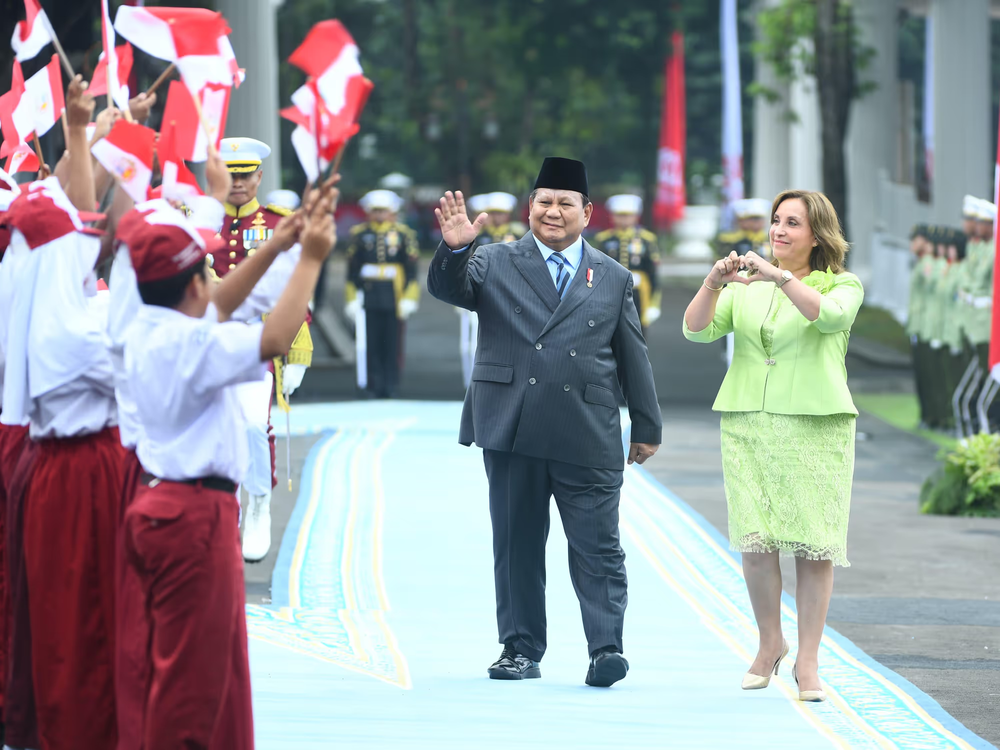
Indonesia and Peru have finalized a Comprehensive Economic Partnership Agreement (IP-CEPA) after just four negotiation rounds between May 2024 and August 2025, a process unusually fast by trade standards. The agreement was concluded on 6 August, days before Peruvian President Dina Boluarte’s state visit to Jakarta.
“Thank God, we were able to conclude these negotiations quickly. This is part of the 2025 target to continue expanding market access for Indonesian products,” said Djatmiko Bris Witjaksono, Director General of International Trade Negotiations (PPI) at the Ministry of Trade, at a media briefing in Jakarta, Tuesday (12/8/2025).
President Prabowo, in an official State Palace release on Monday (11/8/2025), underscored the outcome as the result of swift, solid collaboration between the two countries.
“Normally, negotiations like this take years. Peru and Indonesia managed to complete them in just 14 months. Across all sectors, we will work together to increase trade between the two countries,” he said.
Echoing that view, Peruvian President Dina Boluarte expressed similar optimism, saying the signing of the Indonesia–Peru CEPA (IP-CEPA) will deliver tangible benefits for businesses and the public in both countries.
“Once in force, the CEPA will strengthen trade relations, encourage the exchange of goods, and serve as a foundation for agreements on investment, services, electronic commerce (e-commerce), and more. The CEPA is proof of our government’s determination to promote freer trade and strengthen the economy,” Boluarte said.
The idea for the Indonesia–Peru CEPA (IP-CEPA) first emerged in 2023 through a terms-of-reference agreement between the two countries’ trade ministers, then was formally launched on 15 August 2023 via a virtual joint ministerial statement.
After nearly two years of negotiations, the two governments signed the Comprehensive Economic Partnership Agreement (CEPA) on Monday (11/8/2025), coinciding with the Peruvian President’s state visit to Jakarta. The deal becomes Indonesia’s second CEPA in Latin America after Chile in 2019.
The agreement was signed by Indonesia’s Trade Minister Budi Santoso and Peru’s Minister of Foreign Trade and Tourism, Desilú León, witnessed by President Joko Widodo and the President of Peru.
According to Djatmiko Bris Witjaksono, the pact will grant preferential access to more than 90% of tariff lines in both countries—an expected leap to push bilateral trade toward the USD 5 billion target.
“This is extraordinary. With this CEPA, our competitiveness will improve not only in Peru but also across South America. It strengthens our position in the global market,” Djatmiko said.
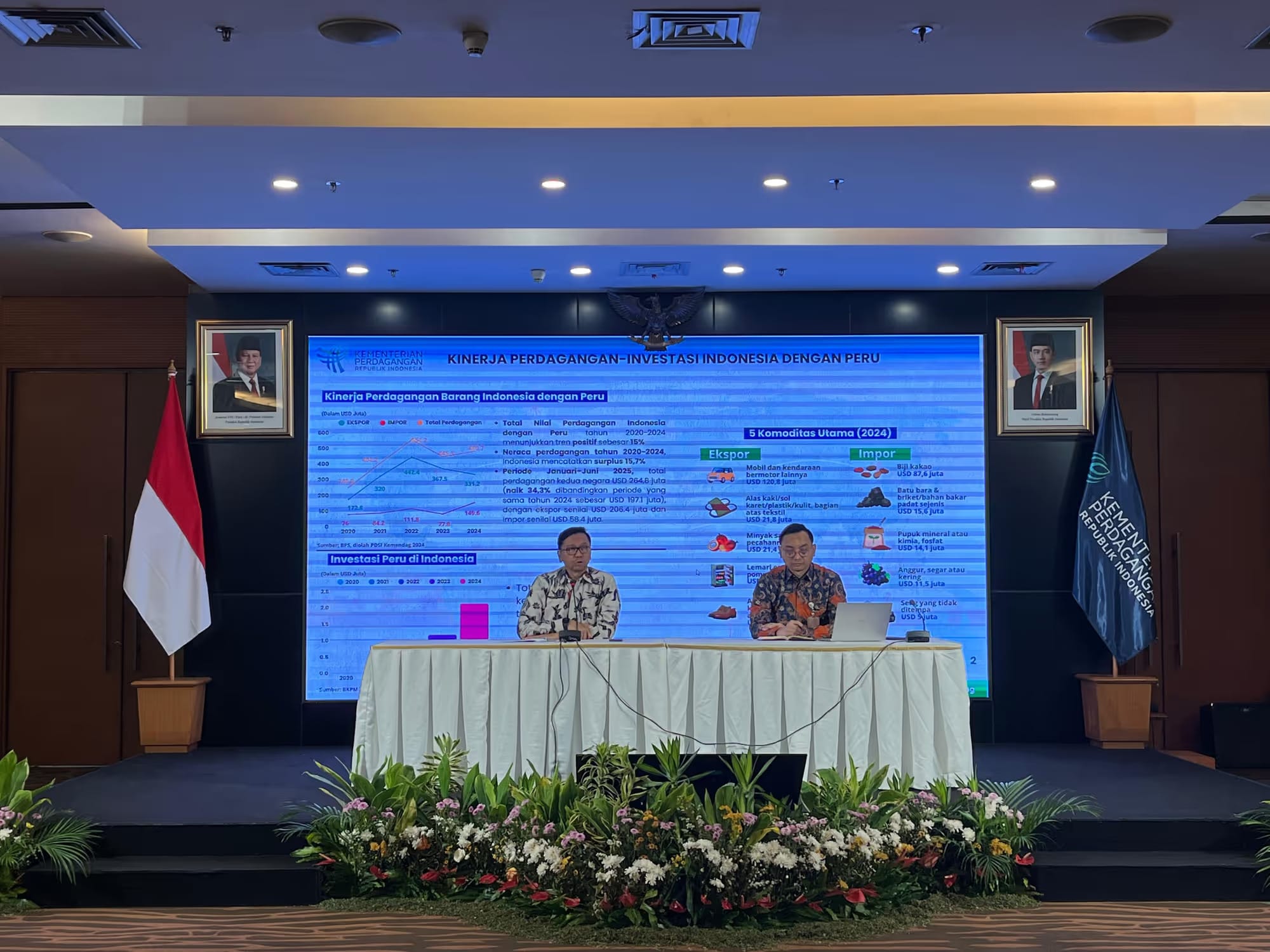
Peru is not yet one of Indonesia’s largest trading partners—bilateral trade in 2023 stood at about USD 331 million—but growth potential is considered significant.
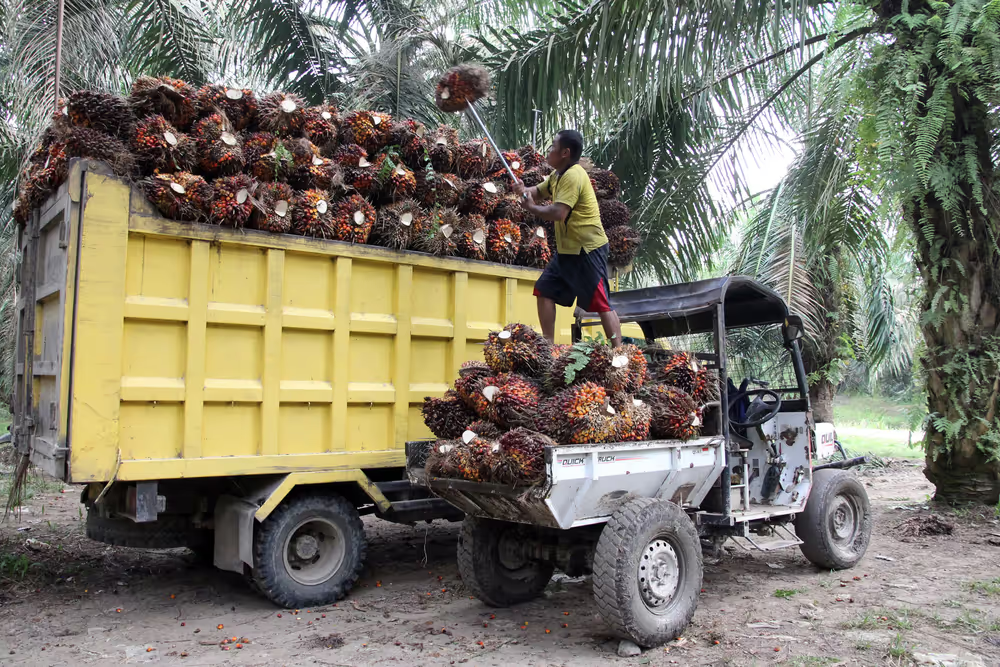
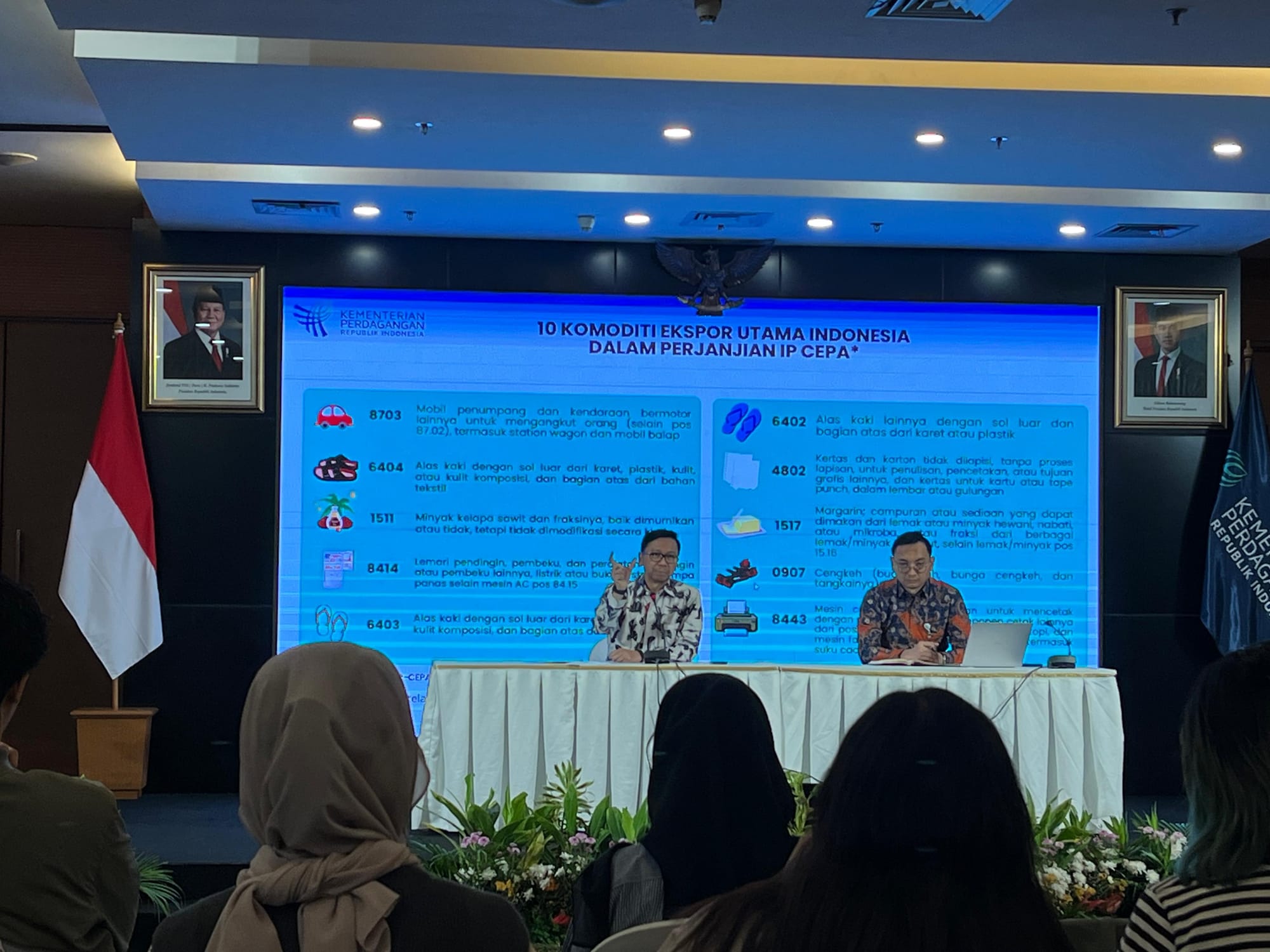
The CEPA provides tariff elimination or reductions for Indonesia’s key export commodities such as automotives, footwear, textiles, and derivative products. Conversely, Indonesia will open access for Peru’s main products, including fisheries, mining, citrus, and several specialty agricultural goods.
In addition to IP-CEPA, two other documents were signed during the state visit, including a memorandum of understanding between Indonesia’s National Narcotics Board (BNN) and Peru’s National Commission for Development and Life Without Drugs on technical cooperation to combat illicit production, preparation, and trafficking of narcotics, psychotropic substances, and precursors.
90% Zero Tariffs, Opportunities in Priority Sectors
Though labeled “Comprehensive,” the IP-CEPA will initially focus on trade in goods. This incremental approach was previously applied in the negotiations with Chile before being expanded to services and investment.
The first stage covers tariff elimination or reduction, rules of origin, customs procedures, trade safeguards, and disciplines related to technical barriers to trade (TBT) and sanitary and phytosanitary (SPS) standards. Once implementation is underway, the two countries will proceed to negotiations on services, investment, intellectual property, and the digital economy.
“We want to quickly deliver tangible benefits for businesses, so trade in goods is the early priority,” Djatmiko said.
One of the headline features of the IP-CEPA is the 0% tariff preference for more than 90% of tariff lines in both countries. On Indonesia’s side, exports of automotives, footwear, textiles, palm-based processed products, and a range of manufactured and non-manufactured goods will gain significant advantages. Some commodities will enjoy zero tariffs immediately once the agreement enters into force, while others will gradually phase down to zero over the next few years.
On the Peru side, Indonesia’s market access opens for products such as fish, mollusks, copper, citrus, and other agricultural commodities. Although several Indonesian sectors—like fisheries and agriculture—produce similar goods, the government believes this openness will strengthen domestic competitiveness and encourage product diversification.
Djatmiko emphasized the importance of businesses, especially MSMEs, seizing these opportunities. “We want new players to get involved, not only the large exporters who are already accustomed to this. The IP-CEPA must become a pathway for MSMEs to break into the Latin American market,” he said.
Seizing IP-CEPA Opportunities
These strategic opportunities are also affirmed by economist Mohammad Faisal, Executive Director of CORE Indonesia. He views the Comprehensive Economic Partnership Agreement (CEPA) between Indonesia and Peru as more than just tariff matters on trade in goods. “Beyond that, its scope is broader: services, investment, and various non-tariff aspects,” he said.
According to him, the agreement requires sharper, more comprehensive calculations in line with its wide scope. “We need to know what we want to target on the export side, which barriers we expect to be lowered, and what our goals are for investment and trade in services,” Faisal said.
The same applies to imports—identifying which goods are truly needed for domestic production, especially those that have been hard to source, such as raw materials.
By his account, Indonesia’s trade with Peru has been recording a surplus. Indonesia exports many higher value-added manufactured products, such as automotives, as well as labor-intensive products like footwear. Faisal sees the CEPA as a gateway for deeper penetration into the Peruvian market, even turning Peru into a hub for Indonesian manufactured goods headed to Latin America.
On the import side, cocoa is one of the main commodities Indonesia buys from Peru. “We are indeed short of cocoa beans. Domestic demand continues to rise, and imports are increasing as well,” he said. In his view, cocoa imports from Peru should be used to cover domestic industry shortfalls—but this must not diminish efforts by the government and the private sector to develop cocoa plantations in Indonesia.
“Cocoa is one of the plantation commodities whose downstreaming has progressed, but the raw material is precisely in short supply,” he said. He emphasized the need for replanting and expansion of plantations, including utilizing currently unproductive land, so that import dependence can be reduced.
Opening a Path to the Latin American Market
The decision to partner with Peru is not without reason. The West Coast South American country has an open economy and is a member of major trade blocs, including the Asia-Pacific Economic Cooperation (APEC) and the Comprehensive and Progressive Agreement for Trans-Pacific Partnership (CPTPP). Geographically, Peru borders Chile, Bolivia, Colombia, and Ecuador, allowing it to serve as a distribution hub for products across the region.
To date, some Indonesian products exported to Chile have ended up entering Peru. With the CEPA, this direct access is expected to cut distribution costs, boost competitiveness, and open new markets for Indonesian products such as footwear, textiles, processed foods, furniture, and automotive components.
“Latin America is vast. If we rely only on Chile, much potential remains untapped. Peru is strategic and has a trade relationship that complements ours,” said Djatmiko.
Indonesia already has trade agreements with countries in Asia, Europe, and Australia, but penetration into Latin America has remained limited. Peru is expected to become a strategic gateway to the Latin American region connected to the North American market.
“With this CEPA, we strengthen our presence in South America. In North America we already have agreements, in Europe we are getting stronger, and in Asia we are very solid. This completes our global trade partnership map,” Djatmiko said.
Next Phase: Services and Investment
Data from the Ministry of Trade show that Indonesia–Peru trade has trended upward over the past five years. Bilateral trade has grown by an average of 15% per year, with an Indonesian surplus of 15.7%. In January–June 2025, two-way trade reached US$264.8 million, up 34.3% from the same period last year.
The government is optimistic that the IP-CEPA will accelerate this positive trend. “Even without the CEPA, growth has already reached 34%—let alone after the CEPA takes effect,” Djatmiko said.
Although the initial focus of the IP-CEPA is trade in goods, the agreement also paves the way for discussions on trade in services and investment. Under the pact, negotiations on services and investment will begin two years after implementation. Potential areas include tourism, logistics, transportation, education, healthcare, financial services, and digital technology.
Peruvian President Dina Boluarte has openly encouraged increased Indonesian investment in Peru. On the other hand, the Indonesian government sees opportunities to expand exports of services to Peru, particularly in education, healthcare, and technology.
Next Steps: Ratification and Implementation
In accordance with Law No. 7 of 2014, the Indonesia–Peru CEPA must be ratified by the House of Representatives (DPR) before it can take effect. The government hopes the ratification process will proceed quickly so that businesses can feel the benefits directly.
“We will coordinate with the DPR so this can enter into force as soon as possible,” Djatmiko said.
The IP-CEPA ratification process is estimated to take around 12 months, including deliberations in the DPR. Once enacted, the implementation phase will be followed by regular evaluations. The government will monitor the utilization of this trade facility, among other things through data on the use of the Indonesia–Peru Certificate of Origin (SKA).
“Routine evaluations are important to ensure the agreement is truly utilized. If our exports rise but SKA utilization remains low, it means there is something we need to fix,” Djatmiko explained.
In addition, the government plans to intensify outreach through trade fairs, training, and assistance for businesses. These services will be provided in major cities via the Indonesian Trade Promotion Center and regional trade offices.
Looking to a Wider Market
With the entry into force of the IP-CEPA, Indonesia will have three comprehensive trade agreements in the Americas: Chile, Peru, and (in the near future) Canada. This strategy is expected to expand Indonesia’s market network in Latin America and North America.
At the same time, Indonesia is exploring a trade agreement with the Eurasian Economic Union (Russia, Belarus, Kazakhstan, Kyrgyzstan, Armenia) and continuing discussions on a preferential trade agreement with Tunisia.
However, Djatmiko acknowledged that the government’s negotiating resources are limited. Therefore, a prioritization strategy is important. “Peru came later, but the process was fast. That is what we need to appreciate,” he said.
For businesses, opportunities are wide open—not only for primary commodities but also for higher value-added products that can compete in quality-driven markets.
With more and more free trade agreements, the biggest challenge is ensuring that businesses understand and utilize the available facilities. “This CEPA works both ways. It is not only for our exports to Peru, but also for imports from Peru to Indonesia. The key lies in the understanding and readiness of businesses,” Djatmiko concluded.