
Entering the end of 2025, the business world is anticipating the policy direction that the government will take in 2026. By understanding the policy direction, businesses can make the right decisions for the future direction of their business.
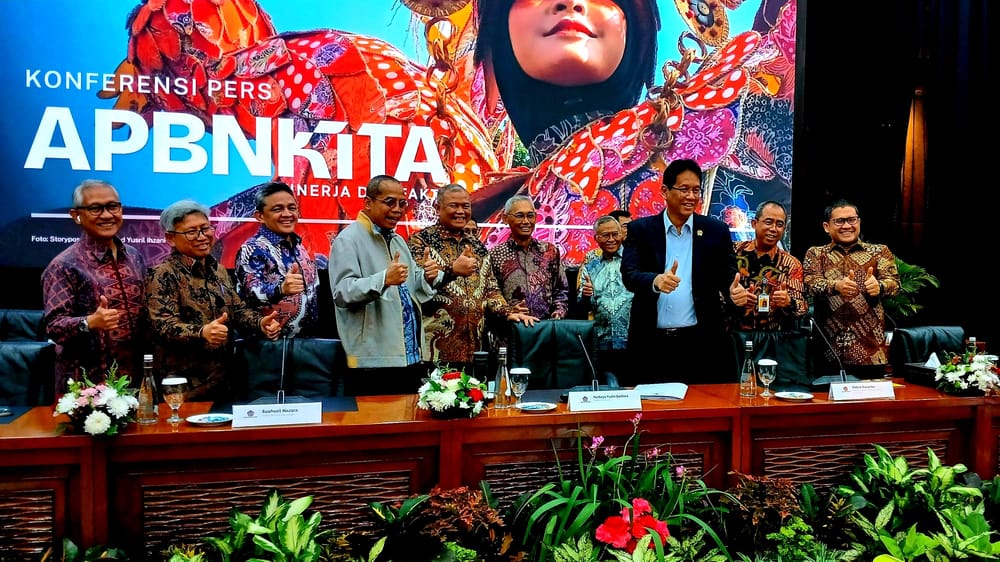
Coordinating Minister for the Economy Airlangga Hartarto next year the economy will still be overshadowed by global uncertainty. This requires Indonesia to strengthen its economic independence. There are two biggest challenges at the moment, namely uncertainty and the difficulty of predicting world turmoil.
Even so, Airlangga assessed that Indonesia's economic indicators are still solid. Airlangga referred to economic growth in the range of 5% which according to him is still higher than Saudi Arabia, China, the United States, and South Korea, as well as inflation which is maintained at 2.65%.
"Economic independence is the key for us to survive when uncertainty hits us," he said on Wednesday (26/11/2025).
Airlangga explained that strengthening investment, downstreaming, and digitalization must move in unison so that economic resilience can be achieved sustainably. Airlangga emphasized the importance of digital infrastructure development, ranging from satellites, optical cables, to renewable energy, to support industrial transformation.
According to him, the digital economy market in the Southeast Asian region, which reaches around Rp1 trillion, provides a large space for Indonesia because around 40% of the region's digital activities are in Indonesia.
Airlangga emphasized that strengthening human resources and regulatory support are key to maintaining the momentum of economic growth. The expansion of the People's Business Credit, the national apprenticeship program for 100 thousand college graduates, and the acceleration of licensing, according to him, are steps to help businesses adapt in the midst of global changes.
"The government and corporations are two sides of a coin that must work together to maintain economic resilience," he said.
Boost investment
Investment and Downstream Minister Rosan Roeslani asserted that Indonesia's economic resilience can only be achieved if the government is able to navigate global turmoil appropriately. Rosan said geopolitical dynamics and changes in the world economic architecture require Indonesia to maintain economic sovereignty without closing itself off from international cooperation.
Indonesia's position as a non-aligned country provides space to partner with all parties in a balanced manner. "The most important thing is how Indonesia can navigate correctly, so that economic sovereignty is maintained while we partner with all countries," he said.
In this context, to achieve the economic growth target of 8%, investment of around IDR 13,032 trillion is needed to strengthen the expansion of priority sectors.
According to him, the projection was calculated based on the trend of the next five years and the need to maintain economic momentum. Rosan emphasized that policy consistency is a requirement so that investment can be realized as expected.
Rosan also highlighted the importance of international economic cooperation in expanding markets and strengthening investment regulatory certainty. He conveyed positive developments in Indonesia's process to the OECD, strengthening cooperation with the European Union through EU-CEPA, as well as progress after Indonesia joined BRICS.
These steps, he said, were a way to improve Indonesia's bargaining position in the midst of global economic changes. "We have finalized EU-SEPA, entered BRICS, and are in the process of heading to the OECD," Rosan said.
On the other hand, Rosan believes that the shift in global supply chains after the pandemic opens up opportunities for Indonesia to attract diversification of production bases. Many multinational companies are looking for locations that are safer from geopolitical tension, and Indonesia can take advantage of this momentum if infrastructure and regulatory consistency continue to be improved.
Rosan emphasized that policy stability is a major factor for investors who dislike uncertainty. Rosan asked domestic businesses to aggressively utilize the opportunity to shift the global supply chain.
He added that the government is preparing various measures to improve investor convenience, including simplifying the licensing process. He cited the improvement of the online single submission (OSS) system and the curbing of fictitious permits that previously hampered business certainty.
According to Rosan, transparency and licensing efficiency are key factors in attracting long-term investment. Rosan emphasized that a cleaner and more scalable investment ecosystem will help Indonesia strengthen its economic resilience.
Industry strengthening
In line with the presentation on investment direction, Minister of Industry Agus Gumiwang Kartasasmita explained the performance of the non-oil and gas processing industry in the third quarter of 2025.
Its contribution to national GDP reached 17.39%, with a growth of 5.58% in the same period. According to Agus, non-oil and gas processing industry exports reached 167.85 billion dollars or around 80% of total national exports.

Agus said investment in the non-oil and gas processing industry reached Rp552 trillion from January to September 2025. He added that the workforce in the manufacturing sector amounted to around 20.31 million people in August 2025.
In addition, the industrial confidence index in October 2025 stood at 53.50 and the Purchasing Managers Index was recorded in the expansion zone at 51.2. Meanwhile, the industrial utilization rate stood at 61.4%, a figure that still shows room for growth for the manufacturing sector.
On the policy side, Agus explained that the domestic component level (TKDN) reform has been designed to be more relevant, simple, and incentive-based. He mentioned the extension of the certificate validity period from three years to five years and the provision of additional value for industries that invest or conduct R&D activities as part of efforts to strengthen business certainty.
Agus also emphasized that household consumption remains the main driver of the manufacturing sector. If consumption growth returns to close to 5%, Agus assessed that the impact will be felt directly on the processing industry.
At the same time, the government is accelerating the transformation to a green industry through energy efficiency, renewable energy utilization, and Carbon Capture, Utilization, and Storage or CCUS technology. He said the industrial sector is targeting net-zero by 2050, or faster than the national target of 2060, so that production sustainability is maintained.
Food policy
Amid the need to boost consumption for the industrial sector, Coordinating Minister for Food Zulkifli Hasan or Zulhas emphasized that economic resilience is not separate from improving food policy.
He reminded that Indonesia's economy once grew by 7 to 8% per year during the 1980s to 1990s, but now lags behind Malaysia and Thailand and has the potential to be overtaken by Vietnam. Therefore, Zulhas explained that the nutritious meal program initiated by the government is not just social assistance, but a strategy to build human quality.
"Eating will change civilization, eating will change the economic structure," Zulhas said.
Zulhas explained that the nutritious meal program will reach 82.9 million recipients, creating a large daily demand for eggs, fish, chicken, and vegetables produced by small farmers and fishermen.
According to him, the massive demand pattern has the potential to become a village economic engine if the supply chain is designed in favor of small producers. The program, according to him, is an empowerment measure that is expected to grow agriculture, livestock and fisheries businesses in various regions, not create aid dependency.
To meet these needs, Zulhas explained that rice production increased from around 30 million tons to 34.77 million tons after improving irrigation and simplifying fertilizer regulations. He also mentioned that last year Indonesia imported 4.52 million tons of rice, while this year rice imports are zero with stocks of around 4 million tons. The government has also raised the price of unhusked rice at the farm level to around Rp6,500 per kilogram to increase farmers' income.
"Bung Hatta said, it is impossible to build Indonesia with just one big torch in Jakarta. Building Indonesia must light small candles in every village, then Indonesia will be bright," he said.
Fourth quarter foundation
Chairperson of the Indonesian Employers Association (Apindo) Shinta Kamdani said that the business world sees that the fourth quarter is always a very decisive seasonal peak, because historically in the last decade. Indonesia's economic growth is almost always higher in the fourth quarter than in the third quarter. The economic conditions in the fourth quarter are the foundation for the economy next year.
The Christmas and New Year (Nataru) period is a consistent seasonal lift . This period should be maximized because throughout the year we face a slowdown in consumption mainly until September.
"For the annual target of 5.2% to be achieved, growth in the fourth quarter must be pushed higher and the existence of the fourth quarter stimulus is a very strategic countercyclical instrument," he said on Wednesday.
Apindo fully supports the government's move to design a year-end stimulus package, including the expansion of cash assistance and rice assistance to tens of millions of families to maintain household purchasing power.
Second, on labor-intensive programs (cash-for-work) and the expansion of paid internship programs to strengthen labor income channels ahead of Nataru. The third point is tourism and transportation incentives, including ticket discounts and subsidies for Nataru mobility.
Fourth, accelerate the realization of government spending (APBN) and the placement of government funds in banks to facilitate real sector liquidity.
The business world in principle supports any government measures designed to maintain purchasing power, strengthen domestic demand, and encourage quality economic growth.