
Indonesia is currently undergoing a technical review, which is one of the accession processes to become a full member of the Organization for Economic Cooperation and Development (OECD).
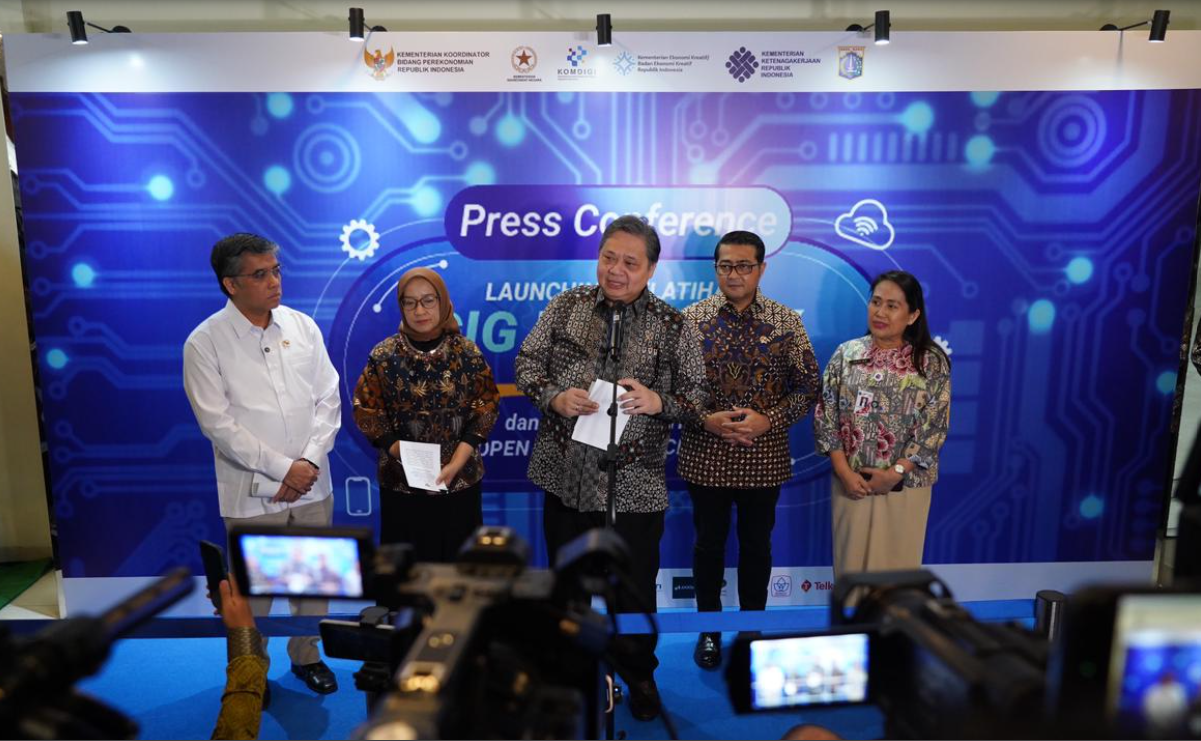
Coordinating Minister for Economic Affairs Airlangga Hartarto said that the technical review stage is a crucial process to test the alignment of national policies with the standards of developed countries, with a target completion date of 2027.
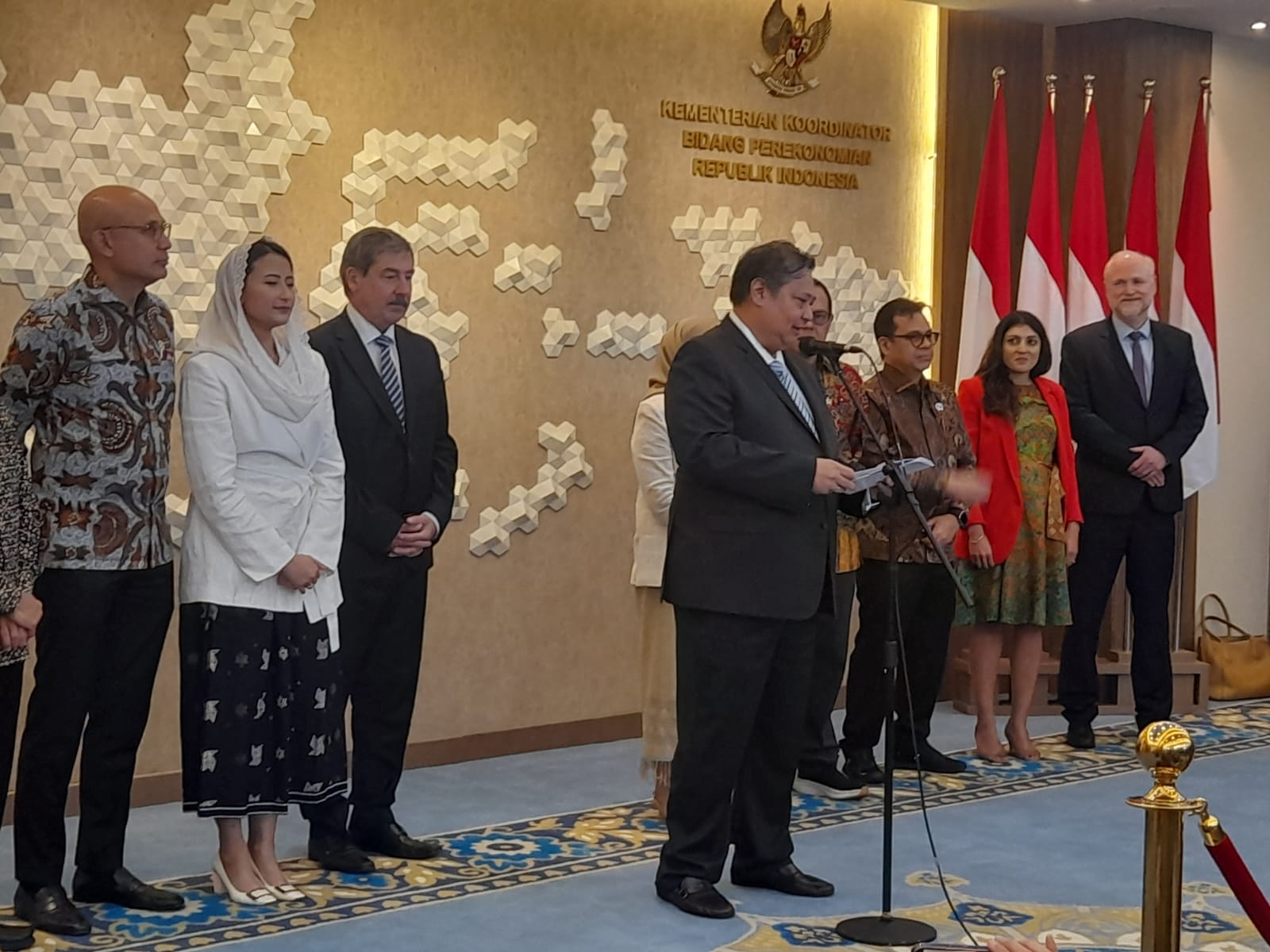
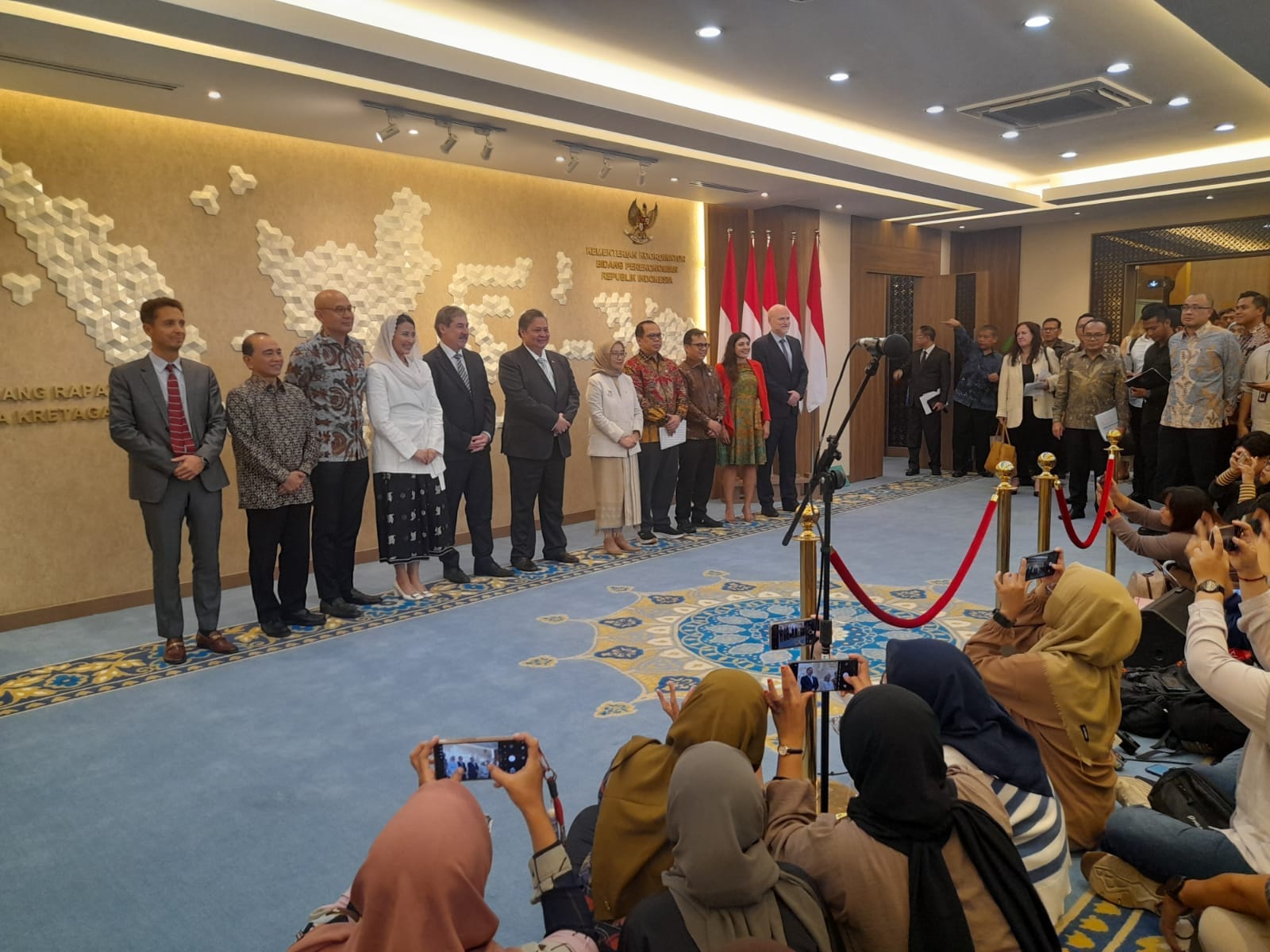
The OECD Delegation Team, represented by OECD Deputy Secretary General Frantisek Ruzicka, visited Indonesia on Thursday (11/12) to directly monitor the acceleration of the accession process.
"Indonesia is updating its technical review, and to date, the areas under review are the environment, trade, and the digital economy. We are striving to complete it by 2027," said Airlangga when met at his office at the Coordinating Ministry for Economic Affairs in Jakarta (11/12).
Indonesia's relationship with the OECD began in 2007 when it became a key partner of the OECD. This was then reinforced by Indonesia's intention to become a full member of the OECD through a letter sent in July 2023.
Indonesia's status then changed to candidate country in March 2024. Indonesia was the first Southeast Asian country to begin the process of accession to the Paris-based OECD, followed by Thailand a few months later in the same year.
Indonesia's target of becoming a member of the OECD has been mandated by the 2025–2029 National Medium-Term Development Plan (RPJMN) Law.
In addition, President Prabowo Subianto has also issued Presidential Decree No. 30 of 2025, which adjusts the relevant ministries in line with OECD accession.
He ensured that Indonesia's accession progress was highly visible and that the priorities set were appropriate, which was in line with what was stated by the OECD.
"Amid global uncertainty, Indonesia's membership in the OECD is expected to help navigate uncertainty or conditions of global multipolarism," he said.
From a trade perspective, despite ongoing trade wars, Indonesia's various international memberships, including the Comprehensive Economic Partnership Agreement (CEPA), are highly appreciated, including by other countries.
Appreciation of Indonesia
Deputy Secretary General Frantisek Ruzicka expressed his appreciation for Indonesia. The meeting with Coordinating Minister for Economic Affairs Airlangga Hartarto was one of the most constructive.
"The Indonesian public's trust in institutions is very high, and I appreciate every effort made by Indonesia to become a full member of the OECD," he said.
Ruzicka emphasized that Indonesia's chances of joining in 2027 remain high as long as reforms continue consistently.
He also assessed Indonesia as a country that always encourages multilateral cooperation.
Indonesia's interest in joining the OECD, which consists mostly of wealthy countries, reflects its ambition to become a developed country by 2045, but Indonesia must overcome many challenges and take advantage of the opportunities offered by the accession process, analysts say.
Executive Director of the Institute for Development of Economics and Finance (Indef), Esther Sri Astuti, said that some of the disadvantages of Indonesia's accession to the OECD include the potential loss of debt interest subsidies and grants that have been received so far.
"The grants received by Indonesia could disappear because the OECD tends to focus more on developed countries or stricter standards," he told SUAR Jakarta on Thursday (11/12).
In addition, he said, the OECD's strict transition to clean energy requirements would be very costly and could burden Indonesia's manufacturing industry, which still relies on fossil fuels, slowing economic growth.
"Developed OECD member countries often impose non-tariff barriers (such as environmental or high-tech standards) that can hinder Indonesian exports," he said.
The Indonesian government views OECD membership as a strategic step to enhance economic competitiveness, attract quality investment, and accelerate structural transformation.
"There is concern that Indonesia's interests as a developing country will not be a top priority, because the majority of members are developed countries," he said.
Enhance Economic Competitiveness
Executive Director of the Indonesian Textile Entrepreneurs Association (API) Danang Girindrawardana said that the main benefits of Indonesia becoming a member of the OECD (Organisation for Economic Co-operation and Development) are increased economic competitiveness, broader market access, increased foreign investor confidence (FDI), and assistance in formulating better policies to avoid the middle income trap, by gaining access to best practices and international standards in various fields.
"Indonesia will reap many benefits if it becomes a full member of the OECD. Hopefully, this can be expedited," he told SUAR Jakarta (11/12).
Indonesia's reputation would be considered more stable, transparent, and in line with international standards if it became a member of the OECD.
Equally important, Indonesia can strengthen its bargaining position in international trade agreements.