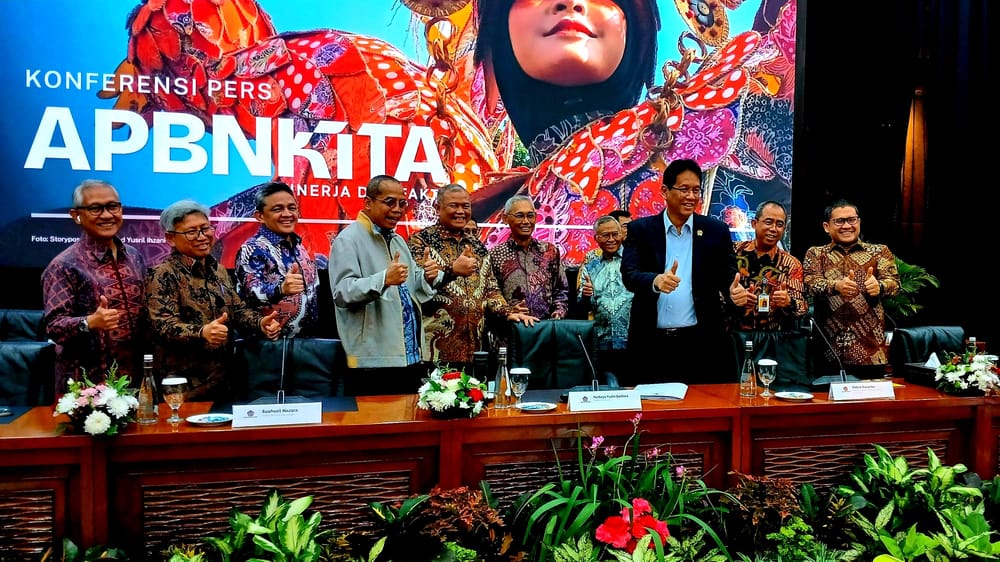

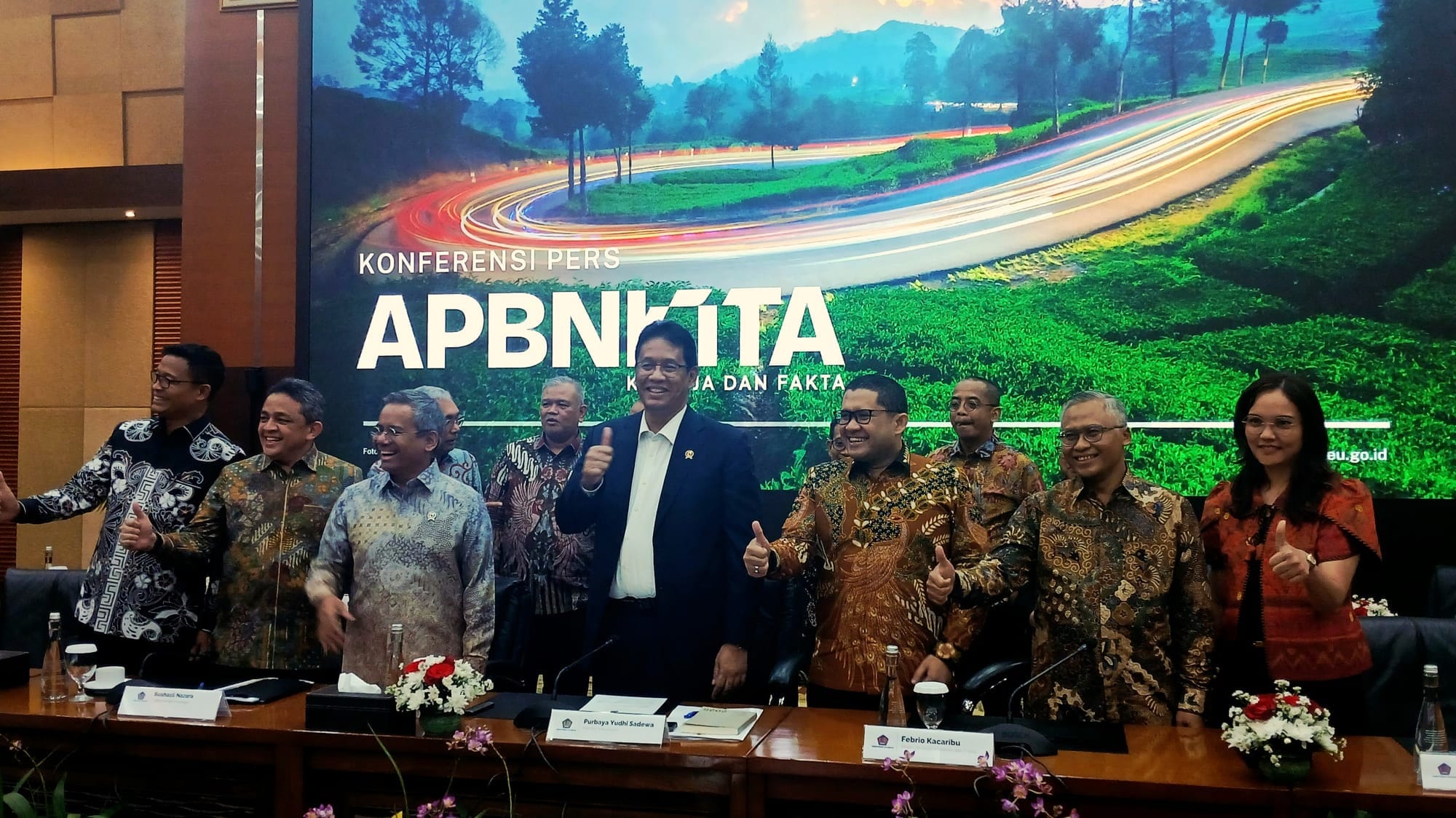
The Ministry of Finance reported on Thursday (20/11) that the achievement of financial and fiscal performance is still considered prudent, providing more room for maneuver for the government to respond to uncertain global economic dynamics.
The October 2025 State Budget Report (APBN) shows that the state cash deficit as of October 31, 2025 reached IDR 479.7 trillion, or 2.02% of Gross Domestic Product (GDP).
Finance Minister Purbaya Yudhi Sadewa said the deficit ratio is still far below the threshold previously projected in the outlook.
"This deficit figure is within safe and controllable limits, much lower than the APBN outlook target of 2.78 percent of GDP for now," Purbaya said in his official statement to reporters.
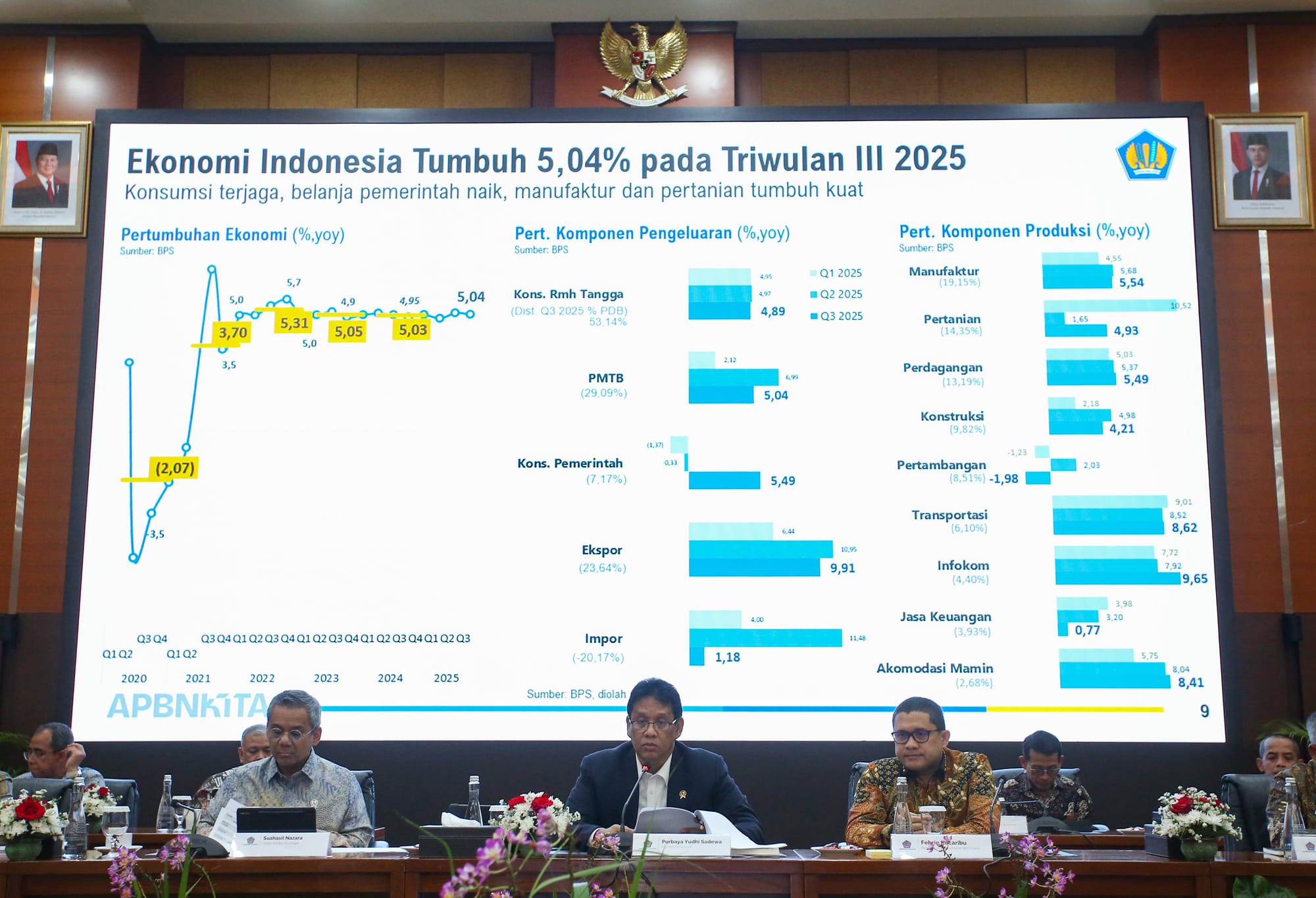
He also explained that in addition to growing domestic demand, adequate export performance, and resilient investment, the acceleration of government spending was one of the factors that kept economic growth in Q3 at 5.04%.
Therefore, although the distribution of government spending was only 7.17% of GDP, its growth in Q3 was one of the fastest.
"From previously slowing government spending -1.37% and -0.33% in Q1 and Q2, government consumption is now growing positively at 5.49% and will continue to be encouraged in Q4. The impact of government spending on the economy is positive, because the government is stepping on the gas in the economy," Purbaya explained in the November 2025 APBN KiTA Press Conference in Jakarta.
Positive growth in all sectors, ranging from manufacturing, agriculture, trade, construction, information and communication, as well as transportation and logistics is another sign of the accuracy of the strategy to boost demand through fiscal expansion. Going forward, with an increasingly solid economy, Purbaya promises that the economic effects will begin to be felt in December 2025.
"Everything is now reversing, so we are experiencing acceleration from the slowdown that happened before," said Purbaya.
In detail, Deputy Minister of Finance Suahasil Nazara explained, as of October 31, 2025, the government had realized Rp2,593 trillion in spending or 73.5% of the 2025 State Budget target.
Meanwhile, state revenue was realized at Rp2,113.3 trillion or 73.7% of the 2025 State Budget target.
Central and local
During this period, central government spending reached Rp1,879.6 trillion or 70.6% of the target.
At this point, central government spending, which has a direct impetus on government spending, is already IDR 45.1 trillion higher than government spending in the same period last year, which reached IDR 1,834.5 trillion.
"With personnel spending on track at Rp262.7 trillion, the government accelerated goods spending by Rp344.9 trillion. If you notice, this expenditure was held back during the previous efficiency, but it has consistently increased and accelerated over the past few months for public services, and maintenance of infrastructure," Suahasil explained.
Of all components of central government spending, Suahasil noted that the capital expenditure component is relatively slow because it has only reached Rp206.4 trillion or 59.9% of the target, while personnel expenditure, goods expenditure, and social assistance expenditure have reached above 70%. For this reason, the government will accelerate the completion of road, irrigation, and network infrastructure projects, as well as the payment of procurement contracts for infrastructure spending and equipment and machinery.
Not only central government spending, acceleration was carried out on central government priority programs to reach Rp611.7 trillion or 65.8% of the Rp929 trillion ceiling. This includes the realization of the Free Nutritious Meal budget, which reached Rp41.3 trillion or 58.2% of the Rp71 trillion allocation in the 2025 State Budget.
"Until the end of the year, the National Nutrition Agency still has a budget of up to Rp30.7 trillion that can be used to accelerate the realization of MBG recipients. This is important because of the 82.9 million target recipients, the program has only reached 41.2 million recipients as of 18 November 2025," he said.
In addition to central government spending, Suahasil also reminded that transfers to regions that have been distributed up to Rp713.4 trillion or 82.1% of the 2025 State Budget ceiling should be allocated as much as possible by regional heads. He saw that the amount of regional expenditure that remained on track was only the personnel expenditure component, while goods expenditure, capital expenditure, and other expenditures were still low.
"We want the money transferred to be APBD expenditures so that the effect on the community encourages growth. We say to spend faster in November and December. Local government deposits continue to increase from 143 T to 244 T as of October 2025 because they have not been spent," he said.
Complementing Suahasil's explanation, Director General of Budget of the Ministry of Finance Luky Alfirman confirmed that there were ministries/institutions that returned their budgets to the Minister of Finance, not because the budget was not absorbed, but because the existing expenditure items had been fully optimized until the end of the year.
"There are several ministries/institutions that said they would return the budget and not spend it. We accept that, but we want to make sure that output is not disrupted or can be achieved. If there are ministries/institutions making shifts, we will continue to encourage them. The point is how to help accelerate economic growth and we want the spending to be utilized as well as possible," Luky said.
Maintain discipline and quality
Regardless of the role of significantly accelerated government spending in maintaining the momentum of economic growth, fiscal discipline and the quality of spending must still be considered. Thus, government spending not only achieves the amount in accordance with the APBN target, but really has an impact and lifts welfare, especially the vulnerable middle class.
Center of Economic and Law Studies (Celios) Fiscal Policy Researcher Galau D. Muhammad assessed that the expansionary pattern in fiscal policy is actually a reasonable pattern in the budget politics scheme, especially to encourage the productivity of sectors related to infrastructure and the real sector. However, he underlined the quality of spending that must also be considered.
"There are many populist programs whose achievements have not been satisfactory, but they are forced, such as the MBG, which will reallocate the education budget to Rp223 trillion. This should be reviewed, what is being sacrificed? The facts on the ground, what is sacrificed is the welfare of honorary teachers and scholarship quotas, so that it actually has an impact on the quality of education," Galau said when contacted. SUAR, Thursday (11/20/2025).
Reflecting on the IMF recommendations based on the Article IV Consultation, Galau reminded that the government's attention to spending is not only in terms of the percentage of realization against the budget target, but also the quality of spending and productive sectors that are prioritized. According to him, the demands of people who have not really felt the recovery of purchasing power and investment that is still waiting are more concrete indicators.
"There is a lot of homework that must be encouraged, but most clearly, we need to be more disciplined while ensuring that all programs are able to be structured technocratically and effectively rather than too much fanfare at the beginning without transparency so as to create fiscal risks that do not pay off in the years ahead," he said.
Sharing views with Galau, Executive Director of the Institute for Development of Economics and Finance (INDEF) Esther Sri Astuti explained that government spending must increase from year to year. Deficits that are within safe limits to GDP should not be a problem, as long as spending is greater for development than routine spending such as employee spending.
"The deficit has been determined in the law at a maximum of 3%. In order not to swell, budget allocations must be for productive economic programs. Indicators of effectiveness are not only budget absorption by ministries / agencies, but must be indicators of performance achievement of each program and the effects felt by the community," said Esther.