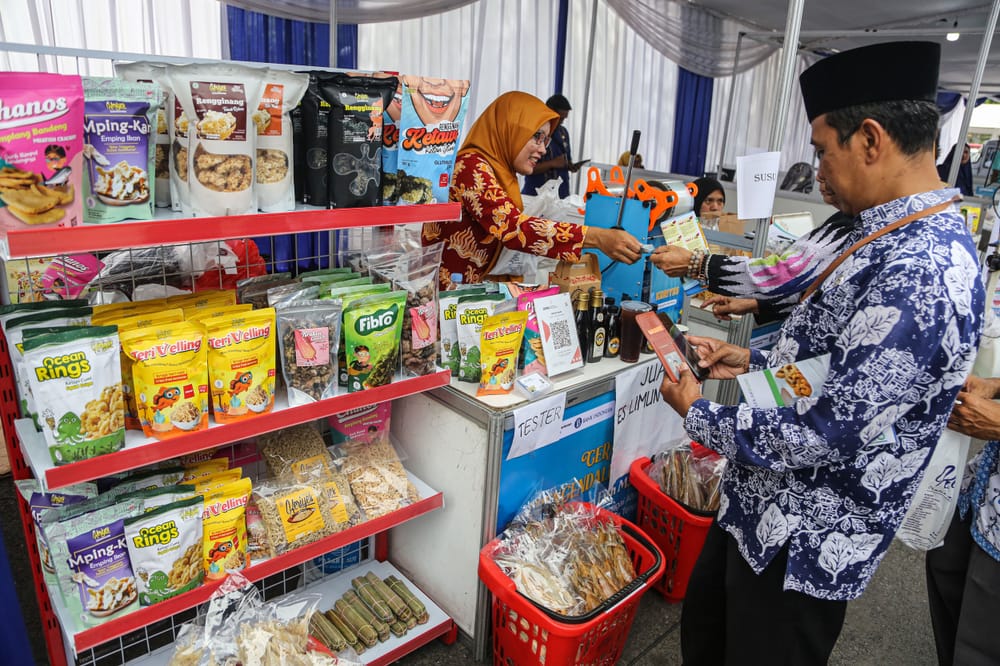

The Jakarta Fair Kemayoran (JFK), or PRJ as it is more commonly known, has transformed into more than just an annual exhibition. It is now transformed into a driving force for wider economic circulation thanks to the phenomenon of the entrustment service business.
Jastip is a business model in which an individual, referred to as a jastiper, offers to buy and deliver goods from a specific location (e.g. an exhibition, another city, or an exclusive store) to customers who cannot access the location in person. The jastiper earns a service fee from each transaction, enabling the customer to get their desired item without having to travel in person, while creating a flexible economic opportunity for the jastiper.

The Broker's Thick Cause
One of the jastipers is Dian Puspitasari, 32 years old, a housewife. She and her friend have been doing jastip business for 3 years at PRJ events. She saw the opportunity to do jastip business because many of her friends could not come directly to PRJ due to distance and their respective busy schedules.
Dian must collect a minimum of 50 orders per day in order to go to PRJ. Customers' orders will be registered in a whatshapp group. The products listed also vary, such as perfume, clothes, skincare, and shoes. After that, customers pay an advance payment voluntarily. Currently, the number of Dian's jastip customers has reached 200 people. This is based on the calculation of the suitability of the cost and the benefits obtained.
The profit earned on each order is accumulative. For example, he takes a fee of Rp3,000 from products with a price of Rp10,000 to Rp40,000. While products valued at Rp50,000 to Rp100,000 earn a profit of Rp10,000 and the level of profit is highly dependent on the value and weight of a product.
According to Dian, the income earned from year to year continues to increase from the jastip business along with the increase in customers. "On the second day, there are now 85 packages, the profit range is Rp800,000-Rp900,000. Yesterday (the first day) the total turnover was more than 5 million," Dian said when met in the middle of the PRJ crowd.
Husna, who works as a medical worker in Jakarta, is also in the jastip business. She has been in the jastip business since 2023. She started her jastip business by creating content on social media such as Instagram and TikTok. Customers will then be invited to a WhatsApp group to keep up to date with the latest products she has found at PRJ. Food products with unique packaging, beauty tools, shoes and even furniture become the target products of her customers.
The amount of profit he earns depends on the scale and impact of the event or exhibition. The profit she earns from Jastip PRJ can be up to 10 million for a 3-day visit. She takes a fee of Rp5000 to Rp50,000 depending on the price of the product ordered by the customer. The more expensive the product, the bigger the profit she gets.
"The background of the jastip business is because of my hobby of shopping, rather than just shopping for myself, I want to shop for people. Moreover, many people order from out of town, for example from Central Java, West Java, Sumatra, and Kalimantan," she said when met at the Jakarta International Expo, Tuesday, July 8, 2025.
Jastip at PRJ works cleverly to bridge the gap in market access. On the one hand, there is a wide array of interesting products with exclusive discounts and promos that are only available at the exhibition site.
On the other hand, millions of consumers across Indonesia may be hampered by various factors: long geographical distances, time constraints due to busy schedules, or even travel and accommodation costs that are not worth the potential savings from such discounts.
This is where the role of jastipers becomes crucial; they act as micro-economic agents that connect the attractive offers from PRJ tenants with widespread consumer demand, regardless of geographical boundaries. Through social media networks and digital communication, jastipers open virtual PRJ "gates" for anyone who wants to hunt for discounts, turning physical barriers into transaction opportunities.
Partner to Benefit Tenant Owner
For businesses or tenants participating in PRJ, the existence of jastipers is a boon. Jastiper effectively serves as an additional distribution channel that is able to significantly expand market reach beyond the physical visitors of the exhibition.
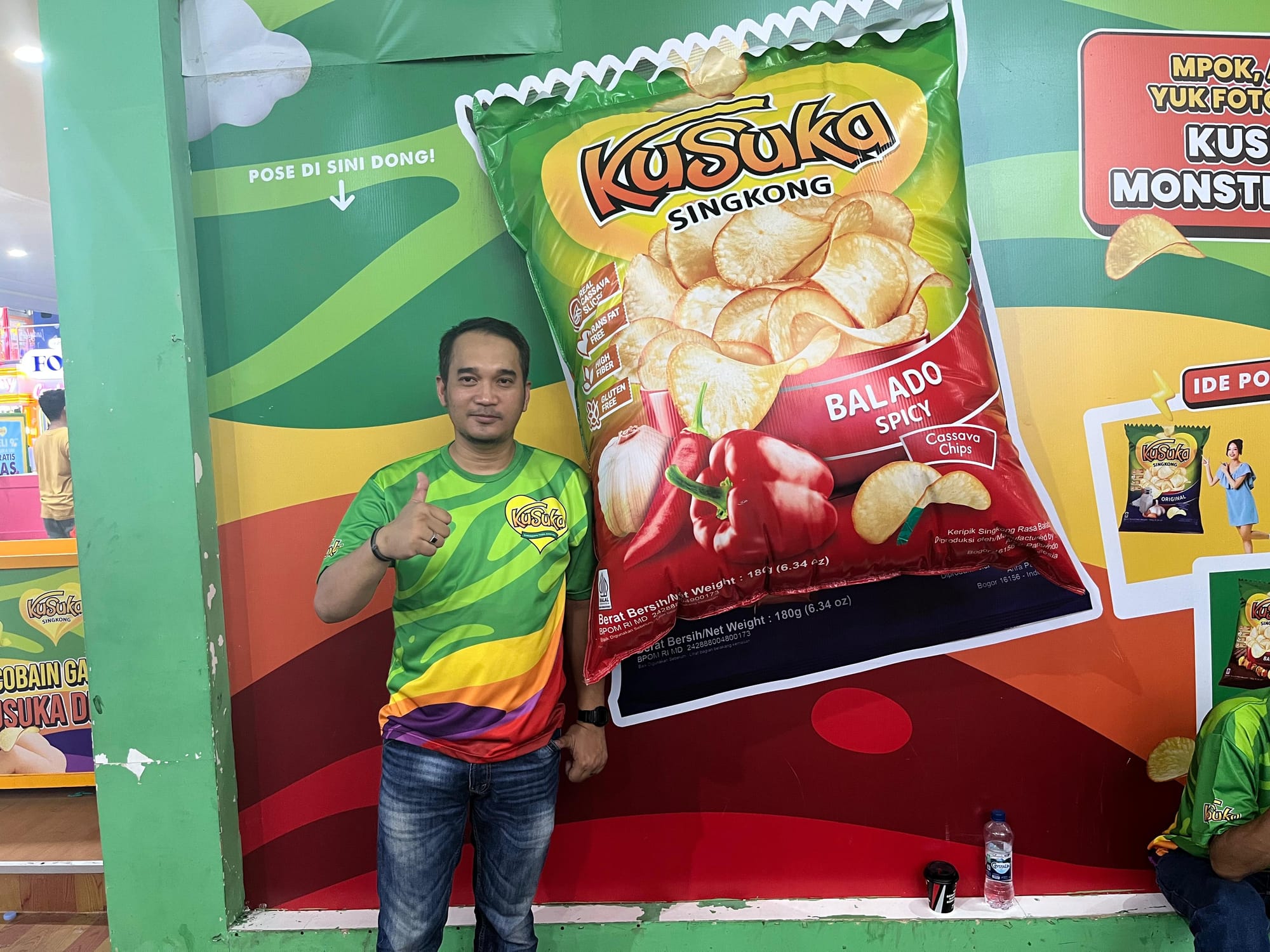
The jastip phenomenon at PRJ 2025 was also considered by tenant owners at the PRJ event, one of whom was Lukman Hakim, the person in charge of the Kusuka tenant. He admitted that his product, Kusuka round bags, sells better through jastiper services.
"We did not predict that this (Kusuka round bag) could be booming, initially we only sold 300 units. It turns out that on the first day it ran out because it went viral on TikTok." he told Suar.id when met at the Kusuka tenant.
Their products that were previously only reached by thousands of people who came directly to JIExpo, can now be spread to hundreds of thousands, even millions of potential consumers in various cities and remote areas throughout Indonesia. This means increased sales volume and optimization of potential discounts offered, ensuring faster turnover and ultimately, increased revenue for tenants. Jastip helps tenants optimize their investment in participating in large exhibitions, turning them into events with a national reach.
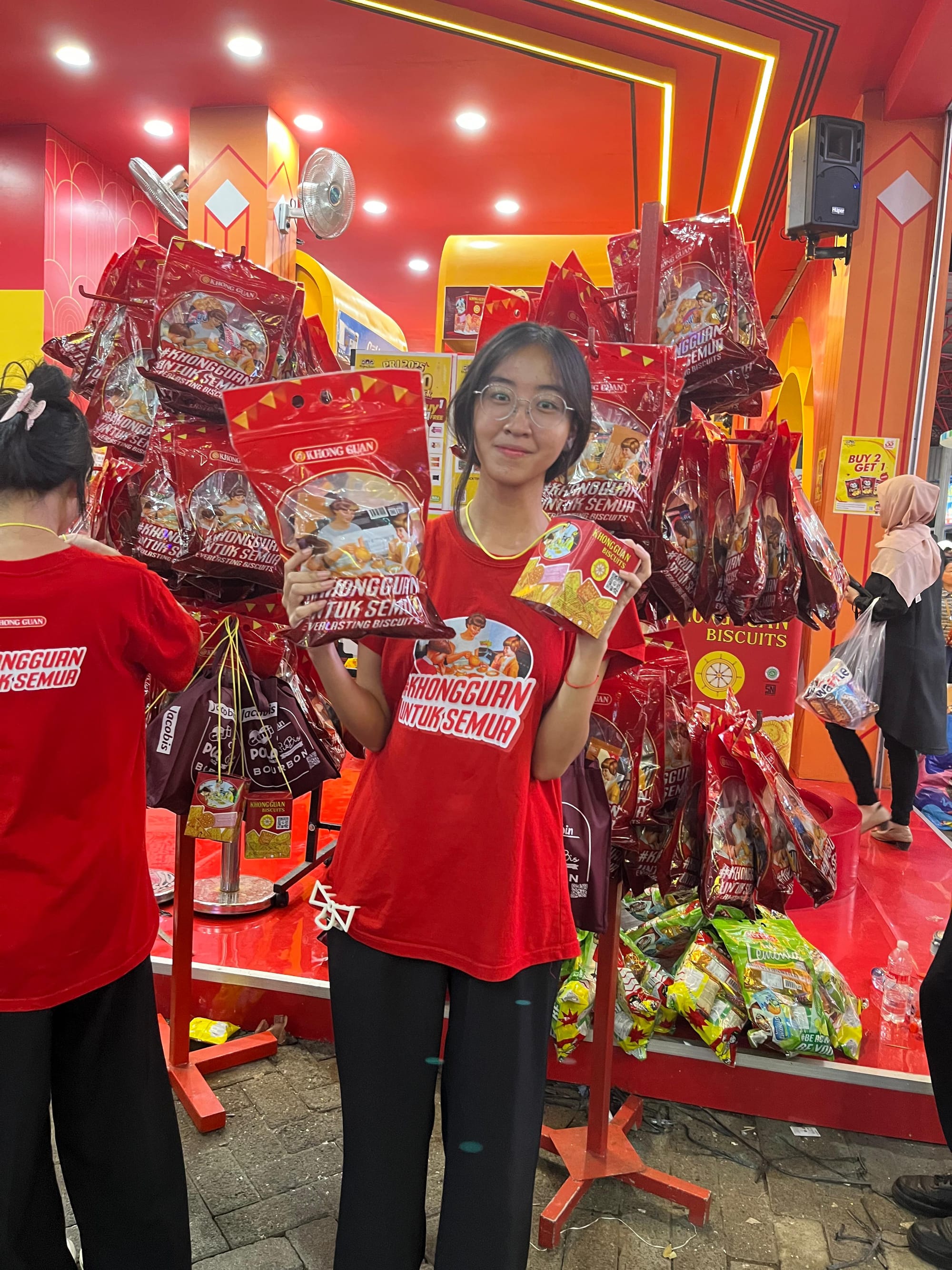
"We are helped by the presence of jastipers because they buy in bulk, the least is 10 and the most is 60 from jastipers. As a result, sales have increased," said Valencia, a sales staff at the Khong Guan tenant.
From a consumer perspective, PRJ jastip brings very concrete economic benefits. Those who are outside Jakarta or do not have the opportunity to come to PRJ can now get their desired products at attractive promo prices, without having to spend a lot of money on transportation, accommodation, meals, and others.
The service fee charged by jastipers, which varies between a percentage of the item price or a flat fee per item, is often much more efficient than the total expenditure of going in person. Thus, jastip effectively increases the real purchasing power of consumers as they can get the desired products at a lower total price.
This means that people's money can buy more valuable goods or services, which has a direct positive impact on their welfare. This mechanism ensures that people's money continues to circulate, but with higher efficiency, leading to savings that can be redirected to other needs.
New Economic Opportunities
More than just facilitating transactions, the jastip phenomenon has also become a significant creator of new economic opportunities. Thousands of individuals, ranging from housewives, students, freelancers, to those directly affected by economic challenges, are now finding additional, even primary, sources of income through the jastip business.
They transform into independent entrepreneurs who hone various skills, from precise order management, negotiation with tenants, careful product selection, to effective digital marketing through social media platforms.
This is a concrete example of how the gig economy or sharing economy empowers communities to become economic drivers at the most basic level. These jastipers become the central point of money circulation: money flows from consumers to jastipers as payment for services, and then jastipers use the income for their daily needs or as capital to grow their business, creating a positive economic ripple effect in the community.
According to Nailul Huda, Economist at the Center of Economics and Law Studies, the PRJ jastip phenomenon has a positive impact. One of them is an increase in sales from tenants at PRJ because the presence of jastip adds to transactions and money circulation, and the market reach is also wider and can reach areas outside Java. However, Huda added that the jastip phenomenon will also have an impact on the number of visitors who come to PRJ or other events will decrease due to the presence of jastipers.
"I think the domestic jastip phenomenon has two impacts. The negative impact is that people who visit will be less and less because of this jastip behavior. Finally, EOs and tenants at PRJ will be quiet and the multiplier impact for tenants and EOs will shrink. The positive impact is that tenants for jastip will increase sales due to more jastip transactions. The market reach is also wider and can reach people outside Java. But in total I think the negative multiplier effect is bigger because event tenants such as F&B will be quite quiet," he said.
Optimizing the circulation of money at the micro level is one of the most significant impacts of the jastip business at PRJ. Every transaction facilitated by a jastiper means that money rotates from the consumer's pocket, through the jastiper, and finally to the PRJ tenant. This shows that money does not just accumulate at one point, but rotates dynamically in various layers of society.
The profits that jastipers make, though often in small amounts per transaction, when multiplied by hundreds or thousands of transactions over the course of PRJ, can add up to a substantial aggregate income. This income is then spent again, creating a multiplier effect that drives economic activity beyond the fair itself.
Of course, the jastip business is not without its challenges. The hit-and-run phenomenon often occurs in the jastip business. Jastipers are prone to fraud, because customers do not pay or vice versa. This is because the relationship between the customer and the jastiper is solely based on trust.
On top of that, the draining physical burden of walking for hours, waiting in long queues, and carrying a lot of heavy groceries is a reality that must be faced. Logistical risks, such as damaged or lost items, as well as the challenges of complex order management, also require extra precision.
However, successful jastipers are those who demonstrate innovative solutions in overcoming these obstacles. They adopt smart time management, optimally utilize social media platforms for marketing and responsive customer service, and even build networks between consumers and jastipers to share information, tips, and strategies in dealing with field challenges.
Others have begun to integrate digital technologies such as live ordering through the TikTok platform and the use of expedition services to track orders and deliveries, to improve efficiency and reduce errors.