

Family businesses survive up to seven generations, perhaps it is very rarely accomplished or even a myth. The Family Business Institute survey, as quoted by Kompas.com some time ago, revealed that the majority of family businesses only survive in the first generation.
In the second to fourth generation, most family businesses collapse or go out of business. Only 30% of family businesses continue in the second generation. As many as 70% of them disappear or are sold to other parties.
Especially in the midst of uncertain economic conditions, fierce competition, and increasingly dynamic consumer changes, it becomes increasingly difficult to continue the legacy of the founding family business if it does not have the ability to adapt and continue to innovate.
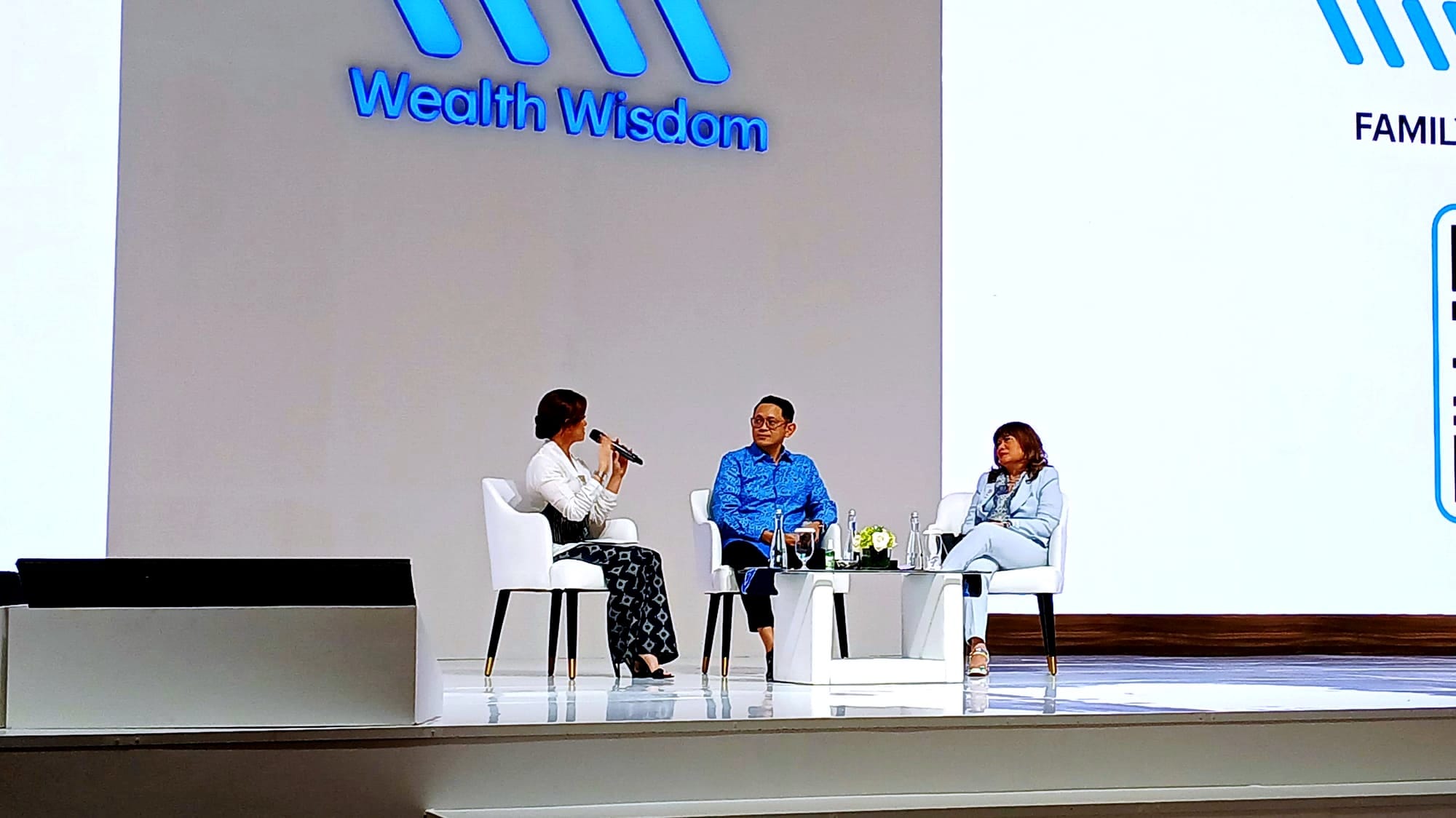
In the public discussion"Adapting the Weather: Building Business Resiliency" as part of Permata Bank's Wealth Wisdom 2025 event at The Ritz Carlton Pacific Place, Jakarta, Tuesday (7/10/2025), Shinta Widjaja Kamdani shared her success story of raising Sintesa Group and Adrianto Djokosoetono leading Blue Bird Group.
Both shared their experiences leading the transformation of their respective family companies in the face of changing times. In essence, successors must have foresight and insight into sustainable governance in order for the family business to last beyond the founding and development generations.
According to Shinta, one of the tips for shaping this orientation is to ensure that family companies still have a purpose, a goal for the future, in addition to pursuing profits.
"Without purpose, family companies will continue to face the shadow of the unpreparedness of the next generation to carry out succession, the tough choice between maintaining tradition and developing professionalization, and adaptability while maintaining corporate identity," said Shinta.
The absence of purpose as the backbone of the business has a serious impact. The grandson of a rubber entrepreneur also explained the findings of Daya Qarsa's research which revealed that only 30% of the second generation of family companies survive.
Furthermore, only 13% of family companies run until the third generation. This means that without purpose, any family company of any size could be headed for bankruptcy without realizing it.
Shinta admitted that the next generation of family companies is also facing uncertainty due to changes in trade policy and climate change issues. "Domestically, we also face the high cost of doing business, as well as bureaucratic and regulatory obstacles. We must recognize these shortcomings," she added.
Based on the findings of a United Oversease Bank (UOB) survey, 95% of Indonesia's listed companies are family businesses that contribute up to 53% of the national GDP.
From the same survey, it was revealed that 76% of business leaders in Indonesia, both UMKM and large enterprises, are the next generation who have now become decision makers.
Shinta's Sintesa Group is a case in point. Founded by her grandfather in 1919 as a rubber plantation, Shinta's father changed the focus of the business to consumer goods distribution in 1959.
At the age of 32, in 1999, Shinta took the leadership baton and immediately made two major decisions. First, to expand the business portfolio. Second, transforming the family company into a professional one with corporate excellence principles.
The key, according to Shinta, is the people within the company. In the past, business and family were mixed up, so the company only followed what the owner said.
"I separated that and recruited new people, while also holding on to the loyalty of the old employees," he said.
That was the case for Adrianto Djokosoetono. Maintaining people as the company's main asset became a challenge when he was trusted to become Chief Executive Officer (CEO) of Blue Bird Group in 2023.
Blue Bird has survived various conditions amidst business and political turmoil. There have even been disputes over assets in the second generation. Today, with 24,500 fleets and 30,000 drivers and employees in 20 cities across Indonesia, Blue Bird cannot be just another taxi company.
"I learned that being first doesn't guarantee you're a winner," says Adrianto, who is the third generation of the Djokosoetono family.
Adrianto said Blue Bird now has to serve more customer mobility needs, including intercity mobility, which prompted the company to decide to acquire Cititrans in 2019.
Bluebird also faced various challenges, especially when online motorcycle taxis appeared, which at that time captured consumer market share. However, instead of competing, the company nicknamed the Blue Bird chose to do co-opetition, working and competing with competitors.
He reflected on the experience of reviving the MyBluebird application, which was only launched during the Covid-19 pandemic. In fact, the investment in the mobile application reached billions of rupiah.
"We go back to the principle that only happy people can make others happy," he said.
For Adrianto, Blue Bird's greatest asset is not first of all its fleet of vehicles, but its drivers and employees. "Realizing that, we provide free healthcare, training, and education for the wives and children of drivers, so that their husbands and fathers can focus on serving customers," he said.
Point and prove
Shinta and Adrianto share the same anxiety. Being part of the 13% of the third generation that maintains the family business makes them wary of not being able to pass on the business to the next generation. Therefore, apart from preparing a cadre from the family, they have a similar key.
For Shinta, the key is to show proof of leadership capability to her predecessors. When she took over as CEO in 1999, Shinta even included a job description for her father, whom she succeeded, so that the intervention of the previous generation would not interfere with the future of the business she was driving.
"Founders don't let go, so I also learned from other companies not to forget corporate governance and good governance. Don't let conflicts between members carry the family business until it dissolves," he said.
"When I manage to separate business and family, the sustainable business values that I bring can be fully implemented," said Shinta.
Adrianto agrees. The founding generation that experienced the difficult early days of the company not only has difficulty trusting the next generation, but also worries.
Showing the best professional performance and performance is an absolute requirement. Adrianto himself took 23 years since joining Bluebird as a management trainee, became a pool head for 7 years, before being pulled to the head office.
"It takes time to prove. From the time I was a pool head to the time I became CEO, I still read the customer complaint reports we received, while ensuring that today's and tomorrow's services must be better than yesterday's," said Adrianto.
"I think that's the key to making management, which is to ensure value not only among the family, but also for the whole company," he continued.
Read also:
 Benedictus Krisna Yogatama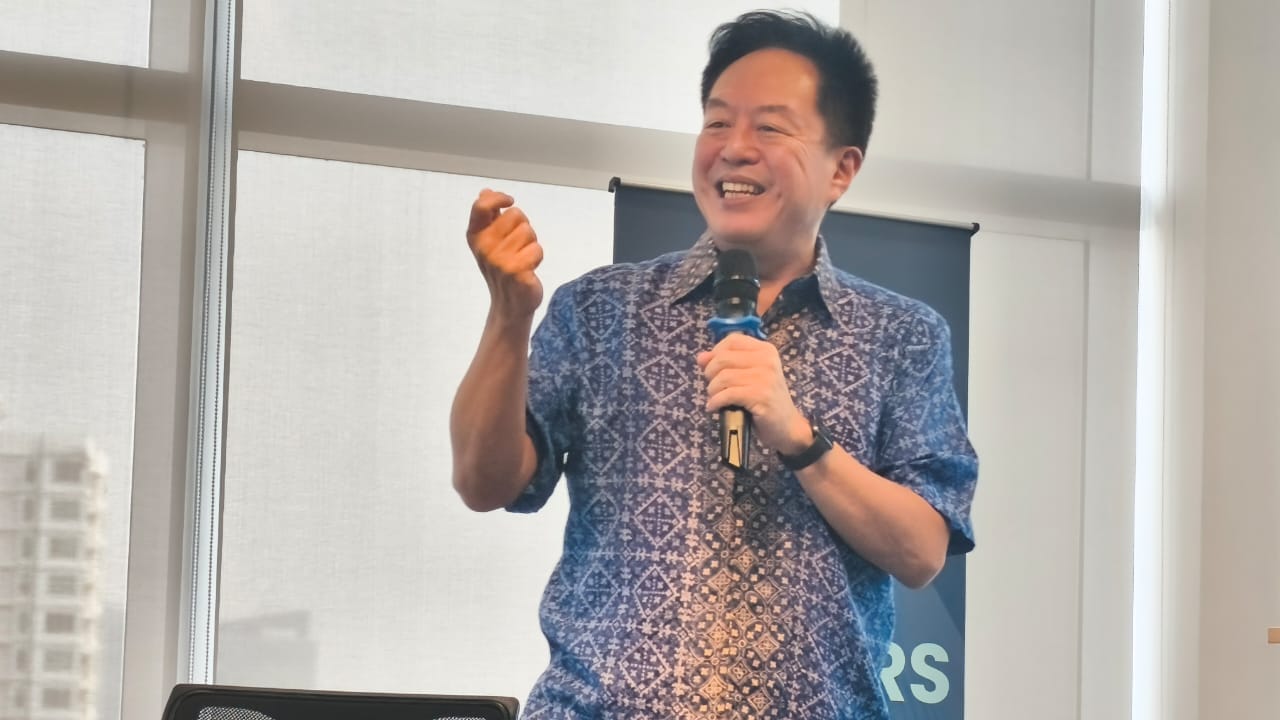
Contacted separately, Professor of Marketing Management at Jenderal Soedirman University (Unsoed) Suliyanto validated the views of the two big entrepreneurs. He stated that the regeneration of family businesses more often fails due to internal factors rather than the competitiveness of the company itself, ranging from the declining ethos of the heirs to the resistance of the founders.
"Successors often grow up in more established conditions than the pioneers, so they do not inherit the full values of hard work and simplicity of the founding generation," said Suliyanto when contacted on Tuesday (7/10/2025).
He added that in more complicated situations, internal conflicts and lack of professionalism can lead to unhealthy struggles over family businesses.
According to Suliyanto, predecessors with a conservative mindset are resistant to environmental and technological changes. Therefore, regeneration needs to be planned with proper preparation and training.
"When the predecessor feels incapacitated due to health reasons, the control of the business is not passed on suddenly," he concluded.