
Bank Indonesia's decision to maintain the benchmark interest rate (BI Rate) at 4.75% and the precedent of involving the Ministry of Finance in the monthly board of governors meeting sends a strong signal to the business world. That signal is the increasingly cordial relationship between fiscal and monetary stakeholders, which is expected to accelerate the transmission of policy impact to the real sector.
BI's efforts to increase bank lending to the real sector, especially UMKM and consumers, are encouraged by various government fiscal expansion measures.
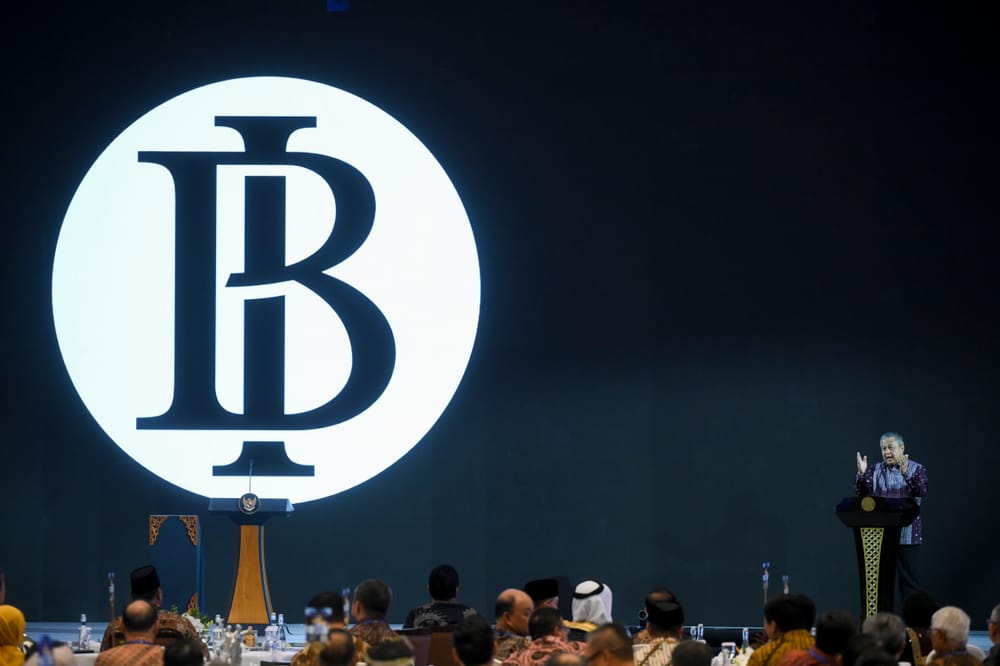
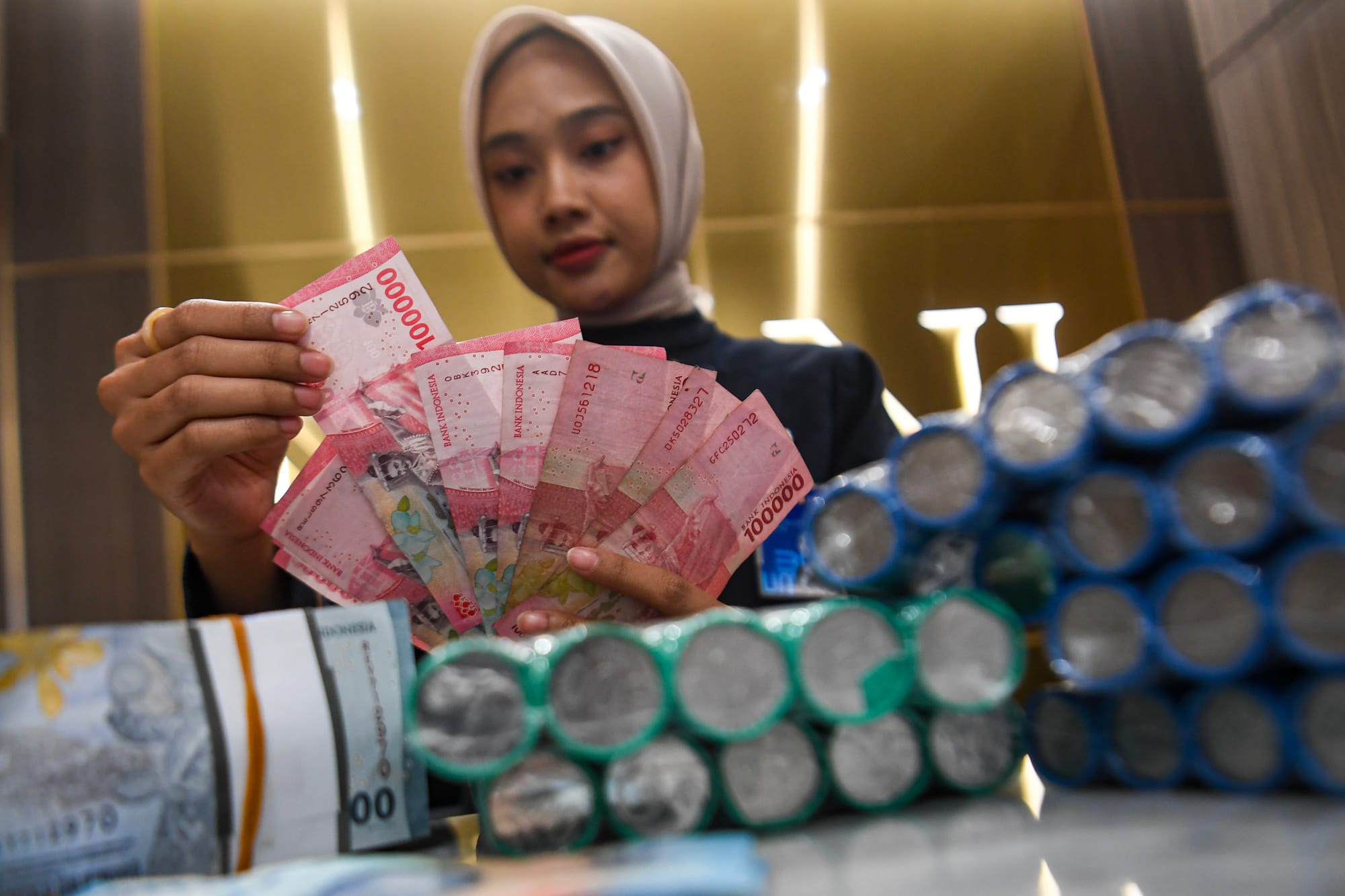
In a press conference on the results of the November 2025 BI Board of Governors Meeting (RDG), Wednesday (19/11/2025), BI Governor Perry Warjiyo stated that, with the benchmark interest rate having been maintained and the encouragement of macroprudential liquidity incentive policies (KLM) which reached Rp404.6 trillion in the first week of November 2025, bank lending which actually slowed from 7.7% to 7.36% year-on-year in October 2025 indicates that the effectiveness of monetary policy transmission has not reached full capacity.
Perry suspects that there are two reasons for the slowdown. First, the one-month deposit rate only fell from 4.81% to 4.25% in October 2025, influenced by the provision of special rates to large depositors who reached 27% of bank deposits.
As a result, lending rates fell more slowly from 9.20% to 9%, in addition to overhead costs and risk premium margins applied by banks.
"This slowdown also occurred because credit demand has not been strong, influenced by the attitude of business actors who are still holding back expansion and optimizing internal financing. However, the interest in bank lending is quite good, reflected in the increasingly relaxed lending requirements," Perry said at a press conference of the BI Board of Governors Meeting held virtually, Wednesday (19/11/2025).
In lending, BI is mindful of the requirements for lending to consumption and UMKM, given the high credit risk in these two segments. With UMKM credit growth in October 2025 falling by -0.11%, the grossnon-performing loan ratio of UMKM is likely to increase from 4.46% in September 2025 to 4.51% in October 2025.
"The results of Bank Indonesia's stress test show that banking resilience remains strong, supported by payment capabilities and maintained corporate profitability. Going forward, Bank Indonesia continues to strengthen policy synergies with KSSK in mitigating various global and domestic economic risks that have the potential to disrupt financial system stability," he explained.
Coordination precedent
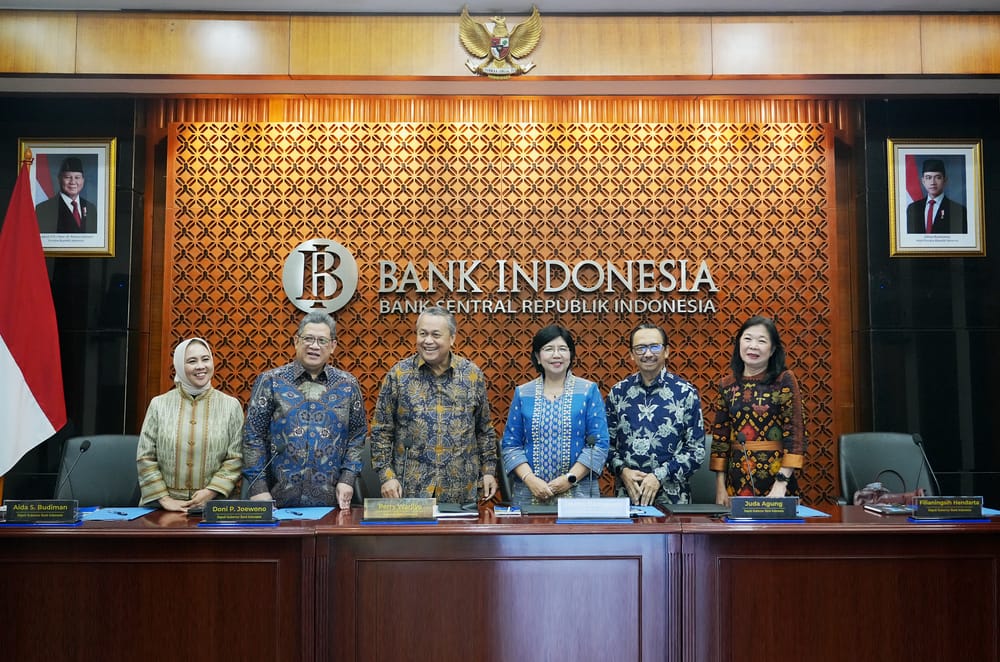
Unlike before, the BI Board of Governors invited the Minister of Finance to attend the monthly meeting for the first time since Perry Warjiyo began his term in 2018. This action, according to Perry, is fully in accordance with the provisions of Article 43 number 1(a) of Law Number 23 Year 1999 on Bank Indonesia which states that the RDG may be attended by one or more ministers representing the Government with speaking rights without voting rights.
"Government policy coordination is increasingly important, especially to maintain macroeconomic stability. For this reason, the BI Board of Governors invites the Minister of Finance to start the RDG in November 2025, which in this case is represented by Deputy Minister of Finance Thomas Djiwandono based on the Minister of Finance's power of attorney," Perry said.
There were three main points of discussion presented by the Deputy Minister of Finance in the November meeting with the Board of Governors. First, the alignment of fiscal and monetary policy expectations. Second, an update on the government's fiscal expansion. Third, the planned issuance of domestic and foreign government securities (SBN), which will be aligned with BI's monetary operation strategy in the financial market and in the foreign exchange market.
"The government's fiscal expansion aims to boost real sector growth through demand. In the Q4, fiscal expansion is getting higher, not only ministry/agency spending, but also an increase in social-economic populist program assistance according to the program outlined by the President," he added.
Through this precedent-setting fiscal-monetary coordination, Perry expects the acceleration of fiscal expansion to help reduce undisbursed loans. Through social assistance programs, public investment and consumption are expected to increase, so that credit demand from the real sector and bank lending can increase in the future.
"With the reduction of SRBI, SBN purchases, and KLM incentives, bank liquidity is already excess, so deposit rates and lending rates must fall quickly to encourage credit supply to the real sector, because the government has accelerated demand through stimulus and other fiscal expansion," Perry concluded.
On that occasion, BI also announced to maintain the BI-Rate at 4.75%, the Deposit Facility rate at 3.75%, and the Lending Facility rate at 5.50%. This decision is consistent with the short-term policy focus on stabilizing the Rupiah exchange rate and attracting foreign portfolio investment inflows from the impact of increasing global uncertainty, while strengthening the effectiveness of the transmission of monetary and macroprudential policy easing that has been taken so far.
Going forward, BI will continue to keep a close eye on the room for further BI-Rate cuts with inflation forecast for 2025 and 2026 under control within the 2.5±1% target, as well as the need to contribute to higher economic growth.
Anticipate crowding out
Regardless of the purpose of coordination and BI's full support as the monetary authority to the government's fiscal expansion agenda, the precedent created may reinforce crowding out tendencies, i.e. the increasing role of the government that pushes out the private sector. Anticipation needs to be done, among others, by organically boosting domestic demand.
University of Indonesia Doctoral Candidate in Economics Dipo Satria Ramli believes that the government's tendency to maximize spending to boost economic growth can depress investment and create a centralized economic trend. In fact, for sustainable growth, the fiscal role in increasing domestic demand is only possible if the private sector is proportionally involved.
"Fiscal expansion through priority programs can accelerate, provided that the program cannot be done by the private sector. For example, in Danantara's priority program for chicken and egg farms amounting to Rp20 trillion. This investment can actually be done by the private sector, but because of Danantara's involvement, the private sector will actually retreat," Dipo said when contacted by the Ministry of Finance. SUAR, Wednesday (11/19/2025).
With a passive role in the fiscal, coordination should be limited to creating a favorable climate for investment, accompanied by appropriate regulatory consistency that can drive demand organically. In this way, consumption that grows from below will drive credit demand and disbursement by banks in a sustainable manner.
Sharing Dipo's view, Political Economy Analyst of Laboratorium Indonesia 2045 (LAB45) Nadia Restu Utami explained that the strength of organic demand is determined by purchasing power and employment, not by fiscal expansion or acceleration of priority programs. Therefore, the first effort to boost demand is to restore income expectations and confidence in the economic outlook.
"In a situation of economic uncertainty, banks are also more cautious in lending due to the increased risk of default, while people and businesses are reluctant to take on debt. As a result, despite BI providing incentives and easing monetary policy, the credit transmission channel remains blocked," he said.
In optimizing the engine of fiscal expansion, Nadia emphasized that the foundation of aggregate demand must be strong enough. In addition to accelerating productive spending, the expansion of employment will strengthen people's purchasing power. As a result, credit demand will grow as there is a real need for financing.
"The synergy between pro-demand fiscal policy and expansionary and pro-growth monetary policy is key so that the economy is not trapped in demand stagnation and a protracted cycle of credit aversion," he concluded.