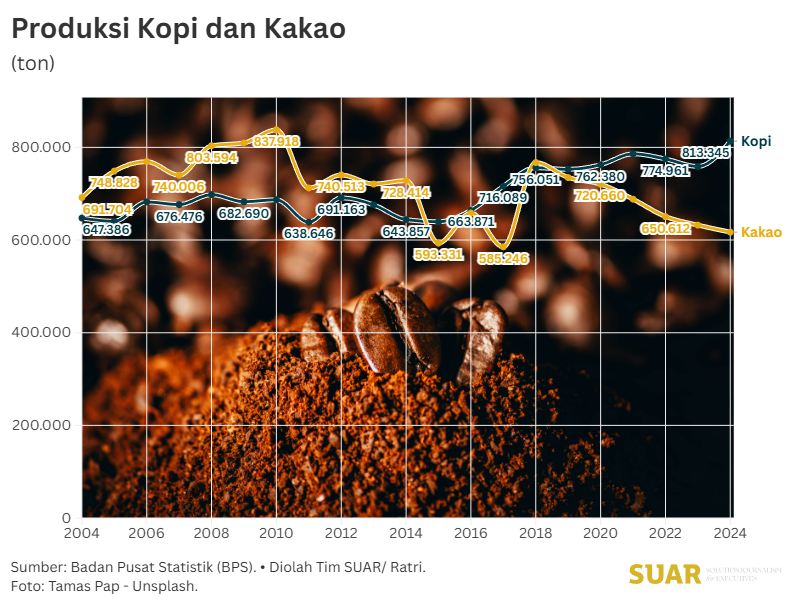
Cocoa production experienced the worst drop in 2017, reaching 11% to 585,246 tons. Previously, coffee also fell by around 1% in 2015 to (639,355 tons). These years were recorded as periods that were directly affected by the El Nino phenomenon, which triggered severe drought and crop failure.
Furthermore, the La Nina period (2020-2022), which brings excessive rainfall, also puts pressure on cocoa production due to increased pest and disease attacks. The threat of climate change provides a lesson on the need to mitigate climate risks to plantation production based on data and collaboration with authorized agencies.
Efforts to mitigate the impact of extreme climate on plantation commodities have entered a new phase with a strategic collaboration between the Meteorology, Climatology and Geophysics Agency (BMKG) and the Indonesian Coffee and Cocoa Research Center (Puslitkoka). The initiative aims to integrate precision climate data into the entire plantation supply chain.
In this collaboration, BMKG is tasked with providing Climate Early Warning (for example, early prediction of El Nino or La Nina) and dynamic weather data. Meanwhile, Puslitkoka translates the data into appropriate Agricultural Technical Recommendations, such as guidance on watering intensity, pruning time, and pest control schedule. Delays in weather information have been proven to cut national coffee and cocoa productivity by 30-60 percent, so this collaboration is key in realizing adaptive and sustainable farm management.
Climate vulnerability analysis is crucial, especially in key production centers. In coffee, the majority of centers are in Central Sulawesi (19.6%) and Southeast Sulawesi (15%). Cocoa is concentrated in Sumatra (South Sumatra 21% and Lampung 12%). The Sulawesi region in Central-Eastern Indonesia is particularly vulnerable to severe drought during El Nino, potentially triggering flower fall and crop failure.
Meanwhile, cocoa centers in South Sumatra and Lampung are more vulnerable to flooding and an increase in fruit fungal diseases (e.g. Phytophthora) and pests(VSD) due to high rainfall brought by La Nina. Synchronizing BMKG data can provide region-specific warnings to address these different vulnerabilities.
The main idea of the BMKG-Puslitkoka synergy is the development of a climate information system that can be accessed by farmers and stakeholders, such as through the Nusaklim platform that supports oil palm plantations. Through this system, farmers no longer rely on traditional planting calendars, but rather on production outlooks combined with climate outlooks.
When the BMKG predicts a dry spell, Puslitkoka can recommend the addition of shade or mitigation of coffee fruit powder pests that are active during high temperatures. Conversely, during La Nina farmers in cocoa centers can be guided to sanitize their farms and increase early application of biological pesticides to suppress fungal attacks.
The science to action collaboration between BMKG and Puslitkoka offers concrete solutions to mitigate the impact of climate change on coffee and cocoa production volumes and price stability. By providing accurate and location-based climate information, the risk of crop failure can be reduced. Thus, the efficiency of resource use (especially water) can be improved and pest attacks can be managed appropriately. Successful implementation of this program will strengthen the resilience of the national plantation sector and ensure Indonesia remains a key player in the global coffee and cocoa market amid the new normal of climate extremes.