Exclusive Interview with SUAR
The government has just activated more than 80,000 “Merah Putih” Village Cooperatives, a nationwide initiative designed to channel capital, cut out predatory middlemen, and accelerate rural development. With the activation phase complete, the program now enters operations.
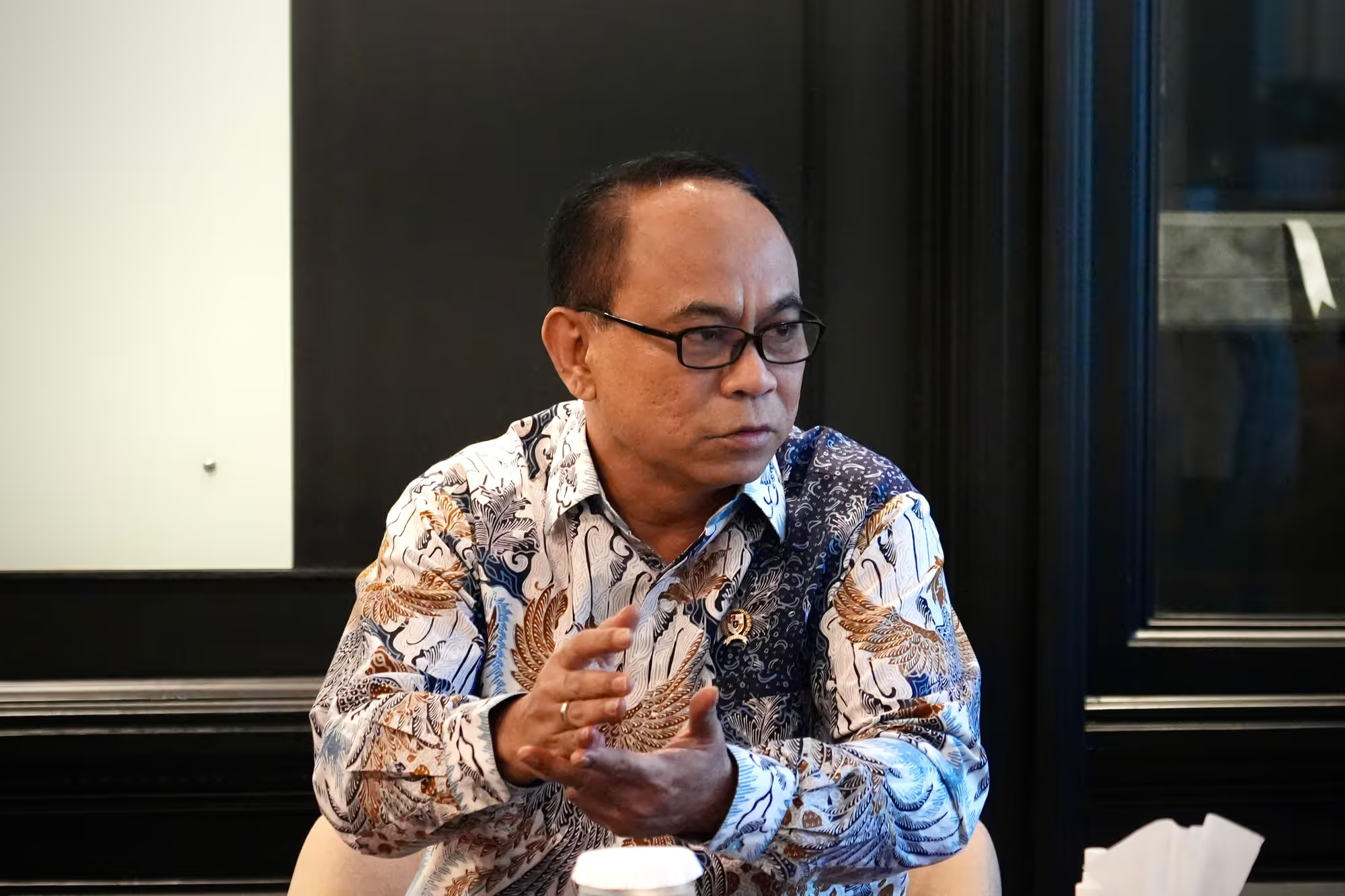
In an exclusive conversation with SUAR, Minister of Cooperatives Budi Arie Setiadi outlined his vision for how these institutions, funded by the state but run by villagers, could become the economic backbone of Indonesia’s countryside.
“I told them, this cooperative will be in the village, not in the palace, not in the Ministry of Cooperatives’ office. The capital is also directly provided—if Village Funds are only Rp1 billion, we provide Rp3 billion. So they will be the ones managing it. How could they not want this?” said Budi.
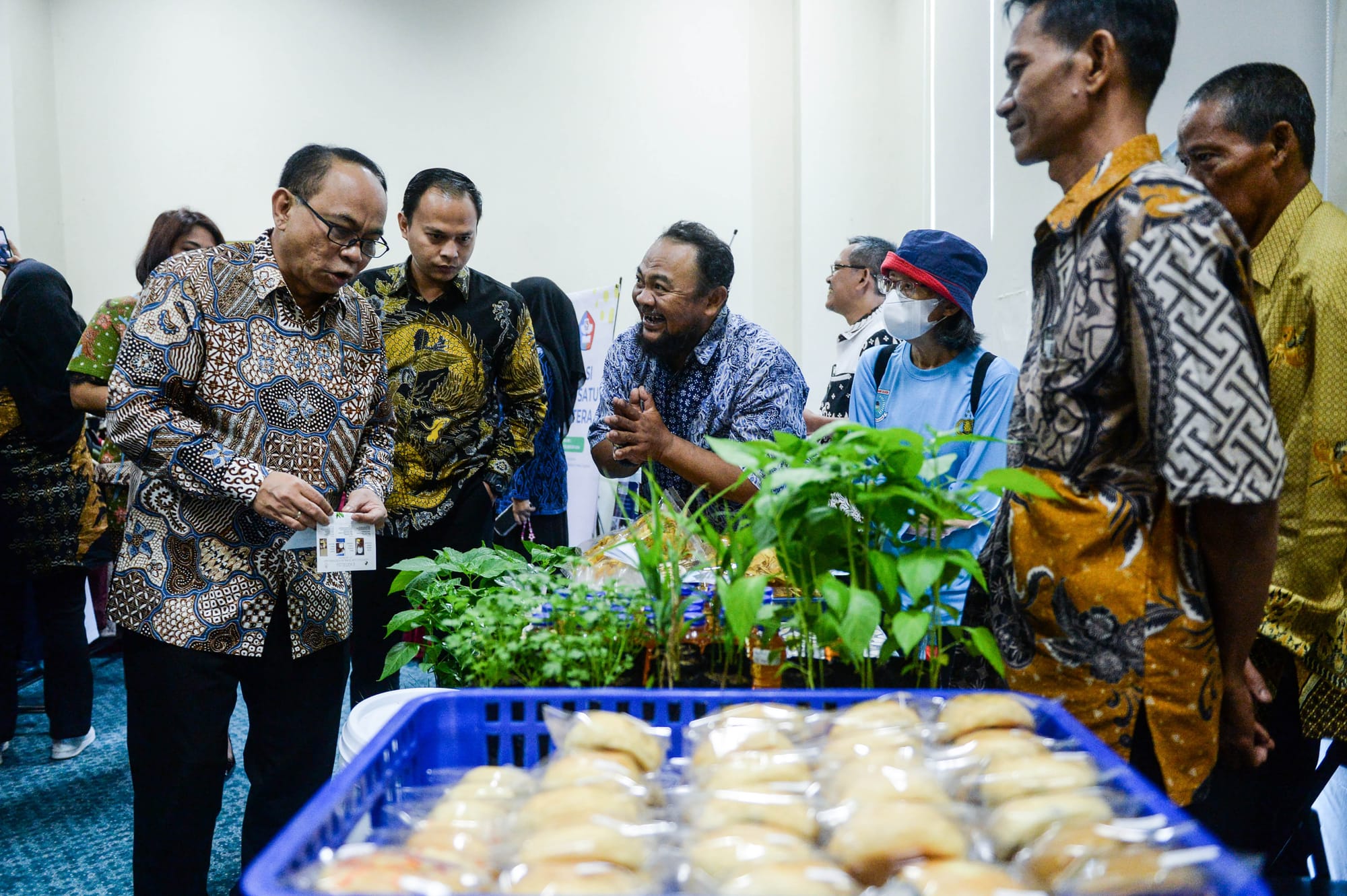
By leveraging existing networks, within just a few months Budi was able to facilitate the establishment of 80,000 Koperasi Desa Merah Putih, meeting the target set by President Prabowo Subianto. The official launch of these cooperatives was conducted simultaneously on July 21, 2025.
Budi explained that the initiative to establish Koperasi Desa Merah Putih in villages had been rolled out since March and was introduced to regional leaders during a retreat in Magelang.
The program has not been without criticism from the public. Even so, Budi Arie assured that this policy will bring benefits to rural communities. As for supervision, he emphasized that it will not be handled by the government alone.
“If some village cooperatives succeed, then surely the village heads who are less successful will face criticism from their residents. So I am confident that the public will also oversee this program,” he said.
On Wednesday, July 23, 2025, Minister of Cooperatives Budi Arie welcomed SUAR journalists at his office in Kuningan, Jakarta. He expressed optimism that the program would run effectively. He also outlined various strategies to ensure Koperasi Desa Merah Putih operates well and delivers positive impact to society. Excerpts from the interview:
SUAR: Many consider the Koperasi Desa Merah Putih program a top-down initiative, not a pure community-driven movement. Your response?
BUDI ARIE: No, it’s only the idea. And don’t be allergic to the word top-down. What’s wrong with top-down? The establishment of Koperasi Desa Merah Putih proves that the state is aligned with the people’s economy.
If it’s not top-down, that means the state has no initiative to build its people’s economy. The concept is that the state must be present. We want to show alignment first.
The establishment of Koperasi Desa Merah Putih proves that the state is aligned with the people’s economy.
SUAR: If so, what about the people’s participation in this program?
BUDI ARIE: These cooperatives are founded in the villages—their ownership and membership belong to the villagers. In addition, every citizen has the right to monitor the management of these cooperatives.
SUAR: The government claims more than 80,000 village cooperatives have already been established. Do you think all of them will function?
BUDI ARIE: Right now, we’re entering the second chapter. Previously, we completed the first chapter: activation. We’ve activated those 80,000 cooperatives. Even I didn’t expect it would be this fast.
Now we’re moving into the second phase: operations. Once operational, these cooperatives will begin serving the community. That’s the focus.
The third phase will be monitoring, evaluation, and business development.
SUAR: Are you confident the program will succeed?
BUDI ARIE: Of course, not everything will go exactly as expected. But let’s say, in one regency, 400 village cooperatives are established—if 100 succeed while 300 underperform, the villagers themselves will protest the weaker ones. They’ll ask why they can’t succeed. So in the end, everything will be monitored directly by the people. This is what gives me confidence.
SUAR: Village cooperatives are also expected to improve distribution efficiency. What is the concept?
BUDI ARIE: From the beginning, I reported to the President that cooperative development should focus on providing certainty, one aspect being prices. Currently, middlemen (tengkulak) dominate communities. To fight them, we also need weapons. What’s their weapon? Money. So we provide the capital upfront. Their weapon must be matched.
With these village cooperatives, we aim to cut overly long distribution chains. Instead of seven layers, we can shorten it to three. And who benefits? The people.
This is in line with what the President has said—we want to eliminate the “economic vampires.”
SUAR: What about the selection of management—are there special requirements?
BUDI ARIE: Yes, valid SLIK checks are required. Management members also cannot be related by blood to the village head to avoid conflicts of interest. Wives, siblings, children, in-laws, or anyone with blood relations to the village head cannot become cooperative managers.
SUAR: Regarding efforts to ensure village cooperatives follow GCG (Good Corporate Governance), what preventive measures will be applied?
BUDI ARIE: Through digitalization. There will be no cash circulation in managing these cooperatives. Everything will be digital. Later, their businesses will use a channeling system. For example, if working with fertilizer companies to sell fertilizer at lower prices, the government will handle contracts directly, while the village cooperative acts as distributor. This way, the system is safe from potential misuse.
SUAR: Will all of them eventually be pushed toward becoming consumer cooperatives?
BUDI ARIE: First, we need to look at the purpose. What does the community need most? That’s why village cooperatives are leaning toward being consumer cooperatives—providing essentials like rice, cooking oil, LPG, coffee, and so on.
We haven’t yet focused on cooperatives as producers. In theory, cooperatives should cover production, distribution, and industry. But right now, all of this connects directly to consumers.
So philosophically, the role of these cooperatives is to facilitate increased productivity and consumption in villages—to accelerate rural economic growth.
SUAR: But is the cooperative alone enough to ensure community prosperity?
BUDI ARIE: The strategy is this: by creating these cooperatives, we bring capital closer to the village. Until now, villagers may have had business ideas but struggled to access capital. Even if they found it, it came with burdensome conditions. We also bring technology closer to villages. Everything is cashless—we’re pushing for digital transformation to happen quickly. Technology is key to productivity.
The third strategy is training communities to become entrepreneurs together. Entrepreneurs calculate risks; they know losses are part of business. Losses can happen, but that’s business risk, not fraud.
The point is collective effort—collegial and cooperative. Because if you stand alone, you break easily.