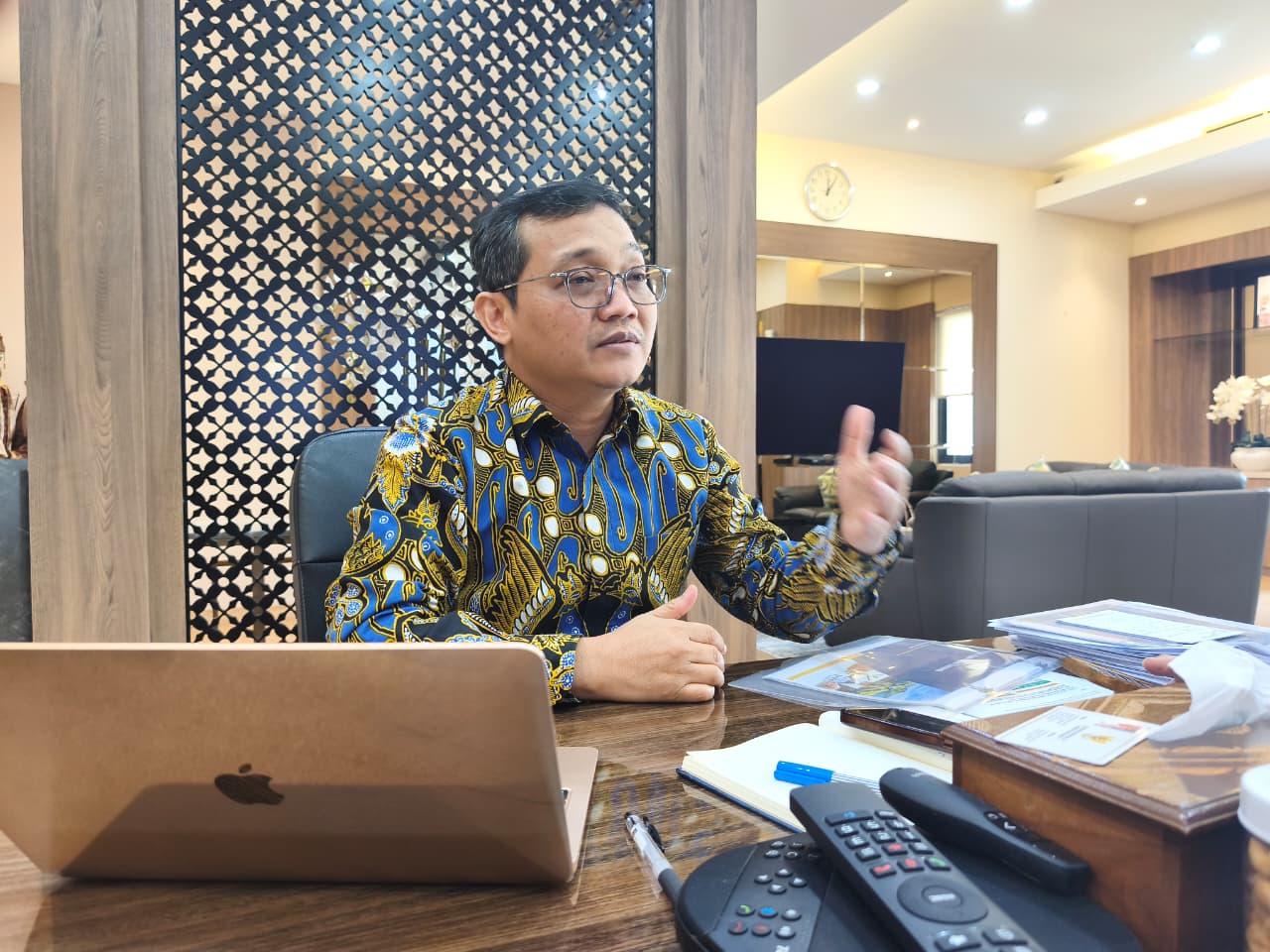
Special Interview with Deputy I of the Coordinating Ministry for Economic Affairs Ferry Irawan
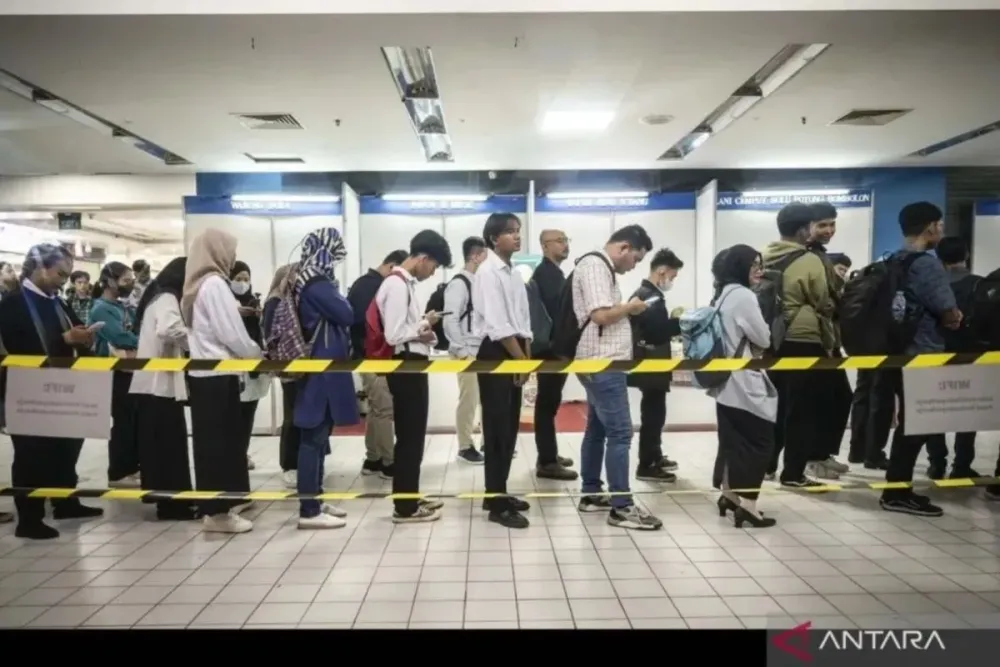
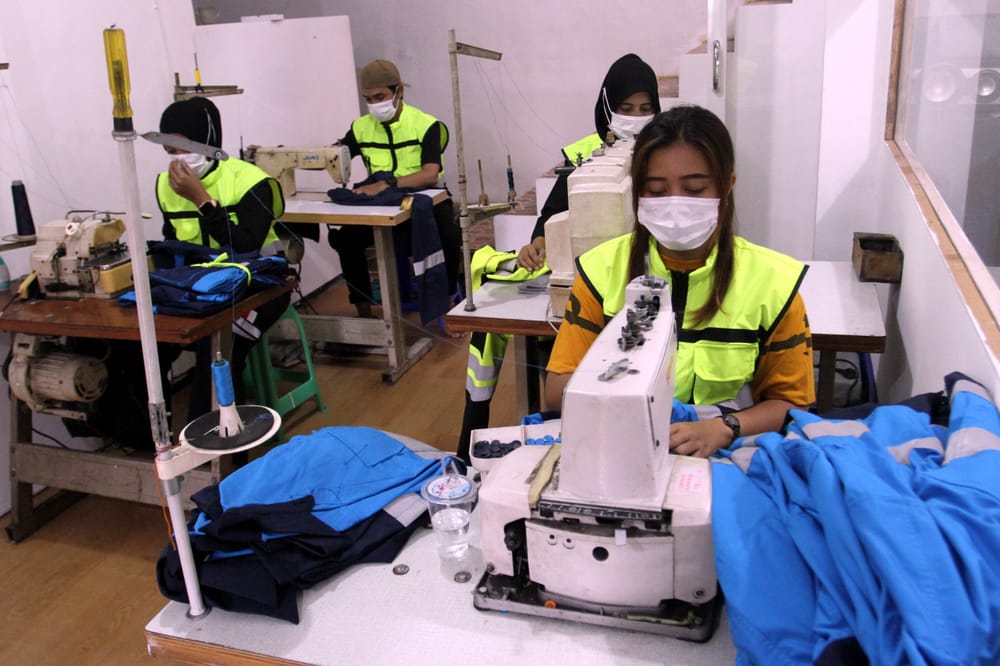
When it comes to labor absorption, labor-intensive industries are the key to absorbing unemployment. In order to survive the current world economic uncertainty, the government has several flagship programs that are expected to absorb labor.
These programs are in the form of economic stimulus, and there are also acceleration programs from existing programs. "We hope that it can encourage growth, then it can also absorb labor. So the government's role is there, with a growth stimulus," said Deputy I of the Coordinating Ministry for Economic Affairs, Ferry Irawan.
According to Ferry, by providing stimulus and incentives, the government is trying to maintain people's purchasing power. If the purchasing power continues to grow, the industry will also move. Therefore, manufacturing plants and properties that absorb a lot of labor must receive assistance.
For UMKM, there are already incentives such as Income Tax Article 21 that can ease the burden on companies and lift workers' purchasing power. It is estimated that there will be 1.7 million workers who can take advantage of this incentive. The government has also begun to provide incentives to the service sector, such as hotels, restaurants and cafes (horeka).

Not to forget also the provision of incentives to the tourism sector. "Later in the period from mid-December to mid-January. Because tourism also absorbs a lot of labor," said Ferry.
To find out more about the impact and background of the preparation of incentive policies in the labor-intensive industrial sector, SUAR had a long conversation with Ferry at his office, Coordinating Ministry for Economic Affairs, last Tuesday (16/9). The excerpt:
Many incentives and stimuli are given to companies and workers in labor-intensive sectors, but how can they make investment in this sector also grow?
To attract investment, there is Government Regulation (PP) No. 28 of 2025 (on the implementation of risk-based business licensing). With this PP, licensing can be more certain. So, within a certain time, if the license is issued, by default it has been approved.
This is important, because if we look at the pipeline that we monitor, which can reach 100,000 workers, there are many licensing sectors. So what we hope is that PP 28 can be effective in October, helping us to speed up the licensing process.
Then, what is the strategy so that the various incentives that have been launched are effective? Not only restrain the rate of layoffs but encourage job creation.
Regarding layoffs, it has been released by Mr. Minister of State Secretary. There are two policies. First, the Labor Welfare Council. The second is the Layoff Task Force. We hope that we can overcome this issue. While simultaneously creating new jobs. We can reduce layoffs by absorbing the existing workforce.
Yes, but labor-intensive industries are also sluggish, hence the layoffs...
That's why we have various stimuli. We are aware of that, that's why we do this policy. Including if there are obstacles in one sector, we can also optimize in other sectors. That's why there are several programs in the government that we hope can also absorb labor.
So, there are constraints in one sector, we improve that sector. But on the other hand, other sectors that we see as having potential are also being mobilized. That's the essence of yesterday's policy.
Some of these policies will only come into effect next year, yes?
Yes, but don't look at just one side. That's why I gave a complete picture so that you can see the whole picture. There is a short-term stimulus, a medium-term stimulus, and a long-term stimulus. This is actually to overcome the issue of layoffs.
The cause of the problem is not just one side. There is a short-term stimulus, there is a medium-term competitiveness, such as PP 28 of 2025, Revision of MOT 8 also provides market access. That's one package. So don't look at only one side.
What are the criteria for a stimulus to be targeted for the short term?
There is stimulus for Q1, stimulus for Q2. Including Income Tax 21 that is included in the short term. In Q1 we have given it, which is labor-intensive. Now, this is the last one, which was launched by Mr. Coordinating Minister, about internships for college graduates.
Usually according to the cycle, such as September and October, where there are many new graduates. We prepare the program. Our target in this program is as many as
Will it be effective in October?
Yes, because the budget has been prepared in 2025. So 3 months in 2025 first, then continue again in 2026. Evaluation every three months.
Many entrepreneurs complain that incentives like this have limited direct impact on their industry.
As stated by the Minister during the press conference. So, in addition to various policy packages, we have formed the Government Priority Program Acceleration Team. So this program is always monitored. Then for the industry, there is a debottlenecking procedure.
The Minister of Finance said that they will also receive complaints. What the problems are, will be discussed as well. It is hoped that it can help the industrial sector.
The government also created a program to protect informal workers such as online motorcycle taxis?

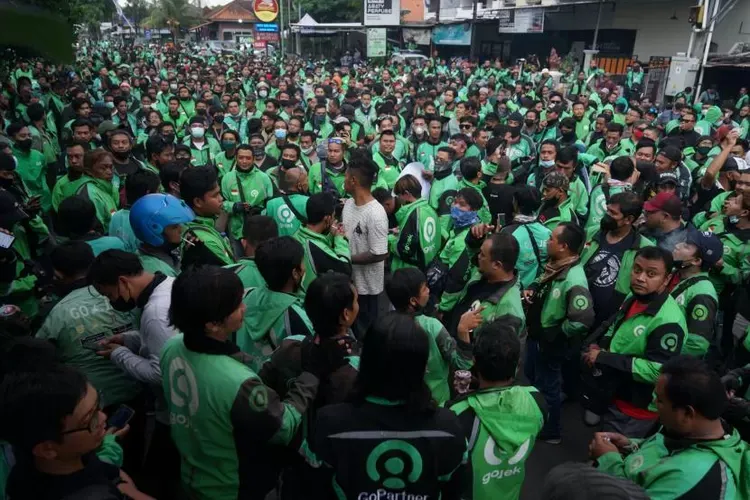
Oh, yes, workers such as ojol, ojek pangkalan, drivers, logistics couriers, we also provide JKK and JKM discounts. This helps both the worker side and the industry side. Because part of it is also paid by the industry.
We are also preparing labor-intensive (infrastructure projects) as a buffer, yes. For daily cash workers. Those in the Ministry of Transportation and the Ministry of Public Works.
So, it's facilitating and providing what is needed, not creating something new?
Yes, but some things like in the Merah Putih Cooperative are new. Indeed, replanting in smallholder plantations is based on what already exists. But we are improving.
In palm oil, for example, there is the constraint that our trees are old. So the capacity to produce is lower. This we improve with this replanting .
The same goes for other commodities. There is sugarcane, there is cocoa, there is coconut, there is coffee, there is cashew, there is pepper. So it already exists. We expect a replanting program of 870 thousand hectares and employment opportunities of 1.6 million 2 years. That's what we expect.
Any policies for the fisheries sector?
For fishermen, there is also boat modernization. So there are already a thousand fishing boats through the Merah Putih Cooperative accessing this program. The constraint for fishermen is that the boats are wooden. That ship can be used for short distance fishing, but for long distance, can't it? Meanwhile, the ships from outside are already modern. That's why from the profiling , one of the things we identified is how we can equip our fishermen with more modern boats.
That's why there were 1,582 fishing boats modernized. A total of 582 are managed by SOEs. It is based on our identification that one of the obstacles for us is simple vessels. So, with this we hope that they can be more modern, they can catch more fish, then the range can also be wider.
This incentive program involves many institutions, how to ensure the coordination goes well?
It has been conveyed by the Coordinating Minister as well, there is a Priority Program Acceleration Team. There is the Coordinating Minister for the Economy, there is the Coordinating Minister for Food. The deputy is the Minister of Finance, Minister of Investment, Minister of PPN Bappenas. Underneath are ministries and institutions that have or are related to the program. So we hope to meet regularly, then coordinate across sectors, in monitoring, evaluation, and debottlenecking .
Entrepreneurs also complain of low competitiveness due to dumping practices. What concrete steps are being prepared?
First, in Permendag 8 of 2025, what we facilitate is the raw and auxiliary materials, not everything. Not the end product. There are raw materials, auxiliary materials, and final products. What is revised in Permendag 8 is for raw and auxiliary materials. So we are actually still protecting these textiles.
Then, as mentioned by Ms. Sri Mulyani, we have a tariff team. We have also improved the anti-dumping import duty. We have improved the governance so that, for example, if there is a complaint, we can respond immediately. So the revision of MOT 8, whose derivatives are in numbers 16 to 21.
In terms of regulations, only certain ingredients are allowed to be imported, yes?
Yes. So in the revision of MOT 8, what we are opening up are materials that we hope can help the industry to operate. Raw materials, supporting materials, and competitive products, yes. Made more specific per commodity. Number 16 is the general policy, later the derivatives for the commodities will be in numbers 17 through 24, per HS code. So it's not like before.
How does the government involve UMKM in trade with the EU?
In the Ministry of Trade, there are already GoExportUMKM . We foster them there. So this way, when talking about UMKM, for example, there is a program called UMKM Upgrade. So we foster the domestic ones, we provide access to financing facilities in KUR.
Then we also have the LPEI (Export Financing Agency) program, which also helps facilitate the financing of our UMKM . So we really want to encourage all business actors to have the opportunity to export. Because we hope that it will be the driver of our economy in the future.
In the terms and schemes stipulated in KIPK, it is actually easier for large companies to access the program?
Regarding soft loan facilities, such as KUR for example, there are several levels. One is super micro, which is below Rp 10 million, meaning UMKM. Then in micro, so above Rp 10 million up to Rp 100 million. The average is Rp 50 million per credit, yes. That must also be UMKM. From there we expect them to upgrade. Above Rp 100 million up to Rp 500 million, that's called KUR Kecil.
Now, if you look again at the continuation, the KIPK for example, KIPK is above Rp 500 million up to Rp 10 billion. Those who can access it are above the scale of small KUR. Because it is our idea to oversee the issue of machinery, so in terms of the scale of UMKM, we also direct that what can be covered in this scheme is only for the purchase of machinery and working capital that backs up the machine.
Then the other one is also if we look at housing, for example, it is above Rp 500 million up to Rp 5 billion, but he can access 4 times and can revolve, or a maximum of Rp 20 billion. So all of that has its segments.
How far has the KIPK program gone?
We are still socializing KIPK, but legally it is all complete. There is a Permenkonya, there is a Permenperin, there is a Permenkeu for the subsidy. What we are doing now is socializing it to the community. So yesterday, for example, we were in West Java. Why in West Java? Because our labor-intensive industries are mostly in West Java, Central Java, East Java.
So West Java already, then Central Java also with the Deputy Governor, maybe East Java will be next. It was just released too, so it takes time. It's different from KUR, which is already familiar.
So far for KUR there are obstacles such as bad credit?
KUR is available. But the NPL is still below the national level, still around 2 percent. Because if for example it was more than 5%, we would have stopped.
KIPK is still in the process. But as far as I saw when I visited furniture, they were enthusiastic. I see that they have a need to improve the machines. Then yesterday I also visited food & beverage. They also need to improve the capacity of their machines. So far, when I visit them, the response is quite good.