
On the other end of the phone, Agus Darsana (58) recounts how he first moved to the capital city of Jakarta to look for work. Moving from one profession to another led Agus to move from Klaten in 1990.
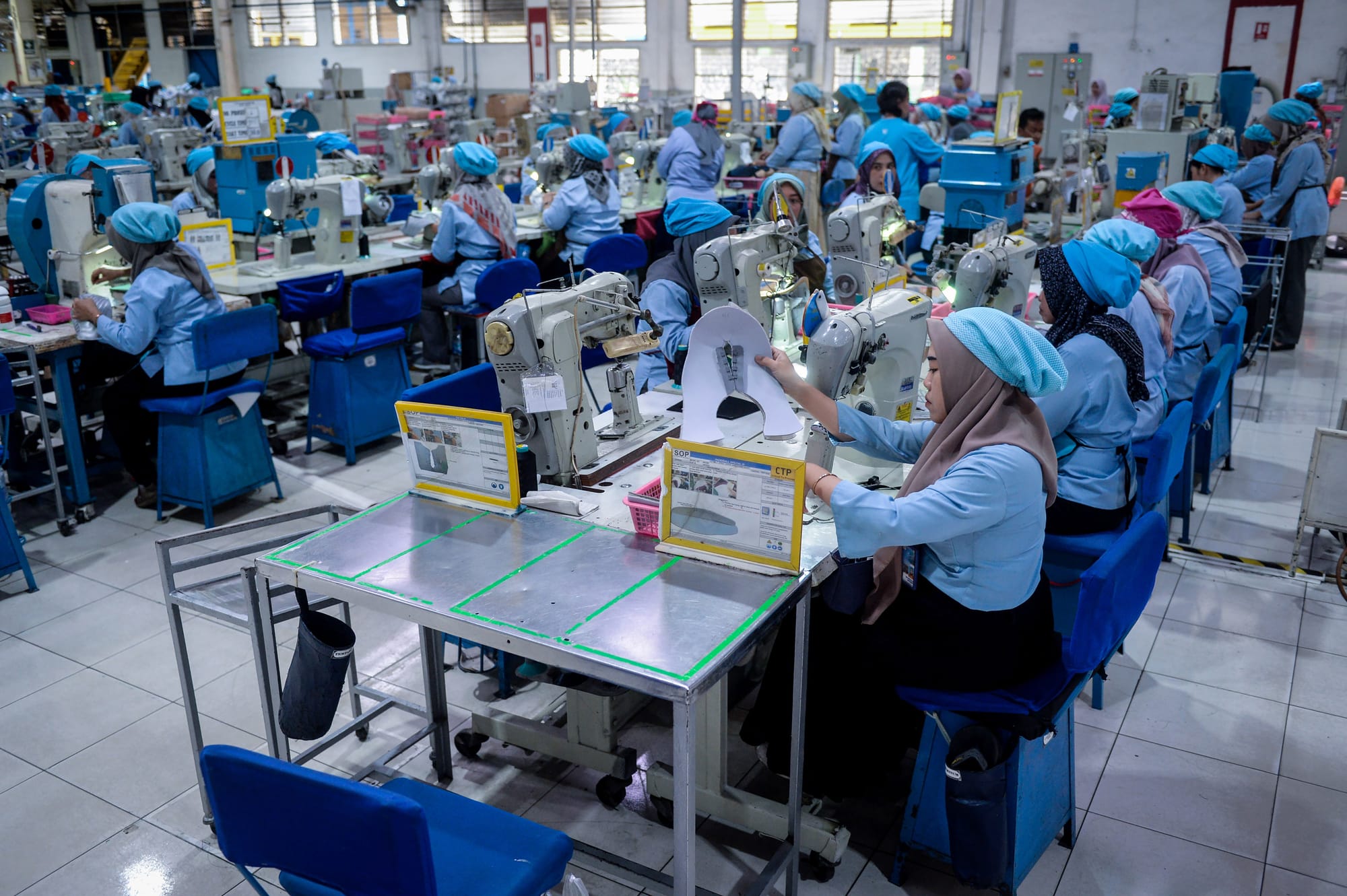
Having helped his parents as a farm laborer and transportation driver, Agus then tried his hand as a factory worker at a well-known footwear factory in Tangerang.
"Back then, you couldn't find a job. So the important thing is to find work. Initially I went to Jakarta but I couldn't get it, finally I went to Tangerang and was offered a job at a shoe factory," he told SUAR, Monday (11/24).
In Klaten, he says employment is not as easy as turning your palm. By working in the shoe factory, he hopes to improve his family's economy in the village.
The staff member of PT Victory Chingluh Indonesia said that by becoming a laborer, his wages are expected to increase every year. "If there is an increase in wages, it is a gift for us because our daily market needs are also increasing," he said.
However, there is news that is quite worrying for him and thousands of other workers when the company where he has worked for decades will open a new factory in Cirebon in 2027. It is not certain whether thousands of workers will move, but Agus said that high costs, differences in UMP and limited land are the triggers.
The minimum wages of the two cities are quite different. Cirebon is at Rp2.7 million while Tangerang is at Rp4.9 million.
"I'm a bit disappointed with this big disparity, the price of basic commodities is the same between Tangerang and Cirebon, but the salary difference can be as much as 40%. There is only a compulsion to work there because there are few jobs, so in the end they are forced and forced by circumstances. People don't want to be considered unemployed," he complained.
Based on a report by CBRE Advisory Services Indonesia early last week, the Cikarang and Karawang industrial areas, which have been the center of manufacturing in West Java, have begun to be abandoned by some industry players.
This shift was triggered by the tendency of companies to look for areas with lower labor costs. The relocation move mainly occurs in labor-intensive sectors that are sensitive to wages.
"There are some who have moved from the west to the center," said CBRE Advisory Services Indonesia Head of Research and Consulting Anton Sitorus on Tuesday (18/11/2025).
The high minimum wage in both regions is one of the factors driving the relocation.
The local government has set Bekasi Regency's minimum wage for 2025 at Rp5.55 million and Karawang's minimum wage at Rp5.59 million. These two regions are listed as the regions with the highest wages in West Java.
Interregional wage differences are evident when compared to the regions that are relocation destinations. The Central Java Provincial Government set the 2025 provincial minimum wage (UMP) at around Rp2.16 million, while the MSEs in several districts are in the range of Rp2.17 million.
The difference is one of the reasons labor-intensive industries are shifting operations to the region. "While in Central Java it is still far away, the UMP is still very low there," said Anton.
Data from the Central Bureau of Statistics shows that more than eight thousand medium and large-scale manufacturing companies operated in the province in 2023 to 2024.
The West Java provincial government noted that the manufacturing industry is still concentrated in the Bekasi, Karawang, and Purwakarta corridors. According to Anton, areas such as Batang and Jatiluhur are now also on the radar for factory expansion, and the movement has spread to the Subang area before moving further east.
Nothing new
In response to this phenomenon, Center for Strategic and International Studies (CSIS) economic researcher Deni Friawan explained that the movement of industries from Cikarang and Karawang is not a new phenomenon, but part of the agglomeration and disagglomeration cycle.
Business centers have long been established in areas with the best infrastructure and logistical access, making Jakarta and its surroundings an industrial magnet. But as land costs increased, congestion grew, and location advantages declined, production centers began to shift to other areas. This kind of relocation, according to him, has happened repeatedly as the cost structure and attractiveness of a region change.
Deni added that the current change in relocation patterns is not only caused by the wage factor, but also by the spread of infrastructure to various regions. In the past, the advantages of Bekasi and Jakarta were largely supported by proximity to ports and main road access, while now similar facilities are available in areas such as Semarang.
The development of ports and logistics networks in several cities has made distribution costs more competitive outside Jabodetabek. This condition also reduces the geographical advantage of the old industrial area.
Responding to this, Deputy Chairman of Kadin for Regional Autonomy Development, Sarman Simanjorang, sees industrial relocation as the impact of companies' long-term calculations on wage burdens. Investors usually calculate the development of UMP for years to come and assess whether the increase is still in line with business capabilities.
According to him, the dynamics of wage determination, which every year raises polemics and demonstrations, adds to the uncertainty for the business world. "Sometimes the UMP increase has exceeded their ability," said Sarman.
Sarman said that moving factories to areas with lower wages also has consequences for workers in the old industrial area. Sarman assessed that areas such as Cikarang and Karawang could lose jobs if companies chose to shift to other regions. Workers who follow the relocation are also faced with a decrease in wages because the wage standard in Central Java is far below Jabodetabek.
"We need to find a wage format that does not cause polemics every year," said Sarman.
National wage system
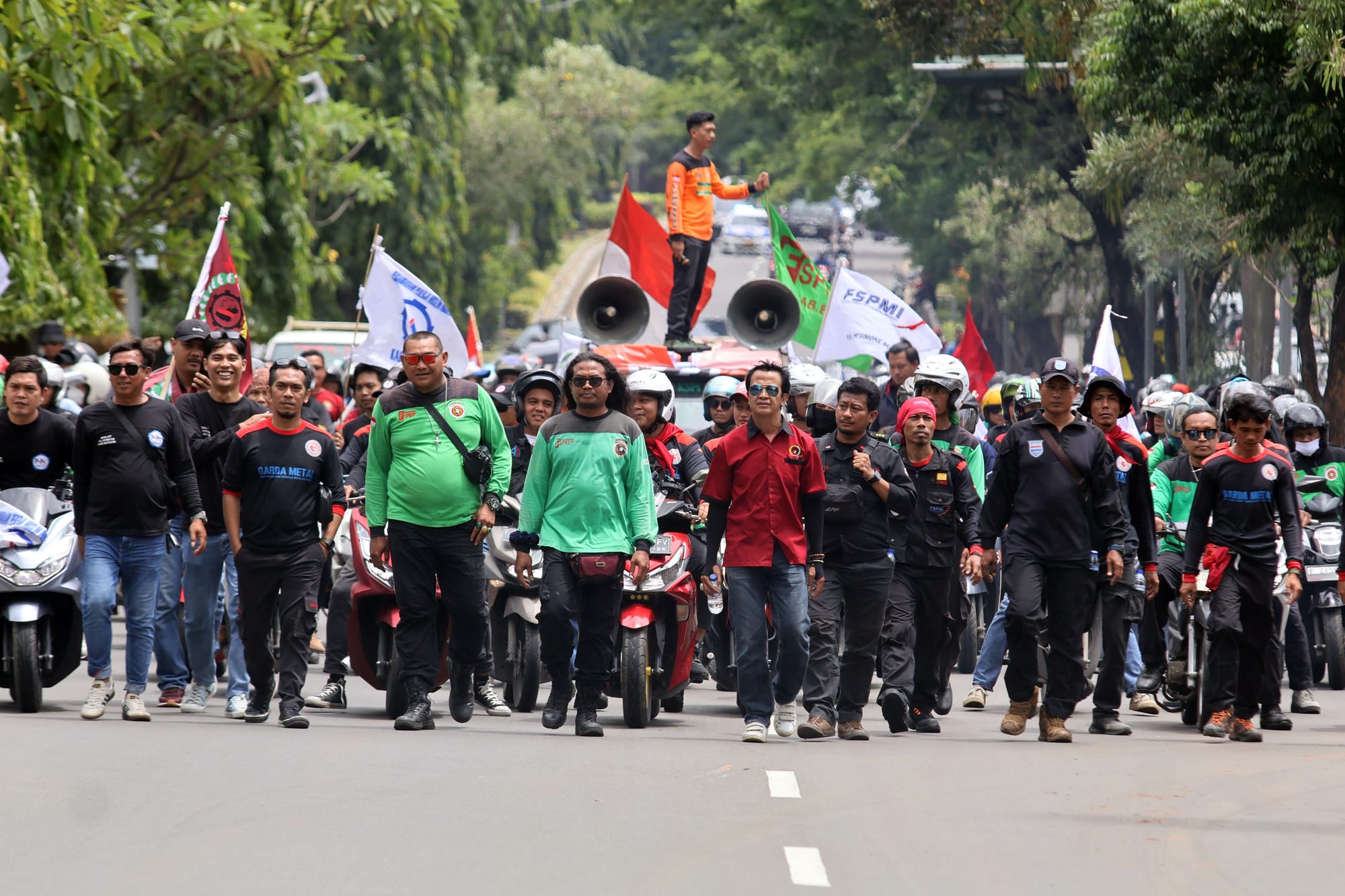
The chairman of the Confederation of Indonesian Labor Unions, Ilhamsyah, sees that the uniformly applied national wage increase actually increases disparity. Regions with high wages and regions with low wages experience the same percentage increase, even though the starting points are far different.
The most obvious impact on workers, according to Ilhamsyah, is the termination of employment when companies move factories. Workers will find it difficult to follow the relocation because the wage standard in the destination area differs greatly from the original location.
"For companies that relocate, they will definitely lay off workers," said Ilhamsyah. Labor-intensive industries such as garments, textiles, and shoes are the most affected because their production is relatively easy to move.
To address the wage gap and minimize relocation, Ilhamsyah encourages the government to reorganize the national wage system.
"For regions with small wages, the percentage must be higher so that there is a balance. The government also needs to make a special wage law that regulates disparities between regions and between positions. And most importantly, the state must immediately build worker housing and integrated transportation in industrial areas so that the burden of living for workers does not continue to increase." he said.
Chairman of the Labor Party and President of the Confederation of Indonesian Trade Unions (KSPI), Said Iqbal said that the number of termination of employment contracts was not only due to wage issues but the decline in people's purchasing power as a result of declining production.
"Imports from China are irresponsible, and government regulations are not in favor of entrepreneurs, that's why," he said.
He explained that in the decision of the Constitutional Court (MK) Number 168 of 2024, the formula for determining the minimum wage must consider three factors: inflation, economic growth, and certain indices, while still referring to decent living needs.
"Based on our calculations, the minimum wage increase is 6.5% to 7.7% of each province's minimum wage per year," said Said.