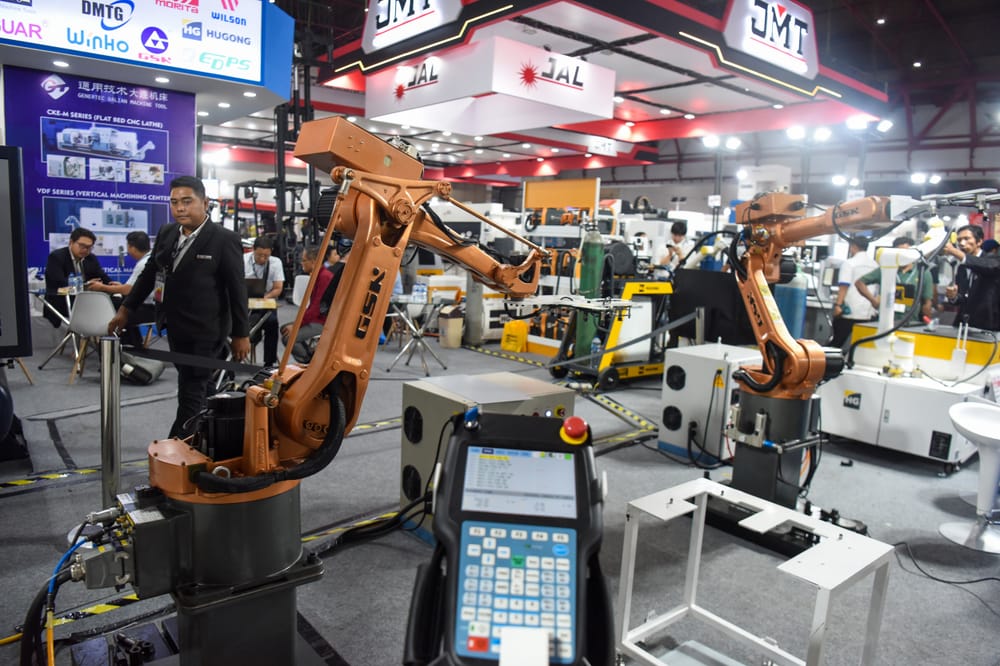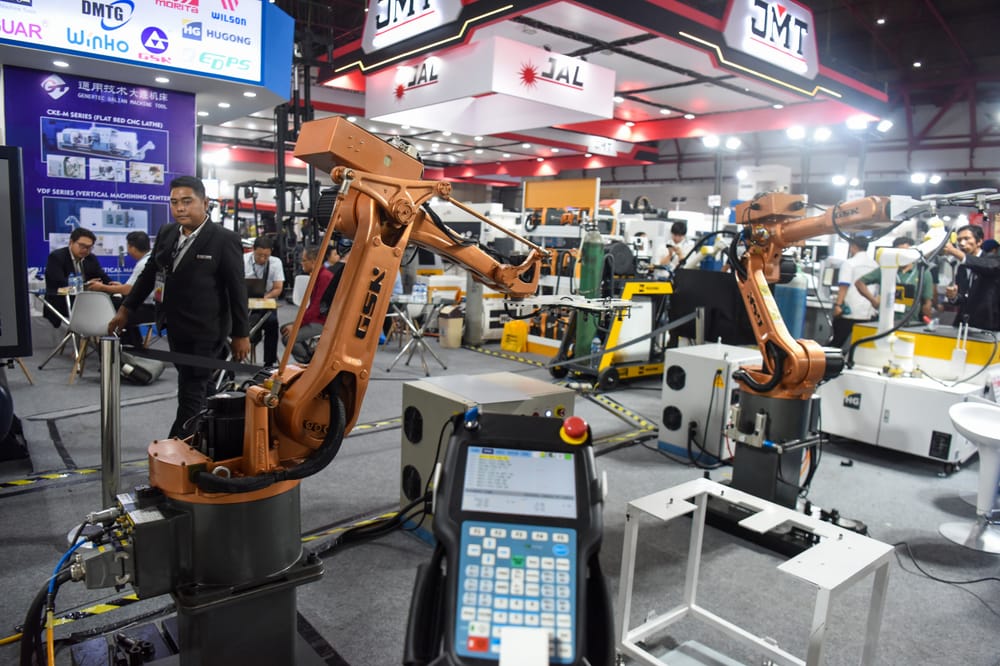

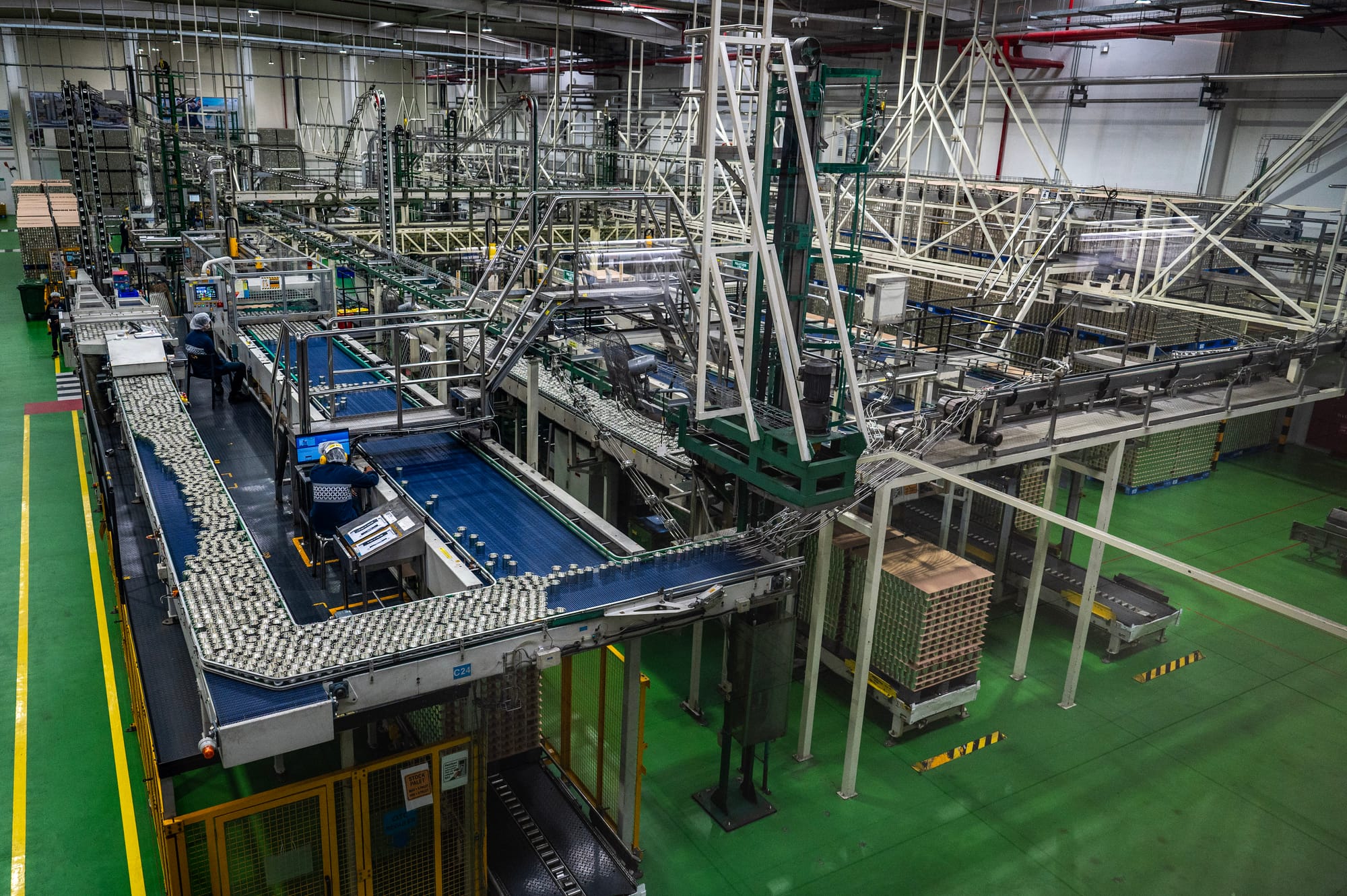
In September 2025, the performance of Indonesia's manufacturing industry recorded a slowdown compared to August 2025. Nevertheless, domestic manufacturing is still in an expansion position.
This is reflected in the Indonesian Manufacturing Purchasing Managers Index (PMI) released by S&P Global on Wednesday (1/10/2025). Indonesia's September 2025 PMI at 50.4 decreased compared to August 2025 at 51.5. A reading above 50 indicates expansion, while below 50 means the manufacturing industry is in contraction.
Despite the decline, it has been two consecutive months since August that Indonesia's PMI has returned to the expansion level. Previously, from April to July, Indonesia's PMI level was below 50.
PMI is an index of manufacturing company managers' spending. A PMI reading that exceeds 50 means that managers of manufacturing companies are actively shopping for raw materials for production purposes to meet needs or demand.
S&P Global Market Intelligence Economist Usamah Bhatti explained that the increase was the second in as many months, but lower than the previous month.
Companies often attribute the increase to increased market demand for goods. Demand conditions appear to be driven by the domestic economy, as international demand declined for the second time in the past three months amid falling overseas demand. Although new demand continued to grow, production declined in September.
Output fell for the fifth time in the past six months, albeit marginally as firms noted a decline in clients' purchasing power. Despite the decline in output, improved demand conditions prompted companies to increase input purchases for two consecutive months.
Companies also reported efforts to raise pre- and post-production inventories to prepare for an increase in production amid signs of improving demand. However, companies also noted that inputs and finished goods were also purchased and stored to cushion rising material prices.
"According to this survey, respondent companies are confident that the early signs of growth will continue to develop, as confidence in output in the next 12 months increased compared to August, and is the highest in four months," Usamah said.
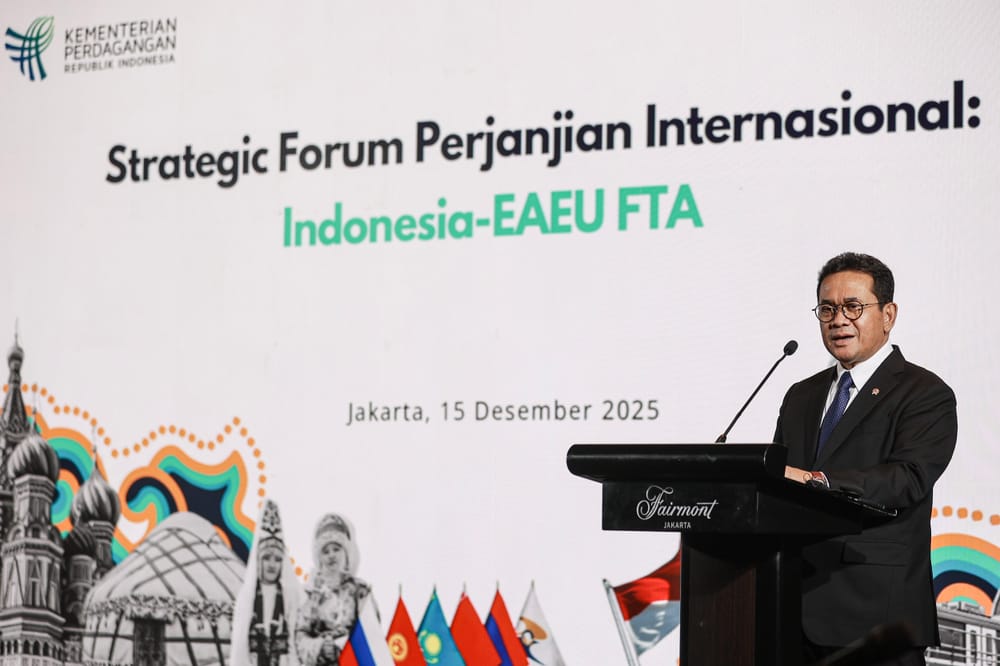
Responding to the S&P Global report, Minister of Industry Agus Gumiwang said that the figure is still above the 50.0 threshold which indicates that industrial activity continues to grow or expand even though at a more moderate pace than in August which reached 51.5 points.
This achievement shows that the resilience of the national industry is still maintained amid global challenges.
"Indonesia's Manufacturing PMI managed to stay in the expansionary zone for two consecutive months. This indicates that strong domestic demand is still the main motor of growth, including export demand which is still quite good despite pressure from the impact of the global economy," he said in a press statement received by SUAR in Jakarta (1/10/2025).
S&P Global data showed that new demand rose for the second consecutive month, driven by rising domestic consumption. This is a good momentum for national industry players to continue optimizing the huge domestic market.
The Ministry of Industry has reformed the Domestic Component Level (TKDN) policy to open up greater opportunities for the absorption of domestic products. With this policy, the industry can be more confident to increase production while expanding the consumer base in the national market.
Furthermore, from the results of Indonesia's manufacturing PMI survey in the ninth month, industry players continued to increase input purchases and inventory stocks in anticipation of a potential increase in production going forward.
Another encouraging indicator was the employment rate in the manufacturing sector, which was at its highest level in four months. Business confidence also increased to the highest since May 2025, along with expectations that demand conditions will continue to improve.
The Ministry of Industry observes that an increase in employment is a positive signal. This indicates that industry players are preparing for better demand prospects, while strengthening the contribution of the industrial sector to job creation.
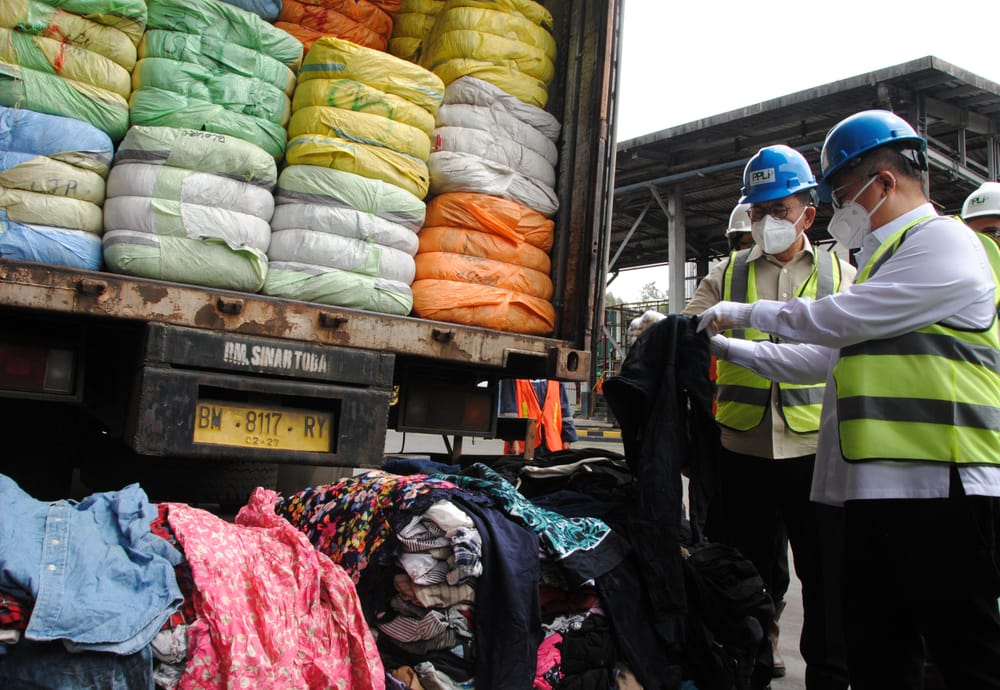
In order to maintain the performance conditions of the domestic manufacturing industry, the Ministry of Industry is determined to continue to coordinate across ministries and institutions to maintain the stability of raw material prices, and encourage supply chain efficiency.
The Ministry of Industry is committed to further strengthening downstream strategies, controlling imports of raw materials, and encouraging diversification of export markets to offset the pressure from declining global demand.
Indonesia's manufacturing PMI in September 2025 surpassed those of Japan (48.5), France (48.1), Germany (48.5), the UK (46.2), Taiwan (46.8), Malaysia (49.8), and the Philippines (49.9).
Chairperson of the Trade Division of the Indonesian Employers Association (Apindo) who is also Vice CEO of PT Pan Brothers Tbk Anne Patricia Sutanto said that the monthly index issued by the Ministry of Industry and S&P global is not a benchmark for the sustainability of the business world.
According to Anne, Indonesia's manufacturing index must be compared with other countries whether Indonesia's index is better or worse. Indonesia's manufacturing index is still in a safe position of 50, never below 50, meaning that Indonesia's manufacturing activities are still operating and there are no businesses that are completely bankrupt.
"To see the root of the manufacturing problem, it is necessary to see government policies that are not in sync with the business world, if found to be out of sync then they should be removed," Anne told SUAR in Jakarta (1/10).
Apindo has often asked the government to conduct a systematic process of benchmarking Indonesia's performance with Asean countries, where the manufacturing index is better.
So far, Indonesia's position is still on track, the business world can still adapt to government policies.
Subsector Expansion and Contraction
Domestically, Indonesia also has its own manufacturing performance index, the Industrial Confidence Index (IKI). In September, the IKI reached 53.02 or was still in the expansion zone. Although it experienced a slight slowdown of 0.53 points compared to August 2025 which was at 53.55, the September 2025 IKI achievement was 0.54 points higher than the September 2024 IKI of 52.48.
"Of all the sectors that we analyzed, namely 23 industrial subsectors, that in August for the production variable index, most industrial subsectors contracted, with details of 19 contracting subsectors and 4 expanding subsectors," said Ministry of Industry Spokesperson Febri Hendri Antoni Arief in Jakarta, Tuesday (30/9/2025).
There were 12 industrial subsectors that expanded, while only 11 subsectors contracted.
"This means that production activity is increasing, because there is also high demand. This improved production is also supported by the availability of raw materials and technology," he said.
Executive Director of the Institute for Development of Economics and Finance (Indef) Esther Sri Astuti said the manufacturing index will improve if the government receives input from the business world, what policies need to be improved to support the sustainability of the business world.
The business world runs manufacturing and needs support from the government in the form of policies.
"To improve the manufacturing index in the future, input from the business world is needed, so we collaborate together," he told SUAR in Jakarta (1/10/2025).