

Many companies are now competing to meetenvironmental, social, and governance (ESG) indicator targets in order to fulfill environmental sustainability requirements in doing business. This step is also in line with the demands of investors.
In addition to being in line with the government's efforts to meet emission reduction targets, this is also one way for the company to increase revenue.
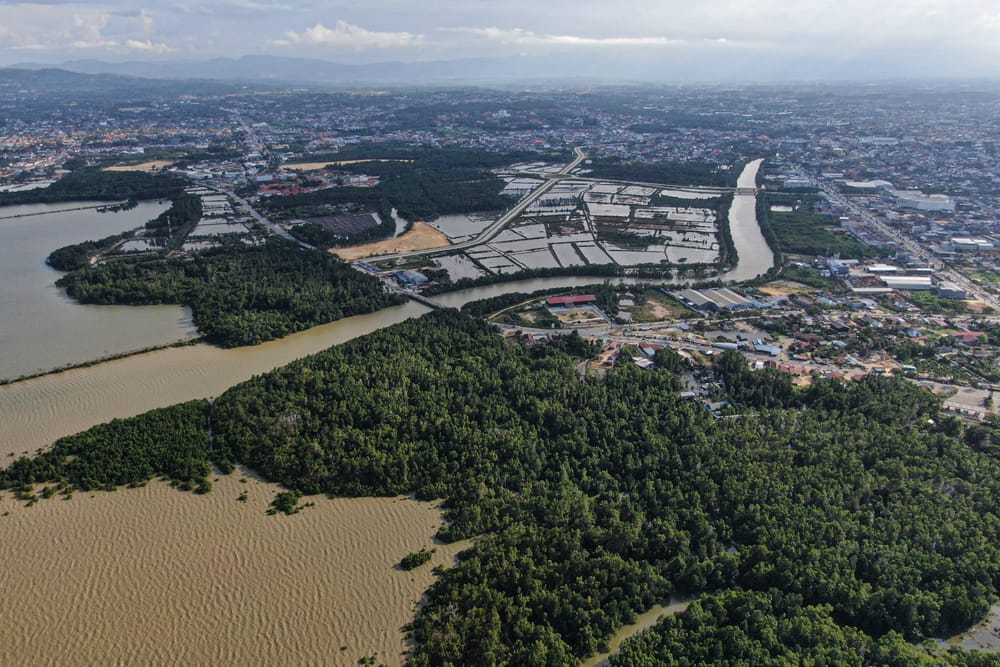
Moreover, Deputy for Coordination of Food Affordability and Security at the Coordinating Ministry for Food, Nani Hendiarti, described Indonesia's emergency response to the threat of climate change as increasingly high. Indonesia, an archipelago, is vulnerable to rising sea levels.
Nani estimates that around 2,000 islands will disappear, threatening the lives of nearly 42 million people. The highest vulnerability points are located in the western part of Java and the Papua Mountains.
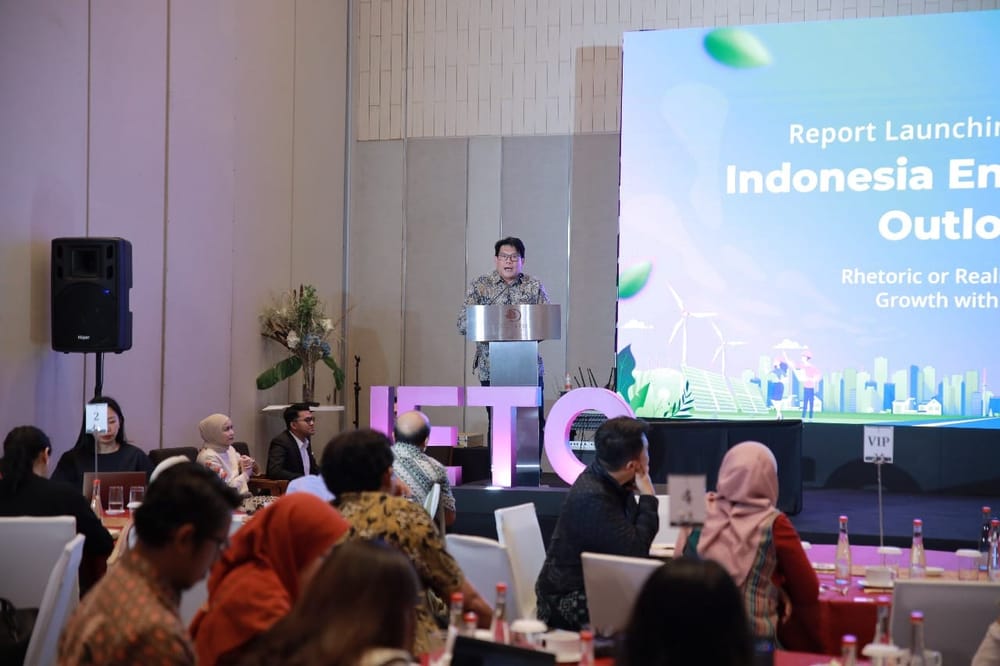
"About 41% or 7.7 million hectares of agricultural land are drought-stricken as a result of El-Nino. And, changes in fishing grounds due to fish migration affect the marine and fisheries sector," said Nani, presenting her findings at the Sustainability Action for Future Economy (SAFE) 2025 event, at the Kempinski Grand Ballroom, Jakarta, Wednesday (10/9/2025).
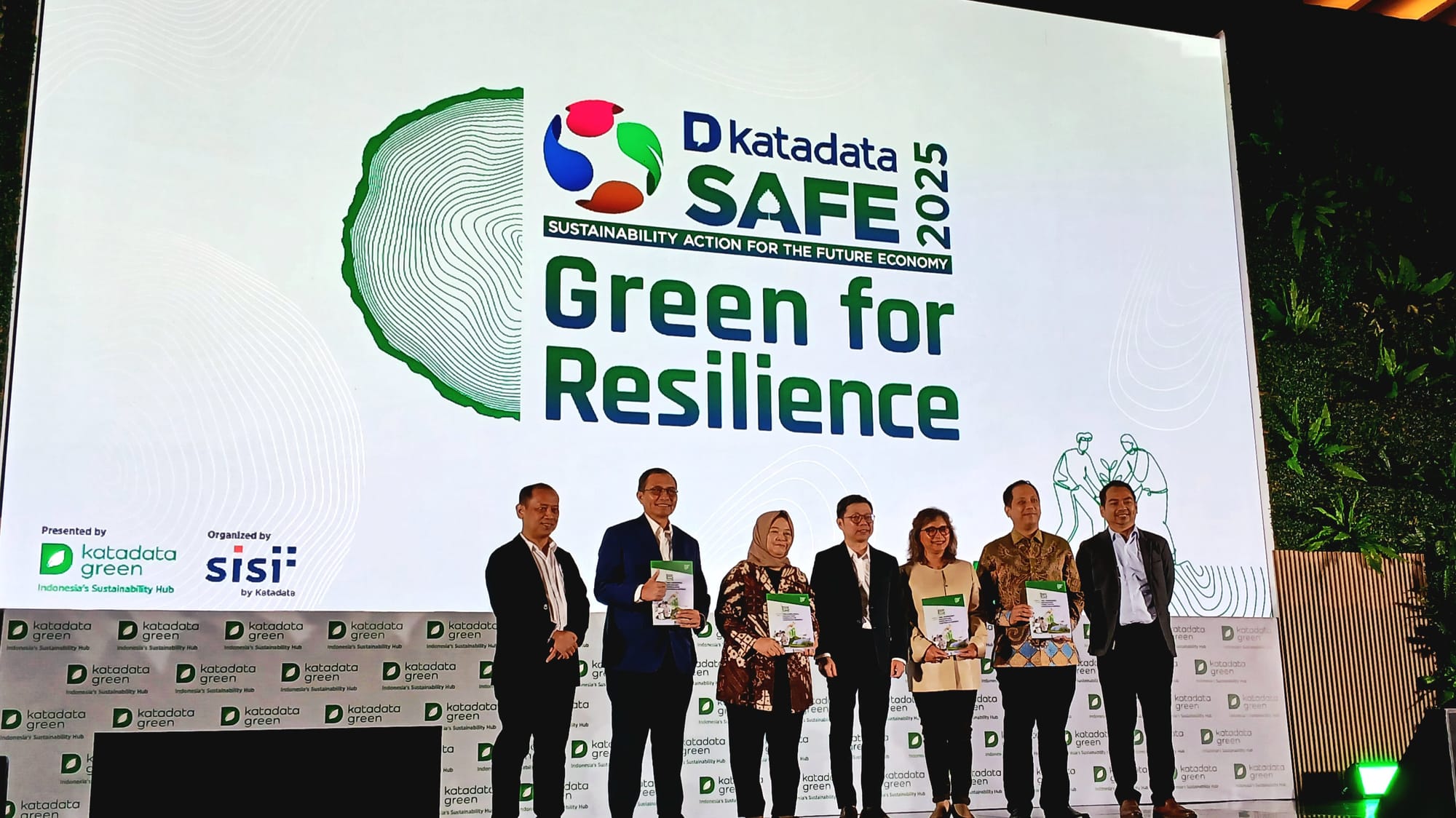
As the coordinating ministry overseeing the Ministry of Environment, the Ministry has adopted a nature-based solutions approach to address climate change impacts and disseminate a culture of sustainability.
Over the past 11 months, according to Nani, the Ministry has issued regulations and continued to oversee the mitigation of climate change impacts with concrete examples. Among others, the Ministry has led the rehabilitation of 75,000 ha of mangroves and the conservation of 400,000 ha of mangroves in North Sumatra, Riau, North Kalimantan and East Kalimantan.
"Among countries in the world, Indonesia is known for leading by example. However, we cannot do it alone. We have to collaborate, even small steps are fine, as long as they are strategic and produce real impact," Nani concluded.
Sustainability committee
In addition to major steps such as those taken by the government through the Ministry of Environment, businesses can contribute by pursuing the fulfillment of ESG targets from each department or division as an example for other departments or divisions.
From these small steps, a company can transform and implement ESG in a sustainable manner.
Institute for Sustainability and Agility President Maria R. Ninditya Radyati presented her findings on the need to follow up on the steps that have been taken separately into integrated steps.
"It is proven that if ESG is done together and integrated in one big framework, it can increase the value of the firm, increasing the valuation of the company significantly. If implemented by one department, the impact is not too much. But if ESG collaboration is carried out by all divisions in the company, it will have a real impact, of course under the supervision of thesustainability committee," said Maria.
"It is proven that if ESG is done together and integrated in one big framework, it can increase the value of the firm, increasing the valuation of the company significantly," Maria said.
As an example of a corporation, Chandra Asri presents evidence of the precision of integrating ESG measures into the company's business. Chandra Asri Director of Legal, External Affairs, and Circular Economy Edi Rivai stated that as a company engaged in the chemical sector, implementing ESG in the company is not a complement, but a demand. This is because investors are increasingly demanding that their investments meetsafe andsustainable criteria.
According to Edi, Chandra Asri already has a strong ESG structure with a framework that aims to set the company's priorities in processing materiality with strictly measurable indicators. "With a decarbonization roadmap that targets a 31.89% reduction in emissions intensity by 2030, our focus is on providing trust to shareholders and investors through concrete actions. So, not just producing a thick report at the end of the year, but really setting a good example," Edi explained.
Moving forward as Chandra Asri has done is not easy. Head of Business Development Division 2 of the Indonesia Stock Exchange Ignatius Denny Wicaksono stated that not all issuers and public companies have the capacity to appoint a chief sustainability officer (CSO) in their company. However, on the trading floor, there are steps that the IDX is also taking to encourage ESG implementation.
"IDX helps evaluate and identify companies that have met the ESG criteria and not. Companies that fulfill will be labeled'green' and those that are still in progress will be labeled'transition'. That way, investors in the stock exchange can quickly find out which companies have met the sustainability criteria and which have not," said Denny.
Maria admits that internal challenges in the form of leadership, mindset, and human capital are the biggest factors that make many companies unable to integrate ESG indicators in their business practices. Although the desire is there, they often do not know where to start and do not know what the benefits of ESG are for their company's bottom line.
"ESG implementation requires education and benchmarking, inspiration, and motivation from other companies. The earliest step can be started by studying the indicators that need to be implemented, then setting targets for each department and providing incentives for departments that are successful and can be an example for others," Maria said.
Reputation up, income up
Assistance for companies wishing to integrate ESG components in their business practices is one of the agendas of the IDSurvey SOE holding , which was formed in April 2025. IDSurvey President Director Arisudono Soerono explained that the ESG concept is one of the fastest entry points for companies to practice green business.
"Green business today is related tovalue creation for the company. Investors are increasingly looking for companies that are able to meet sustainability regulations, have efficient operational costs, and have a brand reputation associated with environmental contributions," Ari said.
Carbon trading is one of them. By engaging in carbon market transactions, some of IDSurvey's client companies have been able to expand their markets, which has opened up new sources of revenue through access to green financing .
A geothermal company successfully participated in the initial carbon unit sale on IDXCarbon with IDSurvey verification and validation, creating a brand as a future energy source, and increasing its value on the trading floor. In another example, a palm oil company that utilizes palm oil liquid waste into fuel successfully obtained significant carbon credits in the carbon trading market with an excellent reputation.
"Waste that was once a burden is now a revenue opportunity. This shows that ESG is not just a trend, but a catalyst for your company to meet international standards. We are at a turning point in history, so let's build a company that is not only advanced and growing, but also sustainable," Ari concluded.
"Waste that was once a burden is now a revenue opportunity. This shows that ESG is not just a trend, but a catalyst for your company to meet international standards," Ari said.
One company that stands out in emphasizing its commitment to maintaining national energy security is PT Pertamina (Persero).
Pertamina Deputy President Director Oki Muraza explained a number of Pertamina's strategic steps in realizing a sustainable energy transition by carrying out a dual growth strategy concept that focuses on two things. Namely, strengthening existing businesses and reducing energy imports to strengthen national resilience, as well as developing low-carbon energy businesses.
"On the one hand, Pertamina wants to reduce imports, so that energy security is stronger by maximizing existing businesses such as oil and gas production, production and distribution of fuel, LPG, and so on. On the other hand, we are developing a low-carbon business to respond to global needs in reducing emissions," Oki explained.
To realize this, he continued, Pertamina rolled out 10 Sustainability Focus. Starting from emission reduction, environmental protection, green technology development, to innovation towards a green economy.
Oki further said, the innovations that were rolled out included:
- Producing environmentally friendly fuel. Pertamax Green 95, an environmentally friendly fuel with a high octane rating and low sulfur content. This product is produced by blending gasoline with bioethanol. Currently Pertamax Green is available at 160 gas stations in Java.
- Pertamina is also developing sustainable aviation fuel (SAF), an aircraft fuel made from plant-based ingredients. According to him. Indonesia has the potential to become a SAF hub in the Asian region.
- Pertamina is also targeting the construction of a green refinery that can produce SAF up to 100 percent, and is expected to become the main supplier of SAF for other countries. "One of the raw materials we use is used cooking oil (UCO), which is then processed at Pertamina refineries such as Cilacap," Oki explained.
- Pertamina also continues to develop palm oil-based B40 biodiesel.
- Developing renewable diesel that is more stable and sulfur-free, so that it can become more environmentally friendly energy while opening up new economic opportunities.
- Developing green electricity from geothermal, solar power, and biogas. Pertamina's geothermal installed capacity currently reaches 727 MW, and is targeted to double capacity by 2030.
- Setting up a green hydrogen project based on geothermal energy through water electrolysis. Currently, potential hydrogen clusters have been mapped in Sumatra, Sulawesi and Java.
- Developing carbon capture, utilization, and storage (CCUS) technology to reduce emissions from oil and gas operations. One potential project is in the Asri Basin, Java Sea, with a storage capacity of more than 1 gigaton.
"All these steps are not only aimed at reducing global emissions, but also strengthening national energy security by reducing imports, creating jobs, and creating a green energy ecosystem in Indonesia," Oki said.
Vice President Corporate Communication of PT Pertamina (Persero) Fadjar Djoko Santoso added that Pertamina is committed to developing green energy in the country to improve national energy security and energy self-sufficiency. With the development of this alternative energy, people have a variety of energy sources to meet their mobility needs.
Pertamina is committed to developing green energy in the country to improve national energy security and energy self-sufficiency. With the development of this alternative energy, people have a variety of energy sources to meet their mobility needs.
"As a national energy company, Pertamina takes great steps to continue to innovate and develop various new renewable energy sources, which have a positive impact on the environment and drive the national economy," Fadjar explained.