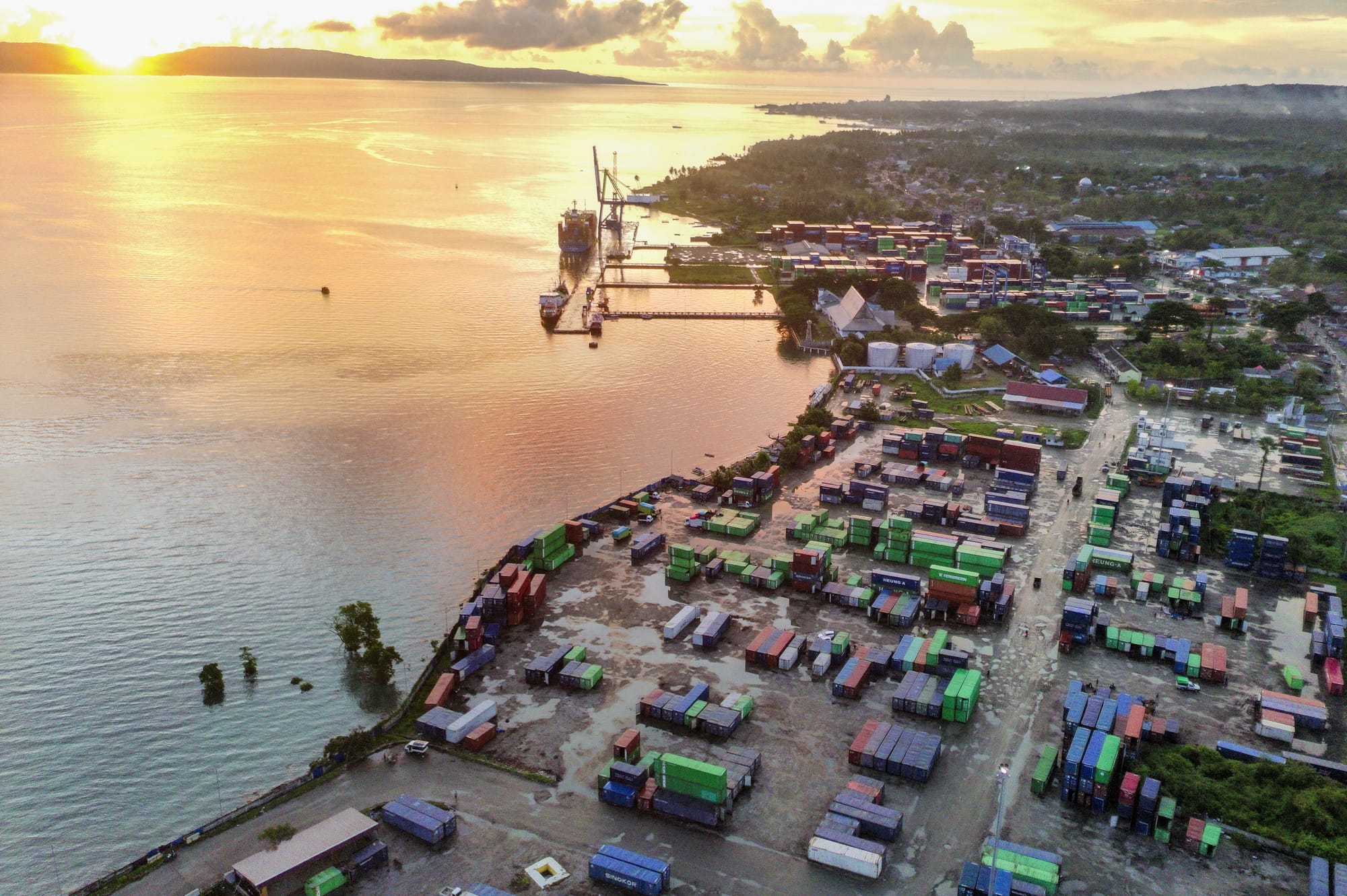
In order to find more consumers, the Nirun Mandiri Sejahtera Honey Farming Group has been determined to join the Special Economic Zone (KEK) Tanjung Kelayang, Belitung, Bangka Belitung Province since 2023.
There, this group of honey farmers gets the facility to set up a mini farm. This is a kind of showcase for marketing their honey products, which are known as Pelabo honey - a type of honey native to Keciput Village, Sijuk District, Belitung.
Yes, finding new markets, that is the main goal of these honey farmers. At least, by opening a small farm in the KEK Tanjung Kelayang, visitors can directly see and taste their honey products. "Tourists who are taken to the mini farm usually buy our honey, even though the quantity is not yet on a large scale," said Sutrisno, Chairman of the Nirun Mandiri Sejahtera Honey Farming Group.
The Nirun Mandiri Sejahtera Honey Farming Group has been established since 2020, based on the Decree (SK) of the Head of Keciput Village. "However, for legality, we also have a Decree from the Ministry of Law and Human Rights (notarial deed). For our bee cultivation land, we use social forestry land (village forest)," said Sutrisno.
Currently, the status of this Social Forestry Business Group (KUPS) is in the platinum class and has a management permit area of approximately 13 hectares.
Tanjung Kelayang is a KEK established through Government Regulation Number 6 of 2016. Its location is in Tanjong Tinggi Village, Sijuk District, Belitung Regency. This area is an exclusive zone specifically for the development of the tourism industry.
Sutrisno admits that being part of the KEK Tajung Kelayang is a strategy to make it easier for his party to market products and open up other cooperation opportunities with other parties. Especially in product marketing and the development of edu-ecotourism activities.
"We really hope for support in increasing production by providing a decent production house so that honey production can run optimally," he said.
Members of this farmer group also hope that there will be development or improvement of human resources through certified bee cultivation training activities or imitation study activities, in order to open insights in maintaining the preservation of nature through this honey bee cultivation activity.
“In addition, we also hope for financing for the development of honey bee cultivation. Of course, we hope that this will support and increase our honey production capacity to be more optimal,” said Sutrisno.
Empowering UMKM to environmental conservation
As we know, in order to accelerate economic development evenly, the government has taken various steps. One of them is through breakthroughs in the form of developing special economic zones (KEK) in various regions which are believed to be able to encourage new economic growth centers with high competitiveness.
However, KEK is not just a production zone with all kinds of facilities provided by the government. KEK is a kind of new ecosystem supported by complementary communities.
Acting Secretary General of the National Council for Special Economic Zones, Rizal Edwin Manansang, emphasized that in order for KEK to optimally boost the economy, it is also necessary to involve UMKM and the economic activities of communities around the area. It is hoped that the positive performance of KEK will also have an impact on the surrounding area. “All of this is what grows the local economy in a real way,” said Edwin.
The government also needs to encourage the use of local labor through collaboration between KEK managers, manpower offices, and training institutions, so that industrial needs can be filled by human resources from the surrounding areas.
“In addition, link and match is also carried out with vocational education, so that the curriculum and training provided are in accordance with the needs of industry in the KEK,” he said.
Director of KEK Tanjung Kelayang, Daniel Alexander, admitted that in order to grow the economy in the area directly, his party needs to involve many UMKM. Currently, KEK Tanjung Kelayang is collaborating with batik producers Sepiak, the name for the local Belitung batik motif,
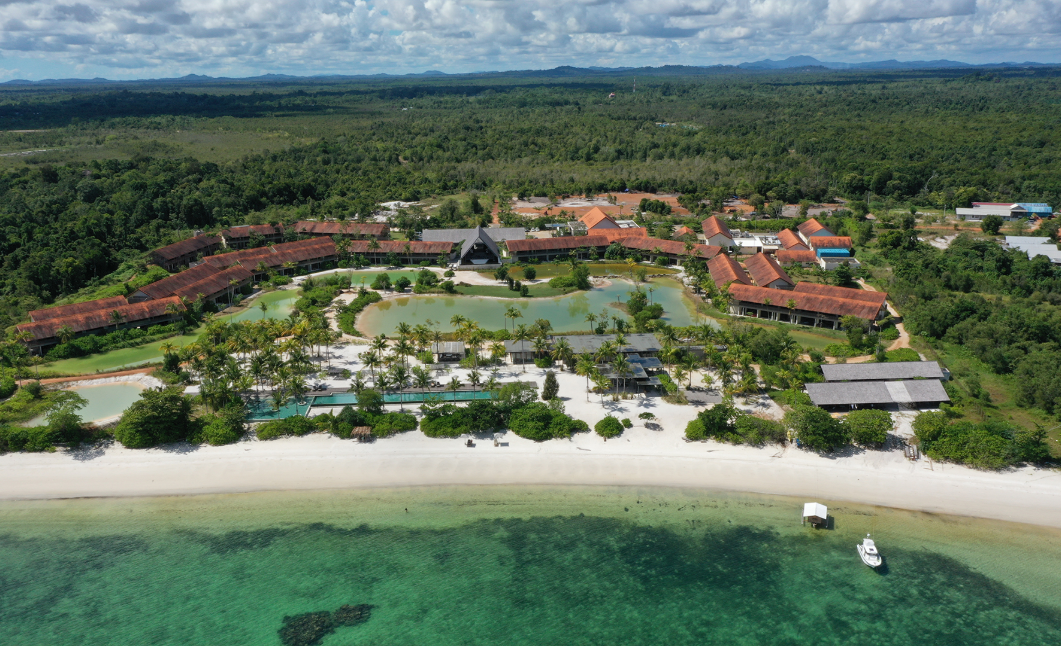
KEK Tanjung Kelayang also encourages honey farmers to be able to carry out their commercial activities, introduce their products or educate others, in the Tanjung Kelayang special economic zone, free of charge. “So they can sell, the revenue is quite good, they can get quite a lot per day,” said Daniel.
Environmental activists who are members of this group provide activities to introduce biodiversity, especially the protection of tarsiers, endemic primates on Belitung Island.
In addition, according to Daniel, his party is collaborating with the Arsel community, or the Air Selumar community, which manages the Bukit Peramun community forest. Environmental activists who are members of this group provide activities to introduce biodiversity, especially the protection of tarsiers, endemic primates on Belitung Island.
This group manages activities to see wild tarsiers, with local rangers. “Interestingly, they also provide afternoon tea activities, which have been packaged very well,” said Daniel.
So, if the Arsel community used to sell daily tickets per person for around IDR 10,000, and relied on mass tourism to come, now they can focus on special interest activity, which is sold in packages of IDR 2.5 million. “Only those who see it are more segmented and more limited. Also, the income they get monthly is much greater than if they rely on mass tourism,” explained Daniel.
The management of KEK Tanjung Selayang is also active in the Belitung UNESCO Global Geopark, helping so that the Belitung UNESCO Global Geopark can continue to gain awareness from the public.
Currently, we at KEK Tanjung Selayang are encouraging publications that Belitung has a Belitung UNESCO Global Geopark. “We also invite journalists from abroad, so that they can get to know that Belitung has a geopark that has been recognized by UNESCO,” explained Daniel.
Adjusting to the generation
Regarding preserving cultural heritage, KEK Singhasari in Malang, East Java, in its business processes related to tourism development, always carries a spirit with the theme of culture and heritage. However, the approach is more towards elements that suit the passion of the current generation.
“Tourism development, if only focused on antiquity, becomes unattractive to millennials and Gen Z. A contemporary approach is needed and that is by utilizing digital technology,” said Corporate Secretary and General Manager BUPP KEK Singhasari, Kriswidayat Praswanto.

By framing tourism with the theme of culture and heritage, it will be far more interesting and informative and embedded in the subconscious of visitors or tourists.
As a KEK that operates in the digital creative industry sector, namely animation, videography, cinematography, and coding, whose business scale is UMKM, most of the KEK Singhasario tenants are UMKM from Greater Malang. Currently there are 15 digital creative industries with a UMKM scale operating in KEK Singhasari.
On the other hand, activities at KEK Singhasari have a multiplier effect on the surrounding community and UMKM actors, including the growing boarding house business. Suppliers of basic necessities such as stalls, shops, depots, and laundry businesses are also growing rapidly. Sellers of various goods who travel around and street vendors make KEK Singhasari their business magnet.
In general, the community around KEK Singhasari strongly supports the existence of KEK Singhasari. “And until now there have never been any conflicts with the surrounding or local community,” said Kriswidayat.
Triple helix collaboration
KEK Banten or D-HUB SEZ plays a slightly different role, positioning itself as a facilitator that bridges international universities, local incubators, and global venture capital. The model is a triple helix: academics, business, and government collaborating in one area.
"Universities provide research and talent, incubators provide acceleration, while investors provide capital, all facilitated by the D-HUB SEZ ecosystem," said Chief of Corporate Sales & Marketing of D-HUB SEZ, Dian Asmahani.
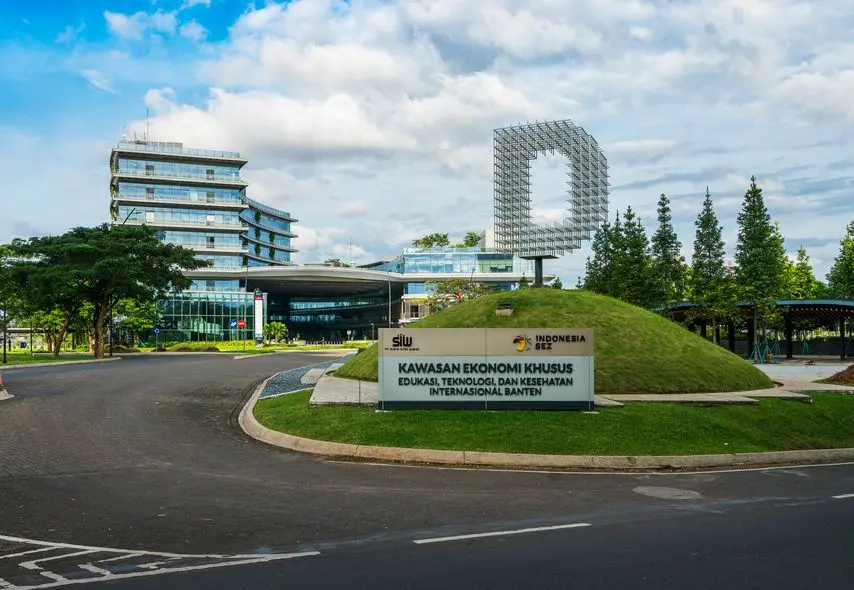
Dian added that within D-HUB SEZ, education is closely linked to the economic framework, ensuring a continuous flow of talent to build a globally competitive Indonesian workforce, in order to realize the vision of Golden Indonesia 2045.
Educational institutions in D-HUB SEZ focus on vocational and international higher education that are directly connected to industry. "Indonesian talents are not only job-ready but also ready to compete at a global level," she said.
D-HUB SEZ is also preparing an inclusive ecosystem for global investors to bring standards, technology, and networks. Meanwhile, local businesses – including local startups – bring market understanding, creativity, and rapid adaptation.
This collaboration is encouraged through research partnerships, incubators, and co-creation between global tenants and local players. "With this model, D-HUB SEZ is not only a place for international companies but also a bridge for local players to level up and go global," said Dian.
Mukhlison, Gema Dzikri, and Dian Amalia