
Special economic zones (SEZs) in a number of regions in Indonesia play an important role as centers of economic growth that attract large investments with various fiscal and non-fiscal incentives, as well as creating jobs for the community. Despite their great potential, SEZs need to continue to be developed in order to be competitive with SEZs in other countries.
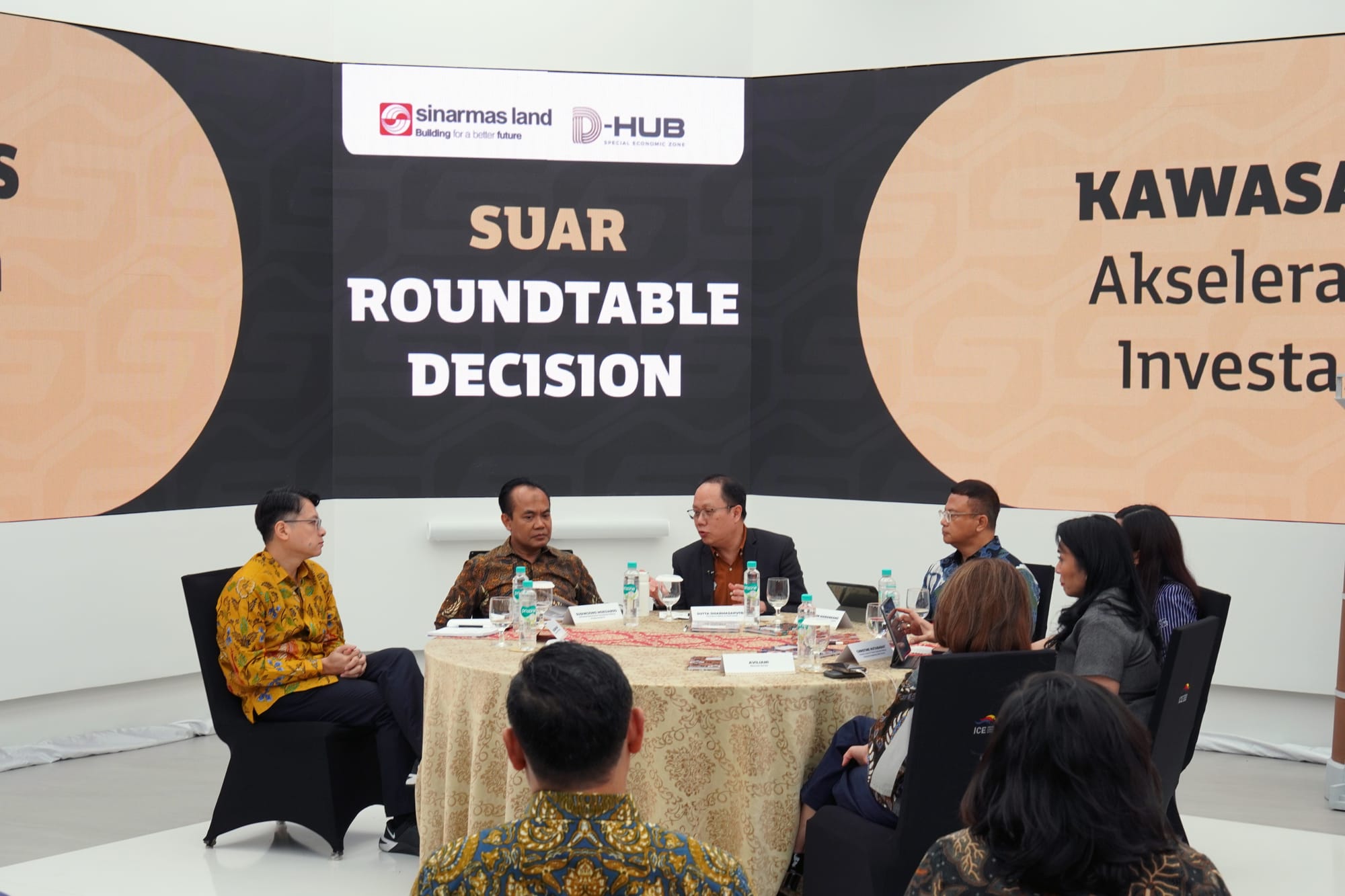
This became the common thread in the Roundtable Decision: Accelerated Attractive Special Economic Zone (Increase Investment and Employment) held at the Biomedical Campus KEK ETKI Banten on Tuesday (12/2/2025).
The event opened with a keynote speech by Health Minister Budi Gunadi Sadikin. This was followed by a presentation by the Secretary of the Coordinating Ministry for Economic Affairs, Susiwijono Moegiarso, who was representing Coordinating Minister for Economic Affairs Airlangga Hartarto. The event continued with a discussion involving a number of speakers.
Present as speakers at the discussion were Acting Secretary of the National Council for Special Economic Zones Edwin Manansang, Executive Director of the Kendal Special Economic Zone Juliani Kusumaningrum, President Director of PT Hotel Indonesia Natour/InJourney Hospitality (Sanur Special Economic Zone) Christine Hutabarat, Strategy Advisor of the Banten Special Economic Zone Mulyawan Gani, and senior economist Aviliani.
On this occasion, Susiwijono highlighted that under the current administration of President Prabowo Subianto, the amount of investment realization continues to exceed Rp450 trillion, which is a drastic increase compared to previous years. From January to September 2025, the total investment realization reached Rp1,434 trillion, an increase of 13.7% year-on-year.
"If we look at it, only in this administration has investment exceeded Rp450 trillionper quarter. Imagine that previously it was less than half that amount, only around Rp200 trillion," he explained.
The increase in investment realization was driven by a number of factors, including government policies, regulations, legal certainty, and other programs such as industrial downstreaming, infrastructure development, and a conducive investment climate, to which SEZs contributed.
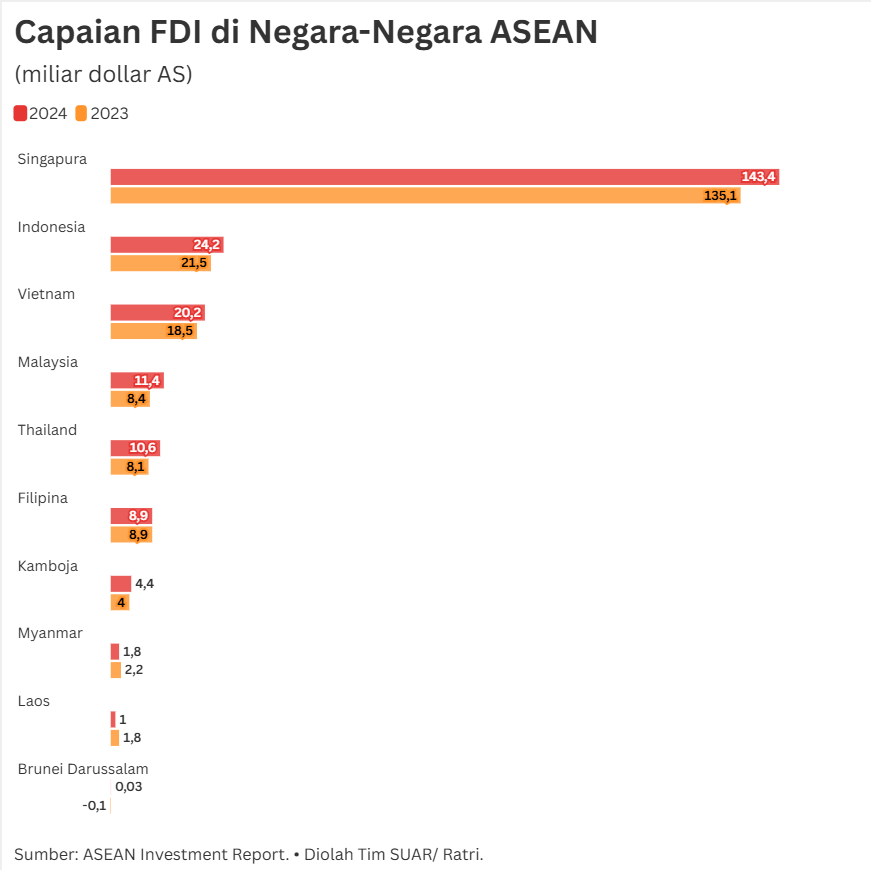
However, when compared to SEZs in other countries, SEZs in Indonesia still need to learn and improve.
"Our incentives, when compared to other SEZs, may still need to be improved. The area of our SEZ is still far behind that of several other countries, so we still need to push forward, and we still need to boost investment achievements," he continued.
Not all SEZs in Indonesia focus on just one sector, such as the Banten ETKI SEZ, which integrates four pillars, including health, education, digital technology, and the creative economy. SEZs themselves generally focus on industries or services that are strengths in their region in order to attract investment.
Budi Gunadi Sadikin said that the health sector also has great potential to drive economic growth. He believes that the health sector can contribute to economic growth through the realization of health spending, as well as the creation of jobs.
"I strongly support the establishment of special economic zones, especially those related to health, because empirically, the health sector should grow by more than 8 percent," said Budi.
Demand in the health sector will also continue to increase in the future, given that Indonesia's population is aging and the need for healthcare will increase. It is this kind of potential that needs to be exploited by business actors, especially SEZs, in order to create appeal and investment.
"This is a huge opportunity for industries to enter the healthcare sector. That is why, in addition to needing this sector to create jobs and GDP, the healthcare industry is also needed by the entire community," he said.
Solution offer
During the discussion session, the speakers presented a number of challenges faced when managing and operating in SEZs. Not only did they share their experiences, but the speakers also provided recommendations and formulated solutions to improve and develop the potential offered by Indonesian SEZs.
According to Juliani Kusumaningrum, the main problem faced by business actors in SEZs is operational, particularly in terms of licensing. Juliani also suggested that there needs to be a good profiling system by Customs and Excise in order to save time and costs incurred by business actors.
"Customs has several documentation letters, BC-BC so many, and it depends on whether you want to go outside the TLDPP (Other Places in the Customs Area) or within the TLDPP. If it's BC 23, 25, 27, it can take 5 to 7 days, while we are not only concerned with the cost of production," he said.
Therefore, Juliani proposed the need for a profiling system that can be implemented in SEZs.
"From the KBLI, we can also determine what the raw materials are, what the finished products will be, so there can't be any sudden deviations. If that's the case, there must be a profiling system at Customs. If the scope is this much, it will immediately be green," explained Juliani.
Meanwhile, Christine from KEK Sanur suggested that there needs to be good coordination between relevant parties in the development of KEK from a regulatory perspective.
"Orchestration of regulations. So how are the relevant policies and regulations, meaning the relevant ministries, and we know that it's all complex, how can this orchestration really accelerate the licensing and investment process," said Christine.
Fast licensing for business actors is considered important, because business actors take full advantage of momentum to invest.
Similarly, Mulyawan Gani at the SEZ, which oversees four pillars, said that there is a need for ministerial regulations (Permen) that can accommodate and facilitate specific sectors in the SEZ in order to facilitate investment.
"There must be clear regulations that can be applied in the Special Economic Zone. Outside of health, I don't see it. There is no digital creativity, no education, so sometimes we are confused about what to do," said Gani.
He cited the education sector, which requires teaching staff. These teachers are then linked to immigration, so there needs to be regulations that support and facilitate this issue.
"So this definitely makes sense. If the regulation itself does not exist, how can we provide certainty to foundations that want to open universities again?" he said.
In addition, Aviliani explained that local governments need to be more involved in the development of SEZs. The operation of SEZs is closely related to local governments in regencies/cities, therefore clear regulations are needed to ensure accountability.
"Regional infrastructure is fordelivering all kinds of goods. So, this team should also involve local governments. Because now, many local governments feel that this is a matter for the central government," said Aviliani.
He also said that the relevant ministries need to coordinate better to become a forum and facilitator for business actors in SEZs. Presidential regulations and laws governing SEZs are said to be sufficiently robust, but need to be balanced with good implementation. Currently, business actors are said to be facing a complicated licensing process that is hampering investment.
"For example, a factory may require five to six environmental permits. Why not combine them into one, which would then be delivered through the DN? So, in my opinion, the government must also have the courage to ensure that all ministries support special economic zones," he continued.
Read also:
 Zikrina Ratri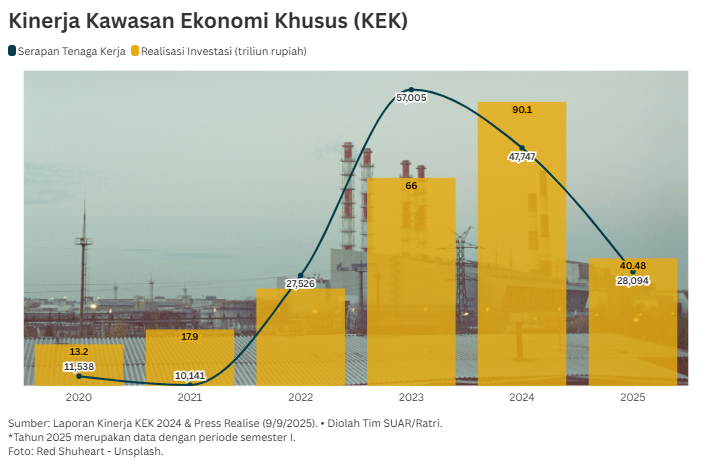
Edwin also emphasized that his office is still working to strengthen coordination between regulatory agencies. One effort to improve coordination is to hold regular meetings every three months with relevant ministries and agencies.
"But each ministry has its own regulations. There are reasons why they are stuck there. Well, this is what we have to solve together," said Edwin.
In strengthening the organizational structure to make it more effective, according to Edwin, coordination must continue to be strengthened in order to create policies that are definitive and consistent.
Through the efforts and solutions presented by the speakers, it is not impossible that Indonesian SEZs will be able to compete with and even surpass SEZs in other countries in terms of competitiveness, given their potential.