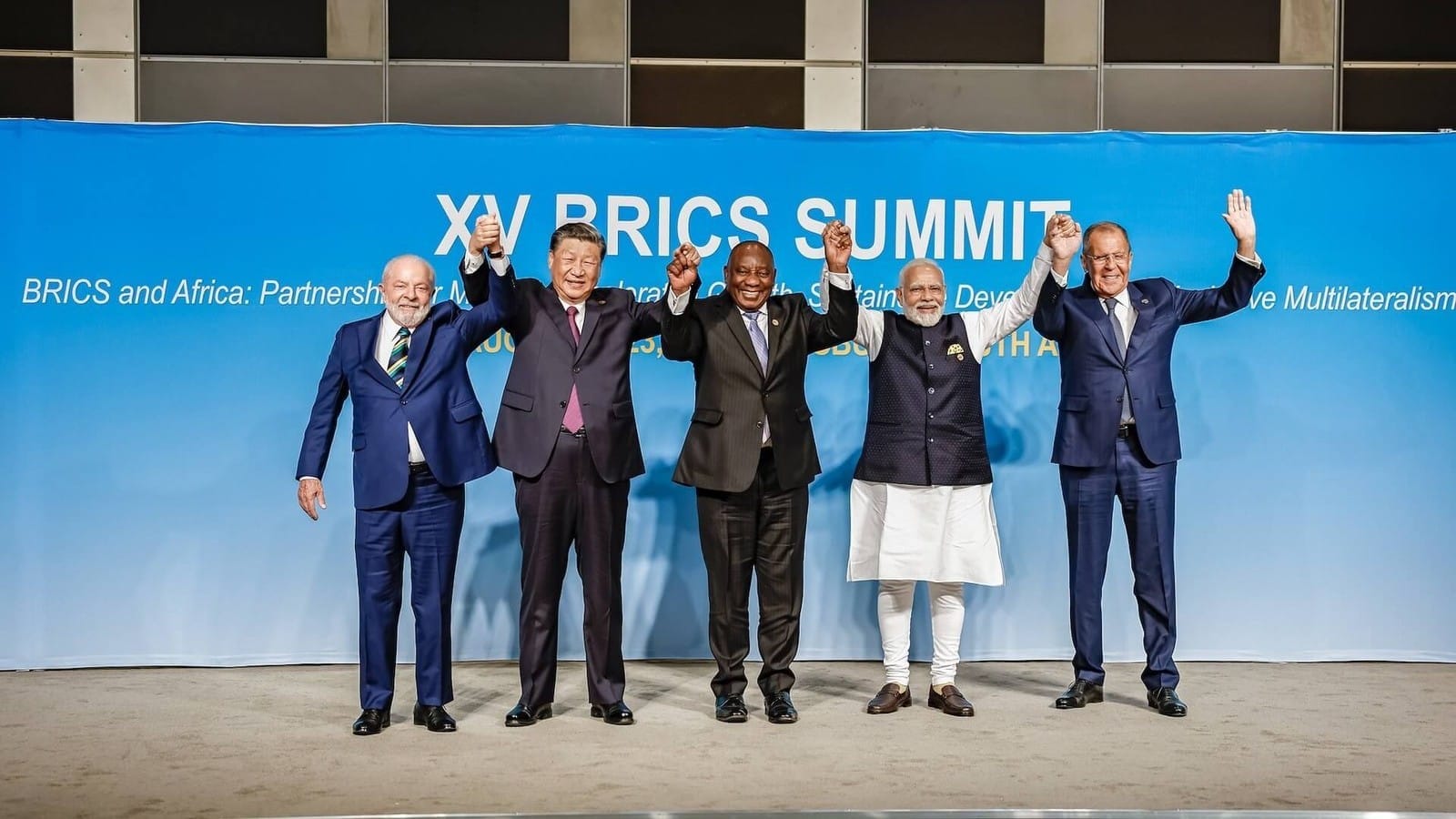
The transformation of BRICS from a partnership of emerging economies to a forum of South-South countries seems to be increasingly relevant to the needs of today's world. In the midst of fierce global geopolitical and geoeconomic conflicts, the existence of BRICS opens a wide avenue for entrepreneurs from member and partner countries to meet, exchange insights, and cooperate to boost the economy of the country and region.
Since its inception as a development partnership of Brazil, Russia, India and the People's Republic of China in 2009, with South Africa joining in 2010, BRICS has undergone a significant transformation to face a changing world.
Since 2024, BRICS membership has expanded. Indonesia joins as a new member along with Egypt, Ethiopia, Iran, and the United Arab Emirates, Argentina, and Saudi Arabia. No doubt, BRICS is a concrete response to a world shaken by war, digital disruption, and climate change.
The BRICS' active, hands-off approach is having an impact. The forum's voice is increasingly taken into account, especially representing the interests of the countries of the Global South that are fed up with the political moves of the US and Europe that are increasingly disregarding the world order that they themselves once built.
See that China is not afraid of being pressured by the US, which through President Donald Trump's decision imposes high import tariffs. China even stopped importing soybeans from the US and diverted them to Brazilian soybeans, thus making US farmers confused. India also dares to face the threat of high tariffs from the US because it is a member of BRICS, because it has its own economic strength and gets oil and gas supplies from Russia.
Russian Ambassador to Indonesia Sergey Tolchenov stated that one of the main problems of the modern world built from the post-World War II Bretton-Woods institutions is the separation of politics and economics that allows superpowers to do as they please. This includes unilateral sanctions and tariffs that affect global supply chains.
"Facing this situation, transregional, cross-platform partnerships and promoting equal cooperation with a comprehensive approach are urgently needed to promote global governance reform," Tolchenov said in a talk on Navigating Global Challengers and Strengthening Cooperation with the Global South and BRICS in Jakarta, Friday (19/9/2025).
Make new world history
Sharing Tolchenov's view, Indian Ambassador to Indonesia Sandeep Chakravorty emphasized that as one of the founding countries of BRICS, India's commitment to a fairer and more sustainable world order is clearly reflected in the motto of the G20 Summit that India chaired in 2023. Namely, realizing a common vision towards one Earth, one world, one family.
"One of the original objectives of India joining BRICS was to reduce protectionism, remove trade barriers, shorten supply chains, promote South-South Cooperation, and enforce consistent and non-discriminatory trade rules," said Chakravorty.
Not only in trade, India is also committed to developing digital infrastructure development cooperation. For India, BRICS has become a platform that helps advance global digital integration, and make digitalization a new ecosystem capable of connecting the global South.
"In an increasingly challenging world economy, BRICS member countries and partners must support each other, trade, interact and work together so that we can overcome the obstacles caused by increasingly protectionist policies," he said.
The initiatives and measures contributed by the countries of the Global South are among the important markers of the first quarter of the 21st century. Ambassador Wang Lutong recalled that 2025 is a historic year that commemorates the 80th anniversary of the founding of the United Nations, as well as the 70th anniversary of the Asia-Africa Conference - two symbols that symbolize freedom and equal dignity.
"But what is happening? We see the rise of the might is right principle, the strong wins, thus plunging the world into the law of the jungle, and destabilizing the world economic and political order," Wang said.
Reforming such governance is now a common interest. And, BRICS can be the motor of accelerating reforms with its pillars of equality, multilateralism, rules-based order, and real humane contribution.
One of China's contributions, according to Wang, is to promote inclusive globalization and universal impact. Currently, the Chinese government has opened 200 college programs for AI and digital economy education that are open to students from countries in the Global South.
"With mutual coexistence and progress, the countries of the Global South will prove that modernization does not necessarily mean westernization. Together, we will carve out a new chapter in the history of the world," Wang said as the audience applauded his presentation.
Indonesia encourages sustainable efforts
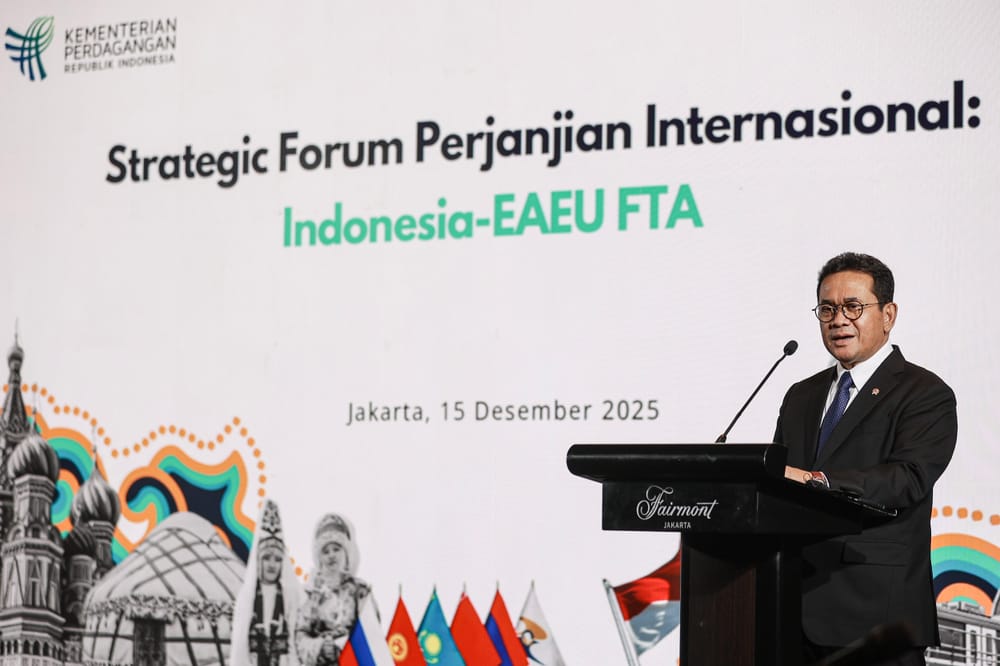
Responding to the ambassadors' presentation, Head of the International Department of the Financial Services Authority (OJK) Enrico Hariantoro stated that the momentum of Indonesia joining BRICS occurred at the right time and had a strategic impact as a new chapter of Indonesia's economic diplomacy.
Because, not only strengthening investment and trade, BRICS membership is an opportunity for Indonesia to contribute to shaping a fairer world economic landscape.
"OJK's role is in line with the ideals of Indonesia's economic transformation, by fully supporting the policies of the Coordinating Ministry for the Economy and the Ministry of Foreign Affairs. BRICS is an opportunity for Indonesia to penetrate a wider and potential market to diversify and stabilize the international economy," Enrico said.
"BRICS is an opportunity for Indonesia to reach a wider market and potential to diversify and stabilize the international economy," Enrico said.
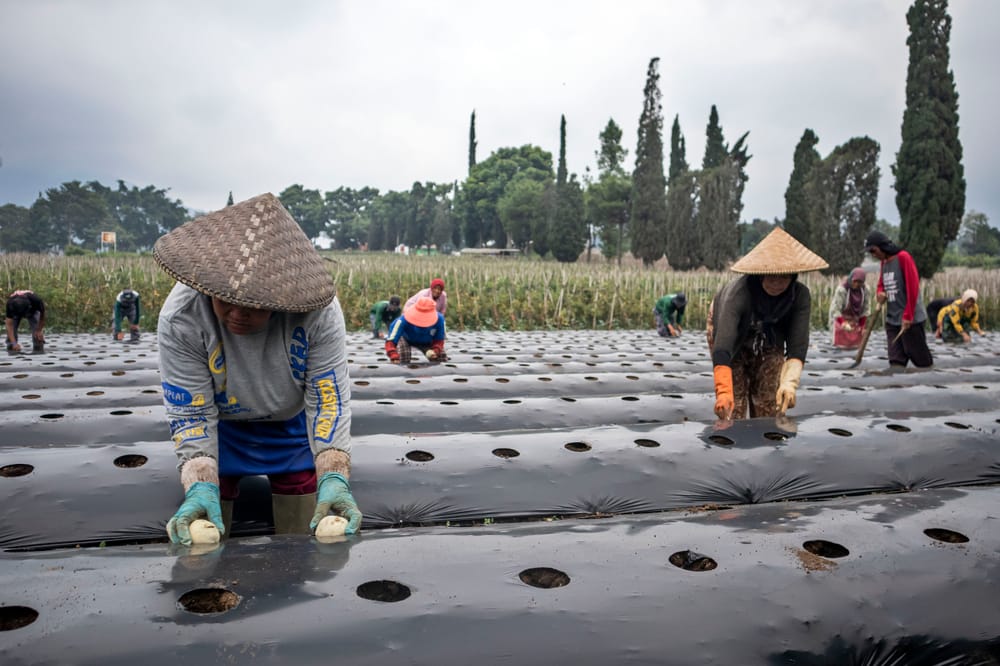
As a financial services regulator, Enrico said, OJK has supported Indonesia's position in BRICS with two policies. First, encouraging a sustainable economy by promoting ESG, green bonds, climate risk management, and carbon trading. Second, lifting the competitiveness of Indonesian UMKM by issuing OJK Regulation Number 19 of 2025 concerning Ease of Access to Financing for UMKM.
"With the issuance of this regulation, we ensure that Indonesian UMKM will not be left behind, but can play a real role. BRICS is not a political alliance, but an opportunity to pioneer alternative markets that we have not taken into account," he explained.
The empirical experience of pioneering an alternative market was experienced by the Deputy for International Relations of the Indonesian Employers Association (Apindo) Didit Ratam, when he attended the BRICS Business Council meeting on the sidelines of the BRICS 2025 Summit. In the association, which has 9 working groups, entrepreneurs across countries are looking for ways to encourage their respective governments to improve the ease of doing business.
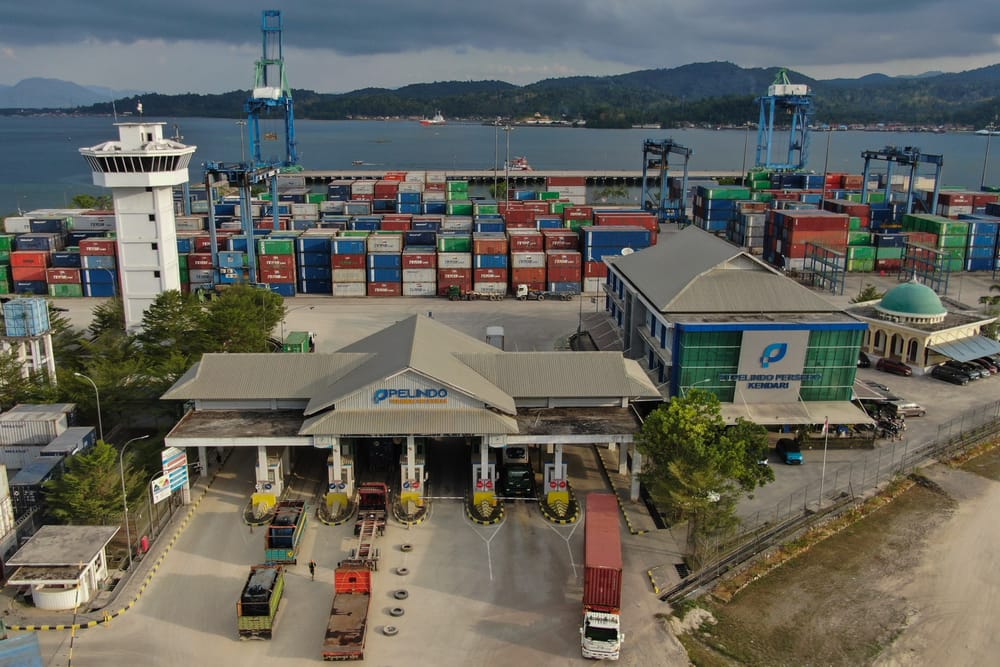
"It was there that I realized that Indonesia's foreign trade potential is still far below its potential. Through BRICS, entrepreneurs have a platform to communicate with entrepreneurs from other countries, especially entrepreneurs from Africa," Didit said.
He recalled that the atmosphere of the BRICS Business Council meeting was really intimate and fun, which opened up space for cooperation and business exploration to be very smooth. In just one meeting, Didit could meet businessmen from India, South Africa, Ethiopia, and Nigeria, get acquainted, and find reliable friends and business partners.
"I always tell my business friends to use BRICS to network, talk, and venture out. This is our chance to really do something so that South-South cooperation becomes something meaningful," he concluded.