
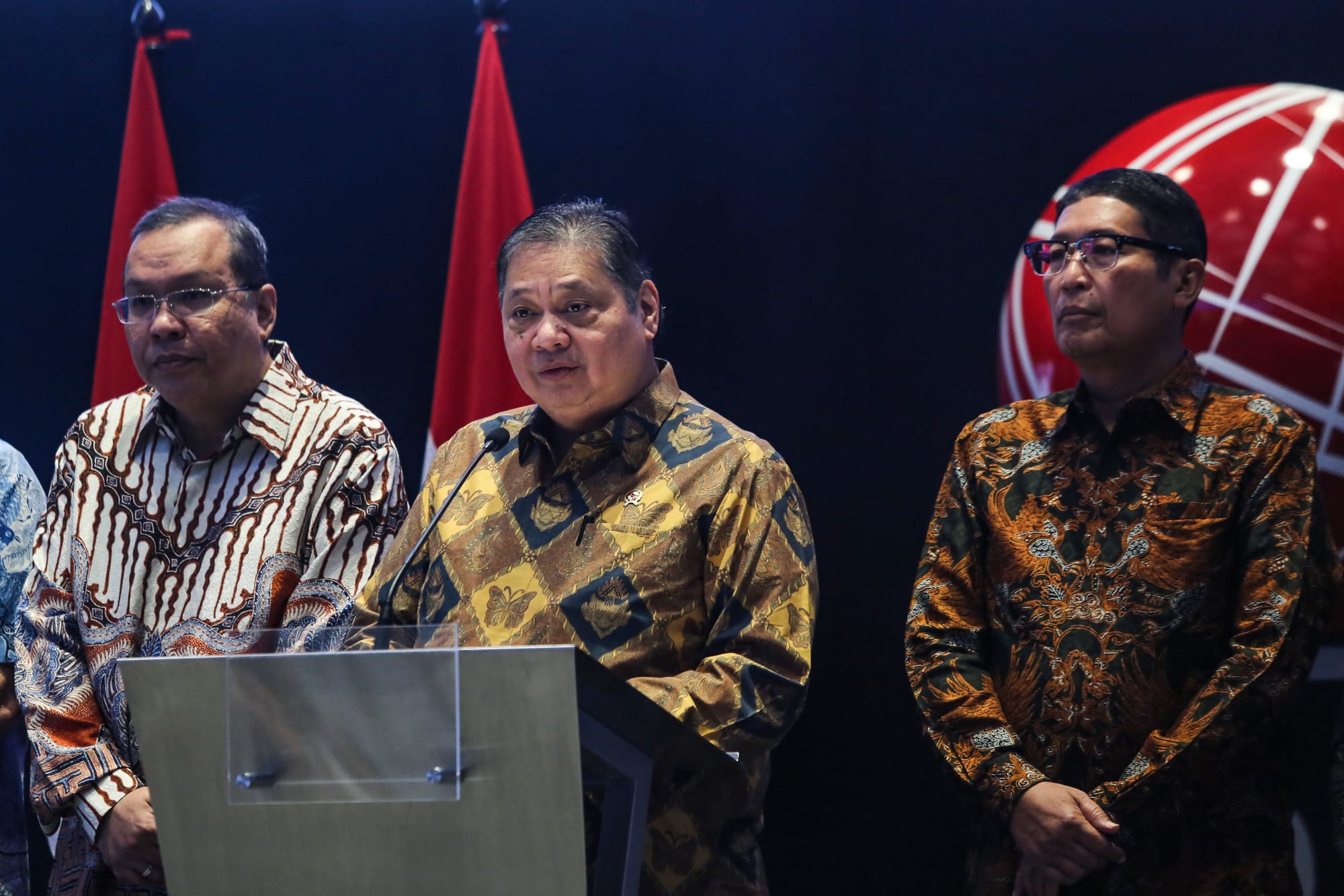
A glimmer of good news amidst the gloomy political atmosphere. The government will provide economic stimulus in the third quarter to maintain the economic growth rate that was considered good in the first and second quarters of 2025.
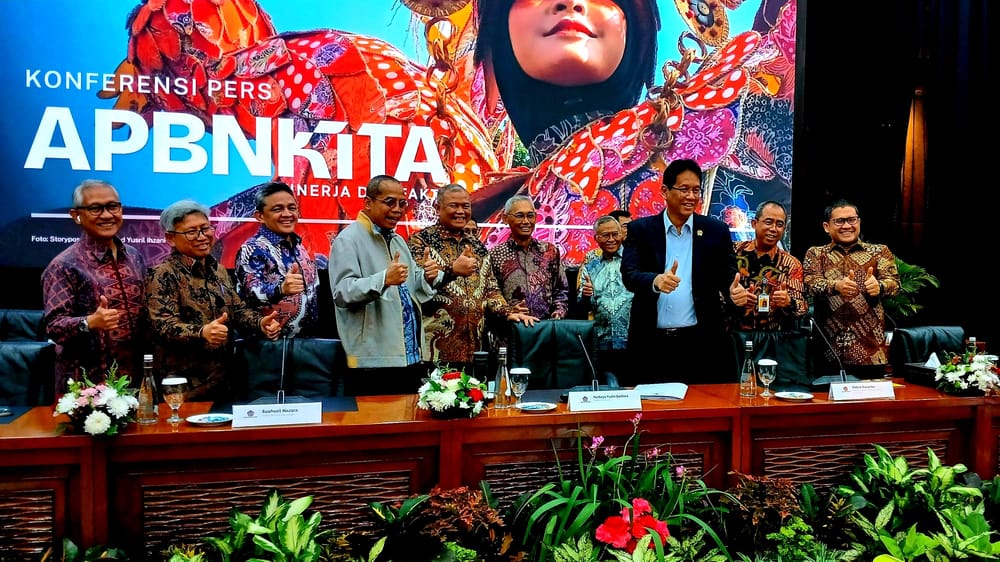
As stated by Coordinating Minister for Economic Affairs Airlangga Hartarto on Monday (1/9/2025), this step was taken as an effort to maintain people's purchasing power amid the heated social and political situation, following the wave of demonstrations that took place in various regions in recent days.
"The loss of life in demonstrations in recent days is a blow to the efforts to build a strong and sovereign nation's economy," Airlangga said when giving a statement at the Indonesian Capital Market Stability Press Conference at the Indonesia Stock Exchange, Jakarta, Monday (01/09/2025).
On the financial market floor, the Jakarta Composite Index (JCI) in the fourth week of August recorded an all-time high, with the stock index value opening at 7,926 on Monday, August 25, 2025, although it fell to 7,830 at the close on Friday, August 29, 2025.
August inflation was also under control at 2.37%, while the rupiah exchange rate against the US dollar was maintained at IDR 16,490 per US$ with a depreciation of 2.35%.
"On the platform of economic growth that is on a positive path, healthy national banking, synergistic coordination of the monetary, fiscal, and real sectors, as well as proactive communication with investors, the government is confident that short-term volatility will not change the existing economic plan," Airlangga said.
Airlangga launched Indonesia's trade balance which recorded a surplus of US$ 4.17 billion in July 2025, referring to the records of the Central Statistics Agency.
The strong level of domestic consumption and the continued high mobility of people made the industry grow positively by 5.08%. This indicates the potential for expansion in the third quarter of 2025.
"The turnover of money and transactions in various provinces shows the high level of economic activity spatially. The government believes that the impact of socio-political dynamics on the economy is only short-term, and the government continues to encourage optimism in the medium and long term," said the former Golkar Party Chairman.
Three stimuli
Airlangga said that the distribution of stimulus worth IDR 61 trillion during the first semester of 2025 began to give a real boost to the pace of the Indonesian economy.
He is optimistic that spending realization can reach 25% with a total of Rp 694 trillion in the second semester to boost growth through domestic consumption stimulus programs.
Airlangga said that there are three stimulus programs that the government will soon realize.
- First, revitalizing credit for labor-intensive industries including textiles and textile products (TPT), furniture, and food and beverages (F&B) such as revitalizing production machinery. This is expected to boost people's purchasing power.
- Second, people's business credit for the housing sector with an increase in the Housing Financing Liquidity Facility (FLPP) from 220,000 to 350,000 housing units, the application of 100% VAT DTP, and self-help housing stimulant assistance for 41,000 houses.
- Third, accelerate the Free Nutritious Meal (MBG) program by targeting 25,000 units of nutrition service units (SPPG) with 75 million recipients in November 2025.
In addition to these programs, the government has also established a Labor Welfare Council and a Layoff Task Force to ensure the welfare of workers and open employment opportunities.
Finally, the government also provides tourism stimulus through the provision of national events, bundling of tour packages, and discounts on transportation rates for trains, ships and toll rates ahead of the Christmas and New Year holidays in 2025-2026.
"All of these programs are designed to directly drive the people's economy while maintaining the momentum of domestic consumption which is the backbone of our economic growth," he said.
"All of these programs are designed to directly drive the people's economy while maintaining the momentum of domestic consumption which is the backbone of our economic growth," Airlangga said.
He urged entrepreneurs to remain calm and optimistic about the situation to help accelerate economic growth.
"Of course this is not only the task of the government, but a joint task with companies on the stock exchange and companies outside the stock exchange. We hope that a peaceful and respectful situation will greatly help accelerate economic growth," Airlangga concluded.
Realistic with caution
Permata Bank Chief Economist Josua Pardede assessed that, in addition to a number of relatively strong fundamental indicators, the manufacturing PMI which is above the 50 level and controlled inflation at 2.37% provide room for the government to encourage consumption without worrying about causing excessive price pressures.
Increased spending and investment realization is also a catalyst in maintaining liquidity flows so that the stimulus impact can be channeled more effectively.
"Government-directed stimulant programs, such as labor-intensive investment credit, housing assistance, VAT reduction, and special support for the tourism sector have a direct effect on increasing people's purchasing power and economic activity. This momentum is getting stronger ahead of the Christmas and New Year period which encourages household consumption through offline and online shopping," said Josua when contacted by SUAR, Monday (01/09/2025).
Nevertheless, Josua still underlines that the effectiveness of the stimulus is still influenced by socio-political stability, which has the potential to disrupt market confidence if allowed to drag on. However, as long as the government is able to control the situation and maintain convincing public communication, the consumption stimulus can function optimally.
As long as the government is able to control the situation and maintain convincing public communication, the consumption stimulus can function optimally.
"This policy is the right step and strong enough to maintain the momentum of economic growth in the third quarter, while maintaining the optimism of investors and market participants amid uncertainty," said Josua.
In line with Josua's assessment, businessman and economic policy analyst of the Indonesian Employers Association (Apindo) Ajib Hamdani stated that the domestic consumption stimulus is part of the fiscal instrument to support the overall purchasing power of the community.
It was increased government spending and high investment in the second quarter that pushed the manufacturing PMI to expansion in August and provided a multiplier effect on job creation and increased purchasing power in the third quarter. However, stimulus alone is not enough.
"To encourage sustainable economic growth above 5% in aggregate until the end of 2025, people's purchasing power must continue to be encouraged. If you look at the second quarter data, growth will only be below 5 percent without high public consumption," Ajib explained when contacted by SUAR, Monday (01/09).
"To encourage sustainable economic growth above 5% in aggregate until the end of 2025, people's purchasing power must continue to be encouraged," said Adib.
One of the opportunities to encourage consumption, according to Ajib, is the reduction in Bank Indonesia's benchmark interest rate by 25 basis points (bps) in August 2025. "This interest rate cut provides a good incentive space for the business world and people's purchasing power," he said.
However, CORE Indonesia Executive Director Mohammad Faisal emphasized that the government's fiscal strategy should pay more attention to existing economic problems.
He suggested that the government needs to revise spending strategies that are less productive and wasteful, such as the establishment of new institutions and large incentives for state officials. "Divert fiscal incentives to strengthen labor-intensive sectors, focus on economic empowerment in an integrated and structured manner, and not just provide social assistance without solving the root of the problem," Faisal said in the seminar Indonesia at the Crossroads: Inequality, Fiscal Reform, and Economic Future which was held online on Monday (01/09).
On the same occasion, Indef Executive Director Esther Sri Astuti also emphasized that the proportion of government spending needs to be more careful.
Esther sees the proportion of debt and goods expenditure to the state budget increasing, while the proportion of subsidy and social expenditure to the state budget decreasing. All this is happening while tax revenues on an annual (YoY) basis recorded a slowdown in April 2025 at IDR 657 trillion compared to IDR 719.9 trillion in the same period in 2024.
"Budget efficiency should be directed at stimulating consumption and creating quality jobs. So it is not just austerity, but directed at creating productive sectors," he said.
Trust rises
Based on S&P Global data, Indonesia's Purchasing Managers Index (PMI) for August 2025 reached 51.5%, marking the first expansion in five months, up from July's PMI reading of 49.2%. An index reading above 50 indicates expansion, while below 50 indicates contraction.
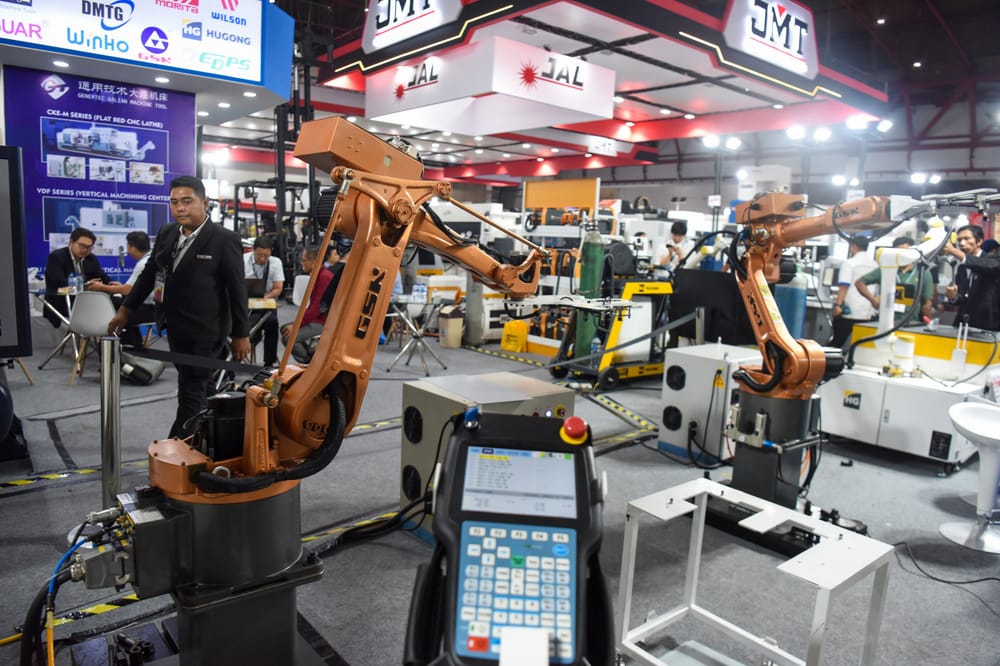
Minister of Industry Agus Gumiwang Kartasasmita said that the surge in Indonesia's manufacturing PMI shows the higher confidence of industry players in running their businesses and proof of the resilience of the domestic manufacturing industry amid national and global political and economic dynamics.
"We welcome the August manufacturing PMI report which shows a recovery in national manufacturing performance. This increase was driven by an increase in new orders, both from the domestic and export markets, as well as increased activity in production," the Minister of Industry said in a statement in Jakarta, Monday (1/8).
According to the Minister of Industry, the manufacturing sector is different from other sectors because it has a broad and sensitive ecosystem. Manufacturing involves many activities, ranging from forward linkages, backward linkages, investment, minimum wage, raw materials, logistics, to energy resources. All of these chains must be maintained so that optimism continues to grow, he explained.
Indonesia's manufacturing PMI in August 2025 surpassed those of France (49.9), Germany (49.9), Japan (49.9), Myanmar (50.4), the Philippines (50.8), South Korea (48.3), Taiwan (47.4), the UK (47.3), and China (50.5).