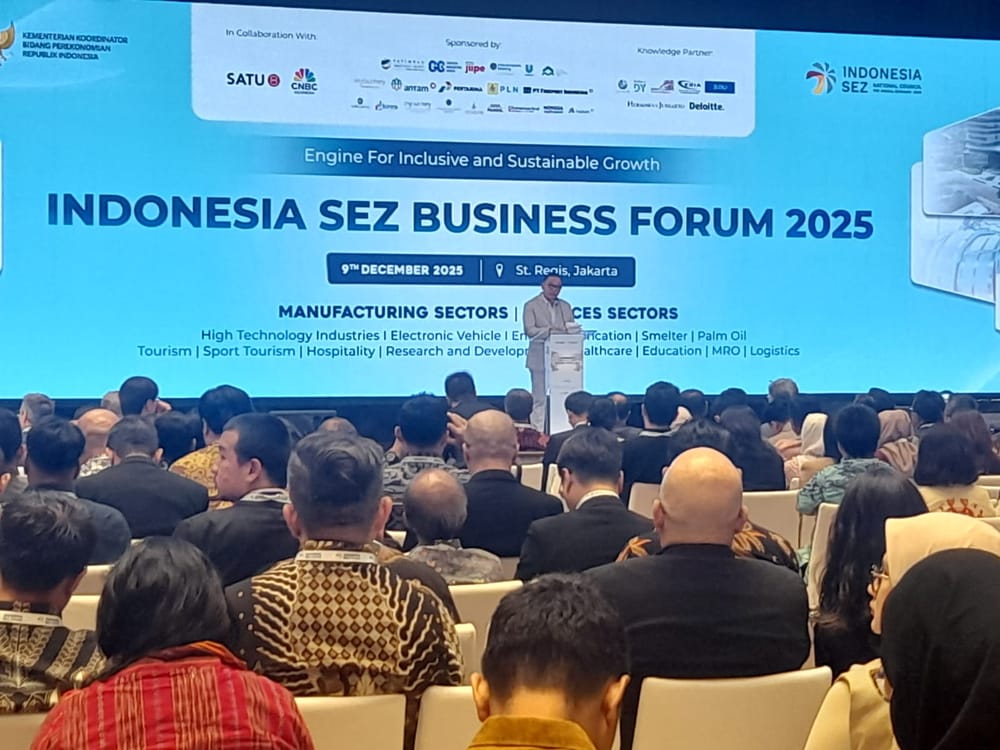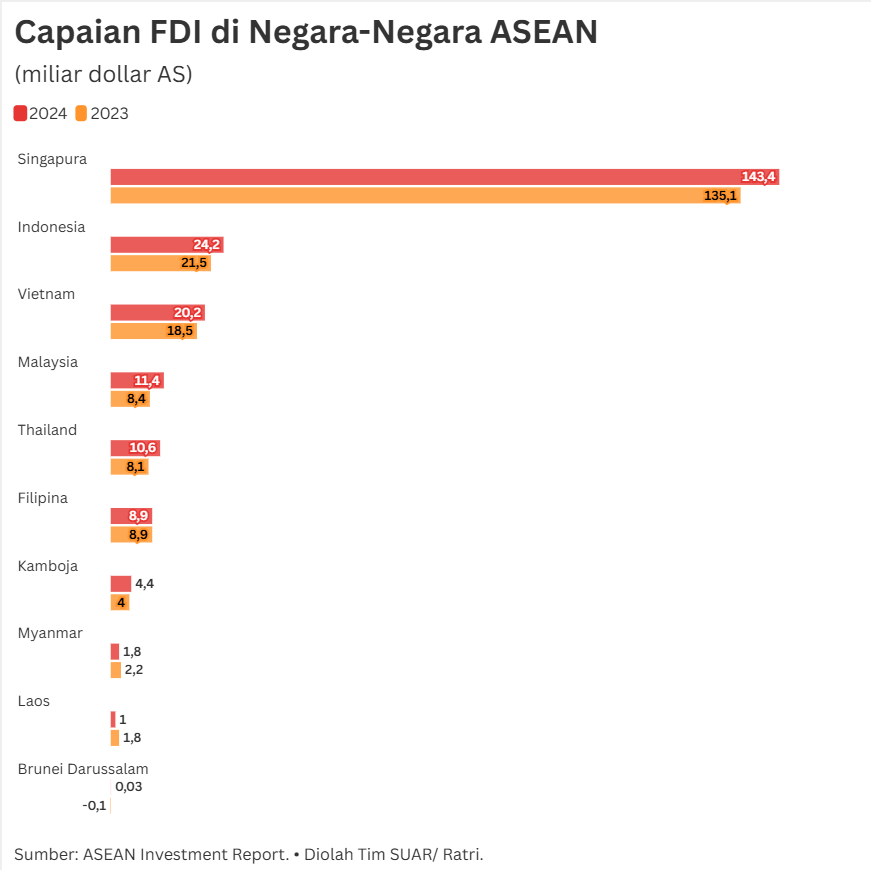


The government's commitment to making Special Economic Zones (SEZs) an engine for economic growth and equitable development is starting to show concrete results.
The attractiveness of a total of 25 SEZs spread from Sabang to Merauke has proven successful in penetrating a total investment of IDR 294.4 trillion or USD 3.6 billion from 2021 to September 2025.
Acting Secretary General of the National SEZ Council Rizal Edwin Manangsang said this number will still increase before the end of the year.
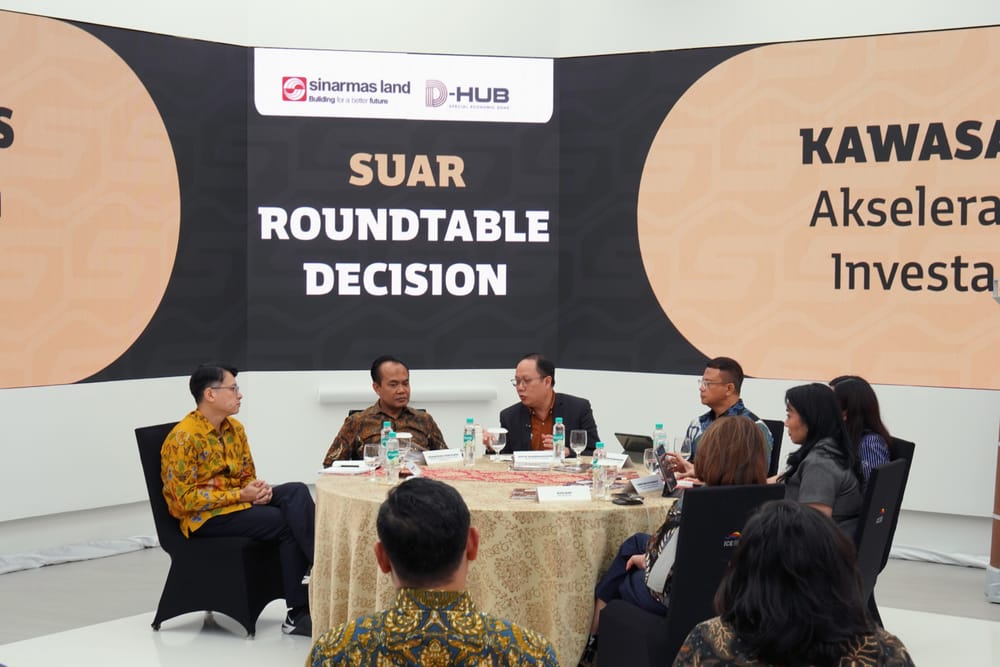
"SEZs are centers of economic growth with geoeconomic and geostrategic advantages for industrial activities, exports, and other high-value economic activities," he told SUAR in Jakarta (1/12).
He said the main purpose of SEZs (Special Economic Zones) is to encourage economic growth, equitable development, and increase the nation's competitiveness by attracting investment through the provision of facilities and facilities for investors.
There are 25 Special Economic Zones (SEZs) spread across various regions with a focus on the industrial, manufacturing, digital, tourism and health sectors, as well as other services such as Maintenance Repair Overhaul (MRO).
The 25 SEZ lists include Arun Lhokseumawe SEZ (Aceh), Sei Mangkei SEZ (North Sumatra), Batam Aero Technic SEZ (Riau Islands), Galang Batang SEZ (Riau Islands), Kendal SEZ (Central Java), Gresik SEZ (East Java), Sorong SEZ (Southwest Papua), Bitung SEZ (North Sulawesi), Palu SEZ (Central Sulawesi).
Maloy Batuta Trans Kalimantan SEZ (East Kalimantan), Nongsa SEZ (Riau Islands), Tanjung Kelayang SEZ (Bangka Belitung), Tanjung Lesung SEZ (Banten), Lido SEZ (West Java), Morotai SEZ (North Maluku), Likupang SEZ (North Sulawesi), Mandalika SEZ (NTB), Kura-Kura Bali SEZ (Bali), Sanur SEZ (Bali), Singhasari SEZ (East Java), Tanjung Sauh SEZ (Riau Islands) and Setangga SEZ (South Kalimantan).
"The investment value is dominated by SEZs in the processing and manufacturing industry sectors such as Gresik, Kendal, Galang Batang, Sei Mangkei, and Nongsa SEZs," said Edwin.
SEZs were also reported to have absorbed 28,094 workers during the January-September 2025 period, dominated by Kendal, Gresik, Mandalika, Tanjung Lesung, and Sei Mangkei SEZs.
In terms of trade, several SEZs such as Sei Mangkei, Palu, Bitung, Arun Lhokseumawe, Galang Batang, Kendal, and Gresik helped strengthen export competitiveness with a contribution of Rp20.33 trillion by mid-2025.
The government provides facilities in Special Economic Zones (SEZs) in the form of fiscal and non-fiscal incentives to attract investment.
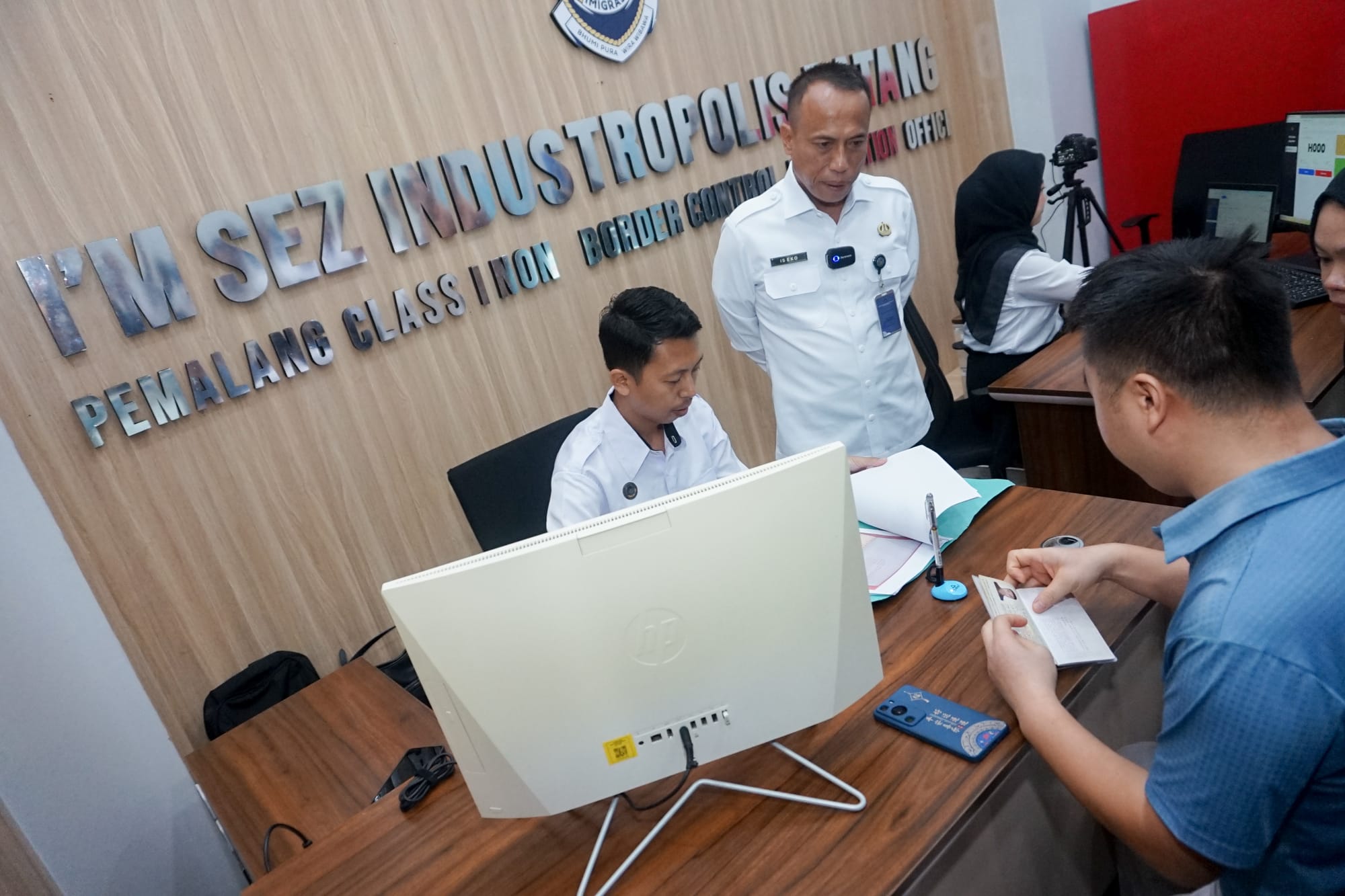
Fiscal incentives include tax facilities such as exemption or reduction of Income Tax (PPh), exemption of Value Added Tax (VAT) and STLG, as well as exemption of import duty and Tax in the Framework of Import (PDRI). Meanwhile, non-fiscal facilities include ease of immigration, licensing, and the flow of goods in and out.
Edwin admits that there are still many criticisms and inputs received by the government regarding facilities, such as the long bureaucracy, long licensing and delayed tax incentives.
It accepts the criticism and opens a discussion room every 3 months by involving investors.
So the driver of economic growth
Bank Indonesia (BI) believes that the national economic growth target of 5.4% by 2026 can be achieved through the transformation of the economic structure that focuses on strengthening the real sector and downstreaming natural resource commodities, which can be done by developing Special Economic Zones (SEZs).
BI Governor Perry Warjiyo said the development of SEZs is one of the indicators that can encourage sustainable economic growth.
"BI fully supports the development of SEZs as one of the government's priority programs to encourage investment in various regions. SEZs are proven to be able to encourage the growth of Gross Regional Domestic Product (GRDP) in the region above the national average," he said at the Bank Indonesia Annual Meeting on (28/11).
Other strategies that BI is pushing to boost economic growth are monetary and macroprudential policies.
BI will continue to use a mix of monetary and macroprudential policies to boost economic growth, including through interest rate cuts, liquidity easing, and increased macroprudential incentives.
BI will also continue to encourage economic growth through the expansion of digital payments and the strengthening of payment system infrastructure.
The total investment of Kendal SEZ is IDR182 trillion.
Executive Director of Kendal Industrial Estate (KIK) Juliani Kusumaningrum said that the investment realization obtained by Kendal SEZ during January-September 2025 reached Rp 182 trillion.
The investment figures illustrate that Kendal SEZ is being eyed by investors and is becoming an investment destination.
The advantages of Kendal SEZ include a strategic location, located on important routes such as the Trans Java Toll Road, the Java North Coast route, and close to the Tanjung Emas International Port.
Kendal SEZ also focuses on high-tech industries, Kendal SEZ focuses on export-oriented industries, import substitution, high-tech products, and special applications that support industry 4.0.
"The obstacle that is still faced by Kendal SEZ is that the licensing process is still long and he hopes that the government can immediately overcome it," he told SUAR in Jakarta (1/12).
The sector that dominates Kendal SEZ is the manufacturing sector, which absorbs a workforce of more than 35 thousand people.
Meanwhile, Director of Tanjung Kelayang SEZ Daniel Alexander Natipulu said the potential of Tanjung Kelayang SEZ is quite large but is still constrained by infrastructure connectivity.
"The main challenge faced by the Tanjung Kelayang SEZ is transportation connectivity that has not been optimized such as minimal direct flight access," he told SUAR in Jakarta (1/12).
Daniel hopes that the government can pay great attention to infrastructure development in the Tanjung Kelayang SEZ.
In addition, other challenges include complex licensing and regulatory issues, as well as disruptions such as land mafia practices that hamper investment.