
Indonesia’s aggressive push for mining downstreaming has drawn investment, generated jobs, and bolstered growth, with PT Freeport Indonesia emerging as a standout case.
Freeport President Director Tony Wenas emphasized the company’s vital role in the economy during Indonesia’s 80th Independence Day celebration in Mimika (Aug. 17, 2025). In 2024, Freeport contributed US$ 4.7 billion (Rp 80 trillion) to the state treasury, including Rp 11 trillion channeled directly to Central Papua, its main operational hub.
That contribution equals 0.75% of national GDP, 77% of Central Papua’s GRDP, and 91% of Mimika’s GRDP, the single largest corporate contribution in Indonesia. Since acquiring a 51% stake in Freeport in 2019, the state has already recouped its investment through dividends.
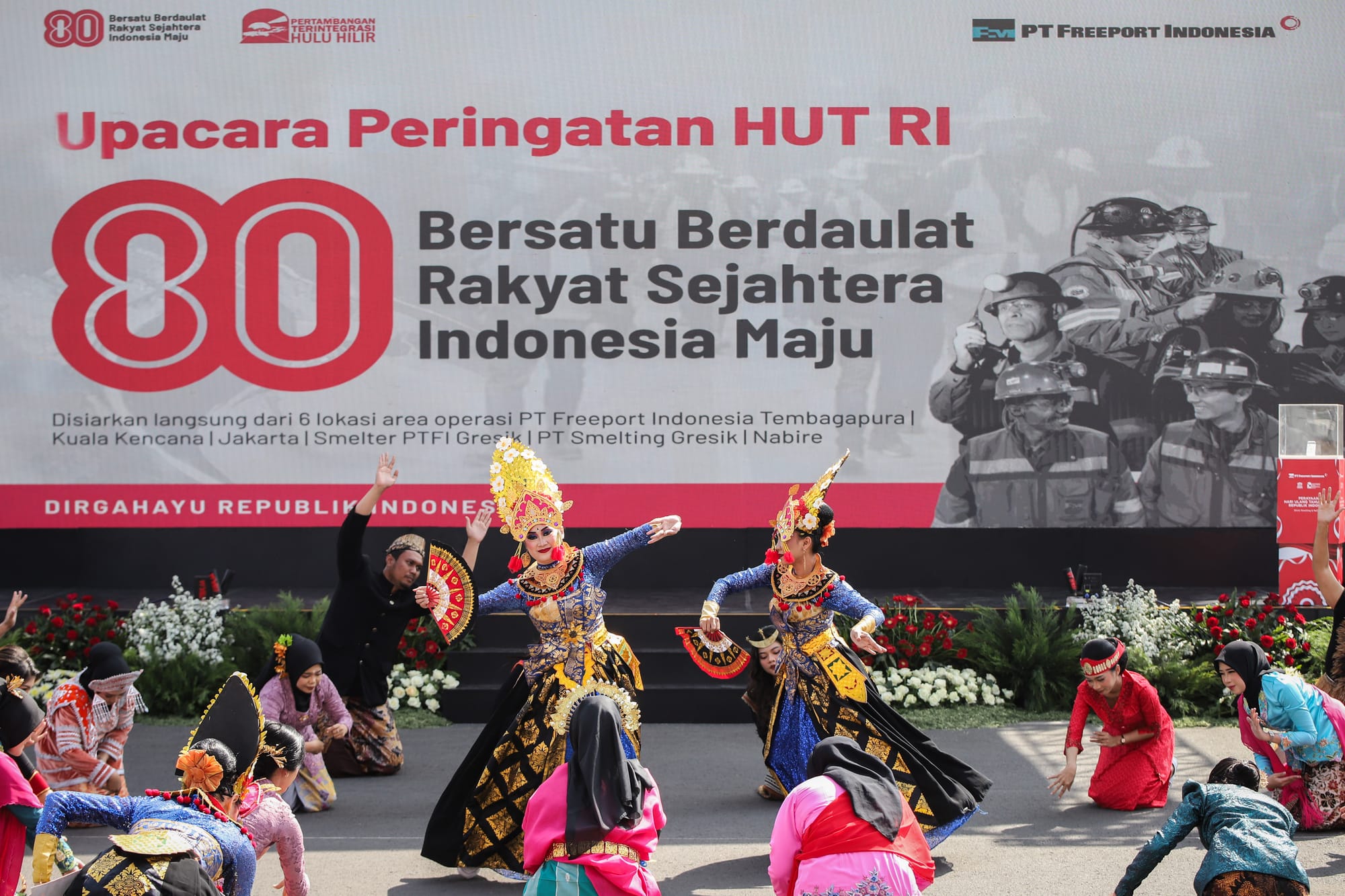
Tony explained that this contribution is equivalent to 0.75% of the national Gross Domestic Product (GDP), 77% of Central Papua’s Gross Regional Domestic Product (GRDP), and 91% of Mimika’s GRDP.
He noted that this figure is the largest contribution from a single company in Indonesia. He added that since 2019, the dividends paid to the government have exceeded the acquisition cost of 51% of Freeport shares, meaning the state’s investment has effectively been recouped.
Beyond direct contributions, Tony emphasized the importance of downstreaming in sustaining the economic benefits of copper mining. He highlighted the Gresik smelter, inaugurated by President Joko Widodo in 2024, as the largest single-line facility in the world. Additionally, a precious metals refinery was inaugurated by President Prabowo Subianto in 2025. Since late 2024, this facility has produced 11.5 tons of gold bars.
Although the smelter temporarily halted operations due to a fire in October 2024, Tony stated that repairs were completed ahead of schedule. Operations resumed in May 2025, with the first copper cathode production starting in July 2025. Freeport targets an annual capacity of 800,000 tons of cathode – claimed to be sufficient to support the production of eight million electric vehicles.
According to Tony, these achievements demonstrate that Freeport’s contribution extends beyond upstream mining to include downstream development that adds value.
“The synergy between the government and Freeport is key to ensuring the mining sector continues to support national economic growth while also creating opportunities for the future energy transition agenda,” said Tony.
Government Program
The downstreaming commitment was indeed emphasized by President Prabowo Subianto in his Financial Note speech for the 2026 State Budget Draft (RAPBN). The President stressed that natural resources must be managed for the benefit of the people by expanding downstreaming, creating jobs, and ensuring that added value remains in Indonesia.
The government even targets the acceleration of downstreaming projects worth USD 38 billion, in line with the sector’s contribution to economic growth in Q2–2025, which reached 5.12%.
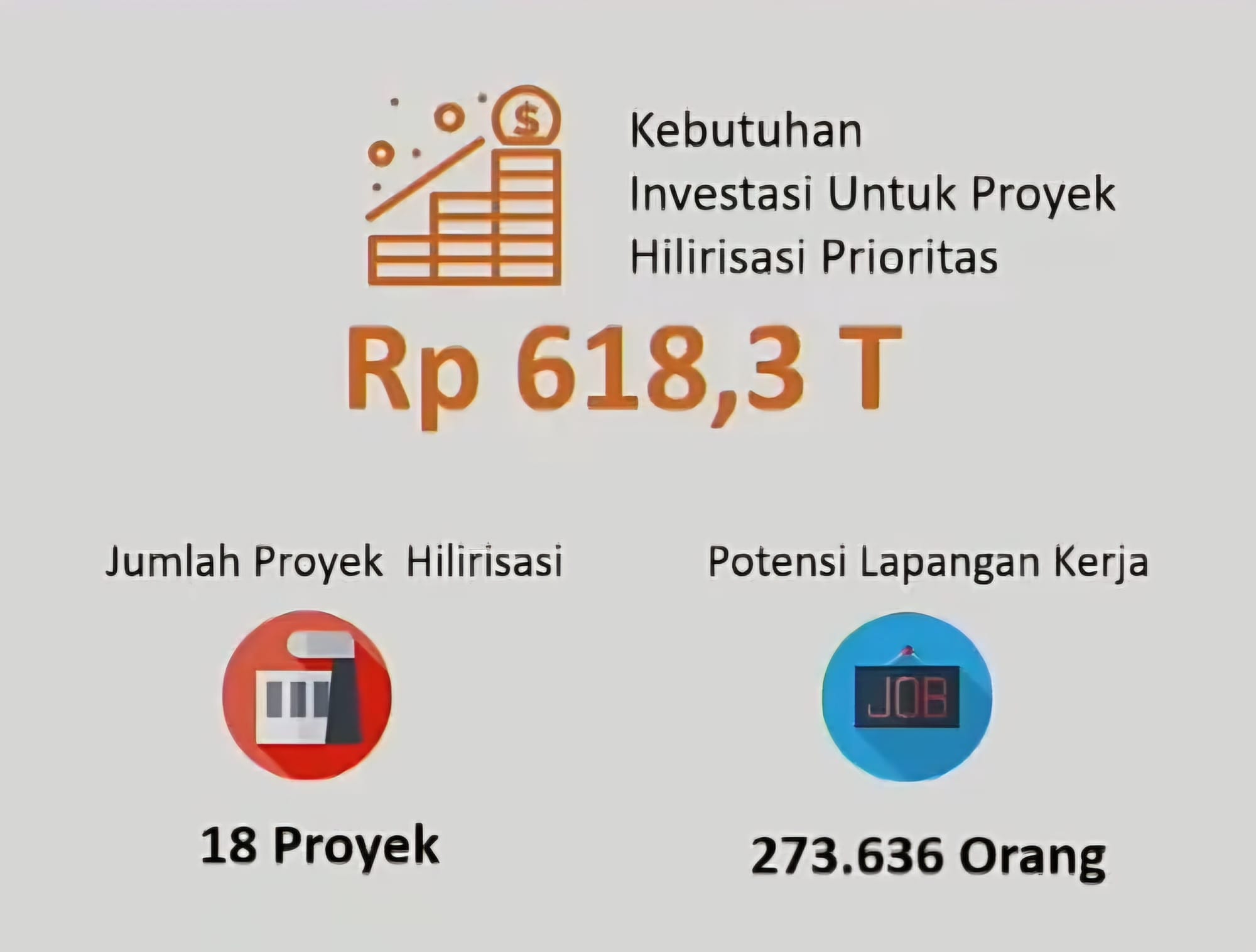
Minister of Energy and Mineral Resources (ESDM) Bahlil Lahadalia stated that investment needs for priority downstreaming projects reach Rp 618.3 trillion, covering 18 projects. These investments are expected to create jobs for 273,636 people.
Komaidi Notonegoro, Executive Director of ReforMiner Institute, considers Freeport’s contribution of Rp 80 trillion to the state in 2024 a significant achievement. He noted that the mineral mining sector now rivals—even surpasses—the oil and gas sector in terms of contributions to state revenue.
According to the World Bank’s Commodity Markets Outlook (April 2025), global gold prices are expected to remain above 150% of the 2015–2019 average throughout 2025–2026, driven by demand as a safe-haven asset amid global uncertainty.
However, Komaidi cautions that Freeport’s high contribution to the GDP of Central Papua and Mimika could create long-term vulnerabilities, given the regional economy’s heavy reliance on private investment, unlike the national economy, which is more household consumption-driven. He stresses that local governments need to strengthen other sectors, including community consumption and local economic empowerment.
Komaidi emphasizes allocating a portion of mining revenues to productive sectors, such as workforce training, industrial development, and agriculture, to prepare communities for the post-mining era. “Natural resources are finite; therefore, society must be prepared starting now,” he said.
Regarding Freeport’s target of producing 800,000 tons of copper cathode per year, Komaidi sees significant potential for the energy transition agenda. He argues that the benefit is maximized if the cathode is absorbed by domestic industries rather than exported, enabling Indonesia to capture more value along the electric vehicle supply chain.
He further explains that downstreaming should not stop at raw material production. “If we have rice paddy, don’t just sell it as paddy; process it into rice or cooked food to gain more added value,” Komaidi said. Integrating domestic automotive and electronics industries is key to ensuring that the benefits of copper downstreaming are widely felt.
According to Komaidi, integration with the domestic automotive and electronics industries is the key for the benefits of copper downstreaming to be widely felt.
Komaidi reminded that Freeport is actually more advanced compared to other mining companies because it began downstreaming as early as the 1990s. However, the main challenge that still arises is the limited absorption of the domestic market. As a result, some processed products, such as copper, still need to be exported with relatively low added value.
In his view, the development of a national industrial ecosystem must become a government priority. Freeport’s role only extends to providing raw materials up to semi-finished products. Meanwhile, the sustainability of benefits depends on the policies of the Ministry of Industry. “If the industrial roadmap is unclear, value-added products will still be enjoyed by other countries,” Komaidi said.
He believes that the sustainability of Freeport’s contribution is also determined by inter-party synergy. Collaboration between mining companies, the central and regional governments, and technical ministries needs to be directed toward creating a downstream industrial ecosystem. This aligns with President Prabowo’s agenda, which prioritizes downstreaming programs.
Although acknowledging Freeport’s significant contribution, Komaidi emphasized the need for proportionality in policy. He argued that other companies must still be treated fairly in terms of taxes and royalties. “Comparing Freeport to other mining companies is like comparing an elephant to a goat; the size is indeed different,” said Komaidi.
However, he also warned of the risk of dependence on a single large entity. Without an economic diversification plan, disruptions at Freeport could directly affect regional and national revenues. Therefore, a portion of the revenue should be allocated to basic infrastructure, education, and other productive sectors.
“Natural resources will eventually run out. Therefore, the existing proceeds should not be spent on consumption but reinvested in production sectors,” Komaidi said. According to him, with this strategy, society can still survive and have economic alternatives after the mining era ends.