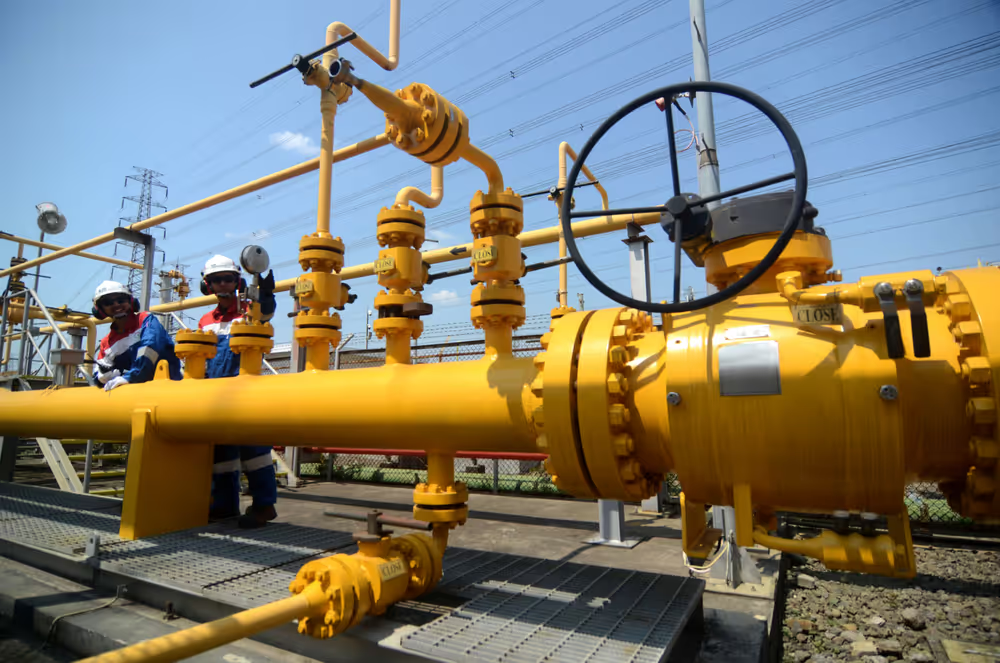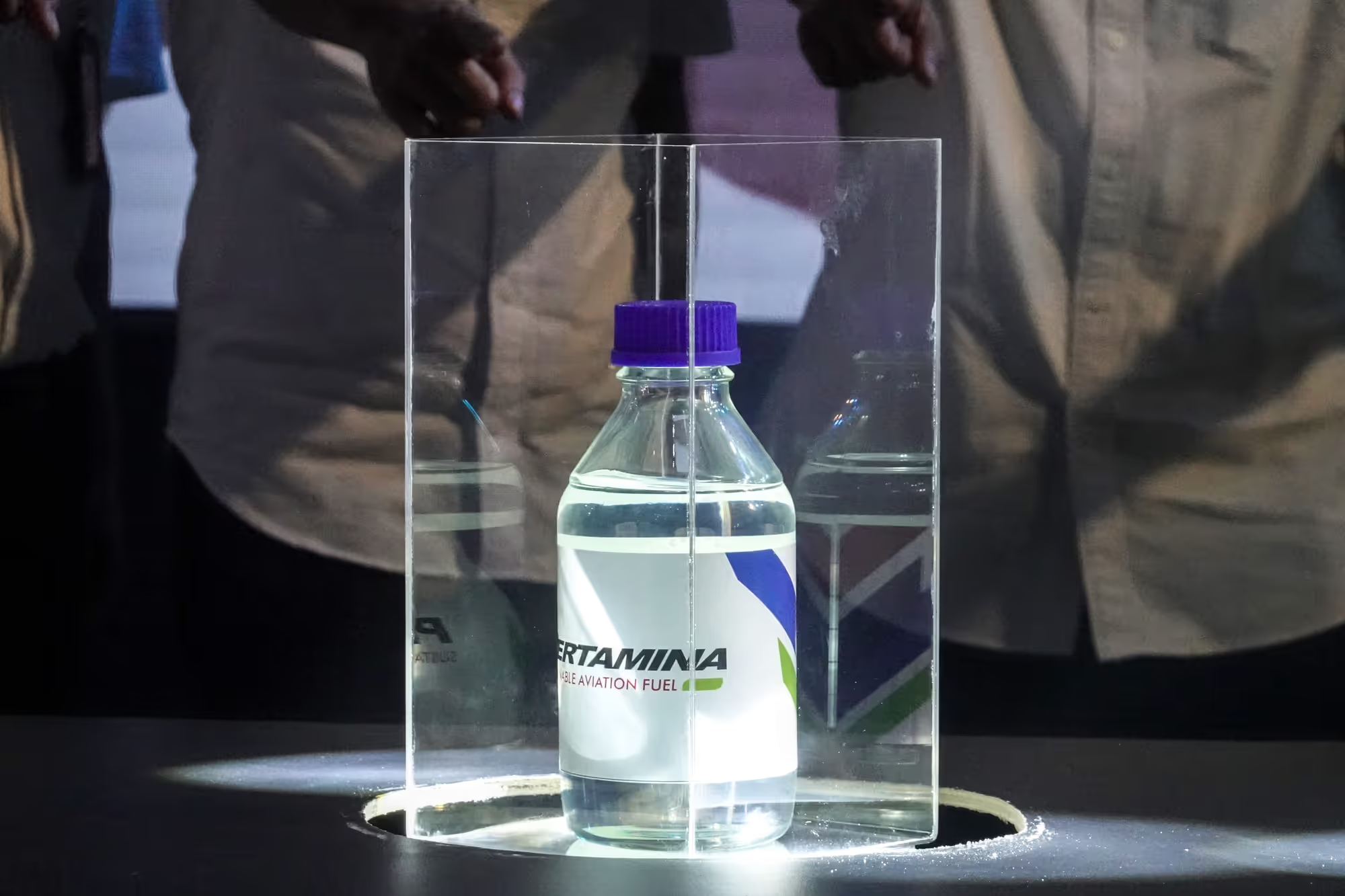
PT Pertamina (Persero) has officially begun producing bioavtur, marketed as Pertamina Sustainable Aviation Fuel (SAF), from a blend of used cooking oil (UCO). The innovation, produced at the Cilacap Refinery by PT Kilang Pertamina Internasional (KPI), is part of the company’s effort to accelerate the energy transition and curb emissions.
The first shipment of Pertamina SAF took place on August 12, following a series of quality tests at the KPI Cilacap Unit Laboratory and Lemigas.
The SAF product, developed using the locally designed "Katalis Merah Putih," in collaboration with the Bandung Institute of Technology (ITB), has met international standards ASTM D1655 and Defstan 91-091, making it the first officially certified SAF in Southeast Asia.
“Pertamina has successfully processed used cooking oil into an environmentally friendly energy source. This is solid proof that the achievements of the nation’s talents are truly remarkable,” said Pertamina President Commissioner Mochamad Iriawan during the inaugural SAF lifting event in Cilacap on August 12.
The production process uses the a formulation developed by Pertamina in collaboration with the Bandung Institute of Technology (ITB). This SAF product is claimed to have met the international standards ASTM D1655 and Defstan 91-091, making Pertamina SAF the first officially certified product in Southeast Asia.
Pertamina has also successfully initiated and explored the entire certified SAF ecosystem.
Meanwhile, PT KPI President Director Taufik Aditiyawarman stated that the fossil oil content in SAF products is around 97%, with SAF production capacity at the Cilacap Refinery reaching approximately 1,200 kiloliters per day using a 3% blend of used cooking oil.
“So, with a temporary need for around 40 kiloliters of used cooking oil per day, we can produce roughly 1,200 kiloliters of Pertamina SAF,” he said.
The collection of used cooking oil is carried out using two methods: retail collection through public fuel stations (SPBU) and bulk collection through associations of collectors.
World-Class Cooking Oil
The initiative also highlights the untapped potential of Indonesia’s used cooking oil industry. Matias Tumanggor, Chairman of the Indonesian Association of Used Cooking Oil Collectors for Renewable Energy (APJETI), noted that Indonesia ranks first globally in UCO quality.
“Currently, most used cooking oil is used as raw material for candles. Now, it is being utilized for bioavtur, which is a significant advancement,” he told SUAR on August 14, 2025.
However, the utilization of used cooking oil in the country still faces challenges, namely the presence of illegal businesses.
To address this, they are preparing a strategy to develop well-informed and educated business operators.
High Potential for SAF
Economist Fadhil Hasan of the Institute for Development of Economics and Finance (Indef) emphasized the strong prospects for SAF, citing rising global demand, abundant domestic feedstock, and growing policy support for low-carbon fuels.
He urged the government and industry to create a bioavtur roadmap for commercial aviation and scale up production to competitive levels.
“As part of the energy transition toward Net Zero Emissions (NZE), the use of bioavtur deserves appreciation. This is a very encouraging development. Consumers also need not worry, as the standards for bioavtur are the same as those for conventional jet fuel, both meeting international standards,” he said.