
The launch of the Full Mutual Reliance Framework ( FMRF) scheme, a collaboration between the World Bank and the Asian Development Bank (ADB), marks a new phase of development assistance programs that are simpler and more focused on outcomes for Pacific countries. Under the regularly updated Country Partnership Strategy framework, Indonesia is ready to welcome all opportunities offered to support government programs in the medium and long term.
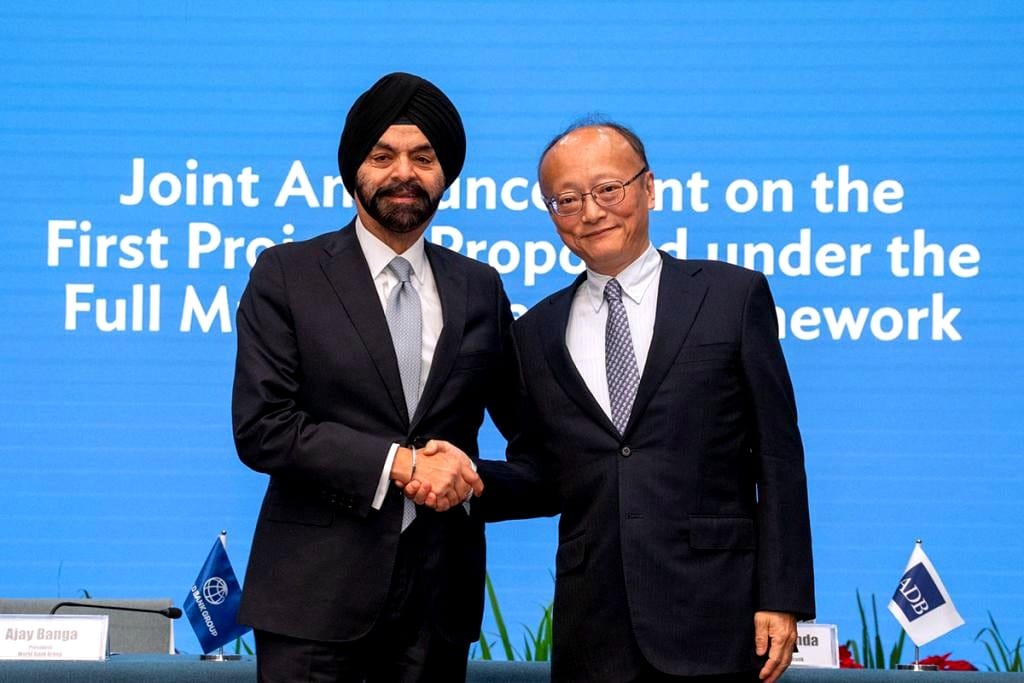
At the launch at ADB Headquarters in Manila, Philippines, on Thursday (December 4, 2025), ADB President Masato Kanda proudly announced that the FMRF is an innovative and historic co-financing breakthrough for both ADB and the World Bank. Through this scheme, debtor countries have the opportunity to access loans from both institutions by following a single set of requirements, either from the ADB or the World Bank.
"This arrangement will simplify the process and reduce duplication between the two institutions. Countries will benefit from faster project implementation, lower transaction costs, and continued adherence to high policy standards," Masato said at a press conference.
Fiji and Tonga are the first two countries to take out loans under the FMRF scheme. For Fiji, the loan is allocated to finance the Pacific Healthy Islands Transformation (PHIT) program worth USD 236.5 million to upgrade health services and infrastructure in Fiji, Kiribati, and Tuvalu, particularly treatment services for cancer, cardiovascular disease, and diabetes patients.
Meanwhile, for Tonga, the FMRF scheme was used to finance the Tonga Sustainable Economic Corridors and Urban Resilience (SECURE) project worth USD 120 million, or a quarter of Tonga's GDP. The main objective of this project is to develop infrastructure in Nuku'alofa, Tonga, in addition to constructing an urban drainage system to prevent tsunamis and increase Tonga's resilience to climate change.
World Bank President Ajay Banga, who was present at the launch, stated that the FMRF plan had actually been eagerly awaited for almost three years. Banga emphasized that this plan would provide a solution for countries that have difficulty accessing financing due to overlapping administrative issues, even though such loans are often needed for very basic infrastructure.
"In the past, with different recording, documentation, and requirements between institutions, our borrowers were busier dealing with a lot of paperwork, which was very tiring. Now, through the efficiency of FMRF, the focus is directed at execution and direct impact that makes people's lives easier," said Banga.
Since the signing of the memorandum of understanding until December 1, 2025, the World Bank and ADB have received at least 20 financing proposals from various countries interested in this loan scheme. Under the FMRF, Banga expects the World Bank and ADB to synergize more coherently, improve efficiency, and focus on program execution.
World Bank Senior Advisor for East Asia and the Pacific Natalia Robalino added that, as a new program, the FMRF remains optional and not mandatory. ADB member countries have the opportunity to access the FMRF scheme by considering capacity, project urgency, suitability of objectives, and ability to meet requirements.
"Every proposal will certainly be approved, with at least three years to develop plans and prepare reports based on actual data for the Board of Directors. However, we can assure you that ADB and World Bank funds are currently more than sufficient to finance future FMRF projects," said Robalino.
Indonesia welcomes
The opening of multilateral development financing opportunities such as the FMRF promises opportunities for ADB and World Bank member countries that are racing to pursue growth while overseeing sustainability programs. Under the umbrella of the Country Partnership Strategy, which is updated every five years, Indonesia welcomes the ADB scheme, which is highly likely to be aligned with the 2025-2029 National Medium-Term Development Plan (RPJMN).
Deputy Minister of Financing and Investment Development at the Ministry of National Development Planning/Bappenas Putut Hari Satyaka stated that as a partner since 1966 and the sixth largest shareholder of ADB, Indonesia has an active loan portfolio value of approximately USD 2.3 billion. The value of this partnership not only includes financing support, but also knowledge sharing and technology transfer.
"A series of coordination meetings were held at the planning and technical implementation levels. In these discussions, Bappenas and ADB always considered each other's capacities and needs in order to find a middle ground that would have a mutually beneficial impact," explained Putut in a written response received by SUARon Thursday (4/12/2025).
Read also:
 Benedictus Krisna Yogatama
Putut added that Indonesian development programs that are compatible with ADB and World Bank financing schemes can be found in the RPJMN, particularly those in the agriculture and fisheries sectors, which are aimed at achieving food security. Two of these programs are the development of aquaculture infrastructure for shrimp farming and the development of horticulture in arid areas.
Alignment is key in selecting program priorities that can be financed by the ADB. As a country, Indonesia's RPJMN and RPJPN have set a number of priorities, and the ADB also has provisions for approving their financing. Thus, common ground will always be sought in order to achieve mutual commitments that support each other's interests.
"The output of ADB activities, whether financed by loans or grants, is directed towards adding value and serving as leverage for other funding schemes such as private sector investment or innovative financing," Putut concluded.
Geopolitical dimensions
In addition to promising development financing that will have an increasing impact on borrowing countries, the launch of the FMRF program at the end of 2025 also has geopolitical dimensions and demonstrates the world's growing attention to developments in East Asia and the Southwest Pacific in particular, especially in addressing climate change and superpower dominance.
Asra Virgianita, lecturer at the Department of International Relations, Faculty of Social and Political Sciences, University of Indonesia, explained that as the frontline of the global climate crisis , the Pacific region is one of the most vulnerable regions, especially with sea level rise, the threat of tsunamis, and changes in coastlines.
"The launch of the FMRF assistance scheme can be interpreted as an effort to build a positive image of Western multilateral institutions in the region, and of course the commercial interests of existing projects," said Asra when contacted on Thursday (04/12/2025).
According to Asra, the importance of building this image becomes crucial at a time when China's influence is expanding in the Pacific region, both through partnership schemes such as the Regional Comprehensive Economic Partnership ( RCEP) and other financing opportunities promised by the New Development Bank ( NDB), which consists of BRICS countries.
"The presence of the FMRF scheme, which is a collaboration between the ADB and the World Bank, can also be seen as an effort to contain China's influence, by showing that the presence of Western multilateral institutions also has an impact on development in the Pacific region," concluded Asra.