
The rise of demonstrations in Jakarta and several cities in Indonesia on August 25-31, 2025 is expected not to dampen the interest of domestic and foreign tourists to travel in the largest country in ASEAN. The growing number of foreign tourist visits needs to be maintained in the future.
The Central Statistics Agency (BPS) reported that the number of foreign tourist visits to Indonesia reached 1.48 million in July 2025. This figure increased by 13.01% on an annual basis or year on year (yoy) and 4.62% on a monthly basis or month to month (mtm).
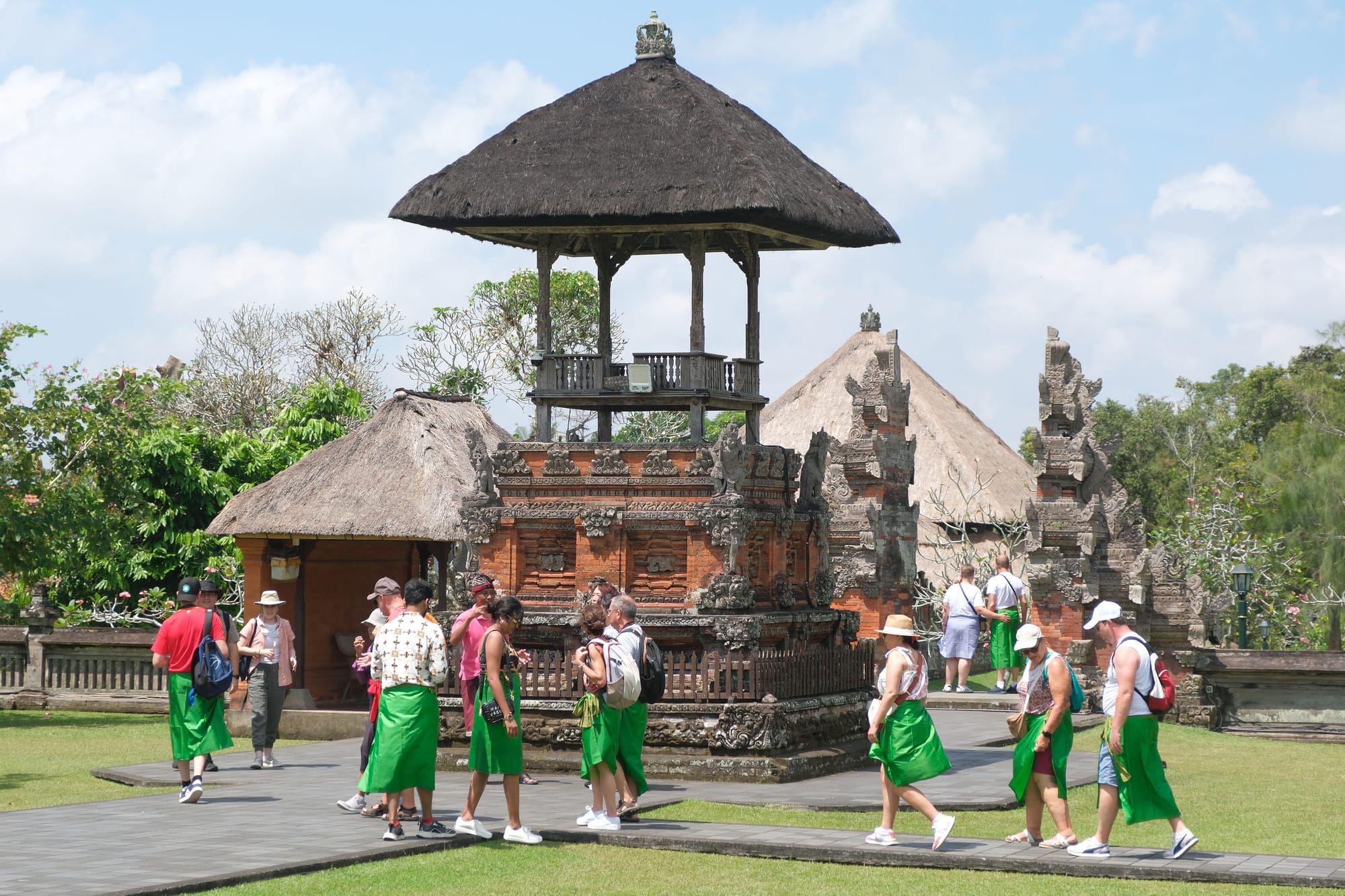
The majority of tourists still choose Bali as the main destination. A total of 697,107 tourists were recorded visiting the Island of the Gods in July 2025, the highest during 2025. This number increased compared to the previous month, namely 637,868 people in June 2025.
Deputy Chairman of the Indonesian Hotel and Restaurant Association (PHRI) Bali I Gusti Agung Rai Suryawijaya said, this demonstration brought its own blessings because Bali became the main destination and was considered a safe place.
During the protests, many domestic tourists, especially from Jakarta, flew to Bali to calm down.
During the protests, many domestic tourists, especially from Jakarta, flew to Bali to calm down.
"Many hotels and restaurants have been booked, Bali is still a favorite place to escape for a moment," he told SUAR in Jakarta (2/9/2025).
The simultaneous demonstrations in several cities such as Jakarta, Makassar, Bandung, Yogyakarta, and Papua had led to chaos. Actions of arson and looting in several places made a number of countries such as Australia, the United States, Singapore, Canada and the United Kingdom issue travel warnings to visit Indonesia.
The Jakarta Provincial Government has even issued a work from home (WFH) policy. As a result, many domestic tourists from Jakarta have chosen Bali as an escape from the demonstrations.
The policy is expected to make foreign tourists afraid and hesitant to visit Indonesia.
However, this is not fully proven. According to Suryawijaya, foreign tourists continue to visit Bali, even though they have seen news of demonstrations on social media and television.
"They consider Bali safer and calmer," Suryawijaya said.
BPS Deputy for Distribution and Services Statistics, Pudji Ismartini, revealed that Malaysia is still the largest contributor of foreign tourists, with a contribution of 14.32% of total visits.
"The most foreign tourist visits are made by Malaysian tourists," Pudji said in a virtual press conference (1/9).
However, two other countries recorded significant monthly growth. First, tourists from Australia with a contribution of 11.69% and an increase of 12.33% month to month. Second, foreign tourists from China.
Safe and conducive
Bali Governor Wayan Koster then distributed leaflets stating that Bali remains safe to visit.
He said that the demonstrations in Bali had ended and were managed well together with the help of the security forces as well as the support and active role of religious assemblies, traditional villages, pecalang, and all components of society.
"All activities of the Balinese people are normal as usual and he emphasized that Bali is safe, conducive and peaceful," Koster said in a statement received by SUAR.
He invited all tourists from all countries and domestic tourists to visit Bali, enjoy the natural beauty, as well as the diversity and uniqueness of Balinese culture.
BPS noted that I Gusti Ngurah Rai International Airport, Bali, became the main entry point for foreign tourists, especially for Australian tourists. This increase was triggered by the winter school holidays in Australia.
Cumulatively, from January to July 2025, total foreign tourist arrivals reached 8.53 million, an increase of 10.04% compared to the same period last year of 7.75 million visits.
However, this situation was not felt by entrepreneurs in Yogyakarta, which was also the center of the demonstration. Agus, 39, a vehicle rental businessman from Yogyakarta, said that Yogyakarta's post-demo conditions had returned to safety and conducive, but rental car bookings were slightly reduced.
Before the demo, rental car bookings were usually quite stable. Many foreign or domestic tourists come directly to the location. Post-demo, bookings are still there, but not as many as normal days.
"A little less people are renting cars, maybe next week it will stabilize again," he told SUAR in Jakarta (2/9).
Strategy to increase visits
Tourism observer I Putu Anom said that the main factors that tourists look for when traveling are comfort and safety. If one of these factors is missing or defective, then the tourism sector can slow down.
The demonstrations that have occurred in recent weeks can indeed affect the tourism sector. The key to getting back up is how the security forces work and make the situation conducive again.
Strong coordination is needed between business actors and the government to re-inform that the country's conditions are safe, the aim is to attract tourists.
Reported by Antaranews, tourism observer Rioberto Sidauruk stated that a national strategy is needed to restore tourism based on five main pillars:
- First, security should be integrated with visible patrols in key destinations, safe zones for travelers at airports, ports, and hotels, and the provision of real-time digital applications for security information and safe routes.
- Second, the rehabilitation of damaged facilities, from Transjakarta bus stops to museums, must be accelerated through central government coordination.
- Third, proactive public communication is essential to rebuilding traveler trust.
- Fourth, diversification of cultural attractions and events, including hybrid virtual tourism and micro-experiences, can encourage tourist visits without the risk of crowds.
- Fifth, the involvement of local communities, traditional leaders and religious leaders is the foundation of an effective mitigation strategy.
Rioberto emphasized that recovery is not only about repairing physical infrastructure, but also about rebuilding a sense of security and a positive image.
"The confidence of the international public will largely depend on how quickly governments, industry players, and local communities show solidarity and preparedness for the crisis," Rioberto said.