
Indonesia is entering a crucial phase in the management of its energy sector. The country is blessed with abundant natural resources, particularly coal and renewable energy, but on the other hand faces global pressure to reduce emissions and demands for a just energy transition.
Chief Executive Officer (CEO) of the Institute for Essential Services Reform (IESR), Fabby Tumiwa, highlighted Indonesia's dominant position in global coal exploration. Of the total global exploration of around 1.1 billion tons, Indonesia contributes 529 million tons or nearly 40%.
"Coal remains the backbone of national energy security, but it is also a source of long-term emissions risk if not managed carefully," said Fabby in Indonesia's Energy Outlook 2026: Independence, Affordability, and Sustainability, Friday (9/1/2026).
The main challenge, according to Fabby, is not simply the existence of coal, but rather the direction of derivative policies, including the gasification of coal into DME, methanol, and the use of carbon capture and storage (CCS) technology.
Without the right policy design and incentives, investment in fossil fuel infrastructure risks locking Indonesia into high emissions in the future.
"Once Indonesia has built high-emission energy assets, the cost of exiting that system will be very expensive," he said.
Meanwhile, energy observer, ICEF member, and Chair of the Indonesian Engineers Association's Chemistry Professional Board (BKK PII) Sripeni Inten Cahyani believes that Indonesia's challenge is not a lack of policy, given that the country has ratified the Paris Agreement and has a National Energy Policy and derivative regulations, but rather execution.
Obstacles in the field arise due to regulatory uncertainty, differences in perception between institutions, and excessive caution in decision-making.
In terms of resources, Indonesia has enormous potential. Solar, geothermal, hydro, and biomass energy are widely available, but two-thirds of the country remains untapped. Although solar power efficiency at the equator is still only 17-20%, technology is expected to continue to reduce costs and improve performance.
Indonesia's success in developing biodiesel is an example of consistent and gradual policy. The mandatory biodiesel program started with low blends up to B40, supported by clear regulations, industry readiness, and monitoring of the impact on consumers and the transportation sector.
In the future, the utilization of palm oil and its derivatives, including the production of methanol and petrochemical raw materials, is considered to increase added value, reduce imports, and strengthen energy security.
The members of the National Energy Council 2026–2030 also emphasized that energy transition cannot be separated from the development of supporting systems such as electricity grids, transmission, and energy storage. The intermittency of renewable energy, such as solar and wind, is not a major obstacle if supported by storage technology, both pumped storage and batteries, which are now more affordable.
Fabby and Sripeni agreed that Indonesia's future energy policy must balance three agendas, namely energy security, independence, and sovereignty.
The government has sent a political signal through the 2025–2029 National Medium-Term Development Plan (RPJMN). The next challenges are the courage to execute, policy consistency, and collaboration between the government, industry, and society.
Strong Commitment, Execution Remains a Weak Point
Similarly, Zainal Arifin, Assistant Professor at the PLN Institute of Technology, emphasized that Indonesia's commitment to formal energy transition is already strong. Various policies, energy mix targets, and emission reduction commitments have been established. However, the fundamental issue is implementation and consistency in execution.
"Our execution is actually good on paper, but many energy projects cannot be treated as economically attractive projects for investors or the public," said Zainal.
He cited low economic incentives and regulatory uncertainty as factors hindering the development of clean energy projects.
Zainal emphasized four factors that must work together: political policy, market structure and pricing, the role of the business world, and community participation. Without synergy, the potential of national energy risks going untapped. He also highlighted the importance of the state's courage in building infrastructure that is actually used.
"We must not only build, but also ensure that the infrastructure is used and integrated with the system," Zainal emphasized.
Slow decision-making processes result in lost investment opportunities and jobs.
Fabby added that Indonesia's energy transition challenges are also related to the design of the electricity system and regulatory readiness. Many policies do not yet provide space for consumers and businesses to play an active role.
He cited the example of industries that want to install large rooftop solar power plants, but are restricted by regulations on exporting electricity to the PLN grid. As a result, industrial expansion has stalled and even prompted the relocation of investment to other countries.
"This is not just about technology. Today, battery technology, storage systems, and intermittency management have developed and become increasingly affordable," said Fabby.
Consumers can now be part of the energy system solution through distributed batteries and load management, but regulatory certainty and consistent policy signals are still needed.
B50: Opportunities and Risks
The trial plan for B50, a blend of diesel and biodiesel from 50% palm oil, is scheduled to be completed in the first half of 2026, with implementation in the second half of 2026.
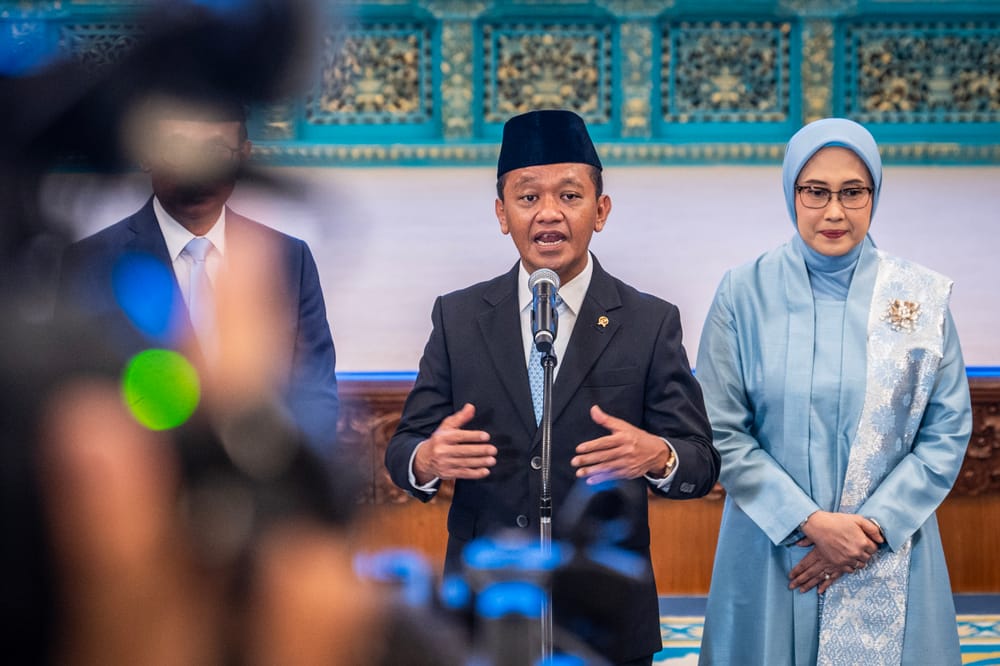
The Minister of Energy and Mineral Resources (ESDM), Bahlil Lahadalia, stated that the implementation of B40 alone could reduce diesel imports by up to 5 million tons by 2025. If it increases to B50, Indonesia has the potential to be free of diesel imports. Bahlil estimates foreign exchange savings of Rp 130.21 trillion and a reduction in GHG emissions of 38.88 million tons of CO2e due to B40.
"If successful, we can move on to B50. That way, we will no longer need to import diesel fuel in 2026," said Bahlil at an ESDM press conference.
However, Fabby reminded that B50 has trade-offs. If CPO productivity does not increase, all related industries will be affected.
"The production of Fatty Acid Methyl Ester (FAME) is more expensive than fuel, especially now that fuel prices are low, while CPO prices remain high," he said. The higher the biodiesel blend, the higher the cost. Subsidies have been financed by the Plantation Fund Management Agency (BPDP) from CPO export levies.
"Are BPDPKS funds (formerly BPDP) sufficient for B50, especially with the decline in fuel prices?" asked Fabby.
In addition, the potential for global oil prices to fall, as predicted to reach $50 per barrel in 2027, could increase the burden of government subsidies. As a result, the budget deficit will increase and must be covered by debt, which will ultimately be borne by the public through taxes.
Fabby considers B50 to be better in terms of slogans, while the budget should be diverted to the development of new and renewable energy (EBT). He emphasized the cost of post-disaster reconstruction in Sumatra as an additional factor.
EBT and Foreign Investment
To achieve its target of 8 percent economic growth by 2029, Indonesia needs to attract foreign investment. Investors now prefer countries with clean and renewable energy. However, Indonesia's renewable energy mix is still low, and GHG emissions are high due to its dependence on coal-fired power plants. Clean energy barriers discourage investors from entering the country, even though the industry needs to expand. Fabby cited the case of rooftop solar power plants, where limited permits from PLN have caused the industry to delay expansion or move to other countries, such as the Philippines.
The losses from reluctance to invest abroad are enormous: lost potential for economic growth, foreign exchange, and job opportunities. Fabby recommends that the government simplify the licensing process for rooftop solar power plants, while still considering system reliability. He emphasizes the concept of a "shared economy" in the energy transition, whereby consumers are able to participate in the use of clean energy in accordance with regulations.
"There are many solutions and plans, but execution still haunts us," said Fabby.