
Indonesia is turning its attention to Africa as a new export frontier, seeking to cushion the impact of reciprocal tariffs imposed by the United States and reduce reliance on traditional Western markets.
With an estimated population of 1.3 billion, about 16% of the world’s population, the African continent is already as large a market as China and continues to grow rapidly.
Minister of Trade Budi Santoso said that Indonesia has long relied on the American and European markets. Yet, many African countries have stable economic growth and are open to imports. Several potential target countries include South Africa, Kenya, Morocco, and Egypt.
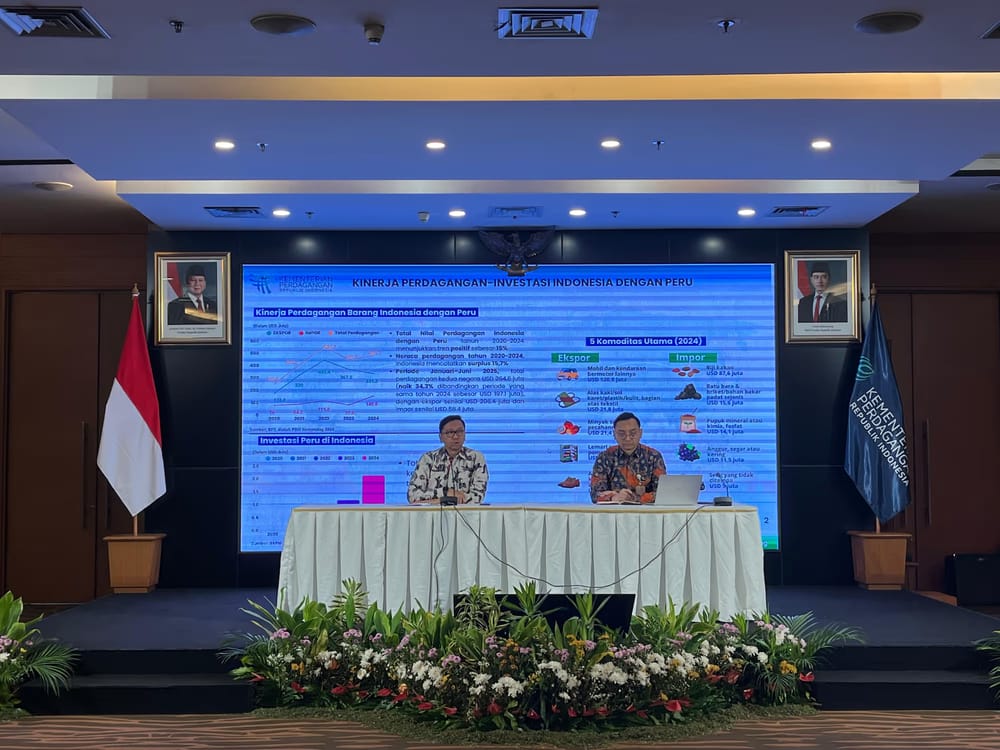
After successfully concluding trade negotiations with Peru, the government is ready to engage in talks with African nations. South Africa has already expressed interest in conducting bilateral negotiations with Indonesia.
“We have already begun negotiations, starting with studying the country’s profile,” Budi said at the “Jakarta Muslim Fashion Week 2026” event in Jakarta, Wednesday (August 13, 2025).
Interestingly, the African market continues to expand. According to UN projections, Africa’s population could reach 2.49 billion by 2050—around 26% of the world’s total—and grow further to 4.28 billion by 2100, or about 39% of the global population. This positions Africa as a strategic opportunity for Indonesia to strengthen diplomatic ties, build economic cooperation, and expand trade and investment relations.
Citing data from the Ministry of Trade, Indonesia’s largest export destination in Africa is Egypt. From January to June 2025, Indonesia’s non-oil and gas exports to Egypt reached USD 967.8 million (Rp 15.66 trillion). However, this figure accounts for only 0.75% of Indonesia’s total national exports.
Indonesia Concludes Three Trade Agreements
Director General of International Trade Negotiations (DG ITN) at the Ministry of Trade, Djatmiko Bris Witjaksono, stated that Indonesia has completed three trade agreements—with Canada, Eurasia, and Tunisia.
The Indonesia-Canada Comprehensive Economic Partnership Agreement (ICA-CEPA), the Indonesia–Eurasian Economic Union Free Trade Agreement (I–EAEU FTA), and the Indonesia-Tunisia Preferential Trade Agreement (IT-PTA) have been finalized, though not yet signed.
Tunisia holds an important role, as it serves as a gateway to North African markets, including Morocco, Libya, and Egypt.
Djatmiko also noted that Indonesia is in the final stages of concluding the Indonesia–European Union Comprehensive Economic Partnership Agreement (IEU-CEPA), which he hopes can be finalized within the coming weeks.
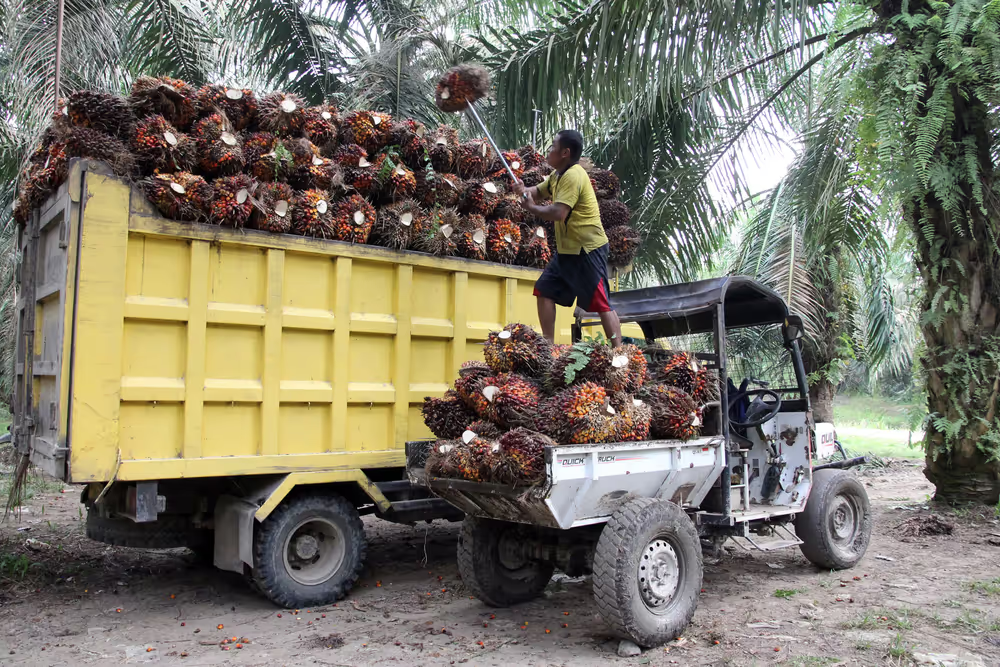
Chairman of the Indonesian Palm Oil Association (Gapki), Eddy Martono, remarked that the African market is quite attractive and rapidly growing. It is no surprise, then, that Gapki is exploring potential market opportunities in Africa.
Currently, Indonesia’s largest CPO (crude palm oil) export destinations are still India and China. As long as the global economy remains stable, India and China will continue to dominate. However, should global economic conditions negatively impact those countries, Gapki is prepared to shift its CPO export markets toward Africa.
“We are still closely monitoring global economic developments, but Africa is already on our radar,” Eddy told SUAR (August 17).
Indonesia’s crude palm oil (CPO) export performance itself declined by 3.08% throughout January–April 2025. Based on Gapki’s data, by April 2025 total CPO exports fell from 9.715 million tons in the same period last year to 9.416 million tons this year.
The steepest decline was recorded in the Indian market, dropping by 1.055 million tons or 68%, followed by the European Union down 818,000 tons (-62%), China down 746,000 tons (-62%), and Pakistan down 385,000 tons (-42%).
Alternative Markets
Economist from the Institute for Development of Economics and Finance (Indef), Fadhil Hasan, assessed that the African market holds tremendous potential as an alternative export destination for Indonesia—particularly as an entry point for the first exports of national manufactured products, before expanding to traditional export markets such as the United States, the European Union, or China.
Although Africa’s purchasing power is still far below that of traditional export markets, it is highly promising in terms of market growth, trade competition, and trade barriers.