Savers, please be patient. The Deposit Insurance Corporation (LPS) followed Bank Indonesia (BI), which on Thursday last week lowered its benchmark interest rate (BI Rate) by 25 basis points (bps).
On Monday (22/9/2025), LPS decided to lower the guarantee interest rate (TBP) by 25 bps. Namely, to 3.50% for rupiah deposits at commercial banks.
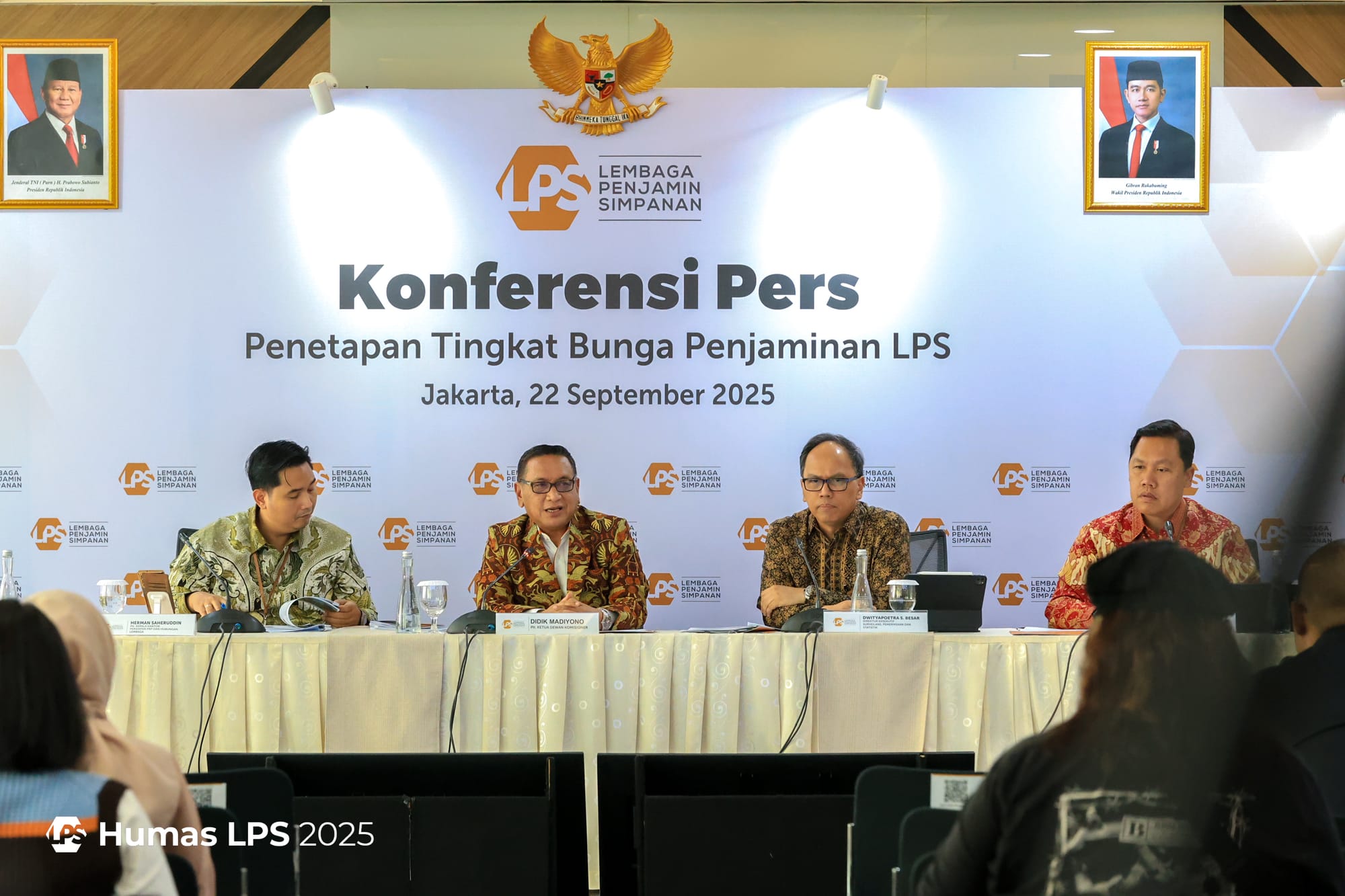
The decision was conveyed by Plt. Chairman of the LPS Board of Commissioners, Didik Madiyono, during a press conference held on Monday (22/9/2025).
"The Deposit Insurance Corporation has decided to lower the interest rate on rupiah deposits in commercial banks and community banks, as well as the interest rate on foreign currency loans in commercial banks, by 25 basis points," Didik explained.
Currently, the lending rate for rupiah deposits at commercial banks is at 3.50%, foreign exchange (forex) deposits at commercial banks at 2.00%, and rupiah deposits at rural banks (BPR) at 6.00%.
This step was taken by LPS following the policy of Bank Indonesia (BI) which has aggressively reduced its benchmark interest rate or BI Rate five times this year to 4.75%.
The guarantee interest rate will apply from October 1, 2025 to January 31, 2026. This determination is also the third time made by LPS this year.
"This guarantee interest rate will be evaluated periodically and is open to adjustment at any time in the event of significant changes in economic, banking and financial market conditions," Didik said.
The establishment of this TBP is based on the domestic economic performance which is still relatively maintained, but needs to be strengthened, especially from the consumption and production sides in a more balanced manner.
"Other factors, banking intermediation performance remains positive supported by resilience in terms of adequate capital and liquidity, the banking intermediation function is maintained, as of August 2025, bank credit grew by 7.56% year on year (YoY)," he said.
Capital resilience is also said to be relatively maintained. Likewise, industry liquidity conditions are still relatively adequate and have the potential to improve in line with the accommodative monetary side and expansion of government spending.
The banking industry's minimum capital adequacy ratio (CAR) was also maintained at 25.88% in July 2025. Liquidity conditions are still relatively adequate with the AL/NCD ratio (liquidity tools to non-core deposits) at 120.24%, where the threshold is 50%. The AL/DPK ratio (liquidity tools to third party funds) amounted to 27.25%, where the threshold is 10%.
 Benedictus Krisna Yogatama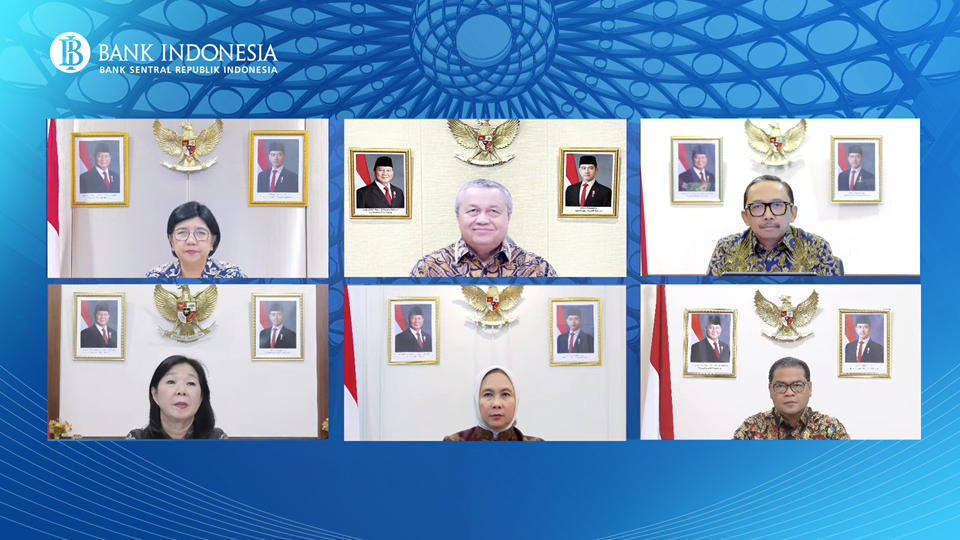
For information, the level of coverage of customer deposit guarantees is regulated in the LPS Law, which states a minimum limit of 90% of a bank's total customers. Based on data obtained in August 2025, the number of commercial bank customer accounts whose deposits are guaranteed reached 99.94% of the total accounts or equivalent to 651,582,625 accounts.
"Meanwhile, the number of customer accounts whose deposits are guaranteed, in BPR and BPR syariah, reaches 99.97% of the total accounts or equivalent to 15,786,434 accounts," Didik explained.
On this occasion, Didik also appealed to banks to remain transparent and open to their customers or prospective customers. They must inform the amount of the current loan interest rate.
"This is done, among others, through the placement of information on the guarantee interest rate at bank offices, areas that are easily known to customers, information media, and all communication channels including digital applications owned by banks," he appealed.
Has not yet answered the problem
Senior economist and Associate Faculty of the Indonesian Banking Development Institute (LPPI) Ryan Kiryanto welcomed the steps taken by LPS in reducing the guarantee interest rate. However, the reduction in TBP is considered unable to solve the problems faced by entrepreneurs and the banking world today.
"The increase in the supply side is good. BI has also contributed to lowering the benchmark interest rate, that's the supply side. OJK issued UMKM incentives, that's all supply side," said Ryan.
Starting from the decline in the BI Rate, LPS Rate, or the distribution of Rp 200 trillion in funds from the government to banks, is considered a step to accelerate economic growth from the supply side.
However, Ryan also highlighted the importance of paying attention to the economy from the demand side. He reminded that entrepreneurs or investors must be made comfortable and safe, in addition to facilitating the lending side of the bank.
"The pro-growth fiscal and monetary policies must also be balanced with the creation of an economic and business investment climate that is investor-friendly and entrepreneur-friendly. So, the demand side must also be worked on," he said.
The reduction in the benchmark interest rate from Bank Indonesia and also the guarantee interest rate from LPS is considered to have not solved the real problems in the real sector.
"If you want to lower it (LPS Rate), it's even better, but that doesn't solve the problem. Government affairs have not been completed, the real sector affairs were resolved first, that was the feeling of comfort and security of entrepreneurs," he concluded.
Bank Permata Chief Economist Josua Pardede said that the decline in benchmark interest rates expanded banks' space to reduce funding and lending rates, but the transmission was still restrained by internal bank factors. The base lending rate (SBDK) in July 2025 was still 9.23% because the overhead cost component rose and the bank's profit margin was also raised to maintain profitability, while the cost of funds (HPDK) was relatively flat.
"This explains why retail lending rates have fallen slowly even though policies have been relaxed," he said Monday (22/9/2025).
BI also noted that the decline in bank interest rates throughout 2025 was very slow. Namely, 1-month deposits have only fallen by around 16 bps and average lending rates have only fallen by 7 bps, even though the BI Rate has fallen by 125 bps. Therefore, BI emphasized that banks need to accelerate the decline in deposit and credit interest rates so that the intermediary function strengthens.
LPS's decision to lower the guarantee rate by 25 bps will help ease the "interest war" on expensive funds as the benchmark guaranteed interest rate falls. In practical terms, banks will be encouraged to normalize the special rate of jumbo depositors to stay within the guaranteed corridor. Thus, the cost of funds will gradually fall and pave the way to cut lending rates further.
The initial impact on banks that lower their lending rates faster than their funding rates is likely to pressure margins for a while. However, as deposits repricing, margins tend to stabilize again. Moreover, system liquidity is still loose and provisioning expenses are under control (gross NPL is around 2.28% and net NPL is 0.86%).
Going forward, the impact on growth will depend on three things. First, the speed at which banks reduce deposit and lending rates (BI has signaled strongly to accelerate).
Second, credit absorption by priority sectors driven by ministries/agencies and the prospect of government spending in semester II. Third, the maintenance of low inflation so that real interest remains positive despite the decline in nominal interest.
With this synergy, BI expects 2025 credit to rise to 8%-11% YoY, and 2025 economic growth to be above the midpoint of the 4.6%-5.4% range.
BCA EVP Corporate Communication & Social Responsibility Hera F. Haryn said that in determining deposit interest rates, BCA always pays close attention to the future development of the benchmark interest rate, other macroeconomic parameters, the market situation including existing demand and supply, as well as the liquidity conditions of banks both in terms of loans and deposits.
BCA expects its overall cost of funds to be relatively manageable this year, as its core funding from current accounts and savings (CASA) continues to grow positively.
As of June 2025, CASA grew 7.3% YoY to reach Rp982 trillion, or around 82.5% of total deposits. CASA funds became the main contributor to BCA's funding in line with the continuous increase in transactions. In the first semester of 2025, the total frequency of transactions processed by BCA grew 17% YoY.
Going forward, BCA is committed to continuing to encourage lending to various segments and sectors while maintaining the bank's prudent principles and implementing disciplined risk management.
Report: Gema Dzikri Harisma