

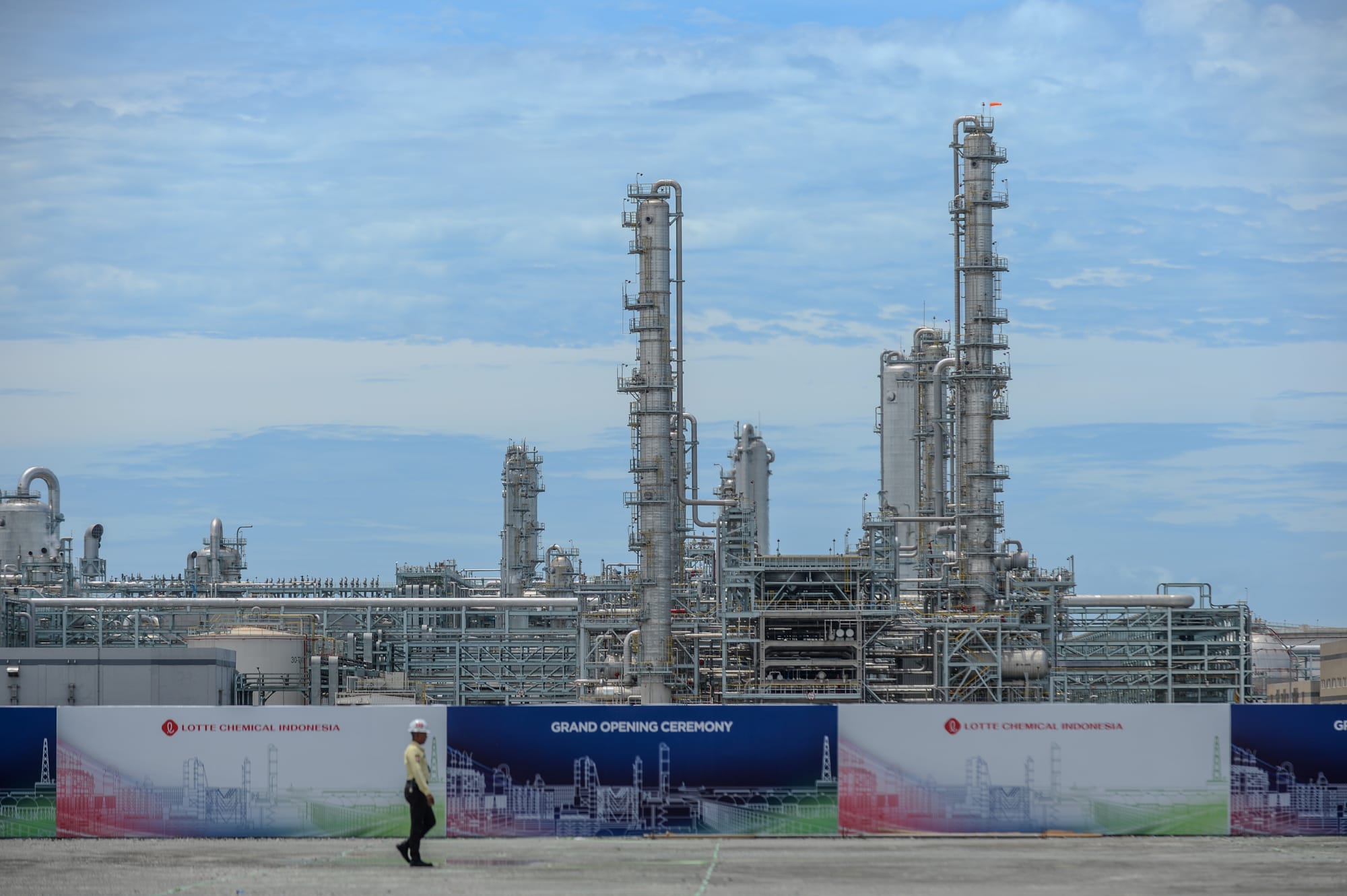
Indonesia's Investment Cost or known as Incremental Capital Output Ratio (ICOR) is still high, if this condition continues, it will have an impact on reducing industrial competitiveness and can hamper economic growth.
Data from the Central Statistics Agency (BPS) noted that Indonesia's ICOR score at the end of 2023 was at the level of 6.33. This figure reflects the high investment required to produce one additional unit of economic growth output.
Indonesia's ICOR cost is higher than India's which reached 4.56 and Vietnam's at 3.58. This means that Indonesia needs an additional investment of Rp6.33 to create an additional output to Gross Domestic Product (GDP) of Rp1. Meanwhile, India is only Rp4.56 and Vietnam is only Rp3.58. A smaller ICOR number shows the efficiency and effectiveness of an investment in a country.
Chairman of the Manpower Division of the Indonesian Employers Association (Apindo) Bob Azam said ICOR is one of the parameters to measure investment efficiency in driving economic growth.
In addition, ICOR also aims to support development planning, the government uses ICOR data as input for regional development planning. By knowing ICOR, the government can create more targeted budgets and investment targets.
"ICOR is used to assess the effectiveness and impact of ongoing development programs. This helps the government ensure that the investment disbursed provides optimal results," he said when met at the "Apindo Media Briefing" in Jakarta (25/11/2025).
Bob said several factors that caused Indonesia's high ICOR costs were bureaucratic problems, complicated licensing and inefficient bureaucracy that added costs and slowed down the investment process.
Expensive logistics costs, especially for inter-island distribution of goods, are an additional burden for businesses, legal and regulatory issues where discrepancies between central and regional regulations create legal uncertainty.
"Low productivity levels generally contribute to high ICOR," he said.
Strategies to Lower ICOR Costs
To lower ICOR costs, steps can be taken to improve the ease of doing business through bureaucratic reforms and eliminating illegal levies, as well as adopting digital technologies such as Artificial Intelligence (AI) and automation in productive sectors such as agriculture and manufacturing.
The government is preparing a number of strategic steps to reduce the ICOR value, which has been a challenge in encouraging the efficiency of national economic growth.
Ferry Irawan, Deputy for Coordination of Management and Business Development of State-Owned Enterprises at the Coordinating Ministry for Economic Affairs, said that the government's current efforts are focused on increasing the productivity of infrastructure investments that have been made over the past decade.
One of the focuses is to encourage the optimization of Special Economic Zones (SEZs). So far, there have been 25 SEZs that have been inaugurated in Indonesia.
"The government will focus on encouraging infrastructure investment so that ICOR costs become lower," he said in a press release received by SUAR in Jakarta (25/11/2025).
Meanwhile, Coordinating Minister for Economic Affairs Airlangga Hartarto targets a reduction in ICOR value to around 4 by 2028.
He emphasized that the effectiveness of investment is important to spur economic growth of up to 8 percent. This can be achieved if the government ensures that all economic 'engines' including investment, consumption, government spending, and exports run optimally.
Airlangga gave an example of other countries such as Vietnam that managed to reduce ICOR to around 4 so that they were able to achieve economic growth above 7 percent per year without relying on natural resources.
Structural Reform and Infrastructure Development
Indef Executive Director Esther Sri Astuti said the policy to reduce ICOR (Incremental Capital Output Ratio) focuses on increasing investment efficiency through structural reforms, better infrastructure development, and investment that focuses on sectors that can create many jobs. The strategies include policy reforms, inter-agency cooperation, development of the tourism sector and digital economy, as well as improving the quality of investment.
Read also:
 Benedictus Krisna Yogatama
Structural policy reforms by encouraging investment efficiency and strengthening the competitiveness of productive sectors. Quality infrastructure development by building efficient and quality infrastructure to encourage better economic growth.
"Involving private participation in infrastructure projects to reduce ICOR and strengthen sectors that can create jobs, such as tourism, because it has broad linkages with many other business fields," he told SUAR in Jakarta (28/11).
ICOR costs can come down by developing the digital economy as a key to achieving higher economic growth.
Use statistical data to analyze and ensure that any infrastructure spending has an optimal impact on economic growth.
Causes of Vietnam's low ICOR
Esther said Vietnam is a country in Asean that has low ICOR costs because Vietnam is able to carry out bureaucratic reforms, currently Vietnam's ICOR costs are at the level of 3.58.
The Vietnamese government has consistently carried out institutional reforms, strengthened the rule of law, and reduced transaction costs and illegal levies, which have had a positive impact on investment attractiveness.
"These reform measures aim to improve the ease of doing business ranking and reduce investment barriers," he said.
Vietnam's economic development strategy is also supported by a leading manufacturing sector as the main driver of the economy.