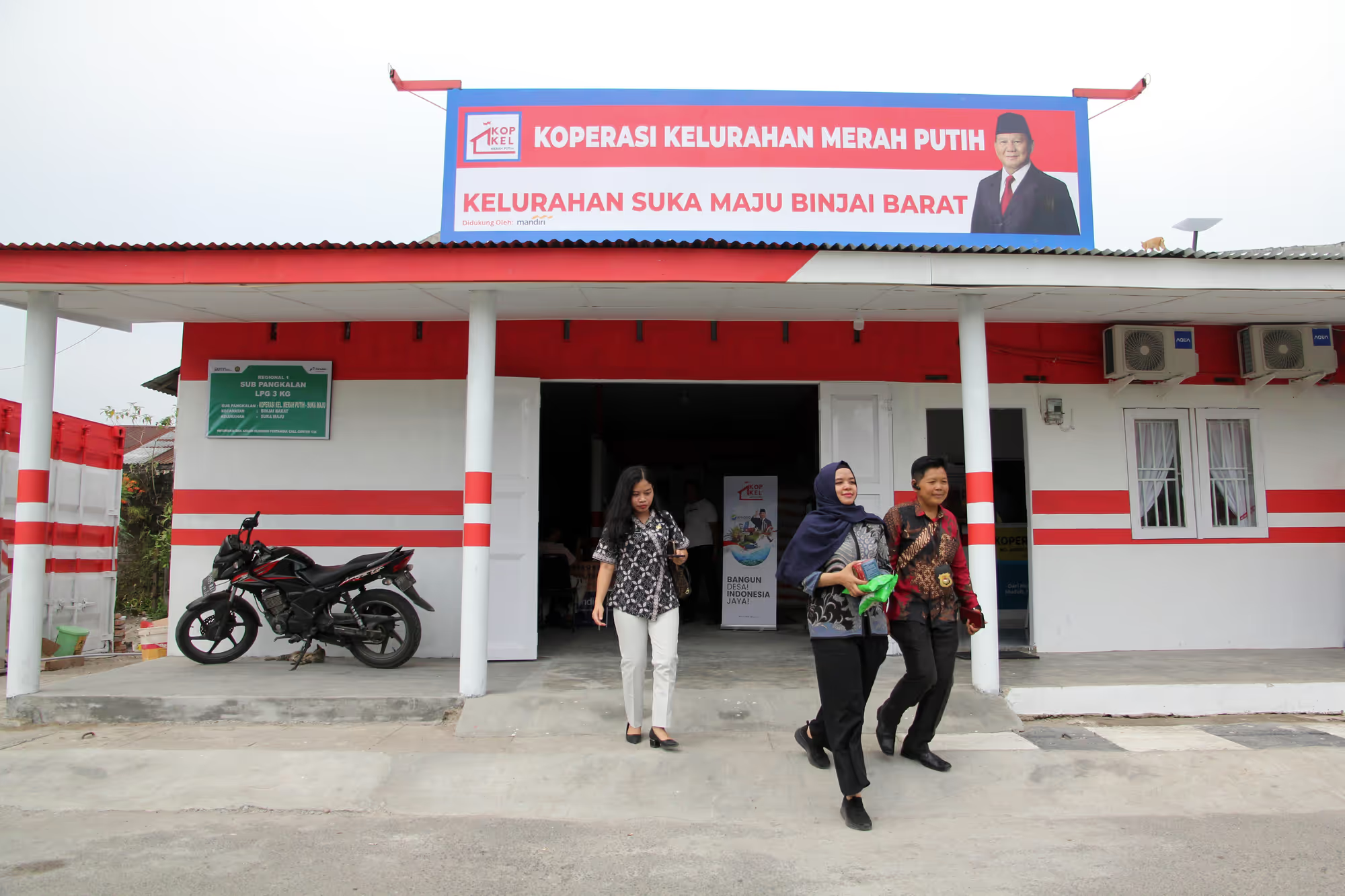
To ensure the success of the Village Cooperative Merah Putih (KDMP) program, the government has instructed the State-Owned Banks Association (Himbara) to participate in financing. Is this an opportunity to boost bank lending, or could it instead raise the risk of bad loans?
Deputy Minister of Cooperatives and Coordinator of the KDMP Acceleration Task Force, Ferry Juliantono, explained that initial cooperative financing will be distributed through a special People’s Business Credit (KUR) scheme with a ceiling of up to Rp3 billion per cooperative.
The loans carry an interest rate of 6%, with tenors of six years for working capital and 10 years for investment. The government has also proposed a six-month grace period to give cooperatives space to adapt in their initial operational phase.
“The Minister of Finance Regulation (PMK) is currently being finalized at the Finance Ministry. We have also completed technical guidelines for the operation of village pharmacies and clinics. Soon, the Ministry of Energy and Mineral Resources will also issue regulations on the distribution of 3-kg LPG cylinders,” Ferry said in a press statement on July 15.
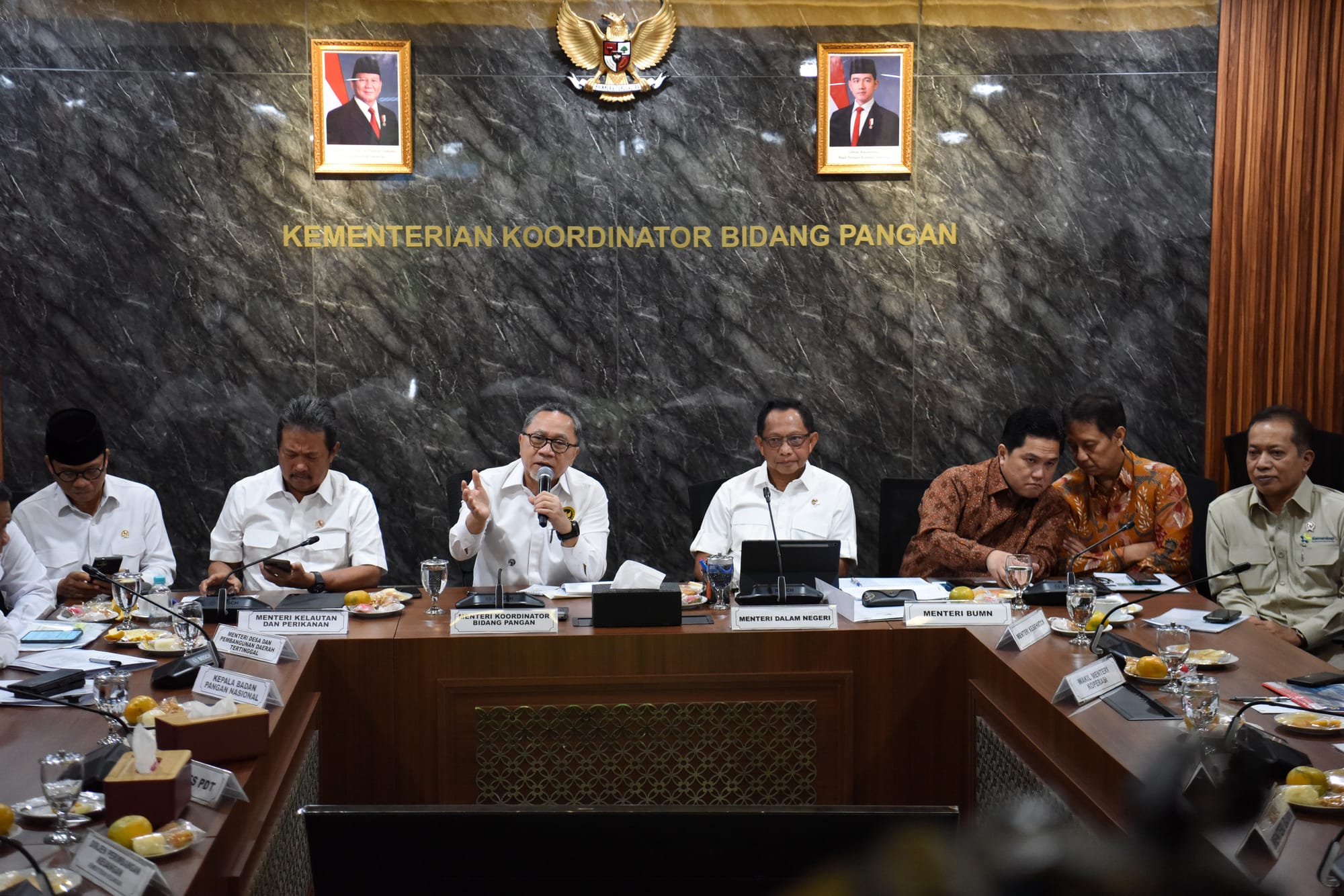
On the financing scheme, Ferry noted that it will involve a tripartite partnership between the cooperative itself, distributors/suppliers, and the lending bank. Cooperatives will apply for financing to Himbara banks or BSI based on their needs, and banks will then assess business feasibility to determine approved funding amounts.
As for the 103 pilot or mockup KDMP cooperatives, he confirmed that all are ready—both in terms of business ecosystems and financing schemes.
Himbara’s Response
As part of Himbara, Bank Mandiri is taking an active role in supporting designated KDMP launch points across Indonesia. The bank has prepared digital financial services such as Mandiri Agen and QRIS, while also ensuring the readiness of physical service infrastructure.
“Cooperative digitalization cannot be separated from infrastructure and system readiness. We are here to ensure cooperatives have modern service channels as well as proper and professional business outlets,” said Bank Mandiri President Director Darmawan Junaidi in Klaten, Central Java, Monday (July 21).
To support the KDMP launch, Bank Mandiri mobilized teams from various business units to accelerate field activation. At KDMP Malangjiwan in Karanganyar and KKMP Banyuanyar in Surakarta, for example, the bank completed building repainting, signage and branding installations, as well as gondola shelving and display cases for cooperative operations.
Internet network strengthening was also carried out to support app-based digital financial services. These efforts were complemented by cooperative management and financial literacy training, which began in late June 2025 and involved thousands of cooperative managers nationwide.
The hybrid training program forms part of broader efforts to accelerate cooperative institutional readiness across Indonesia. Bank Mandiri has also participated in verifying and validating the preparedness of designated cooperatives, working with the KDMP Task Force, technical ministries, and local governments.
This synergy, Darmawan continued, ensures all participating cooperatives have complete legal standing and operational readiness to serve as outlets for basic goods, LPG, financial services, and logistics.
“We fully support the launch of the Merah Putih Village/Urban Cooperative program as part of the government’s effort to strengthen a people-based economy, particularly at the local level. Our role is focused on preparing cooperatives operationally, especially in providing digital financial services and improving basic infrastructure,” Darmawan said.
With a holistic approach encompassing digitalization, training, and infrastructure improvements, Bank Mandiri hopes KDMP can become the backbone of sustainable village economic growth. The long-term commitment aligns with the government’s goal of strengthening the people’s economy through professional, ecosystem-based institutions.
—graphic not available
BRI President Director Hery Gunardi said the KDMP launch by President Prabowo marks an important milestone in building an inclusive and sustainable grassroots economy.
One concrete example of BRI’s commitment to improving financial access in villages is the expansion of AgenBRILink services integrated with cooperatives.
Within the current ecosystem, AgenBRILink has become a strategic partner supporting KDMP operations. As of the first half of 2025, 1.22 million AgenBRILink agents had spread across 67,000 villages nationwide.
This extensive network has become the backbone of BRI’s financial services distribution to rural areas, evolving into a social commerce hub that serves financial transactions while supporting daily economic activities in villages.
The KDMP program itself adopts an integrated “7-in-1 Business Model.” Going forward, partnerships will expand alongside greater collaboration with state-owned enterprises.
To ensure KDMP sustainability, BRI—acting as both agent of development and strategic government partner—has committed to a comprehensive approach covering two main aspects: business support and financial solutions through the One BRI Solution initiative.
First, in business support, BRI assigns Relationship Managers as single points of contact for cooperatives, provides operational assistance for AgenBRILink, and delivers thematic training and digital education platforms to strengthen cooperative institutional capacity.
Second, through One Solution, BRI provides access to business and investment financing, promotes cooperatives as formal financial service providers through AgenBRILink, and offers Qlola by BRI, an integrated financial management platform to support cooperative efficiency.
These approaches have already been implemented in active KDMP sites such as KDMP Hambalang (Bogor, West Java), KDMP Bumisari (South Lampung), KDMP Cileunyi Wetan, KDMP Cangkuang Wetan (Bandung, West Java), and KDMP Pangkah Wetan (Gresik, East Java).
As part of the national rollout, 80,081 KDMP cooperatives have been legally established and are now operational in their respective regions. These cooperatives utilize available village or urban assets, including previously unused facilities, while also optimizing local economic potential to strengthen their role as community economic hubs.
Funding Risks
Suroto, Chairman of the Strategic Socio-Economic Cadres Association (Akses), warned that Himbara’s involvement carries risks. According to him, state-owned banks would not bear the losses in the event of bad loans. Instead, the burden would fall on villages through cuts to Village Fund allocations.
“The use of Village Funds as collateral for bad loans not only shows that state banks are unwilling to absorb losses from reckless government projects, but also highlights that KDMP has not been allocated special funding from the state budget,” he said Saturday (July 26, 2025).
“There is no special allocation from the APBN and no adequate fiscal commitment,” he added.