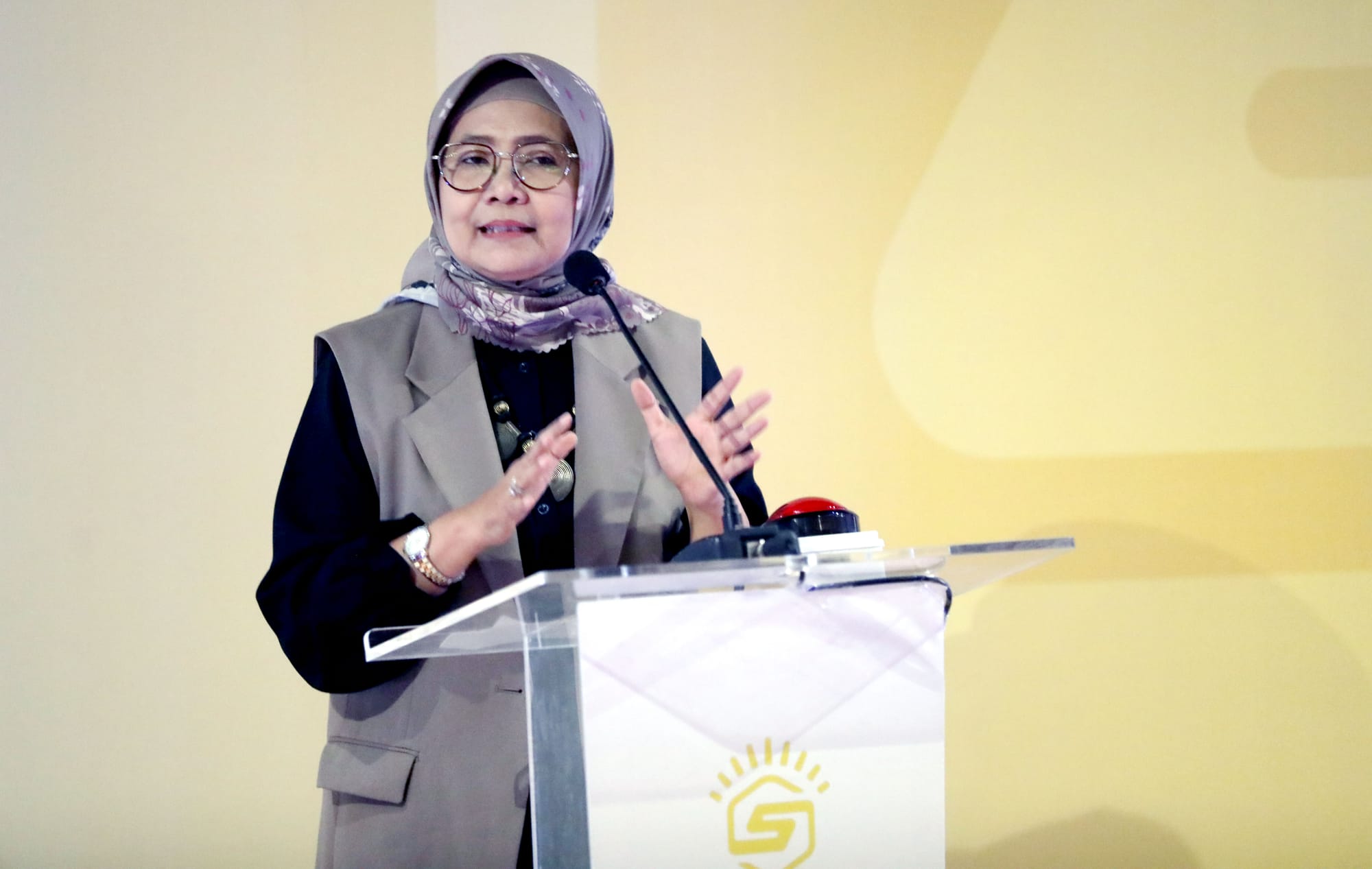
The Free Nutritious Meal Program (MBG) is now in the public spotlight due to the rampant cases of poisoning after school students ate the MBG menu. This condition, which leads to an Extraordinary Event, requires a thorough evaluation so that cases do not spread or recur.
In mid-September, in conjunction with the Universal Survey of the Business World, the SUAR team interviewed senior economist and founder of the Center of Reform on Economics (CORE) Indonesia, Hendri Saparini about the MBG program.
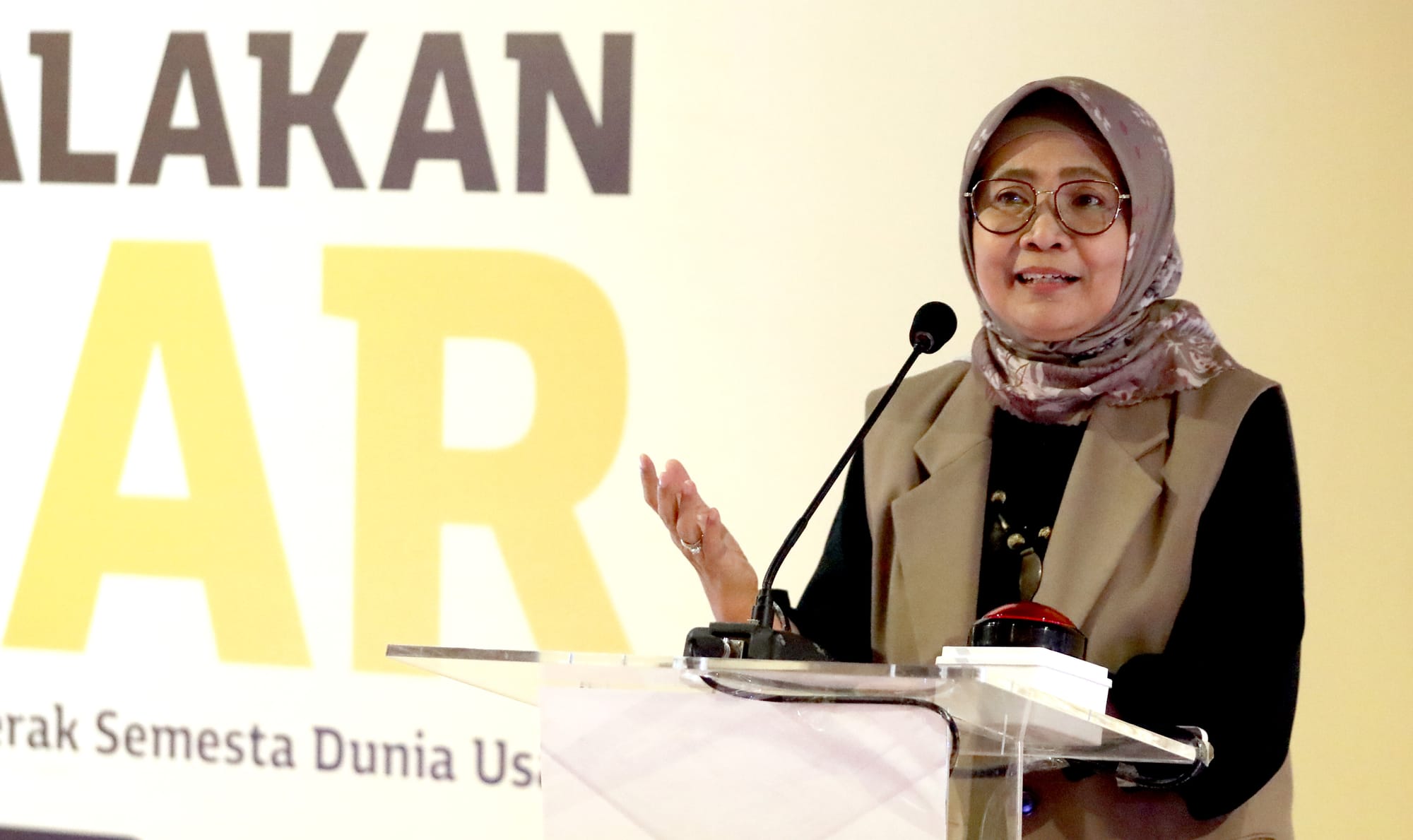
Here's an excerpt from the interview.
"Has the Free Nutritious Meal (MBG) program worked as expected?"
The implementation of the MBG program must be clear on the target. Is it for all children attending school or if it is to improve nutrition, is it given to school children who are malnourished. This clarity will determine whether the implementation is right on target and how the budgeting and evaluation will be carried out.
In order to be targeted and use the budget more efficiently, in many countries' practices, free feeding programs like this are reserved for children in need. Children who are not targeted because they are not in need can join the program by paying.
In Indonesia's current fiscal constraints, the free lunch program should target children in need to improve their nutritional status.
The MBG program should be a 'hub' for other government programs. From food provision to job creation.
"In its implementation, has the provision of food for the MBG program empowered UMKM?"
Assessing MBG cannot be partial. What is also important in the MBG program is to map out who are the parties involved/involved in the implementation. The MBG program must be a 'hub' for other government programs. Starting from providing food ingredients (especially local food), to creating jobs through the development of UMKM and cooperatives, or others. Thus, the MBG program has a hugemultiplier effect.
This is because the MBG program cannot be viewed partially or piecemeal. The issue of providing nutritious food is not only related to health or education programs. It is also related to food programs (agriculture), food processing (industry) with small, medium and large businesses, and job creation.
"What are the main advantages or benefits of the MBG program?"
In addition to improving child nutrition, the provision of free meals will economically increase demand and supply. Thus, the economy will grow from the local to the national level.
Given the large number of actors involved in the MBG program and the wide distribution of targets, the MBG program should be carried out in tiers (decentralized) to really get close to the lower groups or close to the children who are the beneficiaries. Implementation should be at the smallest unit, for example, serving only 150-200 food packages per day. Thus, nutritional quality and food safety are maintained. If the manager handles a very large portion, the risk or difficulty will also be great, in addition to the production costs will also be greater.
"What factors must be considered for this program to work well?"
With many food safety cases such as poisoning occurring in many areas, the MBG program should be evaluated and transformed to emphasize serving a variety of meals closer to the beneficiaries. Thus, risks can be minimized.
If the food provider (Satuan Pelayanan Pemenuhan Gizi or SPPG-red) is very close to the beneficiary school, school children can still receive fresh food. Cut fruit, for example, if the distribution is too far away, the condition of the cut fruit is already very worrying, it is not fresh. The same applies to soupy foods.
In this program, anyone or any party can take part, including the private sector. Parents and teachers at school are no exception. What needs to be underlined is that in every chain of free food distribution, anyone can help implement the MBG program.
It is necessary to map out which schools are eligible and where they are located. Then offer either to the private sector or other social institutions who can help. It could be a stall or canteen near the school. By getting closer to the beneficiaries, the cost or cost of production can be reduced.
Author: Gianie