The holiday season in the second quarter of 2025 was not only a time to unwind - it became a major spark for nationwide economic activity.
“Public mobility increased, as indicated by a rise in rail and sea passengers, in line with National Religious Holidays (HKBN) and the school break,” said Statistics Indonesia (BPS) Deputy for National Accounts and Statistical Analysis Moh Edy Mahmud at a press conference on Tuesday morning (Aug. 5). He was presenting second-quarter 2025 economic growth figures in Jakarta.
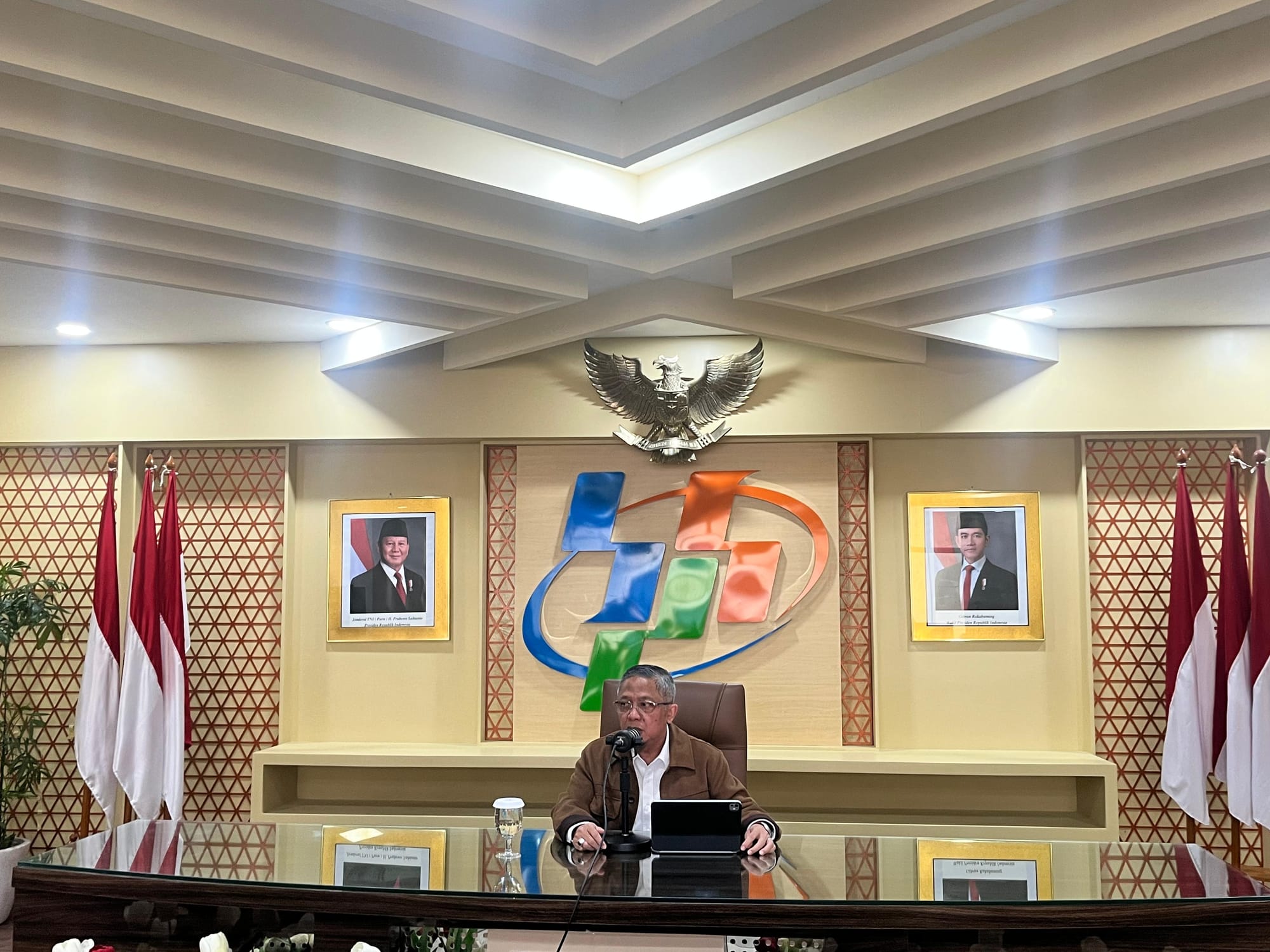
The upswing coincided with HKBN and school holidays. Domestic tourist trips climbed 22.32% year-on-year, while transactions at Jasa Marga toll gates grew 2.86% quarter-on-quarter.
Travelers were not just moving—they were spending, from transport tickets and tour packages to local culinary experiences at their destinations. This mobility funneled household spending across transport, accommodation, and local food and beverage.
“Transport modes such as rail and sea recorded a jump in passenger numbers. On the consumption side, the ‘other services’ category—largely recreation, entertainment, and social activities—saw the highest growth at 11.31%,” Edy said.
The increase in trips fed into Indonesia’s broader growth story: the economy expanded 5.12% year-on-year in Q2 2025.
Beyond tourism, heightened mobility also lifted household consumption and electronic transactions. Online commerce transactions rose 7.55%, while the value of e-money and card payments grew by more than 6%, signaling that people were spending both offline and online.
Spending Boom Led by the Middle Class
This year’s long holiday provided breathing space—and a shopping window—for the middle class, which dominates domestic travel. Household consumption, the largest component of GDP, grew 4.97% year-on-year and accounted for 54.25% of GDP.
“Seasonal factors, especially the number of holidays and religious celebrations, boosted consumption, particularly in travel and accommodation,” said Yusuf Rendy Manilet, an economist at CORE Indonesia, speaking to SUAR (Aug. 5).
Early signs of stronger spending showed up across indicators: the real retail sales index increased 1.19%; imports of consumer goods jumped 7.60%; and the value of electronic transactions—including debit cards, credit cards, and digital wallets—rose 6.26%. Online spending also remained brisk, up 7.55%.
Even so, Yusuf cautioned against reading this as a structural improvement. “Significant challenges remain, particularly ensuring that consumption growth also reaches lower-income groups,” he said.
To date, transport fare discounts and subsidies have largely benefited the middle class—meaning the gains are not yet fully inclusive.
Tourism: a New Engine Warming Up
Tourism continues to power the “other services” sector, which posted the highest year-on-year growth of 11.31% in the second quarter of 2025. Much of this expansion was driven by a surge in domestic and international travel during the holiday period.
In Q2 2025, domestic tourist trips reached 331.37 million, jumping 22.32% from a year earlier. Foreign tourist arrivals also rose 13.96% to 3.89 million.
“Across the first semester, we recorded 113.78 million domestic tourist trips and 7.05 million international arrivals,” Indonesia’s Tourism Minister Widiyanti Putri Wardhana said at a press conference at Graha Sawala, Jakarta.
She noted that the upswing also lifted transportation and warehousing by 8.52%, and accommodation and food-and-beverage by 8.04%.
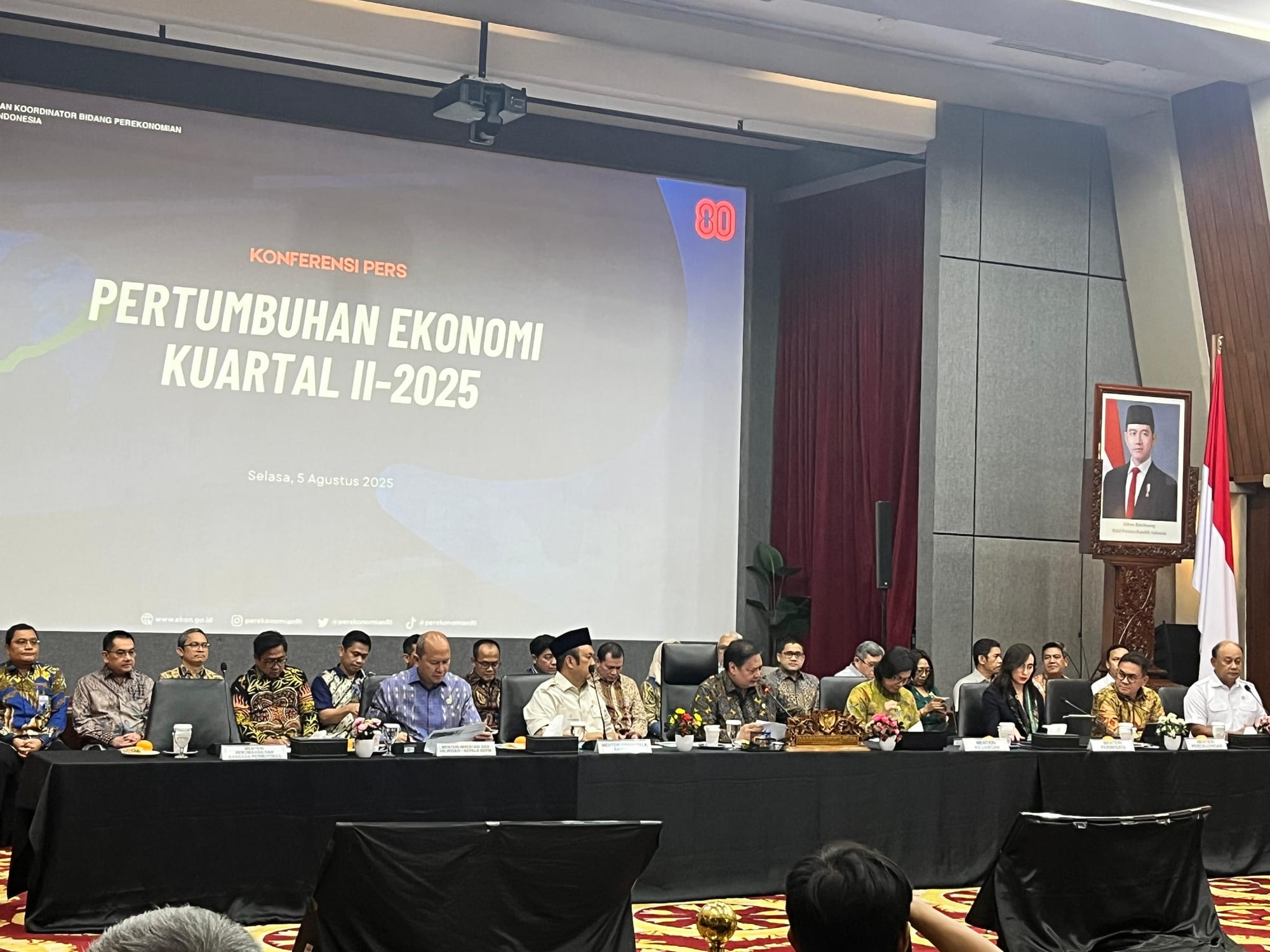
Widiyanti added that the transportation and warehousing sector’s 8.52% growth was supported by discounted fares for air, rail, and other modes, while accommodation and F&B expanded 8.04%, boosted by corporate activities and major events.
The government is moving to capitalize on the momentum. “We have coordinated with the Indonesian Hotel and Restaurant Association (PHRI) to offer attractive holiday packages for the Aug. 18 national holiday and to amplify 58 Karisma Indonesia Festivals through year-end, including the Pacu Jalur Festival in Riau,” she said.
Hotels in several regions, she added, have already logged bookings of up to 80% for the year-end period.
Even so, the potential is not yet fully distributed. According to CORE Indonesia economist Yusuf Rendy, many promising destinations beyond Bali and Lombok still lack adequate transport access. “If access remains difficult, the economic benefits will not be evenly shared,” he said.
Sustaining Momentum After the Holidays
The extended holiday delivered a powerful boost, but keeping that momentum is the next challenge. To make tourism a stronger growth engine, sustained investment is needed in connectivity, the promotion of alternative destinations, and training for the local workforce.
In this context, Gross Fixed Capital Formation (GFCF) rose by a double-digit 11.51%, while government capital expenditure climbed 30.37%—both positive signals.
Tourism Minister Widiyanti Putri Wardhana stressed that the government does not want the energy to fade once the holidays end. Starting in October, a Christmas and New Year 2025–2026 travel campaign will roll out, complete with transport promotions and tour packages designed to spur trips across Indonesia.
“We want to ensure this tourism growth momentum doesn’t stop with the school holidays,” she said.
Indonesia’s economy grew 5.12% in Q2 2025, supported by a surge in mobility and household consumption during the holiday season. Congested toll roads and crowded tourist sites reflected a vibrant economy, though—economists caution—sustainability remains a major challenge ahead.
Indonesian Tourism Industry Association (GIPI) chairman Hariyadi Sukamdani said major religious holidays and long breaks spur consumption and tourism, as people tend to go out for leisure and shopping.
“The surge in tourist visits is largely driven by long holidays,” Hariyadi said.