
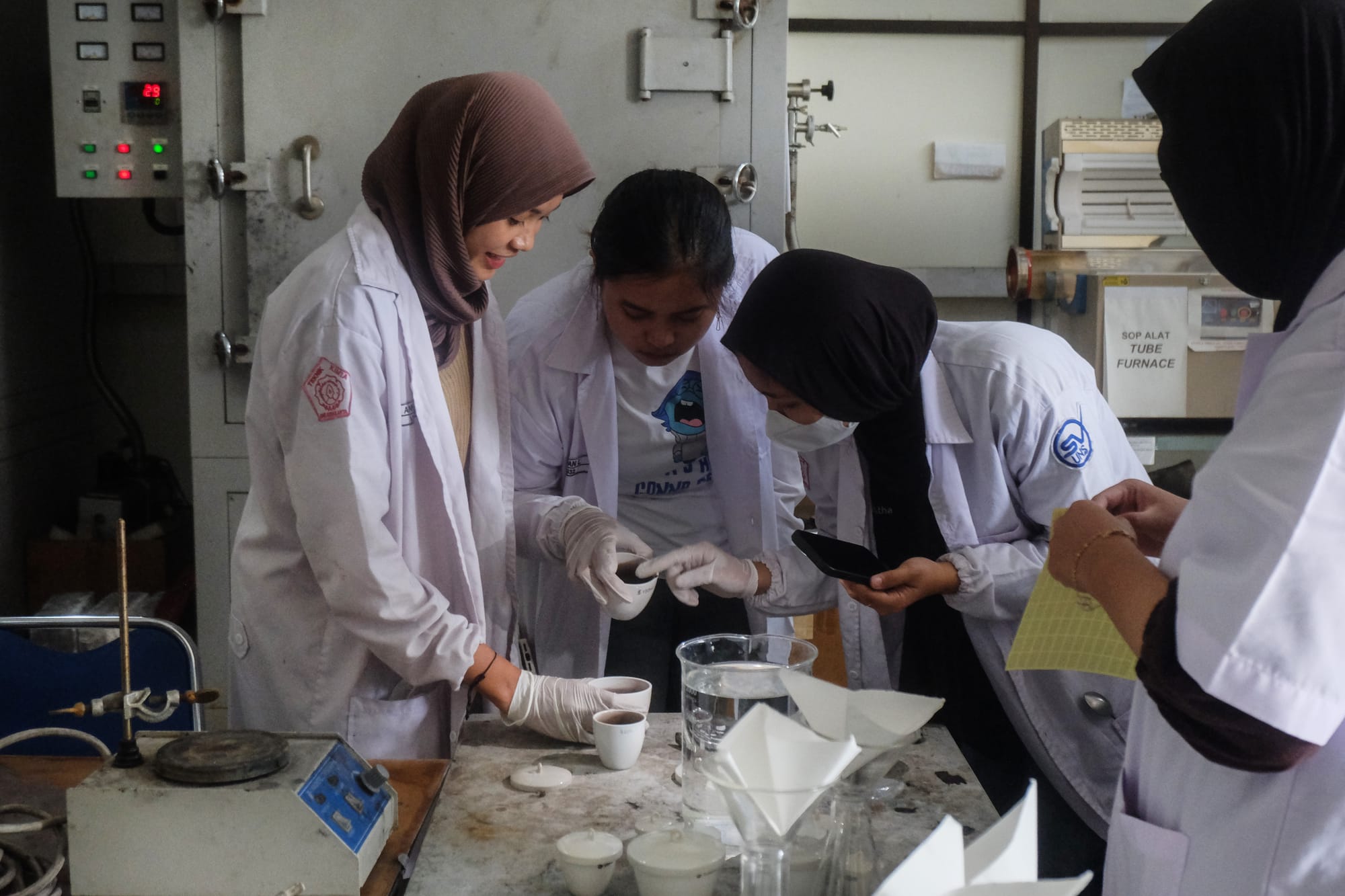
To encourage investment in research and industrial innovation, the government has introduced two state-funded research program schemes: the Priority Research Program (PRP) and the Strategic Research Program (PRS). Increased research can improve the competitiveness of products and human resources, leading to improved public welfare.
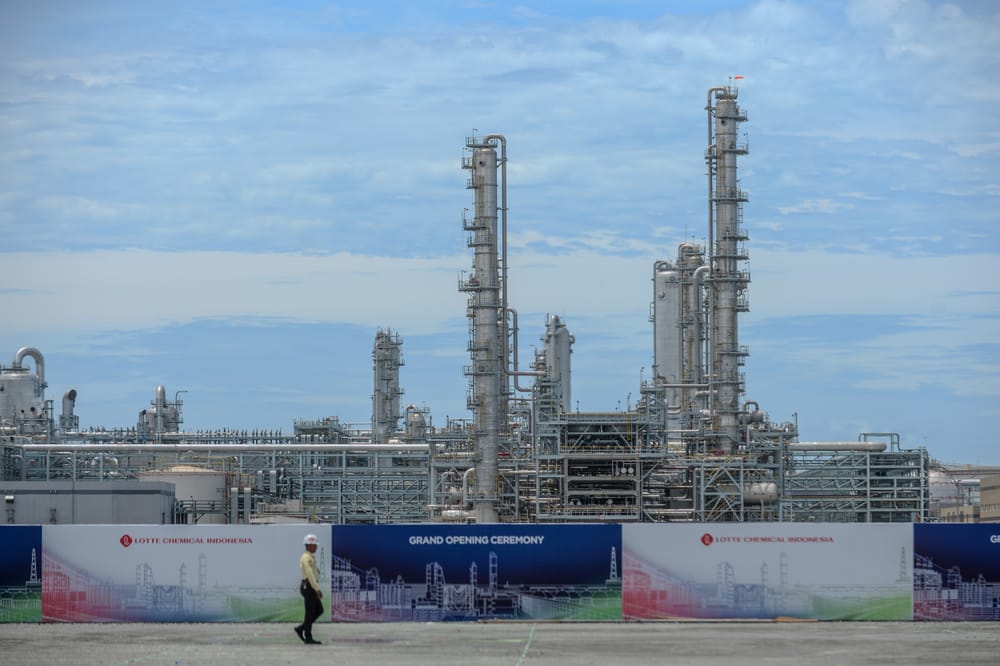
Deputy Minister of Investment and Downstreaming/Deputy Head of BKPM Todotua Pasaribu said, in order to pursue the investment realization target of Rp13,032 trillion by 2029, his party hopes that investments entering the country can also be in the form of research and development.
"The Ministry of Investment and Downstreaming thinks that investment is included in the triple helix national innovation framework (academia, industry, government), which is a dynamic interaction between universities, industry, and government to encourage science-based economic growth to achieve common goals," he said at the 2025 National Investment Forum (FIN) organized by the Ministry of Investment and Downstreaming / Investment Coordinating Board in Bandung, West Java, Thursday (13/11/2025).
Two schemes
Director General of Research and Development of the Ministry of Higher Education, Science and Technology (Kemdiktisaintek) Muhammad Fauzan Adziman explained that the PRP will be an umbrella that guarantees the sustainability of 16,700 researches from all over Indonesia funded by the Ministry, with an average budget of Rp150,000,000 per researcher.
"Through the PRP, we are developing the priority of improving equity, which is still very important to increase research achievement and success to remote areas. In the 2026 State Budget, we have budgeted Rp3.2 trillion for this program, which is integrated with talent development in the university ecosystem," Fauzan said.
Unlike PRP, the PRS scheme focuses on developing research products for industrial needs with funding of up to IDR2,500,000,000 per year, or IDR5,000,000,000 if in the form of a consortium, and can be extended. PRS will be oriented towards solving industrial problems and accelerating downstream strategies.
"The purpose of the program is to connect research from upstream to downstream, in collaboration with industry and banks. We invite the industry, with a full first-year financing scheme from us, while the second year can start a co-funding scheme with the industry financing a maximum of 10 percent of the research value," he added.
So far, according to Fauzan, the government has targeted the real sector as the main recipient of PRP and PRS research products. For example, when medical device manufacturer Oneject Indonesia submitted a proposal for scaling up MRI machines, a state university was invited to participate in the bidding for the manufacture of imaging models and X-ray tubes. The winner of the bidding will then start the research with Ministry funding.
To date, according to Fauzan, Kemdiktisaintek has collected 900 research products for curation. Product royalties for campuses vary, ranging from hundreds of millions of rupiah to Rp10 billion per year. Through PRS, the campus has helped produce tools for free health checks, metal materials, and solar reflective paint products that save the use of air conditioners.
"We have prepared problem formulations for PRS in the fields of food, health, energy, maritime, materials, downstream, defense, and education. From the Ministry of Defense, we have even received 21 products that need substitution, ranging from high tech products to anti-mosquito socks and water filters for our soldiers. Through this program, we will prove that innovation is not only about science and technology, but also collaboration," concluded Fauzan.
Give reassurance
The business world has responded positively to the two flagship research programs that are ready to partner with industry to advance the quality and impact of investments. As a new perspective, excellent research quality needs to be accompanied by firm regulations that support it, so that long-term collaboration is not easily disrupted in the middle of the road.
President Director of Merdeka Battery Materials Teddy Oetomo emphasized that by positioning research as the spearhead, investment is not only a growth motor, but also a defense mechanism. This means that through research excellence, the industry can increase business scalability and increase production capacity, so as to meet market needs when demand is on the rise.
"Research is important, but it is only product-based. If we rely on research to build human capital, it will only take 10 years. The trick we do at Merdeka Battery is to partner with foreign players who have the technology, but the bargaining power must be strong so that our position in the contract must be the majority, because the nickel has Indonesia," said Teddy in the discussion session.
The importance of strategic research, according to Teddy, cannot be separated from the concern that large mines in Indonesia were not discovered by Indonesians, but multinational companies with the strength of qualified research and development teams. This means that regulations need to incentivize domestic researchers to conduct exploration, just as researchers from multinational companies do.
Not only providing incentives for research that directly contributes to the industry, consistency is also an important component of regulation. This is because for investments that are not easy to obtain, funding of up to USD 2 billion-3 billion for a 20-25 year investment project should not necessarily fail due to sudden changes in regulations.
"Provide regulatory certainty, because every change must make entrepreneurs confused, because their capacity and time tend to be used up for damage control, which should be used to encourage progress in the next step," he said.
Sharing Teddy's view, Indonesian Chamber of Commerce and Industry Deputy Chairman for Membership Widyanto Saputro emphasized that policy changes in the government, however slight, have a huge impact on the private sector. It is not only the company's reputation that is at stake, but also funding and investor confidence in Indonesian companies.
"I believe the impact of these changes does not only occur in 1-2 sectors, but many entrepreneurs cannot keep up with sudden changes. Suddenly they have invested, done research, made preparations, but suddenly it changes, this is what we have to realize. Good research is suitable, but we can only move forward if the climate is stable, risks can be measured, and the calculations make sense," said Widyanto.