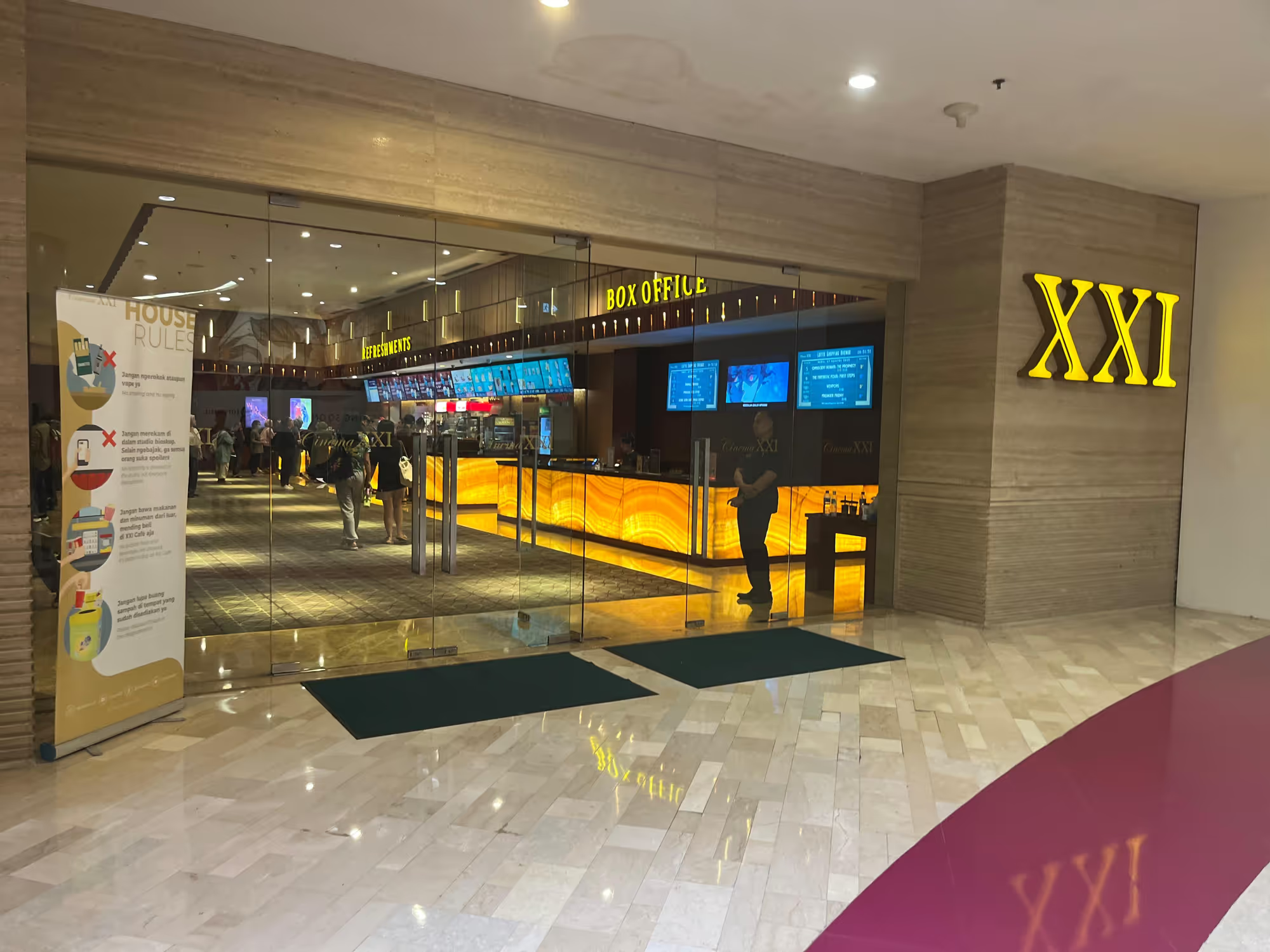
On a Thursday evening in early August, the lobbies of Lotte Shopping Avenue and Hollywood XXI in Jakarta were packed. Ticket lines snaked across the floor, auditoriums filled quickly, and the buzz of families, students, and office workers echoed through the halls. Indonesia’s Independence Month had just begun, and cinemas were alive with anticipation.
That night, three local films of very different genres opened simultaneously: Lyora: Penantian Buah Hati, a family drama inspired by Communications Minister Meutya Hafid’s personal story; Pamali: Tumbal, a horror sequel adapted from a popular game; and Panggil Aku Ayah, a remake of the Korean hit Pawn reimagined for Indonesian audiences. Days earlier, the satirical comedy Tinggal Meninggal had also premiered.
The crowded scenes reflect a broader surge. According to Bicara Box Office, Indonesian films drew 46.56 million viewers by July 20, 2025—two-thirds of all cinema admissions this year, nearly double the tally from 2024.
According to Bicara Box Office, a site that regularly reviews theatrical releases, viewership for Indonesian films released in 2025 reached 46.56 million as of 20 July 2025, equivalent to 66% of total admissions—marking a 99% surge compared with the previous year.
The peak came when the Indonesian animated feature Jumbo broke box-office records in Asian markets, making director Ryan Adriandhy Halim’s film the highest-grossing Southeast Asian animated film, with revenue exceeding USD 8 million, or around Rp130 million (exchange rate Rp16,200).
Jumbo tells the story of Don, an orphaned boy who is overweight and bullied at school. In the film, Don owns a storybook filled with magical tales—including an encounter with a fairy who asks for his help to reconnect with her family.
One Jumbo viewer, Iin Kurniawati, 45, said the film offers something different, both in visual quality and its soundtrack.
“The animation quality is good, the characters are strong, and the music is also great,” she said, having watched the film with her two children in May.
She added that Jumbo meets audiences’ emotional needs by portraying a child’s real life. “This film teaches the meaning of solidarity with friends, unbroken family love, and encourages children to be braver,” she said, recalling the movie.
For weeks after its release, Jumbo packed cinemas across Indonesia. Produced over five years and involving 400 local creators, the film surpassed the regional record set by Malaysia’s Mechamato Movie in 2022.
Released at the end of March, coinciding with school holidays ahead of Eid, Jumbo set a new record as the highest-grossing Indonesian film of all time, drawing more than 10 million viewers within 63 days of theatrical release.
The Visinema Studios production displaced KKN di Desa Penari (2022) from the top slot, according to a Visinema release in late May 2025.
Jumbo is also recorded as the Southeast Asian animated film with the most viewers.
After its domestic success, Jumbo is slated for international release starting June 2025. Countries set to screen the film include Malaysia, Singapore, and Brunei Darussalam. It is also scheduled to open in several Central Asian and European countries, including Russia, Belarus, Ukraine, Moldova, Armenia, Azerbaijan, Georgia, Kazakhstan, Kyrgyzstan, Tajikistan, Turkmenistan, Uzbekistan, Estonia, Latvia, and Lithuania.

A Golden Year
The phenomenon has drawn attention from academics and film observers. Ekky Imanjaya, a lecturer in the Film Program at Bina Nusantara University (Binus), calls 2025 a “golden year” for Indonesian cinema. “This year is something golden, especially in terms of quantity,” he told Suar (27/7/2025).
Ekky cited the success of Agak Laen, followed by the animated film Jumbo and artistically strong works like Sore: Istri dari Masa Depan. He said these successes point to three things: growing audience confidence in local films; producers’ ability to meet market tastes; and the opening of opportunities for breakthrough works to succeed commercially.
“Films like Jumbo and Sore prove that the market can accept something new. They don’t imitate anyone; as the band Efek Rumah Kaca puts it, they ‘create their own market,’” he explained.
Ekky also noted that genre diversity is a core strength of the industry today. “There’s animation, there’s horror with new approaches, there’s sci-fi drama. This way, audiences are free to choose,” he said.
Even so, he cautioned filmmakers against repeating the same formulas—pointing to trends like horror or infidelity themes that risk fatigue if not treated innovatively.
Visinema: Innovation and Transformation
Amid the current momentum, one production house actively pushing quality and content diversification is Visinema Pictures.
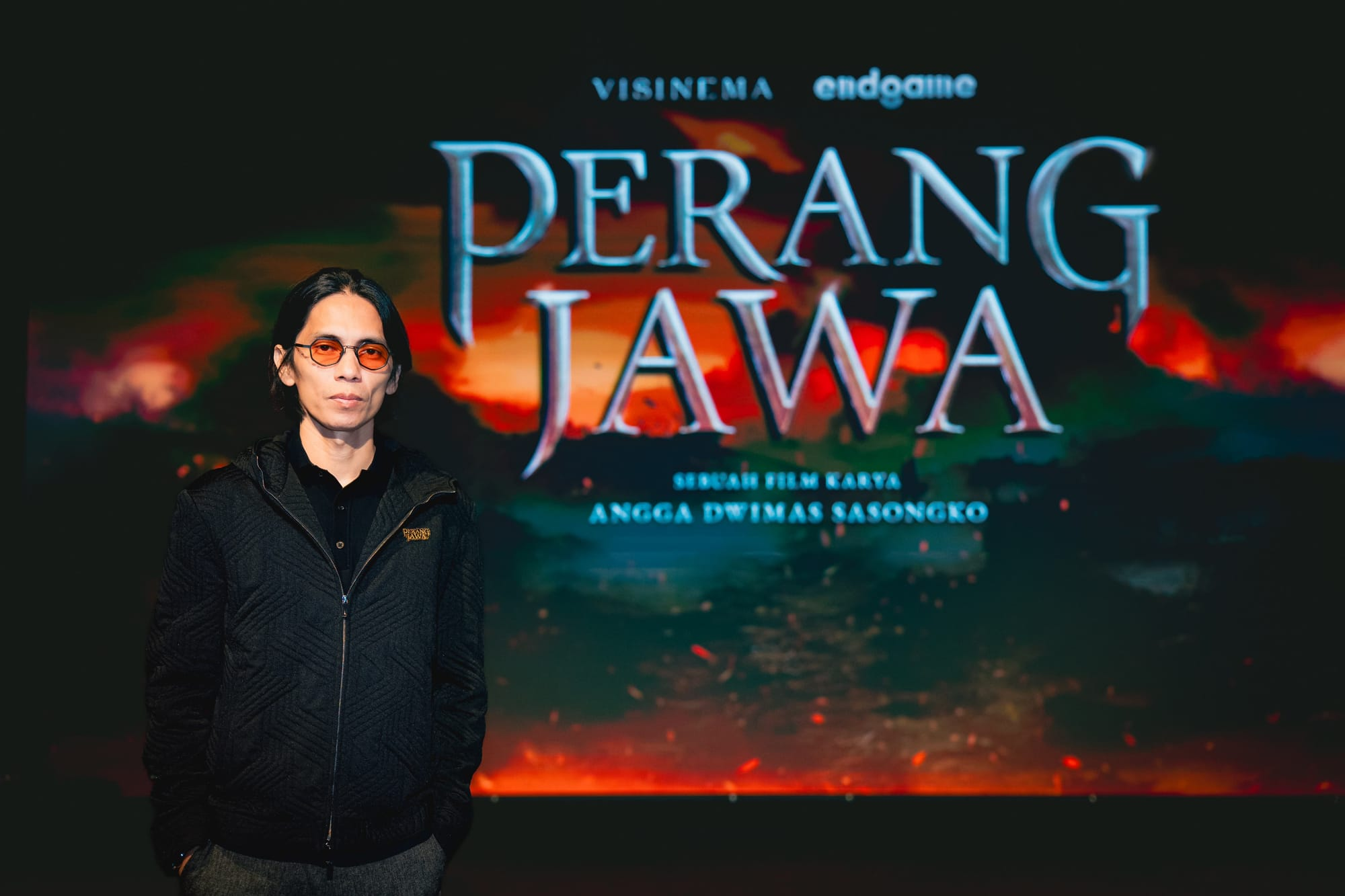
Angga Dwimas Sasongko, Chief Executive Officer (CEO) and Founder of Visinema Pictures, stands out through various innovations—affirming that idealism and artistic quality are not mere add-ons, but core elements of success.
“I believe Indonesian audiences are smart and have demand for quality content—and we must respond to that need. Today, making films that are good and impactful is not a bonus; it’s a strategy for success,” he told SUAR (29/7/2025).
For Angga, Visinema was not born from business calculations alone, but from a transformative collective experience while making Cahaya dari Timur: Beta Maluku.
“We shot on a shoestring, but that film didn’t just win a Citra Award—it became the people of Maluku’s film and was screened at the State Palace. That’s when I realized I wasn’t chasing awards, but impact,” he said.
Angga rejects the notion that idealism and market are opposing poles. For him, both can go hand in hand. He believes Indonesian audiences are now discerning and demand high-quality content.
“A film like Mencuri Raden Saleh is proof. When we decided to make a heist movie, there was no data saying the genre would work. Likewise with JUMBO, an animated film born from creative intuition and empathy. We didn’t chase trends; we tried to understand what audiences truly need. I believe idealism pursued with honesty, discipline, and empathy has market value,” he stressed.
In realizing its vision, Angga said Visinema has transformed from a film production house into a broader creative ecosystem. He said this shift is driven by a mission to be a “voice amplifier” and bring change to the entertainment industry. Visinema began with a small, happy team. But after getting involved in helping Mentawai earthquake victims, Angga and Visinema discovered a new mission: to voice important issues through their works.
Today, Visinema has entered a phase of industry transformation. The company is not only focused on film production, but on building a larger ecosystem: Bioskop Online—an OTT platform for local content—and Visinema Studios, a division dedicated to stories for children and families, including the animated film Jumbo.
“We realized that to stay relevant, this company has to become an ecosystem. Not just a production house, but a house of growth. That’s why we’re building structures, culture, and systems that allow ideas to come from anyone—not only from the founder,” Angga said.
Angga also revealed that Visinema is being prepared to operate independently without his presence. The company now has many independent producers, writers, and creative leaders. The team’s ability to collaborate without him is, he said, a source of pride.
“I can attend the Keluarga Cemara musical—which I didn’t write or direct—and still feel proud because it’s better than anything I imagined,” he said.
Visinema is preparing its next film, Perang Jawa, which will elevate the story of Prince Diponegoro’s struggle—one of the most monumental anti-colonial events in Southeast Asia, Angga said. The aim is an epic that represents the spirit of resistance, courage, and spiritual values in fighting colonial systems.
Angga also offered a message to young people pursuing creative work: don’t rush to become big; focus on authenticity. The best works, he said, are born from the courage to fail, honest doubt, and love for the process—not solely for perfection or virality.

On the other hand, Ekky Imanjaya emphasized that the film industry’s growth must be balanced with improvements in infrastructure and regulation. He highlighted two main challenges that still hinder progress in the national film ecosystem.
First, the absence of an integrated box office system. “The industry’s biggest issue is the lack of a transparent Integrated Box Office System (IBOS). We still use audience counts, whereas the global standard is gross revenue,” he said. He reminded that Film Law No. 33/2009 mandates reporting and publication of audience data—but implementation remains suboptimal.
Second, the limited number of cinema screens.
“Ten million viewers for Agak Laen is still small relative to our population. In Korea and India, the large number of screens drives audience loyalty,” he noted.
He added that long queues of films waiting to be released are a serious bottleneck for producers and for production turnover nationally.
Even so, Ekky remains optimistic. He sees genre diversity, audience trust, and filmmakers’ courage to create their own markets as strong signals that Indonesian cinema is moving toward a more mature and sustainable phase.