OCBC's Financial Fitness Index 2025 research indicates a decline in financial health among young people. Many bad habits are increasingly eating away at their finances.
The OCBC Research Report, which targets young people aged 25-35, is a signal to change the way we manage our finances in an efficient and long-term orientation. This is because, in addition to challenges on key indicators, there are several consumptive habits that need to be changed to achieve financial stability.
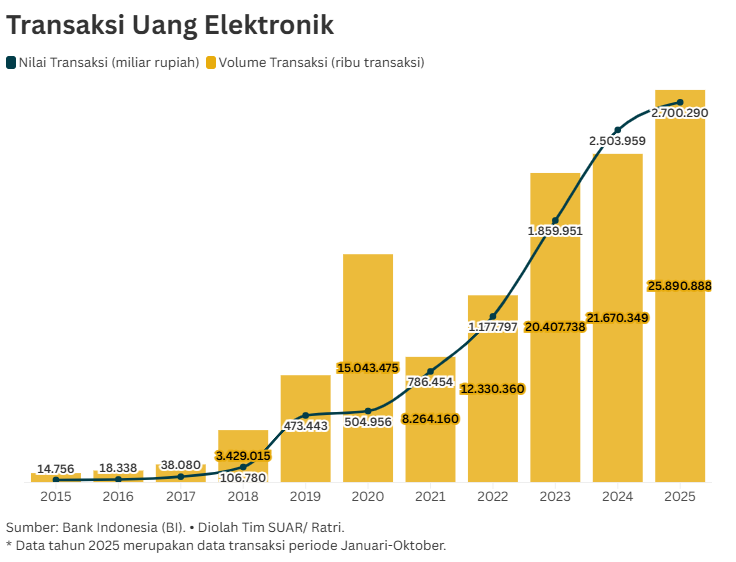
Indeed, a lot of public consumption is met through debt or loan funds. Bank Indonesia data shows that consumer credit loans continue to increase. This year alone, from January to July, the loan position rose from Rp 2,195 trillion to reach Rp 2,227 trillion.
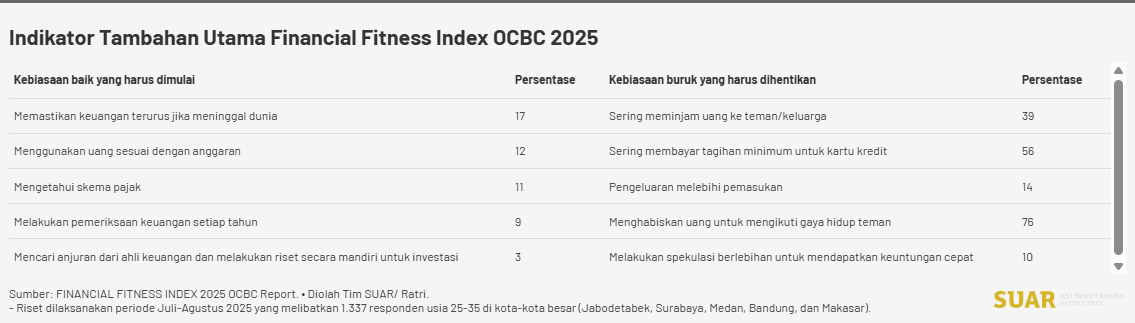
The OCBC research highlighted some bad habits that are detrimental to financial health. These habits include 14% of respondents admitting that they spend more than they earn. There are also 56% of respondents who often pay credit card bills at the minimum. This is one practice that can ensnare consumers in long-term debt.
In addition, 39% of respondents often borrow money from friends or family. One habit that is also bad is that many respondents admit to spending money just to follow the lifestyle of friends (76%). This finding further illustrates that excessive consumptive behavior can encourage an increase in consumptive credit.
Positive changes can start from the awareness to improve. The OCBC research also identified good habits that should be implemented to improve financial conditions. Among others, 17% of respondents felt it was important to ensure their family's financial affairs were secured in the event of their death and 12% realized the importance of using money according to a budget.
Although the percentage is still small, the awareness to be more disciplined and financially responsible is starting to grow. This is an important foundation for moving forward. The younger generation is starting to prioritize planning over reacting to immediate needs.
In general, people need to be encouraged to go beyond just paying the minimum bills or following other people's lifestyles. They should learn to manage their expenses, budget, and invest according to a long-term plan.
Proper financial literacy and education will be the key to turning bad behaviors into good habits, so that Indonesians can achieve true financial health.