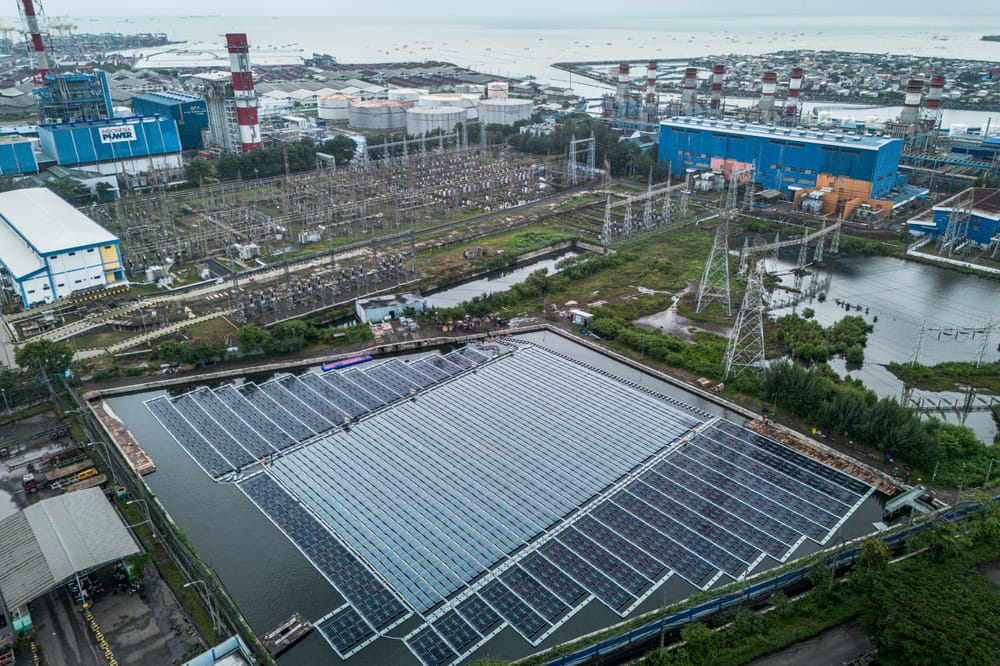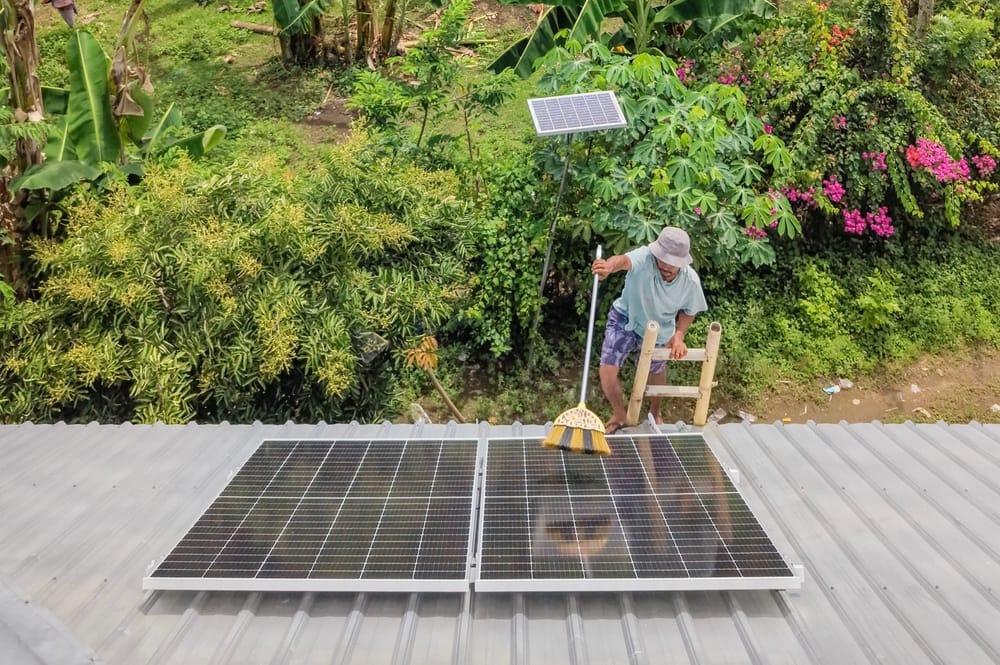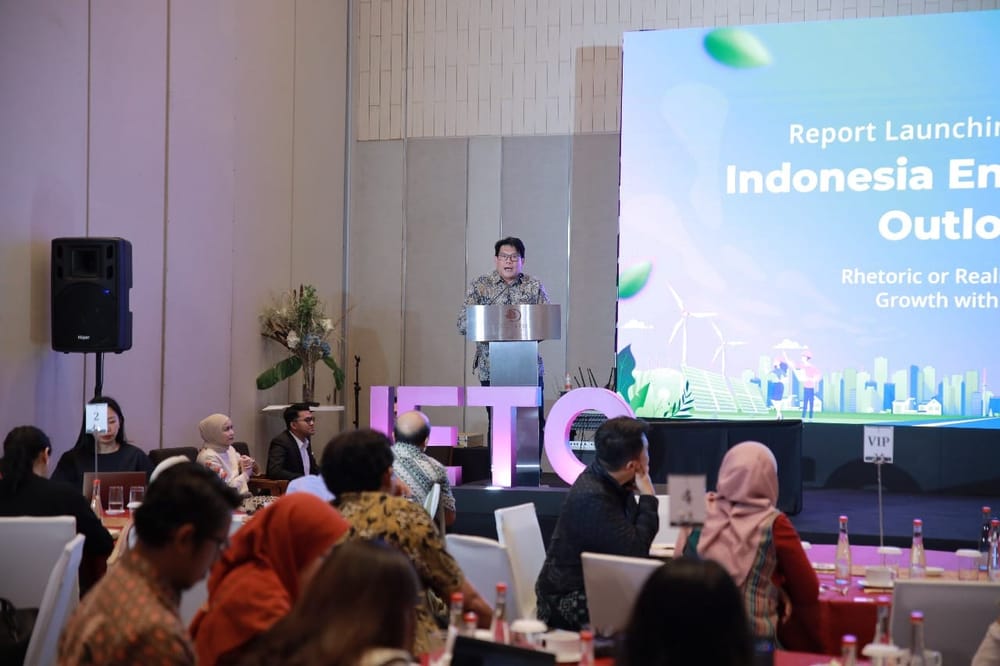


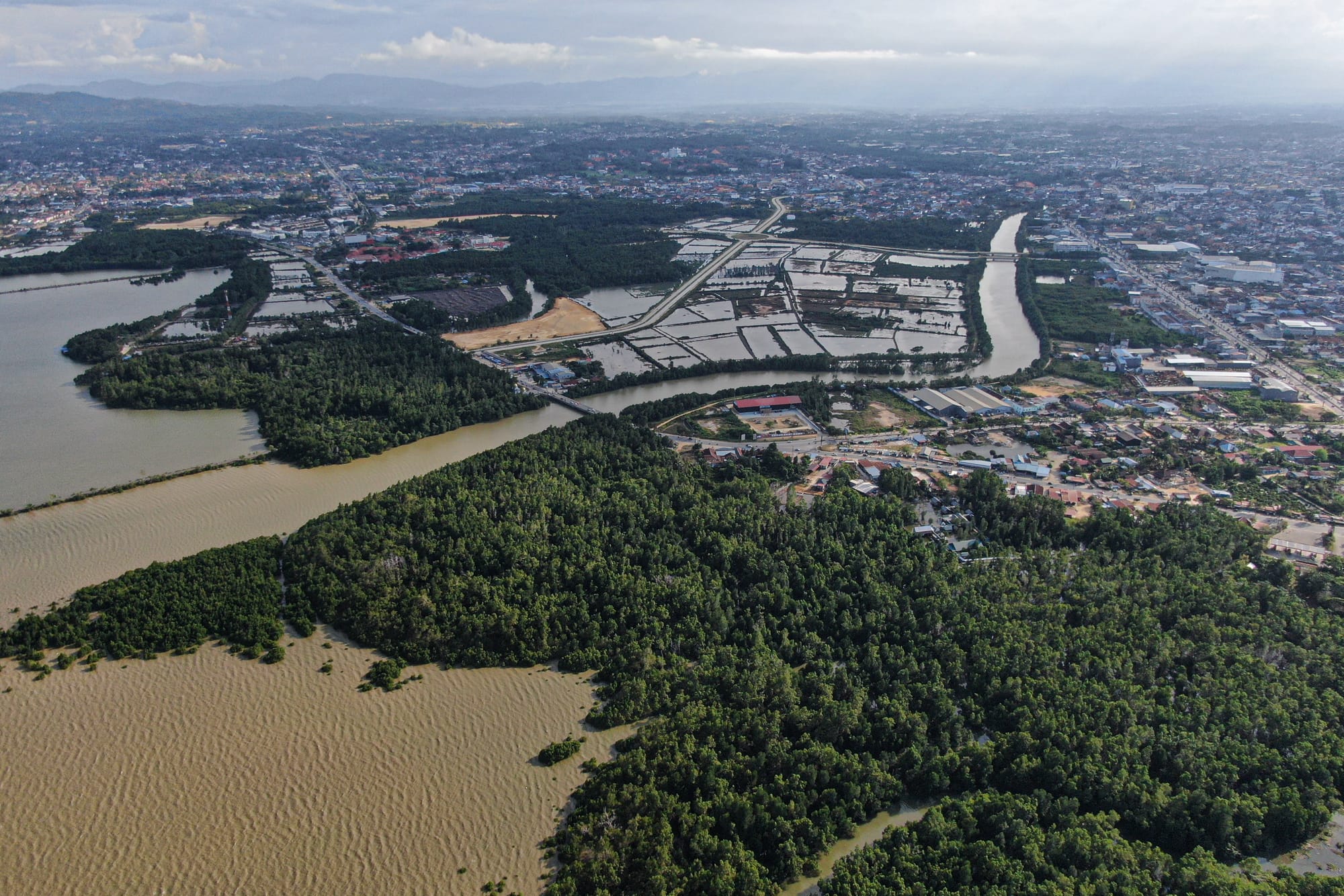
Commitment is not enough, real action is needed to achieve climate resilience. According to the Economic Research Institute for ASEAN and East Asia (ERIA), CO2 emissions in ASEAN are predicted to decline significantly after 2030 if a number of countries in the region fully commit to reducing carbon emissions or decarbonization.
The report, which was presented in a discussion in Jakarta on Monday (24/11/2025), also stated that the electricity sector is expected to be the fastest decarbonizing sector. To achieve this target, according to ERIA Director of Energy Policy and Head of Asia Zero Emission Center Nuki Agya Utama, a number of breakthroughs are needed to encourage the achievement of the targeted energy transition.
Some of the breakthroughs needed are the development of adecarbonization roadmap, promoting sectoral action in priority industries such as chemicals, energy and manufacturing, and establishing market mechanisms and transition financing.
"The way to develop a decarbonization roadmap is to prepare, start making a measurable emission reduction plan. Evaluate and understand the costs involved and the impact of various reduction initiatives," Nuki said in the discussion.
On the other hand, sectoral actions in priority industries such as chemicals and manufacturing should be encouraged. Examples of priority decarbonization actions in the chemical sector include the use of renewable energy, improving energy efficiency, implementing carbon capture storage (CCS), and developing green chemicals such as green and blue ammonia production.
The final breakthrough to promote decarbonization is to establish market mechanisms and transition financing through the use of green financial instruments such as green bonds and green financing (e.g. from banks such as MUFG Bank) for low-carbon projects,blended finance that combines public and private funds, and special financing schemes from the government in collaboration with financial institutions for specific programs.
Since the Indonesia Carbon Exchange (IDX Carbon) was launched in September 2023, the volume of carbon trading up to the first half of this year has increased threefold, with a cumulative value of IDR 77.95 billion.
The trading prospects on the Indonesian carbon exchange show optimistic performance in its journey of less than two years. At the end of 2023, the volume of carbon trading on the Indonesian stock exchange was only recorded at 494,254 tons of carbon dioxide equivalent (CO2e) with a value of IDR 30.91 billion.
In 2024, carbon trading was 413,764 tons ofCO2ewith a value of IDR 19.73 billion. However, in the first semester of 2025, the trading volume shot up to 691,304 tons ofCO2ewith a value of IDR 27.31 billion. Far beyond the 2024 condition.
One example of a company that has committed to decarbonization is a palm oil company by processing waste into renewable energy (biogas).
Gapki Chairman Eddy Martono said that the palm oil industry can be decarbonized through various strategies, such as processing waste into renewable energy (biogas), increasing carbon sequestration through biomass and land management, and replacing fossil energy with palm biofuel.
"This effort aims to reduce greenhouse gas emissions and contribute to the goal of carbon neutrality," he told SUAR in Jakarta (24/11).
Decarbonization methods in the palm oil industry include waste utilization, by processing palm oil liquid waste (POME) into biogas for power generation. Empty bunches can also be utilized as a renewable energy source.
Improved environmental quality
Indef Economic Observer Eko Listiyanto said the benefits of decarbonization are to reduce the amount of emissions from the energy, industry, transportation, and agriculture sectors, which contribute to tackling climate change.
Decarbonization can improve environmental quality and help maintain biodiversity and reduce the cost of controlling environmental impacts.
"Decarbonization also provides benefits to the economy, especially opening up millions of new jobs in the renewable energy sector and green industry," he told SUAR in Jakarta (24/11).
Another benefit is that it can reduce dependence on fossil fuel imports, resulting in more stable domestic energy prices.
The Ministry of Forestry said Indonesia's total potential for tradable carbon credits reaches 13.4 billion tons of carbon dioxide (CO2) equivalent until 2050 with an economic value of Rp41.7 trillion to Rp127.98 trillion depending on the price of carbon in the global market.
The high interest of foreign investors in Indonesia's carbon exchange market was also expressed by the Director of Development of the Indonesia Stock Exchange (BI) Jeffry Hendrik.
He said that during the United Nations (UN) Climate Change Conference in Belem Brazil from November 10 to November 21, 2025, many investors came to the Indonesian pavilion to inquire and express interest in investing in Indonesia's carbon exchange.
"So right now we are collecting buying interest and selling interest that we can collect to see the prospects in our carbon exchange going forward," Jeffry said when met at the IDX Building, Jakarta, Monday (24/11/2025).
Jeffry, who also just arrived from the event in Brazil, said that at the event the government conveyed that there were dozens of projects from Indonesia.
"Approximately 90 million tons of selling interest that could be partially or fully traded through IDX Carbon. As of yesterday, we also received information that there is at least 14 million tons of buying interest," he said.
However, he could not estimate the value of the interest in the kabron exchange. This is because the project has not yet become a carbon unit so it cannot be calculated.